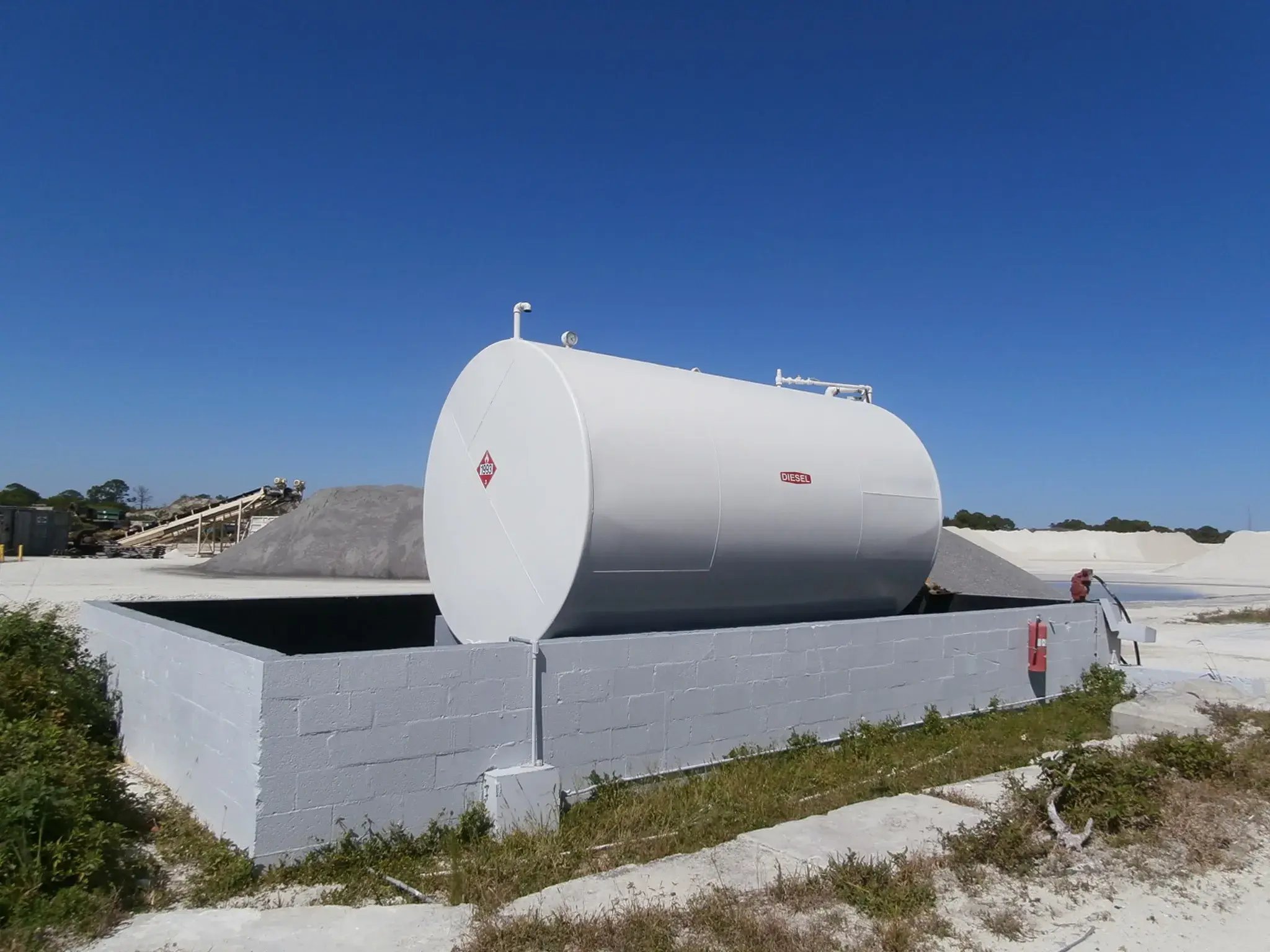
When Pennsylvania Oil Storage Goes Beyond SPCC and Into Facility Response Plan Territory
Most Pennsylvania facilities that store oil need an SPCC Plan, and very few of them need a Facility Response Plan (FRP) on top of it. An FRP is a separate federal plan for oil storage sites that are large enough, or close enough to water, that a spill could do serious damage to a river, a sensitive habitat, or a public drinking water intake. It gets submitted to EPA, it plans for a worst-case discharge, and it comes with response contracts and drills that an SPCC Plan never asks for. For the typical facility, the answer to the question in the title is no.
The rule still expects larger sites to check the criteria and keep a written record of the result, and a few changes at a facility can move it across the line. This article covers what triggers an FRP, what an FRP adds, how Pennsylvania's own Spill Prevention Response Plan fits in, and why documenting a "no" is worth the effort. If you'd rather talk through your own tank inventory, you can reach out to RMA any time.
Table of Contents
TL;DR
A Facility Response Plan is a federal worst-case spill plan that EPA requires only for large oil storage sites. A facility needs one if it transfers oil over water and stores 42,000 gallons or more in total, or if it stores 1 million gallons or more and also has a risk factor: weak secondary containment, sensitive waters or a drinking water intake within range of a spill, or a reportable discharge of 10,000 gallons or more in the last five years. EPA can also order a plan for a site that doesn't meet those tests. Most facilities fall far below these lines, but any site near them should keep a written evaluation showing why it doesn't qualify.
What Is a Facility Response Plan, and How Is It Different From an SPCC Plan?
An SPCC Plan is about keeping oil from getting out in the first place, through containment, inspections, procedures, and annual briefings, and it stays at your facility for inspectors to review. An FRP is about what happens when prevention fails. It sits in the same federal regulation (40 CFR Part 112, section 112.20) and applies only to non-transportation-related onshore facilities that could reasonably be expected to cause "substantial harm" to navigable waters or adjoining shorelines. A site that needs an FRP still needs its SPCC Plan. If you're still sorting out which SPCC format fits your site, our guide to the different types of SPCC plans is a good place to start.
| Topic |
SPCC Plan |
Facility Response Plan |
| Trigger |
More than 1,320 gallons aboveground (containers of 55 gallons or more) or more than 42,000 gallons buried, plus a reasonable expectation of reaching waters |
Substantial harm criteria met, or EPA orders one in writing |
| Focus |
Preventing discharges |
Responding to a worst-case discharge and smaller spills |
| Who sees it |
Kept on site for inspectors |
Submitted to EPA's Regional Administrator, and some plans need EPA approval |
| People and practice |
Annual briefings for oil-handling staff |
Response training, a drill and exercise program, and a qualified individual |
What Are the FRP Substantial Harm Criteria for Oil Storage?
EPA's rule has two capacity screens, and meeting either one makes a facility a substantial harm facility. The second screen has four add-on conditions, and only one has to apply. Capacity means total oil storage capacity, not what's in the tanks on a given day.
| Screen |
What triggers an FRP |
| Over-water transfers |
The facility transfers oil over water to or from vessels and has total oil storage capacity of 42,000 gallons or more |
| Very large storage |
Total oil storage capacity of 1 million gallons or more, and at least one of the four conditions below |
| Condition 1 |
No secondary containment for each aboveground storage area large enough for the biggest tank in the area plus freeboard for rain |
| Condition 2 |
A discharge could injure fish, wildlife, or sensitive environments, based on EPA's distance formula or a comparable one |
| Condition 3 |
A discharge would shut down a public drinking water intake, based on the same kind of distance formula |
| Condition 4 |
A reportable oil discharge of 10,000 gallons or more within the last five years |
EPA's Regional Administrator, which for Pennsylvania means Region 3, has a second path. The Regional Administrator can require any non-transportation-related onshore facility to prepare an FRP after weighing the type of transfer operation, storage capacity, missing secondary containment, proximity to sensitive environments and drinking water intakes, and spill history. The notice comes in writing with the basis for the decision, and the facility then has six months to submit a plan. Anyone, including a member of the public, can petition the Regional Administrator to look at a particular facility. If the Regional Administrator decides a facility could cause "significant and substantial harm," the plan needs EPA approval rather than just submission.
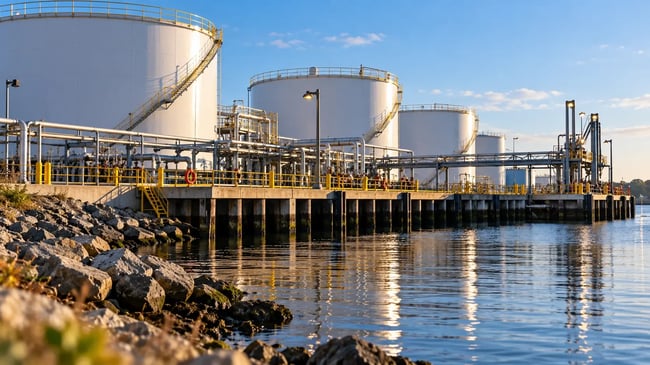
In Pennsylvania, the over-water screen tends to matter for terminals and industrial sites on the Delaware, Ohio, Allegheny, and Monongahela Rivers and on Lake Erie. Oil transfers on the water can also bring in Coast Guard and DOT rules, which cover transportation-related operations and sit outside EPA's FRP rule. If you've had a spill, our explainer on the sheen rule and oil spill reporting covers what counts as reportable.
What Does a Facility Response Plan Add Beyond SPCC?
The biggest addition is worst-case discharge planning. An FRP has to work through specific scenarios: a worst-case discharge calculated with EPA's worksheet in Appendix D to Part 112, a discharge of 2,100 gallons or less, and a mid-range discharge above 2,100 gallons and up to 36,000 gallons or 10 percent of the largest tank, whichever is less. It also has to identify the private personnel and equipment needed to respond, show contracts or other approved means that guarantee they'll show up, and name a qualified individual with full authority, including contracting authority, to start removal actions and spend the money.
An FRP is also a living program rather than a binder. It includes a hazard evaluation covering the facility's reportable discharge history for its whole life, detection procedures, site and drainage diagrams, security systems, and inspection records. The facility runs a job-based response training program and a drill and exercise program, and a program that follows EPA's National Preparedness for Response Exercise Program (PREP) is deemed satisfactory. Changed portions of the plan get revised and resubmitted within 60 days of a material change, and the National Contingency Plan and Area Contingency Plan get reviewed every year. For the rest of your people, our online environmental training library covers general compliance topics.
How Do EPA Region 3 and DEP's Spill Prevention Response Plan Fit With an FRP?
Pennsylvania facilities answer to two sets of oil rules that overlap without replacing each other. EPA Region 3 enforces SPCC and the FRP rule, and our post on who enforces SPCC plans explains how that works. DEP runs the storage tank program under the Storage Tank and Spill Prevention Act and 25 Pa. Code Chapter 245, and owners of large aboveground storage tank facilities, generally those with more than 21,000 gallons of regulated capacity, file a Spill Prevention Response Plan (SPRP) with DEP. Whether your tanks count as regulated depends on their size, type, and use, so check them against DEP's storage tank program. The SPRP has a far lower trigger than the FRP, so a facility can easily need an SPCC Plan and an SPRP and never come near an FRP. The federal rule also lets a facility submit an equivalent response plan prepared for state or other federal requirements, if EPA accepts it and the plan cross-references the FRP elements. Pennsylvania's attention to tank failures goes back to the 1988 Floreffe collapse, which sent diesel into the Monongahela River and is the event most often tied to the tougher state tank law that followed.
Why Should You Document That Your Facility Doesn't Need an FRP?
If your total capacity reaches the screening levels but you don't meet the substantial harm criteria, the rule says to complete EPA's certification form (Attachment C-II in Appendix C to Part 112) and keep it at the facility. If you used a formula other than EPA's for the distance calculations, you attach documentation showing it's sound and notify the Regional Administrator in writing. Inspectors ask to see this paperwork. Facilities far below the capacity screens don't face this step, though it helps to note total capacity in your SPCC file so the reasoning is visible.
The answer can change. A planned change like adding tanks or starting vessel transfers can make a facility subject to the FRP rule, and the plan is due before the changed portion starts operating. An unplanned event, like a large spill, can do the same, and then the plan is due within six months. Revisiting the question at each SPCC five-year review is an easy habit, and our guide to SPCC plan five-year reviews covers what the review should include. Our rundown of top SPCC plan violations and fines shows how oil rule enforcement tends to go. If EPA has already contacted you about an FRP or a possible violation, talk to an environmental attorney before you respond.
How Can RMA Help With Facility Response Plan Questions in Pennsylvania?
We're based in New Jersey and work with oil storage facilities across Pennsylvania. If you're not sure whether your site comes near the FRP criteria, we'll go through your tank inventory, transfer operations, and nearby waters with you, check how your SPCC Plan reads against what's on the ground, and help you put the conclusion in writing. If it turns out you're in FRP territory, we'll tell you plainly what that involves and whether we're the right fit, and if a simpler path covers you, we'll say that too. There's no obligation either way. You can call us, email us, or fill out the form on our website, or just reach out to RMA whenever it suits you.