Just Became the Environmental Person at a New Jersey Plant? Your First 30 Days With NJPDES Stormwater
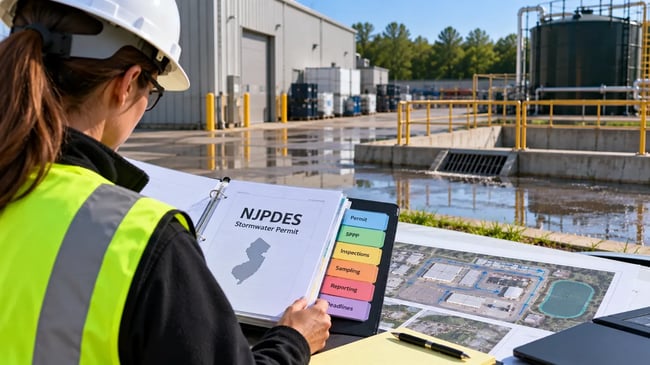
If you just inherited stormwater at a New Jersey plant, you've probably noticed that nobody left you a clean handoff. Maybe the last person retired, maybe the job landed on top of safety and maintenance, or maybe you're new to environmental work altogether. Either way, the state regulates the rainwater and snowmelt that runs off many industrial sites, and your plant may need a permit, a written plan, scheduled inspections, and a yearly certification to the state. Your first 30 days come down to five jobs: find your permit authorization and confirm which category it's under, locate the written stormwater plan, check the inspection and annual certification records, confirm what sampling and reporting your permit requires, and write down the deadlines coming up.
This article walks through those five jobs in order, with a rough timeline, the paperwork to collect, and the warning signs that tell you something needs fixing. We'll also cover what to do if the files turn out to be thin or missing. If you'd rather talk it through with someone who works with NJDEP's stormwater permits regularly, you can reach out to RMA at any point, and if you'd like the full picture first, keep reading.
Table of Contents
TL;DR
Your first 30 days with New Jersey stormwater come down to five jobs. Find your state discharge authorization and confirm which permit it's under, find the written stormwater plan and check it against the site, and pull the inspection and annual certification records. Then confirm what sampling and reporting your specific permit requires, since the basic permit relies on keeping materials out of the rain while industry-specific and individual permits can require sampling, and build one calendar of upcoming deadlines. If records turn out to be missing, start keeping true records from today forward and get help instead of backfilling the past.
What Does Stormwater Compliance Mean at a New Jersey Plant?
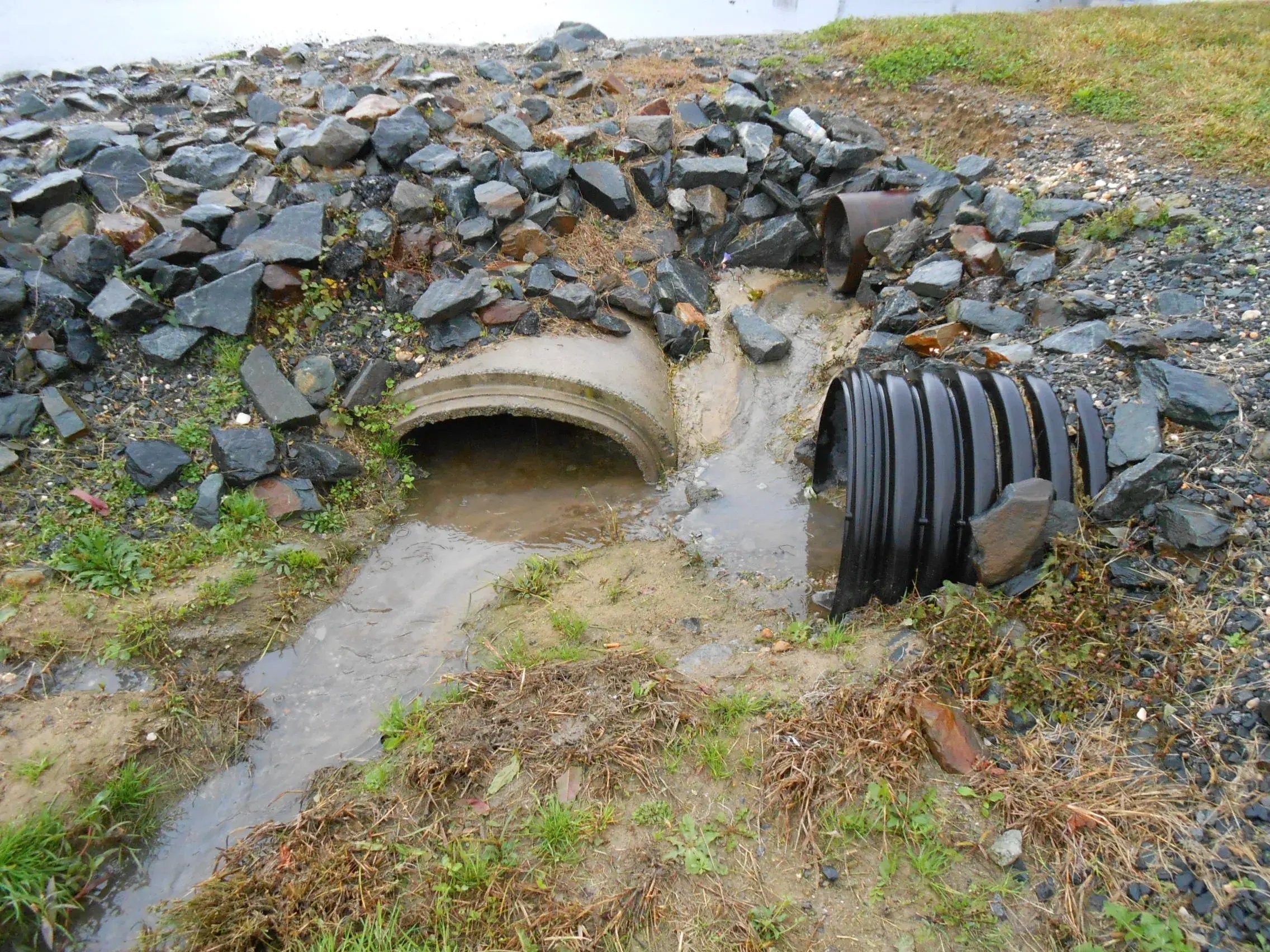
Rain and snowmelt don't soak in politely at an industrial site. They run across pavement, past stockpiles, docks, dumpsters, and equipment, then leave through storm drains, ditches, or the ground. The New Jersey Department of Environmental Protection (NJDEP) treats runoff from many industrial sites as a discharge that needs permission, and its permit system is called NJPDES, the New Jersey Pollutant Discharge Elimination System. New Jersey doesn't hand every plant the same permit, so the first thing to learn is which of these four situations your plant is in.
| Option |
Who it fits |
Day to day |
| Basic Industrial Stormwater General Permit (5G2) |
Facilities that have eliminated, or can eliminate within six months of authorization, all exposure to rain and snowmelt |
Built around best management practices (BMPs) that keep materials out of the rain |
| Industry-specific general permits, such as Concrete Products Manufacturing (CPM), Hot Mix Asphalt (R4), Mining and Quarrying (R13), Scrap Metal (SM2), and Vehicle Recycling (RVR) |
Groups of industries NJDEP wrote a tailored permit for |
May add monitoring, benchmarks, or effluent limits |
| Individual permit |
Facilities that can't eliminate exposure and don't qualify for a general permit |
A permit written for your site |
| No exposure exclusion |
Facilities with no industrial exposure to rain and snowmelt |
Not a permit, but it has its own conditions |
Permit terms and renewal dates change as NJDEP updates each permit, so treat this table as the map and your own authorization as the source of truth. Where your site's water goes can matter too. If your drains lead to a sewerage authority instead of a stream or the ground, that authority's rules may apply alongside or instead of an NJPDES stormwater permit, so confirm instead of assuming. Our guides to general, individual, and no-exposure permit types and NJPDES stormwater permit requirements go deeper.
Days 1 to 5: How Do You Find Your NJPDES Stormwater Authorization and Permit Category?
Start with paper. Check the environmental binder, the plant manager's files, the shared drive, and the email of whoever held this job before you. Ask accounts payable too, since NJDEP bills permit holders a yearly fee and an invoice from the state tells you quickly that a permit exists and whose name it's under.
What you're hunting for is the authorization to discharge, the letter and permit package NJDEP issued for your site. It lists a NJPDES permit number (general permit authorizations usually start with NJG), a Program Interest (PI) ID for your facility, the permit category, and the effective date. Write all four on one sheet. Then check whether the permittee name and facility address match who owns and operates the plant today. NJDEP has a permit transfer process for ownership changes, and a name on the authorization that no longer matches reality is something to fix, not ignore.
Next, do a category sanity check with one walk around the yard. The 5G2 is for facilities that have eliminated exposure, so outdoor stockpiles, uncovered scrap, or open bins on a 5G2 site are a mismatch worth raising early. The reverse happens too, with a plant that moved everything indoors but still carries a more demanding permit. Our guides to the 5G2 Basic Industrial Stormwater Permit, the individual NJPDES industrial permit, and what no exposure means explain how NJDEP sorts facilities, and our article on the SM2 scrap metal permit shows what an industry-specific permit looks like.
If you can't find an authorization anywhere, don't assume the worst yet. The plant may not need coverage, since permit requirements depend on what you do and whether it's exposed to rain. A permit may exist under an old company name or address. Or the plant should have coverage and doesn't. NJDEP's stormwater program staff can tell you what's on file for your address, and your next step depends on the answer.
Days 6 to 10: Where Is Your SWPPP and What Should It Include?
The written plan at the center of your permit is a stormwater pollution prevention plan, or SWPPP (we pronounce it "swip"). NJDEP's forms call it an SPPP, and you'll also hear SP3 or just the stormwater plan. They're the same document, and we'll say SWPPP. The plan describes your site, shows where water goes, lists what's exposed to it, and spells out the practices that keep pollutants out of runoff. NJDEP's forms talk about preparing, implementing, updating, and evaluating the plan, which tells you the state expects a working document and not a binder on a shelf.
Your permit lists what the plan has to contain, so use it as your checklist. In general you'll expect a site description and drainage map, your stormwater team, an inventory of exposed materials and activities, the BMPs that control them, an inspection schedule, employee training, and spill response steps. Check the cover pages for a revision history and signatures. A plan nobody has touched in years is a flag, and so is a team list full of people who've left.
Then take the plan outside. Print the site map and walk the whole property with it in your hand. Do the drains and outfalls on the map match the ones you can find? Has anyone added a building, tank, dumpster area, wash pad, or storage yard since it was written? Do the covers, berms, and drain inserts the plan describes exist and work? Every mismatch goes on your list as a note, not as a failure on your part, because you inherited this. If there's no plan at all, check your permit for how long a newly authorized facility has to prepare and implement one. Our guides to what a SWPPP is and how to navigate a new stormwater plan are good companions for this week.
Days 11 to 17: How Do You Check Stormwater Inspection and Annual Certification Records?
Inspections and certifications are the paper trail showing the plan is being followed, and it's the paper an inspector checks quickly. Routine inspections happen on a schedule your permit sets. NJDEP's 5G2 has called for recorded monthly inspections since its 2013 version, so confirm the frequency and scope in your current permit. The annual inspection and certification is separate. NJDEP's 5G2 certification form has the facility certify that an annual inspection was conducted on a stated date and that the SWPPP was evaluated under the permit's conditions, and it says not to send the plan itself in with the form. Find the due date on your authorization or NJDEP's form instead of guessing.
Pull the records for the last few years, or back to the permit's effective date if it's newer, and compare them against this list.
| Record |
Warning sign |
| Routine inspection logs |
Missing months, identical entries every time, no signatures |
| Annual inspection report |
Missing years, or findings that don't match your site walk |
| Annual certification |
No proof it reached NJDEP, or dates that don't line up with the inspection |
| Corrective actions |
The same issue showing up month after month with nothing closed out |
| Training records |
No record that anyone on the stormwater team was ever trained |
Your permit says how long records have to be kept, so keep yours at least that long. NJDEP takes many submissions electronically, so also find out who at your company has access to the online account tied to your facility. That access can easily sit with someone who has left, and you don't want to learn that the week a certification is due. Even if the history is thin, start recorded inspections now, since records from today forward are the part you control. Our guide to how to do a stormwater visual inspection covers what to look at and how to write it down.
Days 18 to 23: What Stormwater Sampling and Reporting Duties Does Your Permit Require?
This is where your category matters most, so go back to the one you wrote down in week one. NJDEP describes the 5G2 as built around BMPs that eliminate exposure of materials to stormwater, and says industry-specific general permits may include monitoring, benchmarks, or effluent limits. Individual permits can include monitoring and, in some cases, effluent limits. In plain terms, a facility on the 5G2 may have no sampling program at all, while a concrete, asphalt, scrap, or mining operation could have one with specific parameters and schedules.
Read the monitoring section of your own permit and write down what it says: which parameters, how often, where samples are taken, whether results get compared to a benchmark or a limit, and who gets the report and by when. Sampling requirements vary by permit category, and some permits require none, so don't borrow a neighbor's schedule or a past consultant's habits. Reporting usually runs through discharge monitoring reports, and our article on what DMRs are explains the basics. If a storm didn't produce a sample, reporting no discharge has its own rules, so read our guide to reporting NODI on DMRs first. How a result gets treated depends on whether your permit sets a benchmark or an effluent limit, and our explainer on benchmarks versus effluent limits covers the difference.
If your permit requires sampling, your own people should take the samples. We don't take samples for clients, because storm windows are short and unpredictable and nobody can get a consultant on site in time. Your team knows the facility best, and we train clients to sample correctly instead. Our piece on why you need to take your own stormwater samples explains the reasoning. Also confirm the lab you use can meet the methods and certification requirements your permit calls for. That's a quick phone call, and it's far easier than discovering a problem after a storm.
Days 24 to 30: How Do You Track Upcoming NJPDES Stormwater Deadlines?
By now you have an authorization, a plan, a pile of inspection records, and a picture of your sampling duties. This last stretch turns all of it into one calendar. Enter every recurring date, using this table as a starting list.
| Item |
Where the date comes from |
| Annual certification, plus the annual inspection that has to come first |
Your permit and NJDEP's certification form |
| Annual permit fee |
NJDEP billing, so confirm who receives the invoice |
| Sampling and DMR dates, if your permit requires monitoring |
The monitoring section of your permit |
| Permit expiration and renewal |
Your authorization and NJDEP's permit pages (the current 5G2 master permit took effect February 1, 2023 and runs through January 31, 2028) |
| Stormwater team training |
Your permit and your SWPPP |
| Open items with NJDEP |
Any letter or notice in your files, which goes at the top of the list |
Renewals can create an extra deadline. NJDEP's certification form includes an option for facilities reauthorized under automatic renewal to certify that the plan was updated for any new permit requirements, so a renewal date should come with a reminder to compare the new permit against your plan. Give every item an owner and a backup, because a calendar only one person can read fails the day that person is out. Our guides on whether stormwater training is required and taking 5G2 NJPDES training online can help you decide what your team needs, and RMA's online environmental training library has courses your team can take on their own schedule.
What Should You Do If Your Stormwater Records Are Missing or Out of Date?
Sometimes the review turns up bad news: no authorization letter, a plan from a decade ago, inspection logs with long gaps, or no sign that annual certifications were ever filed. You didn't create this, and the sooner it's documented, the sooner it's fixable.
The first rule is not to backfill. Don't create old inspection logs, and don't sign a certification for an inspection that didn't happen. Honest records that start today are the only fix that holds up. Next, start doing the work now: begin recorded inspections, update the plan to match the site, schedule team training, and write down what you found and when. Then find out your real status. If the plant needs coverage and doesn't have it, the usual starting point is a request for authorization to NJDEP, and the 5G2 gives facilities six months from authorization to eliminate exposure, which can be a real project if materials are stored outside. If NJDEP has already sent a notice of violation, or you suspect past problems, an environmental attorney may be the right first call alongside your consultant.
What About Construction Stormwater at a New Plant or Expansion?
If your plant is building or expanding, a separate set of construction-phase rules applies. New Jersey's construction stormwater general permit (5G3) covers activity that disturbs one or more acres and is handled through the local Soil Conservation Districts, with soil erosion and sediment control certification and municipal site plan approvals alongside it. We don't prepare construction-phase permits or approvals, and your engineer, contractor, or a soil erosion specialist handles that piece. We're glad to help you figure out what the construction phase needs and point you toward the right people. Where we help is what comes after: the NJPDES industrial permit or no exposure exclusion, the SWPPP, inspections, annual certification, and sampling where your permit requires it once the plant is running.
How Can RMA Help With Your New Jersey Stormwater Compliance?
We're based in New Jersey and work with NJDEP's industrial stormwater permits regularly. When someone new inherits stormwater, we usually start by reviewing the authorization and plan together, telling you whether the permit category fits what the plant does, and updating the SWPPP where the site has changed. From there we train your team to inspect and sample correctly, and many clients keep us on for annual support: reminders, help interpreting results, plan and annual reporting updates, inspection prep, and a phone call when a question comes up. That can be as hands-off or as hands-on as you like.
We'll also tell you when you don't need us. If your plant is on a basic permit with a current plan, clean records, and a team that knows the routine, you may be able to run it yourself, and our training library and guides are there for that. We're a small firm with senior people doing the work, we're sometimes pricier than other consultants, and we can only sometimes meet very tight timelines, so we'll say so up front. We're not the right fit for major engineering design, treatment system construction, or very large portfolios of facilities. If you'd like a second set of eyes on your authorization, plan, or records, there's no pressure and no obligation. You can call us, send an email, or fill out the form on our website, and you can contact RMA whenever it suits you.