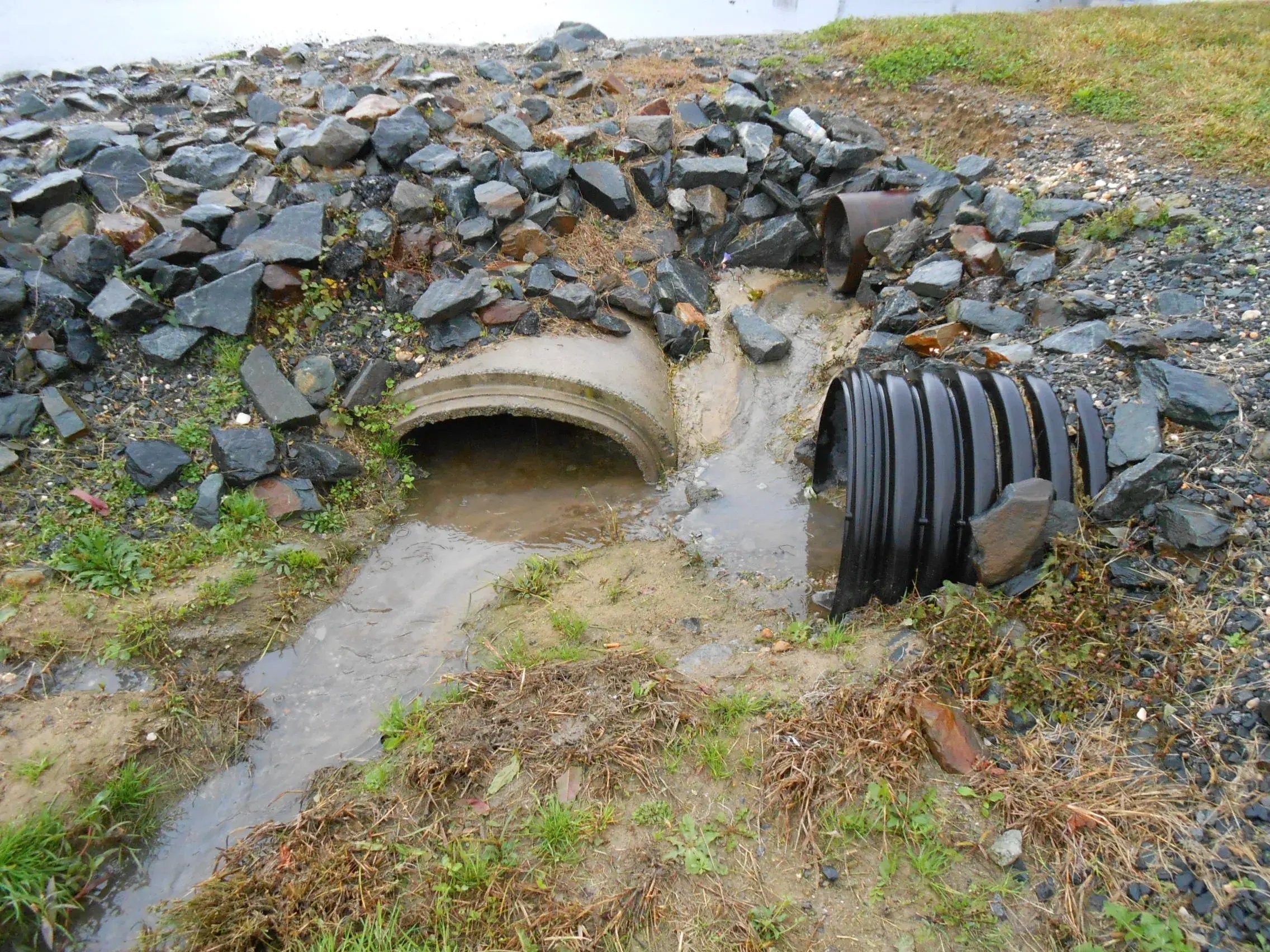
How to Check Your Industrial Activities, Exposure to Rain and Snow, and NJPDES Permit Applicability Before NJDEP Asks
If rain lands on your yard, runs past a stockpile or a forklift lane, and flows into a storm drain or a ditch, the New Jersey Department of Environmental Protection (NJDEP) may treat that runoff as an industrial discharge that needs a permit. Whether yours does comes down to three questions: what your facility does, whether any of that work or material sits outside where rain and snowmelt can touch it, and where the water goes when it leaves your property. If your type of operation is on the regulated list and something industrial is exposed to the weather, you generally need coverage under a New Jersey Pollutant Discharge Elimination System (NJPDES) stormwater permit. If everything stays inside permanent buildings, you may be able to file a certification instead, and if your runoff goes to a sanitary or combined sewer, a different set of rules applies.
This article takes those questions in order. We'll start with the industrial activities NJDEP regulates, then cover what counts as exposure, then show how the basic permit, the industry-specific permits, and the no exposure option fit together. We'll also cover what happens when NJDEP asks about a site that never applied. If you'd rather talk it through with people who work with the New Jersey permit categories every day, you can reach out to RMA at any point.
Table of Contents
TL;DR
A New Jersey facility needs an industrial stormwater permit when its operations fall into a regulated category, industrial materials or activities are exposed to rain, snow, or runoff, and the water leaves through a storm drain, ditch, or the ground instead of a sanitary or combined sewer. A facility with everything inside permanent buildings can file a Permanent No Exposure Certification instead of getting a permit. Everyone else lands on the Basic Industrial Stormwater General Permit (5G2), an industry-specific general permit, or an individual permit. Many offices, retail stores, and data centers aren't on the regulated list, but your industry classification code and what you do on site decide it.
Why Does NJDEP Regulate Industrial Stormwater Runoff in New Jersey?
Rain on its own isn't the concern. The concern is what rain picks up on the way across a facility: oil from equipment, metals from scrap and stockpiles, dust and sediment from yards, cleaning chemicals, and anything else left outside. NJDEP runs its stormwater rules through NJPDES, the state's version of the federal NPDES program, under the New Jersey Water Pollution Control Act and rules at N.J.A.C. 7:14A. Most business owners have never heard of any of it until a letter shows up.
The rules aim at what they call a "stormwater discharge associated with industrial activity." In plain terms, that's runoff from the parts of a site tied to manufacturing, processing, or raw material storage. The federal definition, which New Jersey's program builds on, includes plant yards, roads and rail lines that carriers of materials and waste use, loading and shipping areas, material handling sites, waste areas, equipment storage, and spots where past industrial work left significant materials exposed. Office buildings and their parking lots sit outside the definition as long as their drainage doesn't mix with runoff from the industrial areas. Our guide to stormwater associated with industrial activity goes through the definition piece by piece, and our overview of NJPDES stormwater permit requirements for New Jersey facilities covers what a permit asks of you once you have one.
Which Industrial Activities Need a New Jersey Stormwater Permit?
The first question is whether your type of operation is on the regulated list. The list is built around Standard Industrial Classification (SIC) codes, the four-digit numbers that describe a business's primary activity, and it's written into the federal stormwater rule that New Jersey's program works from. You can usually find your code on an old permit application, an insurance policy, or a state business filing. The table below groups the regulated categories in plain words.
| Category |
What's included |
What to know |
| Heavy manufacturing and processing |
Paper, chemicals, petroleum and coal products, stone, clay, glass, and concrete products, primary metals, leather tanning, shipbuilding, and certain lumber and wood operations |
Concrete, asphalt, and metals plants land here, and several have their own NJDEP permits |
| Other manufacturing and warehousing |
Food and beverage, textiles, apparel, furniture, printing, rubber and plastics, fabricated metal products, machinery, electronics, and instruments, plus public warehousing and storage (SIC 4221 through 4225) |
Many distribution centers carry wholesale or retail codes that aren't on the list, so check yours |
| Mining and quarrying |
Active or inactive mines and quarries (SIC 10 through 14), plus oil and gas operations |
Runoff that never touches overburden, raw material, or products can be exempt |
| Waste facilities |
Hazardous waste treatment, storage, or disposal facilities, plus landfills, land application sites, and open dumps that receive or have received industrial waste |
Solid waste and recycling approvals are separate programs with their own rules |
| Recycling |
Metal scrapyards, battery reclaimers, salvage yards, and auto junkyards (SIC 5015 and 5093) |
New Jersey has dedicated scrap metal and vehicle recycling permits |
| Power generation |
Steam electric power generating facilities, including coal handling sites |
Which permit applies depends on the site, so confirm with NJDEP |
| Transportation |
Trucking, rail, water transportation, airports, and similar operations (SIC 40 through 45 and 5171), but only the parts with vehicle maintenance shops, fueling, equipment cleaning, or airport deicing |
The maintenance bay and wash area count, the staff parking lot doesn't |
| Sewage treatment works |
Plants with a design flow of 1.0 million gallons a day or more, or ones required to run an approved pretreatment program |
Smaller plants generally fall outside this category |
Now look at what's missing. Offices, retail stores, car dealerships, data processing, and most service businesses don't appear on the list, which is why plenty of body shops, quick-lubes, and data centers don't need an industrial stormwater permit. The caveat is that your code isn't the whole story. A business with a manufacturing line, a scrap pile, or a vehicle maintenance operation can pick up coverage through that activity, and NJDEP keeps the authority to require a permit for any discharge that contributes to a water quality problem. Our article on who needs a stormwater permit walks through more examples. Construction activity is its own category with its own permits, and we come back to it in the section on eliminating exposure.
What Counts as Exposure to Stormwater at a New Jersey Facility?
Exposure means industrial materials or activities are outdoors where rain, snow, snowmelt, or runoff can reach them. The definition of industrial materials and activities is broad. It covers machinery, raw materials, intermediate products, by-products, final products, and waste, along with material handling, which includes storing, loading, unloading, and moving any of them around the site.
The federal no exposure checklist is a good way to picture it. A facility has to confirm that none of the following sit in the weather now or will in the foreseeable future: machinery or equipment used, stored, or cleaned outdoors, along with residue left where it was cleaned; spills or leaks on the ground or in storm drain inlets; leftover materials or products from past industrial activity; material handling equipment other than well-maintained vehicles; and materials during loading, unloading, or transport. The list continues with materials or products stored outdoors, open, deteriorated, or leaking drums, barrels, and tanks, materials handled or stored on roads or rail the facility maintains, waste outside covered, non-leaking containers, process wastewater applied or disposed of without a permit, and visible residue from roof stacks and vents showing up in the runoff.
A pallet yard, a dumpster with a bad lid, a staging lane where forklifts set down loads, and a drum on a pad out back are all exposure. Our article on what no exposure means covers the concept in general terms. New Jersey's version of the test is narrower than the federal one, which we cover in the no exposure section below.
Which NJPDES Industrial Stormwater Permit Fits Your Facility?
New Jersey doesn't use one catch-all industrial stormwater permit. NJDEP offers a basic general permit, a set of industry-specific general permits, individual permits, and the no exposure exclusion. A general permit is a single master permit that NJDEP wrote once, and facilities that qualify apply for authorization under it by submitting a Request for Authorization (RFA). An individual permit is written for one specific facility. Landing on the wrong one is common, so the table below shows who each one fits.
| Permit |
Who it fits |
| Basic Industrial Stormwater General Permit (5G2) |
Regulated facilities that have eliminated, or can eliminate within six months of authorization, all exposure of industrial materials and activities, by covering them or moving them indoors |
| Concrete Products Manufacturing (CPM) |
Ready-mixed concrete, block, and brick producers, and facilities NJDEP classifies as concrete manufacturers |
| Hot Mix Asphalt Producers (R4) |
Hot mix asphalt plants |
| Mining and Quarrying Activity (R13) |
Mines and quarries |
| Sand and Gravel (RSG) |
Sand and gravel operations whose stormwater goes to groundwater with no discharge to surface water, including some previously authorized under R13 |
| Scrap Metal (SM2) |
Scrap metal processing and auto recycling facilities (NJDEP's current list shows SM2, not the original SM) |
| Vehicle Recycling (RVR) |
Vehicle recycling and dismantling operations |
| Wood Waste Recycling and Leaf Composting (WRC) |
Wood waste recyclers and leaf composting sites |
| Individual NJPDES permit |
Regulated facilities that can't eliminate exposure and don't fit any industry-specific general permit |
The 5G2 is the catch-all for regulated facilities without an industry permit of their own, and the six-month window is the deciding line. If you can't get materials and activities covered or indoors in that time, and no industry permit fits, you're looking at an individual permit, which we cover in our article on individual NJPDES industrial permits. For the common categories, we have detailed guides to the 5G2 basic industrial stormwater permit, the SM2 scrap metal permit, and stormwater permits for concrete plants. For a broader comparison, our article on general, individual, and no-exposure permit types helps.
Both the 5G2 and the industry-specific general permits require a Stormwater Pollution Prevention Plan (SPPP) with best management practices (BMPs) to eliminate or minimize exposure of source material to stormwater. SPPP is New Jersey's term for the written plan that many other states call a SWPPP, and our explainer on stormwater pollution prevention plans covers what goes in one. Sampling, reporting, and inspection requirements differ from permit to permit, and some permits require no sampling at all, so read the version of the permit currently in effect on NJDEP's site before assuming anything. Whoever walks the yard and keeps the plan current also benefits from training, and our online environmental training library is there for that.
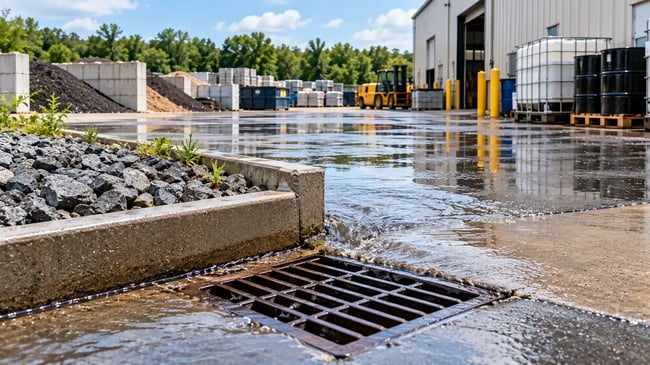
Where Does Your Stormwater Go, and Why Does It Change the Permit Answer?
A permit question is also a plumbing question. NJDEP's stormwater rules cover discharges to surface water, like streams, ponds, and the storm drains that lead to them, and they also reach discharges to groundwater through basins, dry wells, or the ground itself. The Sand and Gravel (RSG) permit exists for exactly that situation, where stormwater goes to groundwater and nothing goes to surface water.
Sewers change the answer. Under N.J.A.C. 7:14A-24.2, stormwater that goes to a sanitary or combined sewer system isn't covered by the stormwater subchapter's industrial permit rules, and combined sewer systems that discharge to state waters are handled as point sources with their own NJPDES permits. Many older New Jersey cities have combined sewers, so a facility that drains to one may answer to the local sewerage authority's rules instead of, or alongside, an NJPDES stormwater permit. We won't tell you flatly that a site in a given city does or doesn't need a permit, because it depends on where that site's drains lead. Trace the drains and confirm with the authority.
Shared drainage adds another layer. If your runoff passes through a town's municipal separate storm sewer system (MS4), the operator can ask for a copy of any no exposure certification you file. Where several operators share a private storm sewer, NJDEP can issue one authorization to the operator of the portion that reaches surface water, with each discharger as a co-permittee, or issue separate authorizations to each discharger. Because the rules put the duty on the operating entity of the facility, on a leased or shared site it's worth confirming who counts as that entity. Runoff mixed with process wastewater is a different question than pure stormwater, and our article on the difference between stormwater and process water explains the split.
Can a New Jersey Facility Avoid a Stormwater Permit With Permanent No Exposure?
Yes, if everything industrial really is inside. Under N.J.A.C. 7:14A-24.6, an operating entity can skip the permit for discharges made up entirely of stormwater when there's "Permanent No Exposure." That means all industrial materials are stored, and all industrial activities are performed, inside a permanent building or structure anchored to a permanent foundation and completely roofed and walled. A tent, a tarp, or a canopy with open sides doesn't meet that test.
The exceptions are narrow. Dumpsters and similar rigid containers used only for routine collection of waste are fine if they're watertight, leak proof, and covered, with no visible residue on the outside. Adequately maintained vehicles used in material handling are allowed, and so is pipe that isn't deteriorated and doesn't leak. New Jersey's list is shorter than the federal one, which also lets tightly sealed drums and some final products sit outside, so don't assume a federal checklist from another state transfers here.
The conditions that come with the exclusion are worth knowing before you file:
- You submit the signed Permanent No Exposure Certification form to NJDEP once every five years.
- NJDEP can inspect to verify the claim and make its inspection reports available to the public on request.
- The exclusion covers the whole facility, not individual outfalls or drainage areas.
- It isn't transferable, so a new operating entity has to file its own certification.
- If materials or activities become exposed, the exclusion ends and the discharge is treated as an unpermitted stormwater discharge until you get a permit. If you see a change coming, apply for a permit before it happens.
- NJDEP can deny the exclusion and require an application if a discharge contributes to a surface water quality problem.
What If You Already Have a Permit and Want to Switch?
A facility that already has authorization can pursue the exclusion, but NJDEP inspects first. Until NJDEP finalizes a modification or revocation, the permit and all its conditions, including any monitoring and reporting, stay fully enforceable. Don't stop sampling or inspections the day you mail the form.
What About Building Your Way to No Exposure?
Moving operations indoors is often a construction project. Roofing over a work area or putting up a new building brings building permits, soil erosion and sediment control approvals, and possibly construction stormwater coverage, none of which RMA prepares. Your engineer, your contractor, or a soil erosion specialist handles that piece, and construction discharges aren't eligible for the no exposure exclusion anyway. Once the facility is running, though, you'll still need the right operating paperwork, whether that's a no exposure certification, a 5G2 or industry permit, and the plan and inspections that come with it. That's where we help, and we can also help you figure out what the construction phase needs and point you toward the right people for it.
How Do You Walk Through the New Jersey Stormwater Permit Decision?
Put the pieces together in this order. First, check your SIC code and your on-site activities against the regulated list. Second, look hard at your yard and decide whether anything industrial is exposed. Third, trace where the water goes. Fourth, match what you found to a permit. The table below shows the usual outcomes.
| Your situation |
Likely path |
Next step |
| Office, retail, data processing, or most service work, and nothing on the regulated list happens on site |
Probably no industrial stormwater permit |
Confirm your code and activities, and keep an eye on anything that changes |
| Regulated activity, and everything sits inside permanent, fully roofed and walled buildings |
Permanent No Exposure Certification |
Walk the site, then file the certification and calendar the five-year renewal |
| Regulated activity, some exposure, no industry permit fits, and you can cover or move everything within six months |
5G2 |
Build the SPPP and submit the RFA |
| Concrete, asphalt, quarry, sand and gravel, scrap, vehicle recycling, or wood and leaf recycling |
The matching industry-specific general permit |
Confirm which permit version is current and which one fits your water's destination |
| Regulated activity, exposure you can't eliminate, and no industry permit fits |
Individual NJPDES permit |
Plan for a longer application process and talk to NJDEP early |
| All runoff goes to a sanitary or combined sewer |
Different rules, often the sewerage authority's |
Confirm where each drain leads and what the authority requires |
Most real facilities don't fit one row perfectly. A manufacturer might keep production indoors but store scrap, pallets, and a few drums outside, which puts it in the 5G2 row until the outside storage moves. A trucking yard might have a maintenance bay that triggers coverage and a parking area that doesn't. When your site straddles two rows, treat the more demanding one as your answer until someone confirms otherwise. Our article on how long it takes to get a New Jersey stormwater permit helps you plan the timing once you know where you land.
What Happens If NJDEP Asks About a Facility Without a Stormwater Permit?
NJDEP doesn't have to wait for you to apply. Under N.J.A.C. 7:14A-24.5, the department can send a written notice to anyone it believes owns or operates a facility with an industrial stormwater discharge. The notice can ask you to declare your intent to obtain a permit, submit a Permanent No Exposure Certification, or provide information explaining why you don't need a permit. It also has to briefly explain why NJDEP thinks you may be covered, and the response can be required on a department form with a certification attached. NJDEP can extend the response time for good cause, but the rules don't say a request pauses any deadline to apply.
If you need a permit and don't have one, the discharge is an unpermitted discharge of stormwater associated with industrial activity, and it stays subject to enforcement until authorization is in place. We won't quote penalties here, because they depend on the violation, its duration, and NJDEP's enforcement policies in effect at the time. If NJDEP has already sent a notice of violation or a penalty assessment, bring in an environmental attorney alongside your consultant. Our article on common NPDES permit problems shows what we see most often once a facility starts sorting this out.
How Does RMA Help With New Jersey Industrial Stormwater Permits?
We're based in New Jersey, and we work with NJDEP and the state's permit categories regularly. For a facility trying to figure out where it stands, we'll look at your activities, your exposure, and your drainage, tell you which path fits, and tell you straight if you don't need a permit at all. If you do, we help with the operating side: the right 5G2, industry-specific, or individual permit, the SPPP, inspections and certifications, and training for your team. We don't prepare construction-phase permits or approvals, but we can help you work out what that phase needs and who to talk to.
There's no pressure and no obligation. You can call us at 888-RMA-0230 or fill out the form on our contact page, and one of us will review your situation and say whether we're the right fit. When you're ready, contact RMA and we'll take it from there.