Flooding Is About Too Much Water, While Industrial Stormwater Permits Are About Pollution in Runoff, and a New Jersey Business Can Have One, Both, or Neither
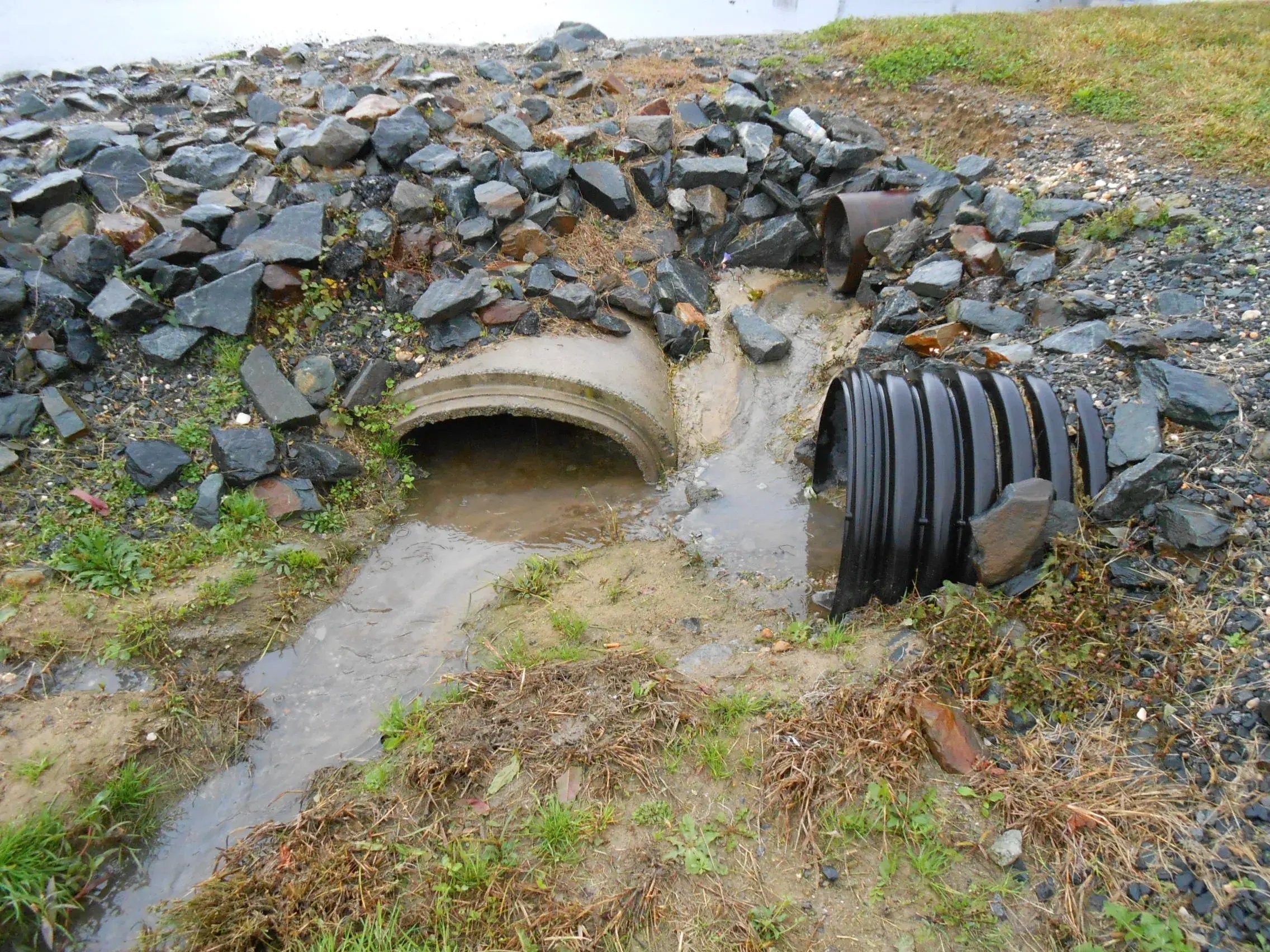
Most business owners hear "stormwater" and picture the back lot that turns into a pond every time a nor'easter rolls through. That's a real problem, but it isn't the one NJDEP means when it tells a facility it needs a stormwater permit. Flooding is about how much water shows up and where it can go. A stormwater permit is about what that water picks up on the way across your site.
The two problems have different rules, different agencies, and different fixes, and a facility can have either one without the other. This article explains where each one comes from, who regulates it, how New Jersey's stormwater management rules for new development fit in, and how to tell which situation you're in. If you're not sure, you can always reach out to RMA and we'll tell you whether a permit applies to your site.
Table of Contents
TL;DR
Flooding and industrial stormwater permits are two different problems. Flooding is about water quantity and local drainage, and it's handled mostly by your town, with NJDEP's land use rules covering development near waterways and larger projects. An industrial stormwater permit is about pollution in runoff, and it comes from NJDEP's water quality program under NJPDES. A business can have a flooding problem with no permit obligation, a permit obligation with dry feet, both at once, or neither. What decides it is what you do outdoors and where your site's water goes, not how wet your lot gets.
What Is the Difference Between Flooding and Industrial Stormwater Permits in New Jersey?
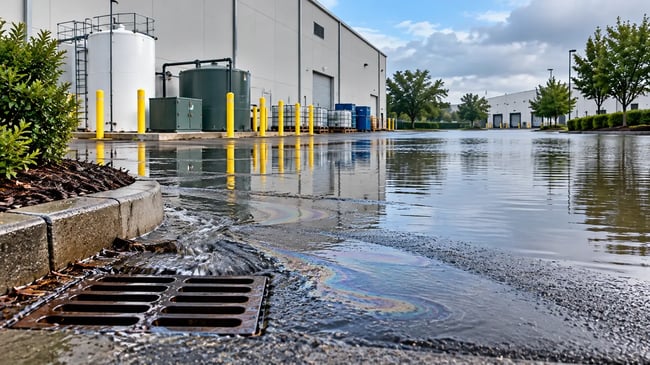
New Jersey uses the word stormwater for two separate things, and the shared vocabulary causes most of the confusion. When your parking lot fills up after a heavy storm, that's a flooding and drainage problem. When NJDEP says your facility needs a stormwater permit, that's a pollution problem. The first is about volume and speed. The second is about whether rain that touches your industrial materials and activities carries contaminants off site.
The two also have different owners. Flooding is mostly handled locally, through your town's engineer and public works department, with NJDEP's land use programs stepping in for work near streams and for larger development projects. Industrial stormwater permits come from NJDEP's water quality program under the New Jersey Pollutant Discharge Elimination System (NJPDES), the state's version of the federal NPDES program. A facility can have a serious flooding problem and no permit obligation at all. It can also have flawless drainage and still need a permit because of what's stored outside.
| |
Flooding and Drainage |
Industrial Stormwater Permit |
| What it's about |
How much water arrives and where it goes |
What's in the runoff leaving your site |
| Who deals with it |
Your municipality, with NJDEP land use programs for streams and larger projects |
NJDEP's water quality program through NJPDES |
| Main rules |
Flood Hazard Area Control Act rules (N.J.A.C. 7:13) and Stormwater Management rules (N.J.A.C. 7:8) |
NJPDES rules (N.J.A.C. 7:14A) |
| What triggers it |
Where your site sits and what you're building or changing |
What industrial activity you run and whether it's exposed to rain |
| Typical fix |
Grading, drainage, detention, elevation |
Covering or moving materials, housekeeping, a written plan, inspections |
What Counts as a Flooding or Drainage Problem for a New Jersey Business?
Flooding shows up in a few different forms. Some sites have chronic ponding because the grading is wrong or a storm drain is undersized or clogged. Others sit next to a creek or river that overtops its banks. Some have a neighbor's runoff coming across the property line. Each one is a water quantity problem, and none of them involves a pollution permit by itself. The first calls are usually your municipal engineer or public works office, and a civil engineer if the fix involves regrading or new drainage.
Where a waterway is involved, NJDEP gets involved too. Its Flood Hazard Area Control Act rules at N.J.A.C. 7:13 regulate development, fill, and clearing in flood hazard areas and riparian zones along streams and rivers. Many activities in those areas need an NJDEP authorization, a few minor ones qualify as permit-by-rule, and building elevation requirements are tied to the state's flood elevation standards rather than only the FEMA maps. If you're planning to add a building, a pad, or a bridge near a stream, that's a land use question to settle with your engineer before anything else.
RMA doesn't handle flood hazard area permits, drainage design, or any construction-phase approvals. We mention them here because they're the right place to start when the problem is water you can see standing on your site. What we handle is the pollution side, once the facility is up and running.
What Are New Jersey's Stormwater Management Rules for New Development?
This is where the vocabulary really trips people up. N.J.A.C. 7:8 is called the Stormwater Management rules, but it isn't an operating permit. It sets design and performance standards for new development, covering water quantity, water quality, and groundwater recharge. Those standards apply to what the rules call a "major development," which is a project that disturbs one acre or more of land or creates a quarter acre or more of regulated impervious surface (a quarter acre is 10,890 square feet). Municipalities apply them through their planning and zoning approvals, and NJDEP applies them through its own land use permits. A town can also require compliance for smaller projects through its own ordinances and the Residential Site Improvement Standards.
In practice, this means a new plant, a building addition, or a big paving project often triggers detention basins, rain gardens, or other drainage features designed by an engineer. Those features are meant to control how much water leaves a developed site and how clean it is at the design stage. Construction itself brings separate requirements, including construction stormwater coverage under NJDEP's 5G3 general permit and soil erosion and sediment control certification through the local Soil Conservation District. RMA doesn't prepare any of those. Most owners work with their engineer, contractor, or a soil erosion specialist on that piece.
Once the building is finished and operating, a different set of obligations begins. The detention basin your engineer designed doesn't tell NJDEP whether your outdoor storage is polluting runoff, and it doesn't replace an industrial stormwater permit. Facilities that meet the rules for development approval can still need NJPDES coverage the day they open.
What Is an NJPDES Industrial Stormwater Permit?
Under New Jersey's Water Pollution Control Act and the NJPDES rules at N.J.A.C. 7:14A, discharging stormwater from an industrial facility is unlawful unless it's authorized by a permit or the facility qualifies for the no exposure exclusion. The rule targets "stormwater associated with industrial activity," meaning rain or snowmelt that comes into contact with industrial materials, equipment, or operations and then leaves the site. Whether your facility is covered depends on its industrial classification, what happens outdoors, and where the water ends up.
Most permitted facilities are authorized under a general permit rather than an individual one. They submit a Request for Authorization to NJDEP and then maintain a stormwater pollution prevention plan, known as a SWPPP (you'll also hear it called an SPPP, an SP3, or just a stormwater plan). The plan identifies what's exposed, what could pollute runoff, and what the facility does to prevent that. The permit also calls for inspections and an annual certification to NJDEP that the inspection happened and the plan is current. Sampling requirements vary by permit category, and some categories require none. Our guide to stormwater associated with industrial activity walks through what counts, and our explainer on what a SWPPP is covers the plan itself.
Notice what's missing from all of that: how much rain falls, how deep the water gets, or whether anyone has ever been flooded. A permit is about exposure and pollutants. A dry, well-graded site that stores scrap or bulk materials outdoors can need one, and a flood-prone site with everything indoors might not.
Which NJPDES Stormwater Permit Applies: 5G2, an Industry Permit, or No Exposure?
New Jersey doesn't have one general industrial stormwater permit. It has a basic permit, several industry-specific ones, individual permits, and an exclusion for facilities with no exposure. Readers often end up on the wrong one, so here's how the options line up.
| Option |
Who it generally fits |
| Basic Industrial Stormwater General Permit (5G2) |
Regulated industrial facilities that have eliminated, or can eliminate within six months of authorization, exposure of industrial materials and activities to stormwater |
| Industry-specific general permits |
Operations that can't remove exposure because of what they do: concrete products manufacturing (CPM), hot mix asphalt (R4), mining and quarrying (R13), sand and gravel (RSG), scrap metal (SM and SM2), vehicle recycling (RVR), and wood waste recycling and leaf composting (WRC) |
| Individual NJPDES permit |
Facilities that don't fit a general permit, or that NJDEP requires to hold an individual permit |
| No exposure exclusion |
Facilities where industrial materials and activities are fully protected from rain and snowmelt |
The reason this matters for the flooding question is that 5G2 is built around what NJDEP calls "remove and cover." The goal is to get industrial materials out of the rain, not to manage how much rain falls. Our articles on the 5G2 permit and individual NJPDES permits go deeper on each, and our piece on what no exposure means explains the exclusion.
Plenty of businesses don't need any of them. Warehouses, data centers, body shops, dealerships, and quick-lube shops often fall outside the regulated categories or can qualify for no exposure, depending on what actually happens outdoors. That's a site-specific answer, not a blanket rule, and we'd rather tell you that up front than sell you a permit you don't need. Our guide on who needs a stormwater permit is a good place to start checking.
Can a Business Have a Flooding Problem, a Stormwater Permit Problem, Both, or Neither?
Yes to all four. The table below shows how the two problems can sit independently of each other.
| Situation |
Example |
Who to call first |
| Flooding only |
A distribution building with everything indoors, on a low lot that ponds after heavy rain |
Your municipal engineer and a civil engineer |
| Permit only |
A hot mix asphalt plant on well-drained ground with outdoor stockpiles |
An environmental consultant who handles NJPDES permits |
| Both |
A concrete plant beside a creek, with materials stored outdoors and a yard that floods |
Both: an engineer for drainage and flood rules, a consultant for the permit |
| Neither |
An office or light assembly operation, all indoors, on a site with good drainage |
Nobody, as far as these two issues go |
One thing to watch is that fixing one problem can touch the other. A new detention basin built to solve flooding can end up receiving runoff from an industrial yard, which puts the basin's contents and outlet in play for your stormwater plan. Likewise, moving materials under cover to satisfy a permit changes your impervious area and roof runoff, which your engineer will want to know about. Talk to both specialists before you commit to either fix.
How Do Municipal Stormwater Fees and Sewer Rules Fit In?
There's a third layer that has nothing to do with either problem. New Jersey municipalities hold their own NJDEP permits for the storm sewer systems they run, and those obligations fall into Tier A and Tier B categories. To pay for the work, a small but growing number of towns, including New Brunswick, Maplewood, and Raritan Township, have set up stormwater utilities that charge property owners a fee based on impervious surface. If you own a lot of pavement and roof, that bill can be noticeable.
That fee is a local charge for the town's stormwater costs. It isn't an NJDEP permit, it doesn't count as permit coverage, and paying it doesn't help with flooding on your property. Likewise, a facility's own NJPDES obligation doesn't disappear because the town charges a fee. Your town's website or public works office can tell you whether a utility exists where you operate.
Older cities with combined sewers add one more wrinkle. Where a site's runoff goes to a sewerage authority instead of directly to a waterway, the authority's rules can apply instead of, or alongside, an NJPDES stormwater permit. We'd never tell you flatly that a facility in a particular city does or doesn't need a permit. It depends on where your site drains, and the right move is to confirm that before you decide.
How Does Flooding Affect Your Stormwater Pollution Prevention Plan?
Flooding and permits do meet in one place. When a yard floods, the water can carry whatever's sitting in it. Stockpiles, drums, scrap, and loose equipment can all move, and a flooded site can send exactly the kind of pollutants a stormwater permit is meant to keep out of waterways. If you already hold permit coverage, your plan is the right place to account for it by deciding where materials and containers sit and how they're protected when the weather turns bad.
That's a practical point more than a regulatory one. Raising materials, covering them, or moving them out of the lowest part of the yard helps with both problems at once. Tanks and oil containers in flood-prone areas deserve the same attention. We cover the storm side of this in our article on stormwater permits and hurricanes, and training your yard crew on housekeeping through our online training library is an easy way to keep the plan working day to day.
How Can RMA Help With New Jersey Stormwater Permits?
We're a family-run firm based in New Jersey, and we've worked with NJDEP's industrial stormwater program for decades. If you're trying to figure out whether you need coverage, we'll look at what's happening outdoors, tell you which permit fits (or whether none does), and write the plan and handle the paperwork if you do need one. If the answer is that you don't need a permit, we'll say so and leave it there. Our NPDES pricing page gives you a ballpark before you ever talk to us.
We don't handle flood hazard area permits, drainage design, or construction-phase approvals, so for those you'll want your engineer, contractor, or a soil erosion specialist. We can help you work out what the construction phase involves and point you toward the right people, and then we pick up once the facility is operating. There's no pressure or obligation. You can call us, email, or fill out the form on our website, or just contact RMA with a question and we'll give you a straight answer.