How New Jersey's WRC General Permit Covers Wood Waste Recycling and Leaf Composting Runoff, and Where to Start
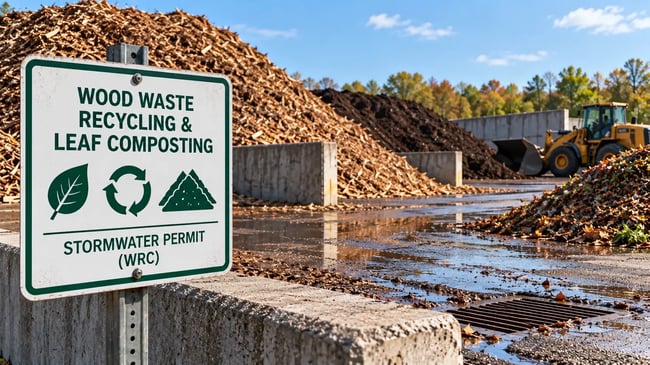
If you grind brush into mulch, run a municipal leaf yard, or compost leaves and wood chips outdoors, you've got big piles of organic material sitting in the rain. Rain that falls on those piles and then leaves your site is regulated by the New Jersey Department of Environmental Protection (NJDEP), even though most people running these yards think of themselves as recyclers, not industrial dischargers. The stormwater permit is also separate from the recycling approval you already hold, which is where a lot of the confusion starts.
The short answer is that if you receive and process clean wood waste or compost leaves in New Jersey, you most likely need coverage under the Wood Waste Recycling and Leaf Composting general permit, known as the WRC permit, and NJDEP has the final say on edge cases. In this article we'll walk through what the WRC permit is, which private yards and municipal leaf sites it typically covers, why runoff from piles gets this much attention, and the practical first steps. If you'd rather talk it through with someone, you can reach out to RMA anytime.
Table of Contents
TL;DR
New Jersey has a stormwater general permit, called WRC, written for sites that receive and process clean wood waste or compost leaves, grass clippings, and wood chips. It applies to both private yards and municipal leaf sites, and it comes with a stormwater plan, a drainage control plan, inspections, and an annual report. It's separate from your recycling center approval, so having one doesn't mean you have the other. Start by confirming exactly what you take and do on site, then check whether you already hold WRC authorization.
What Is the New Jersey WRC Stormwater Permit for Wood Waste Recycling and Leaf Composting?
NJPDES stands for the New Jersey Pollutant Discharge Elimination System, the state program that regulates discharges to water, including rainwater that runs off an industrial site. A general permit is a standard permit NJDEP writes once for a whole category of facilities. Instead of negotiating a custom permit, you apply for coverage under the general permit and follow its terms. The WRC permit (NJPDES permit number NJ0324183) is that general permit for wood waste recycling and leaf composting, and NJDEP describes it as an alternative to getting an individual NJPDES stormwater permit.
The permit covers two kinds of activity. The first is recycling in which tree branches, limbs, trunks, brush, and other wood waste are received, stored, processed, and transferred, as long as the wood hasn't been chemically treated, glued, dyed, or painted. Processing is limited to chipping, grinding, screening, and size reduction. The second is composting, where grass clippings, leaves, and wood chips (again, not chemically treated, glued, dyed, or painted) are received, stored, processed, and transferred. If your operation fits those descriptions, WRC is the permit NJDEP built for you.
The permit has been through a renewal. NJDEP issued the current version in December 2025, it took effect January 1, 2026, and it runs through the end of 2030. It replaced the first version of the permit, which took effect in 2023. You'll find the current permit and application materials on the NJDEP WRC permit page, and it's worth reading the permit text itself rather than relying on anyone's summary, ours included.
Who Needs a WRC Stormwater Permit for a Mulch Yard or Leaf Composting Site?
The permit follows what happens on your site, not what you call yourself. Private mulch and wood recycling yards use it, and so do municipal leaf composting facilities. Several New Jersey townships post their WRC stormwater plans publicly, and NJDEP set aside $1.35 million in federal American Rescue Plan money to help public facilities prepare their plans, with applications closing on August 15, 2025. Public sites are clearly a big part of the group this permit was written for.
The table below shows where common situations usually land. Treat it as a starting point, because the final answer depends on your exact operation and NJDEP's read of it.
| What Happens on Your Site |
Where Stormwater Coverage Usually Lands |
| You receive clean brush, limbs, and trees and chip or grind them into mulch |
The WRC general permit |
| You compost leaves, grass clippings, and wood chips |
The WRC general permit |
| A town yard stores finished compost, chips, or aggregate but does no processing |
Possibly the municipal stormwater program instead, so confirm with NJDEP |
| You take painted, treated, or glued wood, or other materials beyond clean wood and leaves |
Outside the WRC activities listed above, so another permit category or an individual permit may apply |
| You color or dye mulch on site |
Not listed in the WRC activities we reviewed, so ask NJDEP before assuming WRC covers it |
| Your site is in the Pinelands Area |
WRC includes separate provisions for Pinelands sites, so read those sections closely |
If your site lands in one of the gray rows, our guide to general, individual, and no-exposure permits explains how those categories work, and our article on whether you need an individual NJPDES industrial permit covers the case where a general permit doesn't fit.
Why Does Stormwater Runoff From Mulch, Wood Chip, and Leaf Piles Matter?
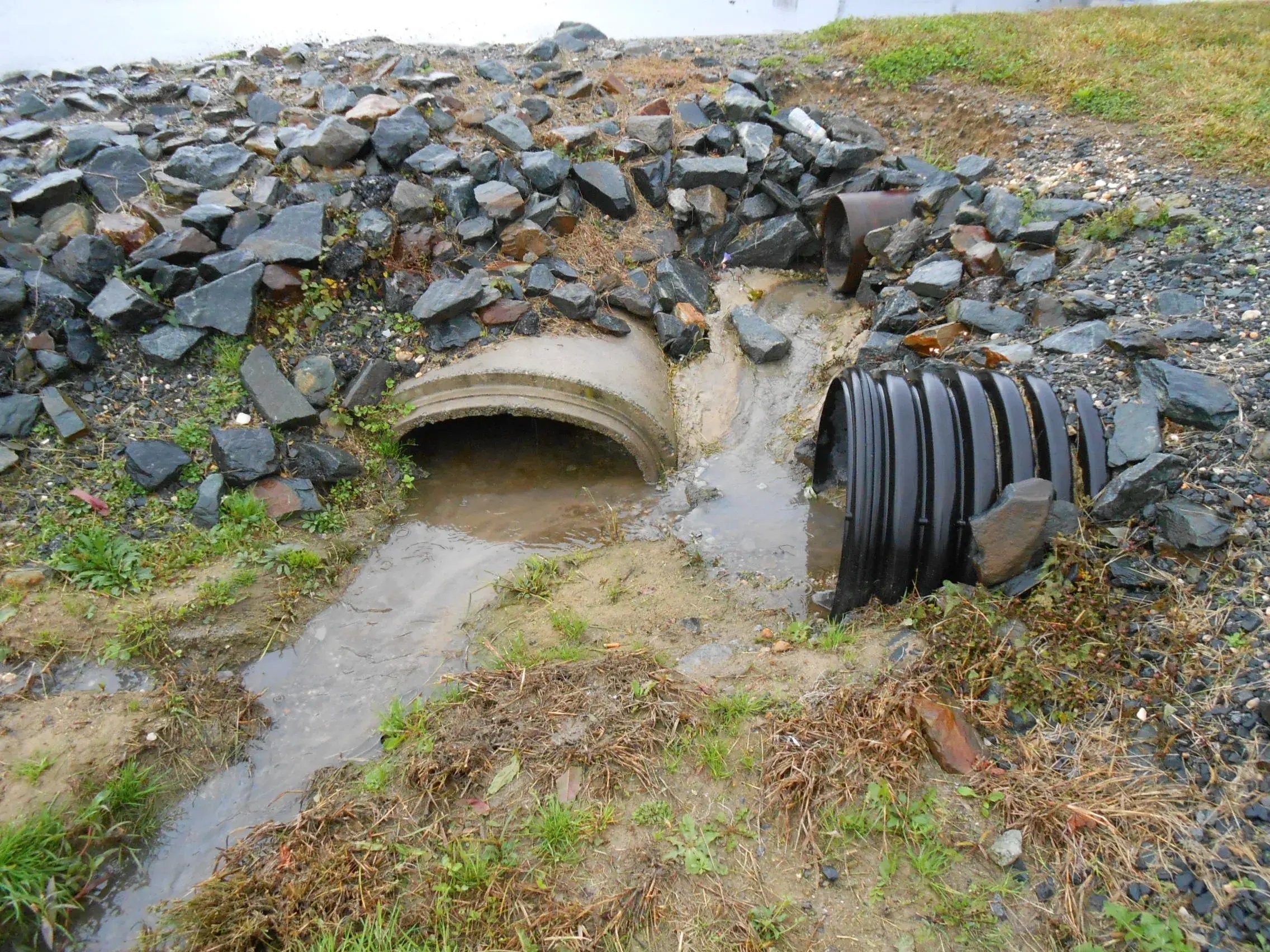
A pile of wood chips or leaves breaks down, and rain carries what comes out of it. The water that runs off a pile is often dark brown, like weak tea, and it carries dissolved organic material, nutrients, and fine solids. When that water reaches a stream, the organic material uses up oxygen as it breaks down, which stresses fish and other aquatic life. Nutrients can feed algae growth, and fine solids can cloud a waterway or settle into a ditch and clog it.
The WRC permit covers discharges to both surface water and ground water, which brings in yards built on porous ground. Runoff from a pile doesn't have to reach a stream to be a problem. It can soak into the ground under or beside the piles, flow across a driveway into a storm drain, or leave the property and run onto a neighbor's land. Compost piles that are actively breaking down tend to produce the strongest runoff, but fresh leaf deliveries and big wood chip stockpiles contribute too.
Equipment is part of the picture. Grinders, screeners, and loaders run on diesel and hydraulic fluid, and a leak or a fueling spill on bare ground ends up in the same runoff. Good housekeeping around equipment and fueling areas is a normal part of a stormwater plan for these sites. Our guide to stormwater best management practices covers the common controls, like berms, diversion swales, covered storage, and vegetated buffers, in plain terms.
What Does the WRC Stormwater Permit Require From Your Site?
At a high level, the permit asks you to understand your site's water, put controls in place, check that they work, and report once a year. The details live in the permit itself, and some of them depend on how your site is built, so we'll keep this section general and point you to the current permit text for specifics.
The Stormwater Plan and Drainage Control Plan
The core document is a stormwater pollution prevention plan. NJDEP calls it an SPPP, and you'll also hear it called an SP3 or just a stormwater plan. We'll use SWPPP (pronounced "swip"), the term most people know. For WRC sites, the SWPPP includes a Drainage Control Plan, which maps how water moves across your site, where it leaves, where discharge monitoring points sit, and where your source materials are stored. The plan should match the way your yard runs, with piles, processing areas, and drainage where they really are. Our article on what a SWPPP is walks through the parts of a plan if you haven't seen one.
Inspections, Monitoring, and the Annual Report
The permit also calls for annual inspections and an Annual Report Form, and it has monitoring requirements that include submitting monitoring data to NJDEP. The permit ties some monitoring provisions to site conditions, including whether the activities happen on an impervious surface, so read the current permit rather than assuming your neighbor's setup matches yours. Fees and renewal paperwork are set by NJDEP, so check the current schedule on the WRC page before you budget.
Where the permit requires sampling, we strongly recommend your own team takes the samples. They know the site, and storm sampling windows rarely line up with a consultant's calendar. We don't take samples ourselves, but we train your people to do it correctly, and our article on taking your own stormwater samples explains why that works better in practice. Our guide to stormwater visual inspections helps with the inspection side, and our online training library can bring your crew up to speed.
How Does WRC Fit With Your Recycling Approval and Other Permits?
The WRC permit handles stormwater only. Your right to operate a recycling yard comes from a separate approval from NJDEP's solid waste program, typically a Class B recycling center general approval for wood and similar materials or a Class C approval for composting yard trimmings, and many yards hold both. Those approvals set tonnage and storage limits, hours, and operating conditions. Depending on your equipment, you might also need an air permit, and NJDEP has said so in its recycling center approvals. A recycling approval doesn't give you stormwater coverage, and WRC coverage doesn't give you the right to operate, so you'll want both squared away. Our New Jersey recycling approvals resources explain that side of the picture.
Wastewater is another separate question. If your site generates process water, such as wash water or water from a treatment or processing step, that isn't stormwater and the WRC stormwater permit doesn't automatically cover it. Our article on the difference between stormwater and process water shows how to tell them apart.
If you're building a new yard or regrading an existing one, construction-phase requirements come first. In New Jersey that typically includes the construction stormwater general permit (5G3) and soil erosion and sediment control certification through the local Soil Conservation District. We don't prepare construction permits or approvals, and most owners handle that piece with their engineer or contractor. What we help with is the part that starts once the yard is running: the operating stormwater permit, the plan, the inspections, and the annual paperwork. We can also help you figure out what the construction phase needs and point you toward the right people.
What Are the First Steps to Get WRC Stormwater Coverage?
Most operators can work through these in order without hiring anyone, at least up to the point where the plan gets written.
- Write down exactly what you receive and what you do with it, including every material that comes through the gate and every processing step. Painted wood, construction debris, or anything beyond clean wood and leaves changes the answer.
- Find out whether you already hold WRC authorization. If you do, the renewed permit took effect in January 2026, so compare your plan against the current permit and NJDEP's authorization page instead of assuming nothing changed.
- Pull your recycling center approval and site plan, since the stormwater plan and the approval should describe the same site.
- Sketch how water moves across your yard, including where it enters, where it pools, and where it leaves.
- Have the plan and Drainage Control Plan prepared, then submit your application using the forms and checklists on NJDEP's WRC page.
- Train the people who run the site, so inspections and sampling happen without a scramble.
Some sites will need engineering help with drainage, especially if water leaves the property in the wrong place and the fix means regrading or building controls. We aren't an engineering firm, and if you need engineered design you'll pay engineering prices to an engineering firm. We can tell you what the permit expects so the engineer builds the right thing. Our article on how long a New Jersey stormwater permit takes gives a sense of timing, and if you're wondering whether you can do it yourself, our piece on writing your own SWPPP is honest about when that makes sense.
How Can RMA Help With WRC Stormwater Permitting in New Jersey?
We're a family-run firm based in New Jersey, and senior staff do the work on your plan instead of handing it to someone junior. For a WRC site, that usually means confirming that WRC is the right permit, preparing the SWPPP and the pieces that go with it, helping with the application, and training your team. After you're covered, we offer ongoing support, including reminders, help interpreting results, plan updates, inspection prep, and answers when questions come up. You can be as hands-on or hands-off as you like.
Cost depends on a few things: whether a plan already exists, how big and complicated the site is, how many processing and storage areas it has, and how much support you want afterward. We can give you a real number once we know your situation. We're not always the cheapest firm, and we aren't a fit for major engineering design or for buyers shopping only on lowest price or fastest turnaround. If your town engineer already has this covered, you may not need us at all. If you'd like to talk it through, there's no pressure and no obligation. You can call us, email us, or fill out the form on our website and contact RMA to start the conversation.