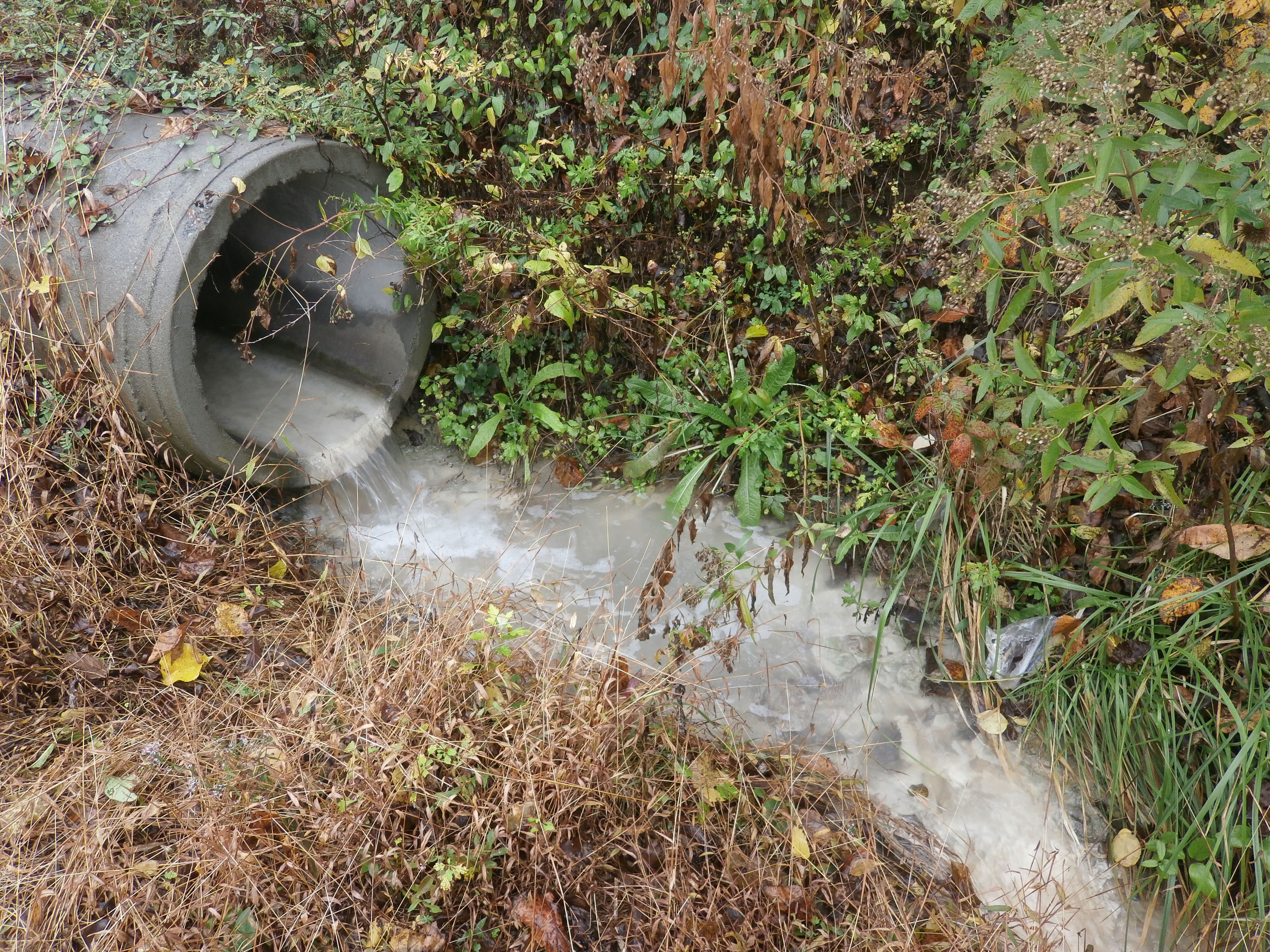
Stormwater, PPC Plans, Storage Tank Registration, Residual Waste, Tier II Reporting, and Township Land Development Approvals, in the Order You'll Run Into Them
You've picked a site, the equipment is on order, and then someone mentions that you'll need DEP permits before you can run. It's a fair thing to be surprised by. There's no single permit for a plant in Pennsylvania. Instead, you get a handful of separate requirements, handled by different offices, each with its own forms, fees, and timing, and nobody hands you the full list.
This checklist walks through what a new Pennsylvania plant typically needs to line up: township land development approval, stormwater permit coverage, a PPC Plan, storage tank registration, residual waste requirements, and Tier II reporting. We'll cover them in roughly the order you'll run into them, and we'll point out which ones your plant might not need at all. If you'd like a second set of eyes on your own list, you can reach out to RMA at any point.
Table of Contents
TL;DR
There's no single permit for opening a plant in Pennsylvania. You'll usually start with your township for land development approval, then work with DEP on stormwater coverage (PAG-03, a No Exposure Certification, or an individual permit), a PPC Plan, and registration for underground tanks over 110 gallons or aboveground tanks over 250 gallons. Residual waste rules kick in once you generate an average of more than 2,200 pounds a month, and Tier II reports go to Labor & Industry, not PEMA, by March 1 each year if you store chemicals above the thresholds. Sorting this out during design is much easier than fixing it after the equipment is installed.
Why Does a New Pennsylvania Plant Need So Many DEP Permits and Approvals?
A new plant in Pennsylvania doesn't get one permit. It gets a set of requirements, and which ones apply depends on what you make, what you store, and what leaves the building. Stormwater, storage tanks, and residual waste all run through Pennsylvania DEP, but they're separate programs with separate paperwork. Tier II chemical reporting goes to a different agency entirely, and your township sits in front of all of it with its own land development process.
The good news is that the list is finite, and most of it can be handled in parallel once you know what applies. Plenty of plants end up with a short list, because a facility with everything indoors and no large tanks can skip several items. Our guide to five key questions to determine your environmental compliance needs is a quick way to size up your own situation, and our overview of environmental compliance for manufacturing facilities covers the wider picture beyond Pennsylvania.
Not every new plant needs a consultant, either. If you run a small shop with one tank and everything under a roof, you may be able to handle this yourself, and whether you need an environmental consultant is a straight look at when paying for help makes sense.
How Do Township Land Development Approvals Affect Your Pennsylvania Plant Permits?
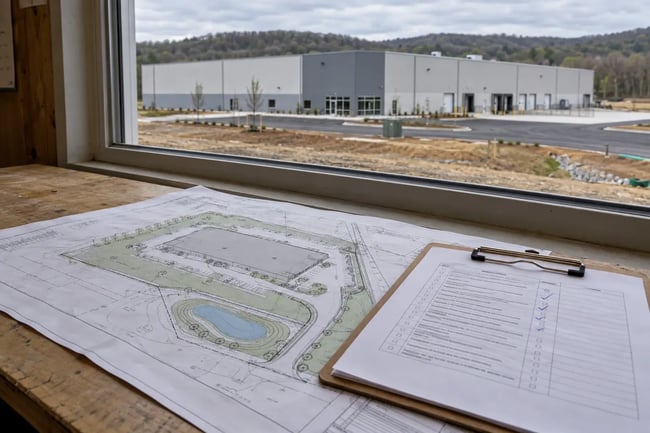
In Pennsylvania, your township or borough controls zoning and land development approval, and you generally need that approval before you break ground. Many municipalities review the site plan, access, and how stormwater will be handled on the property, and they can attach conditions. Requirements vary a lot from one municipality to the next, so a phone call to the township office early in design is the best first step, ahead of any checklist, ours included.
The local process and the state permits affect each other. DEP stormwater coverage depends on a settled site layout, because your drainage, outfalls, and material storage areas all go into the application. If the township asks you to move a building or add a basin, the maps and plan you built for DEP change too. Construction earth disturbance has its own stormwater permitting through DEP and your county conservation district, which is separate from the industrial permit we cover below, so ask your site engineer how that is being handled.
Which Pennsylvania Stormwater Permit Does a New Plant Need?
Stormwater is usually the first state permit on the list for an industrial plant, because it's tied to your site layout. Pennsylvania gives you three routes. If all your industrial materials and activities will be indoors or under shelter, you may qualify for a No Exposure Certification, which DEP has to approve and which you renew every five years. If anything will sit outside, most plants use the PAG-03 general permit, which means submitting a Notice of Intent to DEP along with a PPC Plan. If your site discharges to High Quality or Exceptional Value waters, PAG-03 and No Exposure aren't available, and you'd need an individual permit, which takes longer and costs more.
For PAG-03, DEP charges a $500 application fee and a $500 annual fee. Plan to have coverage in place before industrial activity starts, and build in review time, so you're not scheduling opening day around a permit that hasn't been approved yet. We've written up how long it takes to get PAG-03 coverage in Pennsylvania, and which NPDES permit you need explains the three options in more detail. If you're thinking about doing the paperwork yourself, read can you get a PAG-03 permit yourself first.
What Is a PPC Plan, and When Do You Write One for a New Pennsylvania Plant?
The PPC Plan is Pennsylvania's planning document for stormwater. PPC stands for Preparedness, Prevention, and Contingency, and the plan lays out how your plant keeps pollutants out of stormwater and what you'll do if something goes wrong. It covers your site maps, drainage and outfalls, industrial activities and materials, stormwater controls, inspections, spill response, and who's responsible for each task. We compare it with the SWPPPs used in other states in SWPPPs vs. PPC Plans for PAG-03.
A new plant has an advantage here. You can design the controls into the site, like covered storage, curbing, and sensible drainage, instead of retrofitting them later. The catch is that the plan has to match what you actually build, so a PPC Plan written from early drawings may need revisions once the layout settles. We like to walk the site, or at least review the final drawings, before finishing it. Your employees also need to know what's in the plan, and our online environmental training library is one way to cover that.
Do You Need to Register Storage Tanks With Pennsylvania DEP?
Pennsylvania requires you to register certain storage tanks with DEP. Underground tanks holding more than 110 gallons of regulated substances need to be registered, and so do stationary aboveground tanks holding more than 250 gallons. In a multi-compartment tank, each compartment is registered separately. Regulated substances include petroleum products like diesel, gasoline, and heating oil, so a plant with a fuel tank for a generator or yard equipment is often in scope.
Underground tanks come with extra paperwork. DEP's registration forms include a separate UST operator training documentation form, so you'll need your operators trained and documented as part of registering. Whichever type you choose, settle tank type and size during design, since changing a tank after the foundation is poured is expensive.
You register within 30 days of installing a new tank, taking over ownership, or closing or removing one. DEP then invoices an initial fee and annual fees after that. DEP's listed fees are $50 a year per underground tank, $50 for aboveground tanks up to 5,000 gallons, $125 for 5,001 to 50,000 gallons, and $300 above 50,000 gallons. Registration is a state requirement, and it's separate from the federal SPCC rule, which applies when you store more than 1,320 gallons of oil aboveground in total, counting containers of 55 gallons or more. If you're near that line, what an SPCC plan is and the best four steps to figure out if you need an SPCC plan will help you decide.
What Do Residual Waste and Hazardous Waste Rules Mean for a New Pennsylvania Plant?
Residual waste is Pennsylvania's term for non-hazardous waste from industrial operations, such as process sludges, spent materials, and off-spec product. Plants that generate more than an average of 2,200 pounds of it per month at a location, based on the previous year, have to meet additional requirements. Those include a biennial report, an annual chemical analysis on Form 26R, and a source reduction strategy on Form 25R. Before residual waste goes to a processing or disposal facility, that facility has to approve it, using Form U or, for contaminated soil, Form U-CS. Storage rules for residual waste are in Chapter 299 of DEP's regulations.
A new plant can't know its previous-year average yet, so estimate it from your process and start tracking from the first day. Some residual waste can be used beneficially instead of disposed of, through permit-by-rule or general permits, which can cut your disposal costs. Hazardous waste is a different program with its own generator categories, covered in our post on hazardous waste generator status. If you're not sure which waste streams you'll have, understanding waste streams walks through how to sort them out.
Where you keep waste before it leaves matters too. Keep containers closed, labeled, and in a covered area with secondary containment, which helps your stormwater compliance as much as your waste compliance. Pick your haulers and disposal facilities during startup, not when the first dumpster fills, since approvals take time.
Does a New Pennsylvania Plant Have to File Tier II Reports, and Where Do They Go?
Tier II reports tell the state, your county, and your local fire department what hazardous chemicals you keep on site. You report if you store 10,000 pounds of a hazardous chemical, or 500 pounds (or the threshold planning quantity, whichever is lower) of an extremely hazardous substance. Reports are due March 1 each year, covering the previous calendar year. Our post on who needs to do Tier II reporting goes through the thresholds in more detail.
In Pennsylvania, you file through the Department of Labor & Industry's PATTS system, not through PEMA. That's a common mix-up, since PEMA handles emergency management and receives the notifications for extremely hazardous substances, but routine annual Tier II reports go to Labor & Industry. The state charges $10 per chemical, you send copies to your local fire department, and some counties add their own fees or systems. A plant that opens mid-year still files by the next March 1 if it crossed the thresholds, and our overview of everything you need to know about Tier II reporting shows what the process looks like.
Start your chemical inventory early. Collect the safety data sheets for everything coming in the door and note the largest amount you expect on site at any one time, since that's the number that decides whether you cross a threshold. Your SDS file also feeds your hazardous waste decisions and your employee training, so it's useful well beyond Tier II.
What Does the Pennsylvania DEP Permit Checklist Look Like for Opening a Plant?
Here's how we'd sequence it. Treat the timing as a guide, since your township, your equipment lead times, and DEP's review queue will all move things around.
- While you're designing the site, talk to the township about land development approval, list every chemical, fuel, and waste stream you expect, and decide where materials will be stored, indoors or outside.
- Before you finalize tank sizes, check the 110-gallon underground and 250-gallon aboveground registration thresholds, and the 1,320-gallon SPCC trigger.
- Before you start operating, confirm your stormwater path (No Exposure, PAG-03, or individual), finish your PPC Plan, submit your Notice of Intent or certification, and train your employees.
- Within 30 days of installing tanks, register them with DEP.
- Before waste leaves the site, get disposal approval from the receiving facility for any residual waste, and work out your hazardous waste generator status.
- After startup, sample stormwater and report through eDMR, track your residual waste against the 2,200-pound line, and file Tier II with Labor & Industry by March 1 if you cross the thresholds.
Your own list may be longer or shorter, depending on your process, your county, and your township. If you do end up with PAG-03 coverage, our guides to Pennsylvania eDMR reporting and what happens during a PA DEP stormwater inspection cover what comes after opening day.
How Can RMA Help With Permits for Your New Pennsylvania Plant?
RMA helps new and expanding plants across Pennsylvania sort out which of these requirements apply and get them done in a sensible order. We can work through your process and site plans to build your list, handle the stormwater application and PPC Plan, review your tanks and chemical inventory, and take care of Tier II reporting once you're running. If your list turns out to be short enough for you to handle on your own, we'll tell you that. We also tend to catch the small things that trip up new plants, like a tank that's a few gallons over a threshold or a drainage outfall nobody put on the drawings.
There's no pressure and no obligation. You can call us, email us, or fill out the form on our website, and you can contact RMA about your new Pennsylvania plant whenever you're ready. If you'd like to understand the bigger picture first, what happens if you're not in environmental compliance lays out what's at stake.