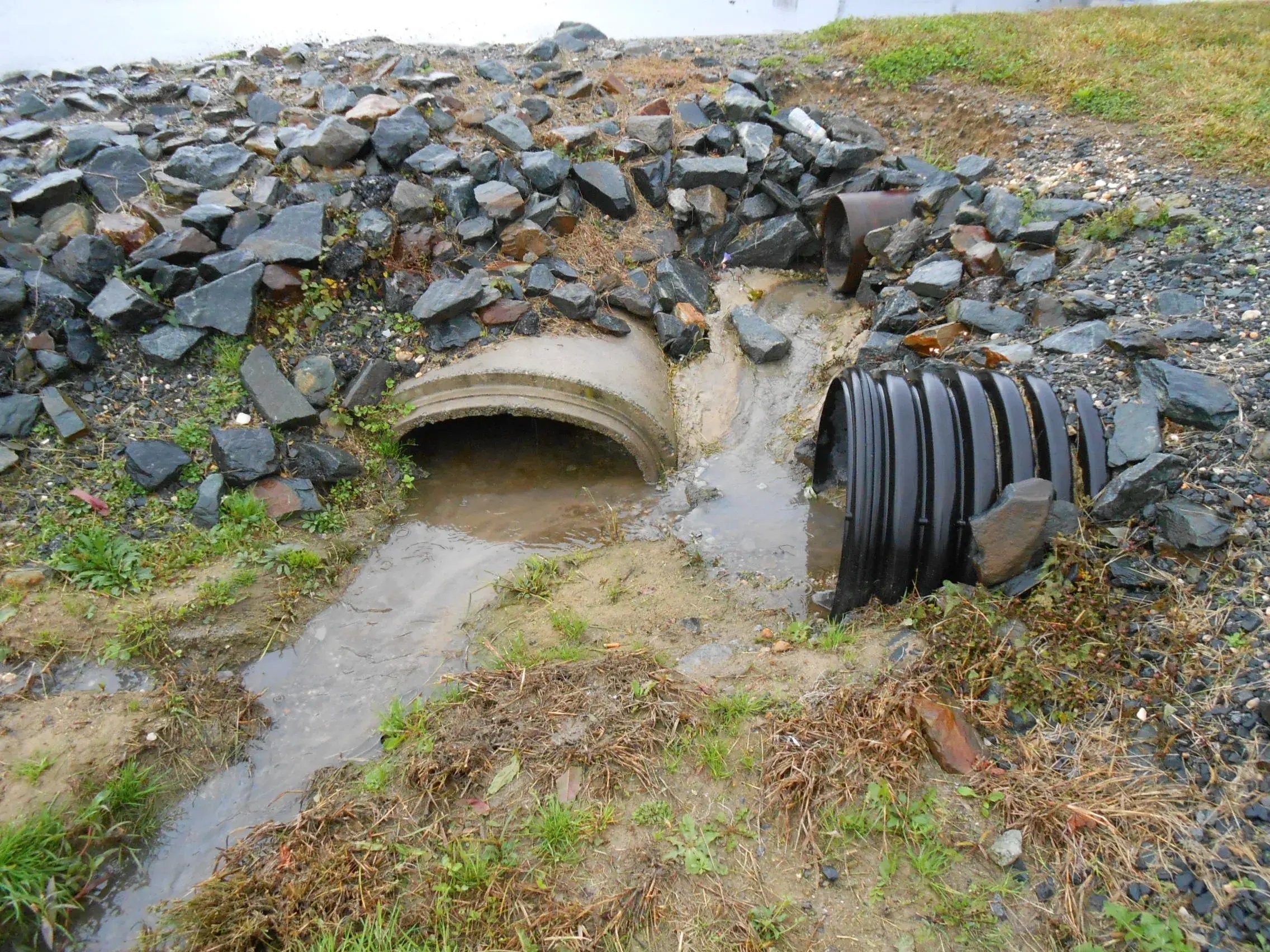
Why Parking Lot and Yard Flooding Can Matter for New Jersey Stormwater Compliance, and What to Do About It
Water standing in the yard or parking lot after every rain is a headache, and if you run an industrial or commercial facility, it's natural to wonder whether NJDEP can cite you for it. The short answer is that flooding by itself usually isn't a permit violation. New Jersey's stormwater permits are about pollutants leaving your site, not about whether your pavement drains well.
That said, flooding can cause permit trouble indirectly. Flood water can carry material away from your work areas, wash out the controls your stormwater plan relies on, and point to drainage problems your town or landlord cares about. Below we cover when flooding becomes a stormwater permit issue, who to talk to, and the practical fixes that tend to work. If you'd rather have someone look at your site with you, feel free to reach out to RMA.
Table of Contents
TL;DR
A flooded lot isn't a violation just because it floods. NJDEP's stormwater permits care about pollutants, so trouble starts when flood water carries material off site from exposed work areas, washes out the controls your plan depends on, or contradicts a no exposure certification. The flooding itself is usually a matter for your town, your landlord, or a civil engineer. Clean out the drains, get materials out of the low spot, write down what happens in each storm, and update your plan if your site has changed.
Is Flooding at My Facility an NJDEP Stormwater Permit Violation?
NJDEP regulates stormwater from industrial facilities through NJPDES, the New Jersey Pollutant Discharge Elimination System, which is the state's permit program for discharges to water. A facility with outdoor industrial activity generally falls under the Basic Industrial Stormwater General Permit (5G2), an industry-specific general permit, or an individual permit, or it certifies that nothing is exposed to rain and qualifies for a no exposure exclusion. Our guide to NPDES permit types walks through how those options differ.
All of these are built around pollution prevention. You write a Stormwater Pollution Prevention Plan (SPPP, which is New Jersey's name for what most states call a SWPPP), you put controls in place, and you keep them working. Nothing in that setup says your lot can't hold water, and rain pooling on clean pavement isn't what the permit is aimed at. Plenty of businesses, including many warehouses and offices, don't have an industrial stormwater permit at all, and for them flooding is a drainage and property problem rather than a permit one. Whether you need coverage depends on your industrial activity, what's exposed to rain, and where your water goes.
How Can Parking Lot Flooding Create NJPDES Permit Problems?
Flooding turns into a permit issue when the water touches something it shouldn't. Standing water moves, and when it rises it reaches stockpiles, drums, scrap, dumpsters, and fueling or washing areas. It picks up whatever it can carry and leaves through the same drain or low corner it always does. If that water leaves your site with sediment, oil, metals, or debris in it, that's a stormwater discharge of pollutants, and your permit expects the plan to have prevented it.
| What Happens |
Why It Matters |
| Flood water reaches exposed materials |
It carries pollutants off site, which suggests your plan's controls didn't hold and the plan may need to change. |
| Berms, inlet protection, covers, or absorbents wash out |
Your plan says these controls are in place and maintained, so repairs and records matter after a storm. |
| Water reaches materials you described as protected |
A no exposure certification may no longer be accurate, and a general permit plan may be out of date. |
| Oil or chemical sheen shows up in the water |
Spill reporting rules may apply, and our sheen rule article covers when. |
Recurring flooding is also something your own inspections should catch. A plan written years ago may not match the site today. Maybe new pavement changed where water flows, a stockpile moved into the low spot, or a drain has been half blocked since spring. Our article on stormwater best management practices explains the controls a plan usually relies on, and the one on doing a stormwater visual inspection shows how to check them. Big storms deserve their own attention too, and we cover that in NPDES stormwater permits and hurricanes.
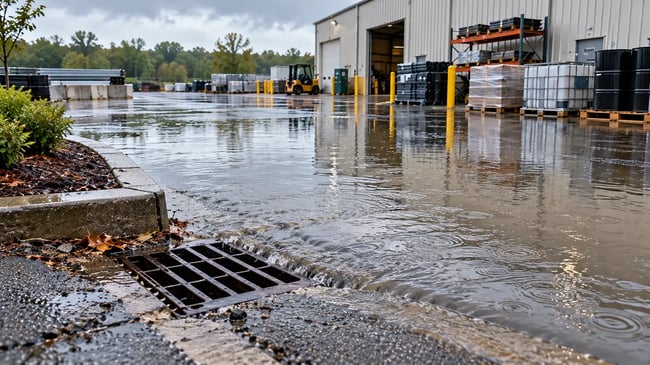
Who Should I Talk to About Parking Lot Flooding in New Jersey?
It depends on where the water comes from and where it goes. A lot of facility managers assume NJDEP is the first call, but for plain drainage problems it usually isn't. NJDEP gets involved when pollutants are in the discharge, when work needs a state approval, or when your permit requires you to do something.
| Your Situation |
Who to Talk To |
| Street storm drains or catch basins back up onto your site |
Your municipal public works or engineering office, or the county if it's a county road |
| Water runs onto or off of a neighboring property |
Often a civil matter between property owners. The municipal engineer can tell you whether an easement or local ordinance applies. |
| You lease the building or yard |
Your landlord or property manager, since grading and drainage usually belong to the owner |
| Your site drains to a sewer rather than a storm drain |
The local sewerage authority, whose rules may apply instead of, or alongside, a stormwater permit |
| You're thinking about regrading, adding fill, or work near a stream or wetland |
A civil engineer, before anything starts. State land use approvals may apply, including in flood hazard areas. |
| Flood water touches materials, BMPs, or areas your plan covers |
Your stormwater consultant, or us |
If you're not sure where your site drains, finding out is the first step. Some older New Jersey cities have combined sewers, and where your runoff goes changes which rules apply to you. We can't tell you from here whether your particular site needs a stormwater permit, but the NJPDES stormwater permit requirements article is a good place to start sorting that out.
What Are Practical Fixes for a Flooding Parking Lot or Yard?
Start with the cheap, boring stuff, since clogged drains cause a lot of parking lot flooding. Clean out the inlets, catch basins, trench drains, culverts, and outfalls on your property. Leaves, sediment, and trash block them constantly, and a drain that's half full of silt can turn a normal rain into a pond. If the clogged drain turns out to belong to the town or county, you'll at least have the date and photos to send them.
Next, get materials out of the low spot. Move stockpiles, drums, pallets, scrap, and anything else that can leach or wash away to higher ground or under cover, and keep fueling and washing areas out of the area that floods. This is also the fix that helps most with your permit, since it takes the pollutants out of the path of the water. After that, inspect the site after heavy rain and write down what you see: the date, how deep the water got, where it went, and what it touched. A few weeks of notes will show you whether the problem is one clogged drain or a grading issue.
If the simple fixes don't work, a civil engineer can look at grading, pipe sizing, and detention. That's design and construction work, and RMA doesn't prepare construction-phase permits or approvals, so the engineer or contractor will handle what that work requires. Regrading and adding fill can trigger approvals of their own, so check before a contractor starts moving dirt. Once the site changes, update your plan to match. Our article on stormwater pollution prevention plans explains what they should contain, and our online training library can help your team learn how to inspect and maintain controls.
How Does RMA Help With Facility Flooding and NJPDES Stormwater Compliance?
We're a New Jersey firm, and we work with NJDEP stormwater permits every day. Where flooding touches your permit, we can review your plan against what happens on your site in a storm, check whether your controls hold up in heavy rain, and tell you whether you need coverage or can qualify for no exposure. We also help facilities update plans after the site changes. We don't design drainage systems, so for grading and detention you'll want a civil engineer. And if it turns out you don't need us, we'll say so.
There's no pressure and no obligation. You can call us at 888-RMA-0230, or contact RMA through the form on our website, and we'll talk through your situation and point you in the right direction.