PAG-03 Visual Inspections: What Pennsylvania Facilities Have to Check, How to Document It, and What DEP Expects to See
If your Pennsylvania facility has PAG-03 coverage, the state's general NPDES permit for stormwater from industrial sites, part of the deal is walking your own property on a schedule and looking closely at it. There's no lab involved and no one from DEP standing next to you, which is why these routine visual inspections often turn into a ten-minute stroll on a dry afternoon, a form with every box checked, and a file folder nobody opens. Then an inspector asks to see your last two years of them, and the records either show a working program or show a formality.
PAG-03 requires routine visual inspections at least twice a year, once in each half of the calendar year. Each one covers your exposed industrial areas, the pollutant sources in your PPC Plan, past spill and leak areas, your outfalls, and your physical BMPs, and at least one each year has to happen while stormwater is discharging. Below we walk through what a good inspection looks like, who should do it, what to check in each part of a typical site, whether samples need a visual check, and how to document it all so it holds up. If you'd rather have an experienced set of eyes on your program, you can reach out to RMA anytime.
Table of Contents
TL;DR
PAG-03 requires a walk-through of your facility at least twice a year, once in each half of the calendar year. You check exposed material and work areas, the pollutant sources in your plan, past spill spots, outfalls, and your stormwater controls. At least one inspection each year has to happen during a storm with water leaving the site. Write down what you found and what you fixed, report each inspection in your Annual Report due May 1, and keep the records for at least three years.
What Do PAG-03 Routine Visual Inspections Require?
A few terms first. A PPC Plan, short for Preparedness, Prevention and Contingency Plan, is the written plan describing your site, your pollutant sources, and the controls you use. Those controls are BMPs, or best management practices, such as covering materials, sweeping, containment, and storm drain inserts. An outfall is any point where stormwater leaves your site, like a pipe, swale, or ditch.
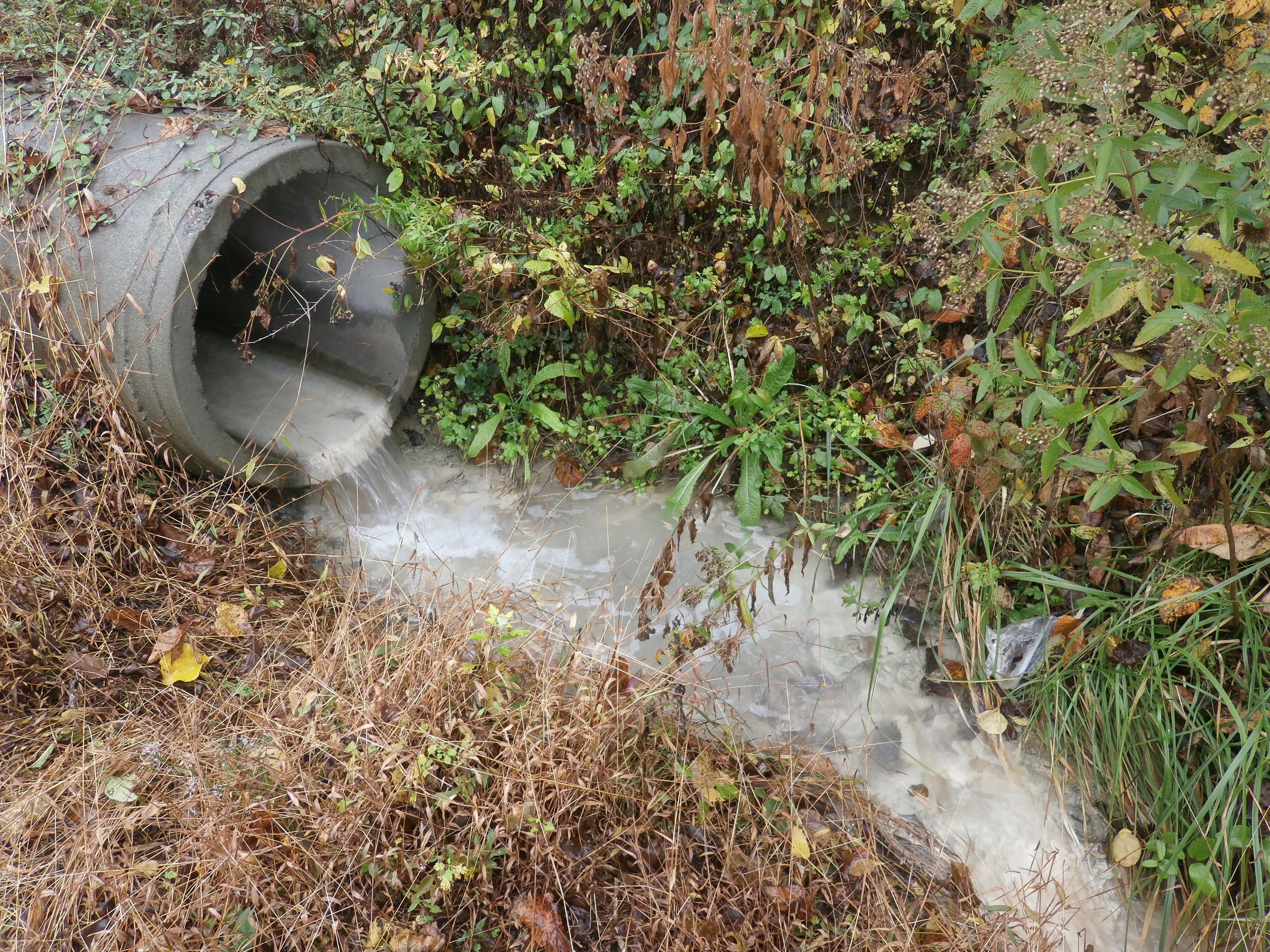
Part C of PAG-03 requires routine visual inspections at least semiannually, meaning at least one from January 1 through June 30 and one from July 1 through December 31. Every inspection has to cover areas where industrial materials or activities are exposed to stormwater, areas your PPC Plan identifies as potential pollutant sources, areas where spills or leaks have happened in the past three years, outfalls and spots where authorized non-stormwater discharges may mix with stormwater, and the physical BMPs you depend on.
One inspection each calendar year has a second condition. It has to take place during a storm greater than 0.1 inch that comes at least 72 hours after the previous measurable storm, so you can watch water move across the site and leave it. DEP's annual report instructions say the same thing from the reporting side: at least one semiannual inspection must happen while a stormwater discharge is occurring. Our PAG-03 permit guide covers the rest of the permit's moving parts.
Individual NPDES permits can carry similar or different inspection requirements, so if you hold one, read its inspection section before relying on this article. A No Exposure Certification works differently, because the question there is whether anything industrial has ended up outside. Our article on what no exposure means explains it.
Who Should Conduct Your PAG-03 Stormwater Inspections?
Pick someone who knows how the site runs day to day and has read the PPC Plan. For most facilities that's the environmental or safety manager, the plant manager, or a lead who's been trained. The Annual Report asks for the inspector's name and title for every inspection, so choose a person you're comfortable putting on record, and name a backup for vacations and sick days so a semiannual window doesn't slip by.
Anyone who works in an area every day gets used to what it looks like, including the stained pavement and the drum that's been sitting by the fence since spring. Having a person from another department take a turn catches things the regular crew has stopped seeing. A short training session on the plan, the outfalls, and what a problem looks like pays off quickly, and stormwater training requirements and the online training library are good places to start.
You don't need a consultant for routine inspections. A trained employee with a good form does them fine. An outside walk-through once a year, or after a big change at the site, gives you fresh eyes, but it's a choice and not a requirement.
PAG-03 Stormwater Inspection Checklist by Area of the Site
The table below breaks a typical industrial site into the areas an inspection should touch. Use it as a starting point, then adjust it to your own PPC Plan and your sector's PAG-03 appendix, which can add controls specific to your industry.
| Area |
What to Check |
Problems to Record |
| Loading, unloading, and material storage |
Materials inside or under cover, tarps secured, run-on diverted away from piles |
Torn tarps, material outside its storage area, spilled product, staining |
| Dumpsters and waste containers |
Lids closed, containers not overflowing, used oil, batteries, and solvents labeled and contained |
Open roll-offs, leachate stains, trash blowing toward drains |
| Fueling and vehicle or equipment maintenance |
Drip pans and absorbents in place, leaking equipment stored inside or on pans |
Fresh drips, oily pavement, used absorbents left outside |
| Drums, totes, tanks, and secondary containment |
Containers closed and labeled, containment intact, drain valves closed |
Cracks, open valves, containment full of water or showing a sheen, containers parked outside containment |
| Past spill and leak locations (last three years) |
Cleanup finished, staining not growing, added controls where problems repeated |
Old stains still present, the same spot leaking again |
| Paved work areas |
Sweeping routine being followed, dust and debris controlled around transfer points |
Dust or debris built up near drains, hose-downs running to storm drains |
| Unpaved areas and stockpiles |
Stable surfaces, perimeter controls on stockpiles, clean entrance and exit |
Gullies, sediment fans, mud tracked onto the road |
| Drain inserts, separators, basins, berms |
Inserts intact and seated, separators and basins maintained, socks and booms replaced on schedule |
Torn or clogged inserts, full basins, saturated socks, no maintenance record |
| Outfalls and drainage paths |
Outfall easy to reach and identify, flow path clear; during a discharge, note color, odor, cloudiness, floating material, and sheen |
Blocked outfall, scour, deposits or staining, sheen, odors |
| Non-stormwater discharge points |
Washwater, floor drains, and equipment cleaning not reaching storm drains, apart from discharges your permit authorizes |
Flow at an outfall on a dry day, an unexplained pipe discharge |
| Spill kits and response gear |
Kits stocked, near fueling and other spill-prone areas, workers know where they are |
Empty or locked kits, a kit across the building from the fueling area |
| Sector-specific controls from your appendix |
Each control your PPC Plan lists for your industry is in place and working |
A control on paper that doesn't exist on site |
Look at what each row says about your own site, too. If the plan describes a control you never see, either the plan or the yard needs to change. Our guide to stormwater BMPs explains what each control is meant to do.
What Does a Good PAG-03 Inspection Walk-Through Look Like?
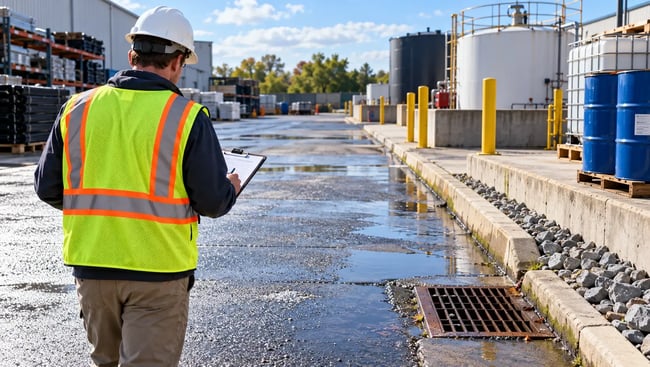
Preparation takes five minutes. Pull the PPC Plan site map, the last inspection record, and any open items from it, and bring a camera, a flashlight, a clean jar, and a way to write things down. Walk the site the way water does, starting at the highest point and following the drainage paths down to each outfall. Open lids, lift drain grates, look at the ground for staining, and check behind stockpiles and equipment. Compare the map to what's in front of you, because new outfalls, moved storage, and added tanks show up fastest this way. Ask the people working in each area whether anything has changed or keeps leaking.
The Storm-Event Inspection
The inspection that has to happen during a storm is the one facilities struggle to schedule, since you can't book rain. Have your inspector and a backup ready to go when a storm over 0.1 inch is forecast after a dry stretch, and don't leave it for the last few weeks of December. During the walk, watch where water pools, where it runs across work areas, and what it looks like at each outfall. Rain also shows problems a dry day hides, like a containment drain that's leaking or a berm that doesn't hold.
Write it up the same day, while you still remember which corner of the yard had the problem. If you want a second take on method, our guide to a stormwater visual inspection done the right way goes through it step by step.
Does PAG-03 Require Visual Checks of Stormwater Samples?
PAG-03 doesn't build a separate color, odor, and cloudiness assessment of each sample into its routine inspections the way some other states' permits do, but a few visual checks still come up. Where your permit allows release of stormwater collected in storage tank diked areas, that water has to be visually checked for sheen before it's released, and the details depend on your sector appendix. An individual permit or your appendix may add its own visual requirements, so read yours closely.
Even where nothing is required, a quick look pays for itself. When you collect a sample for the lab, pour a little into a clean jar and note the color, any odor, how cloudy it is, whether anything floats or has settled, and whether there's a sheen. A sample that looks like chocolate milk or smells like fuel is telling you where to start looking before the lab results come back. Many facilities pair a semiannual inspection with a sampling event, since both need rain, and write the observations on the same form.
The lab work itself is a separate track, with semiannual monitoring and electronic reporting through DEP's eDMR system. Our guides to taking good stormwater samples and Pennsylvania eDMR reporting cover that side.
How Should You Document PAG-03 Inspections for DEP Review?
The Annual Report is where DEP sees your inspections. It lists each inspection with a number assigned in chronological order, the date, the inspector's name and title, whether stormwater was discharging during it, and check boxes for the areas, activities, and practices you evaluated. It goes to the DEP regional office that approved your coverage by May 1 and covers the prior calendar year. Keep the underlying inspection records for at least three years, because DEP can ask for copies.
The Annual Report is a summary, and the inspection record behind it is what proves the work happened. Each one should contain the following.
| Record Item |
What to Write Down |
| Date, time, and weather |
When you walked, rainfall estimate, and whether stormwater was discharging |
| Inspector |
Name and title, matching what you'll report to DEP |
| Inspection type |
Routine semiannual, storm-event, or follow-up |
| Areas covered |
Each area from your checklist, so nothing is skipped without a note saying why |
| Findings |
Specific location, what you saw, and a dated photo |
| Corrective action |
What was done, by whom, and the date, or the target date if it's scheduled |
| Follow-up check |
The date someone confirmed the fix held |
| Sign-off |
Inspector's signature and date |
A stack of forms with every box marked "no issues" doesn't hold up well next to a torn drain insert and a stained containment pad. Records that show a problem, a fix, and a date are more convincing, because they show your program catches things. For a sense of how the visit itself goes, see what happens during a PA DEP stormwater inspection.
What Should You Do When a PAG-03 Inspection Finds a Problem?
Fix what you can fix that day, like sweeping, closing a valve, or replacing an insert, and log it. Schedule the rest with a named owner and a date, and check back. Problems that repeat from one inspection to the next are the ones to chase down, since the same spot failing twice usually means the control is wrong for the job.
Inspection findings and sampling results tend to point at the same places. After two or more consecutive benchmark exceedances at an outfall, PAG-03 requires a corrective action plan, and fixing housekeeping, containment, and sediment problems is usually what brings the numbers down. Our article on what to do when stormwater sampling results are high goes deeper. If an inspection shows the site itself has changed, update your PPC Plan too, and our quick guide to navigating your stormwater plan helps with that.
If the fix involves regrading, new paving, or other earth disturbance, that's construction-phase work with its own state and county approvals, and we don't prepare those. Your engineer, contractor, or an erosion and sediment control specialist handles that piece, often with the county conservation district. Once the work is finished, we can help make sure your PPC Plan and PAG-03 coverage reflect the changed site.
How RMA Helps Pennsylvania Facilities With PAG-03 Inspections
We're based in New Jersey and work with industrial facilities across Pennsylvania on PAG-03 compliance. We can build an inspection form matched to your PPC Plan and appendix, walk your site the way a DEP inspector would, train your inspectors, and review your records before the Annual Report goes in. Senior staff do the work, and if your team already has a solid routine, we'll tell you so.
If you'd like help with your inspection program, or you just want to talk through what an inspector might flag at your facility, there's no pressure and no obligation. You can call us, send an email, or fill out the form on our website. Contact RMA whenever you're ready, and we'll help you figure out the best next step.