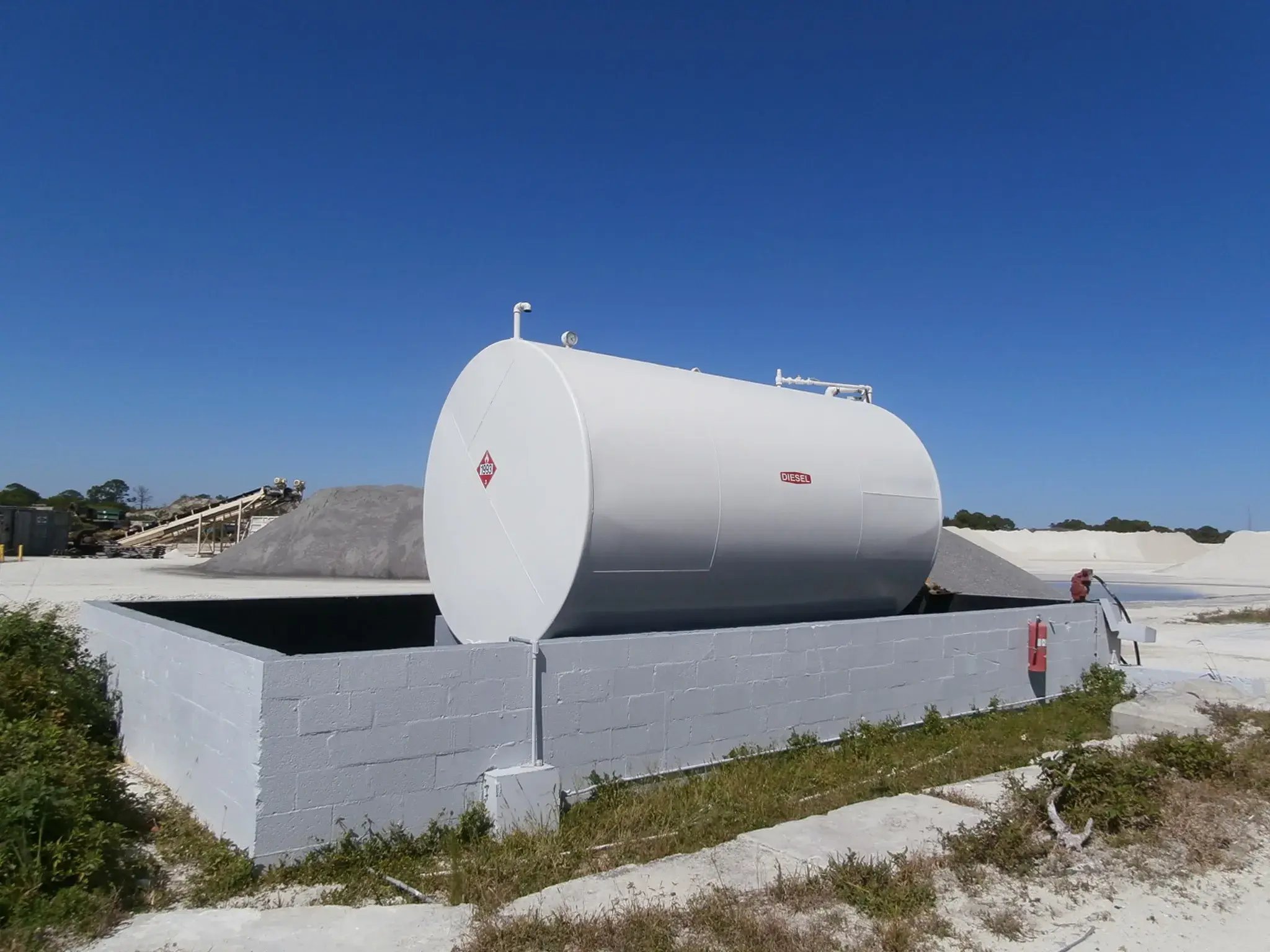
A Month-by-Month Guide to Oil Storage Inspections, Tank Testing, Training, and Tank Registration Renewals for Pennsylvania Facilities
If your facility stores oil in Pennsylvania, whether that's diesel for a generator, hydraulic oil, lube oil in drums, or used oil waiting for pickup, federal rules may require a written oil spill plan called an SPCC Plan (short for Spill Prevention, Control, and Countermeasure Plan). The plan itself is only part of the job. The rest is a set of recurring tasks you have to carry out and document: inspections, tank tests, training, state tank registrations, and a plan review every five years. When an inspector from EPA Region 3 or the Pennsylvania Department of Environmental Protection (DEP) opens your binder, they usually want to see two things, the plan and the records that show you've followed it.
So what does a Pennsylvania SPCC compliance calendar look like? In short, it's four layers stacked on top of each other: monthly inspections and records, annual training briefings and tank registration renewals, periodic tank testing and DEP-certified inspections on set intervals, and a plan review at least every five years. Below, we lay out a 12-month calendar you can adapt, explain where each frequency comes from, and cover the longer-cycle items that don't fit neatly into a single year. If you'd like a second set of eyes on your own schedule, you can reach out to RMA anytime.
Table of Contents
TL;DR
A Pennsylvania SPCC calendar has four layers: monthly inspections with signed records, an annual training briefing and annual DEP tank registration renewals, periodic tank testing and DEP-certified inspections on the intervals your plan and DEP set, and a plan review at least every five years. The federal rule leaves most inspection and testing frequencies to your own SPCC Plan and industry standards, so the calendar in this article is a template to adapt, not a universal schedule. Keep signed inspection records for three years, and put the five-year review date on the calendar the day you finish the plan.
What Does a Pennsylvania SPCC Compliance Calendar Cover?
A federal SPCC Plan is generally required when a facility's aboveground oil storage capacity is more than 1,320 gallons (counting only containers of 55 gallons or more), or its buried capacity is more than 42,000 gallons, and a spill could reasonably be expected to reach a waterway. Capacity is what counts, not how full the containers happen to be. If you're over those numbers and don't have a plan yet, the plan comes first and this calendar comes second. If you already have one, it should spell out the inspections, tests, and training your facility has committed to, and this calendar is how you keep those commitments. Our guide on what an SPCC Plan is covers the thresholds in more detail.
Three sets of requirements feed the calendar. The first is the federal oil pollution prevention rule, 40 CFR Part 112, which EPA Region 3 enforces in Pennsylvania (our article on who enforces SPCC Plans explains how that works). The second is DEP's storage tank program, which comes from the state Storage Tank and Spill Prevention Act and 25 Pa. Code Chapter 245. It covers tank registration, certified inspections for larger aboveground tanks, and a Spill Prevention Response Plan for facilities with more than 21,000 gallons of aboveground storage. The third is your own SPCC Plan. The federal rule leaves most inspection and testing frequencies to industry standards and to the plan itself, so the calendar that works for the facility down the road may not be the one that works for yours.
How Often Should You Run SPCC Inspections and Keep Records?
Most SPCC Plans call for monthly inspections, and monthly is the interval we'd suggest for most facilities. The federal rule is looser than that. It tells you to inspect the outside of each container frequently for signs of deterioration, leaks, or oil collecting in containment, and to inspect aboveground valves, piping, and fittings regularly, then leaves the exact interval to your plan and industry standards. Pennsylvania's tank rules lean toward monthly as well. Existing aboveground tanks with secondary containment are expected to use a monthly leak detection method, and monthly visual inspections are an accepted way to do it. DEP also publishes a sample monthly maintenance checklist for owners of small aboveground tanks. Our list of the top 10 things to do during monthly SPCC inspections is a good starting point for building your own checklist.
An inspection only counts if there's a record of it. Under 40 CFR 112.7(e), you follow written inspection procedures and keep those procedures, along with a record of each inspection and test signed by the appropriate supervisor or inspector, with the SPCC Plan for three years. Records you already keep in the normal course of business are fine, so you don't need a special form if your existing checklist captures the information.
Containment drainage deserves its own record. If rainwater collects inside a diked area, you can't just let it run to a storm drain. The rule allows you to drain it only if the bypass valve is normally kept sealed closed, someone inspects the water first to make sure it won't cause a discharge, the valve is opened and resealed under responsible supervision, and you keep a record of each drainage event. Flapper-type drain valves aren't allowed on diked areas. Keep a drainage log next to your monthly checklist so it's filled out when the drainage happens instead of reconstructed later.
What Does a 12-Month SPCC Compliance Calendar Look Like?
The table below places each recurring task in a month. The task list comes from the federal rule and Pennsylvania's tank regulations, but the month assignments are our suggestions for spreading the work out so nothing piles up in a single week. Move tasks to whatever month suits your operation, and where your plan sets a different frequency, follow the plan.
| Month |
What Goes on the Calendar |
Source or Basis |
| Every month |
Walk the tanks, containers, piping, valves, and containment. Sign and file the inspection record. Log any containment drainage the day it happens. |
40 CFR 112.7(e), 112.8(b), 112.8(c)(3), 112.8(c)(6), 112.8(d)(4); 25 Pa. Code 245.543 |
| January |
Pull last year's inspection records and confirm they're complete and signed. Keep three years of them with the plan. Write down the DEP registration expiration date for each tank. |
40 CFR 112.7(e); 25 Pa. Code 245.41 |
| February |
Compare your tank list and facility diagram to what's physically on site. Flag any tanks added, moved, removed, or switched to a different product, since those can trigger a plan amendment. |
40 CFR 112.5(a); 112.7(a)(3) |
| March |
Check secondary containment after winter: walls, floors, cracks, drain valves, and any water or debris that built up. Remove any oil accumulations promptly. |
40 CFR 112.8(c)(2), 112.8(c)(10) |
| April |
Test high-level alarms, pump cutoffs, and level gauges, or whatever overfill protection your plan describes. |
40 CFR 112.8(c)(8) |
| May |
Take a closer look at aboveground piping: flange joints, valve glands and bodies, catch pans, pipe supports, valve locks, and metal surfaces. |
40 CFR 112.8(d)(4) |
| June |
Train any new oil-handling employees. Confirm the person accountable for discharge prevention is still named and still in the role. |
40 CFR 112.7(f)(1), 112.7(f)(2) |
| July |
Run the tank-by-tank inspection your plan calls for, including supports and foundations, and keep comparison records. Use the interval and qualifications your plan's industry standard sets. |
40 CFR 112.8(c)(6), per your plan |
| August |
Refresh the emergency contact list (response coordinator, National Response Center, cleanup contractor, agencies) and check spill kit and response supplies. |
40 CFR 112.7(a)(3)(iv), 112.7(a)(3)(vi) |
| September |
Hold the annual discharge prevention briefing for oil-handling employees. Cover any discharges, failures, malfunctioning components, and new precautions from the past year, and keep the attendance sheet. |
40 CFR 112.7(f)(3) |
| October |
Get ready for winter: protect drain valves and outdoor piping from freezing, and make sure snow plans don't block containment, fill points, or response equipment. |
Good practice; your plan's procedures |
| November |
Line up any DEP-certified inspection or integrity test coming due next year, so there's time to schedule a certified inspector. |
25 Pa. Code Chapter 245; your plan |
| December |
Confirm every tank's DEP registration is paid and unexpired. Audit the year's records for gaps, note when the five-year plan review is due, and build next year's calendar. |
25 Pa. Code 245.41; 40 CFR 112.5(b) |
A few notes on reading it. The "every month" row is the backbone, and everything else is layered on top of it. Tasks tied to a specific tank, like the tank-by-tank inspection or the overfill alarm test, should follow the intervals your plan states, which is why some rows say "per your plan." Facilities with a Facility Response Plan, a separate and more extensive federal plan for facilities with larger oil storage and higher spill risk, have additional training and drill requirements that this calendar doesn't cover. And if your facility is a small Tier I qualified facility using EPA's template plan, much of this calendar is work you can run yourself with a recurring reminder and a good checklist.
When Do SPCC Tank Integrity Tests and DEP-Certified Inspections Come Due?
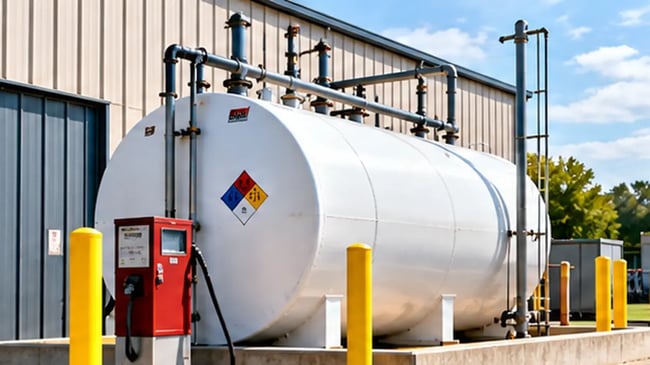
The federal rule requires each aboveground container to be tested or inspected for integrity on a regular schedule and whenever you make material repairs. You decide, based on industry standards, who's qualified to do the work, how often, and what kind of testing, taking into account the container's size, configuration, and design. In practice that usually means a standard like STI SP001 for many shop-built tanks or API 653 for large field-erected tanks, and your plan should name the one it follows. The rule lists visual inspection as one example of an integrity test, alongside hydrostatic, radiographic, ultrasonic, and acoustic emissions testing. It also requires comparison records and an inspection of the container's supports and foundation. Buried piping needs integrity and leak testing when it's installed, modified, relocated, or replaced. The full text is in 40 CFR 112.8.
Pennsylvania adds its own layer for larger tanks. DEP requires periodic inspections of aboveground tanks over 5,000 gallons, and of tanks holding highly hazardous substances over 1,100 gallons. A DEP-certified aboveground tank inspector has to do them, and that inspector can't be an employee of the tank owner. DEP certifies inspectors in two categories, one for manufactured tanks and one for field-constructed tanks, so make sure the company you hire holds the right one. An in-service inspection looks at the containment area, foundation, tank shell, and roof, and the complete report stays on file at the facility. The maximum intervals are below, and the inspector sets the actual due date at each inspection based on the tank's condition.
| Inspection Type |
Tank Description |
Initial Inspection |
Maximum Interval After That |
| In-service |
Aboveground tank over 5,000 gallons |
Within 5 years after installation |
5 years |
| In-service |
Highly hazardous substance tank over 1,100 gallons |
Within 5 years after installation |
5 years |
| In-service |
Aboveground tank in an underground vault, over 5,000 gallons |
6 to 12 months after installation |
3 years |
| Out-of-service |
Aboveground tank over 21,000 gallons |
Within 10 years after installation of a new tank or tank bottom |
20 years |
| Lining |
Internally lined aboveground tank over 21,000 gallons |
Within 10 years after lining installation |
10 years |
Tanks over 21,000 gallons also have to be inspected at installation, reconstruction, relocation, and major modification, and field-constructed tanks of any size follow the same rule. Smaller tanks fall under DEP's simplified program for small aboveground tanks, which leans more on owner checks like the monthly checklist above. Whether a particular tank is regulated at all depends on its size, type, and use, so confirm yours against DEP's storage tank program before you assume it is or isn't. The easiest way to track all of this is one list of every tank with its install date, last inspection date, and next due date, reviewed each November.
How Do SPCC Training, Annual Briefings, and Pennsylvania Tank Registration Renewals Work?
Training and the Annual Discharge Prevention Briefing
The federal rule sets a training floor and an annual briefing. At a minimum, oil-handling employees have to be trained in operating and maintaining equipment to prevent discharges, discharge response procedures, the pollution control laws that apply, general facility operations, and the contents of your SPCC Plan. You also have to designate one person at the facility who's accountable for discharge prevention and who reports to management. Then, at least once a year, you schedule and hold a discharge prevention briefing for oil-handling employees. The briefing has to highlight known discharges or failures, malfunctioning components, and any new precautionary measures. Many facilities pair the briefing with a refresher on the plan, which is a sound habit even though the rule only spells out the briefing. If you're sorting out what counts, see our articles on whether you need annual SPCC training and what SPCC training should include, or browse our online training library.
Pennsylvania Storage Tank Registration Renewals
Registration is a separate obligation from the SPCC Plan, and it runs on DEP's calendar instead of EPA's. Pennsylvania requires owners of regulated tanks to register each one, and under 25 Pa. Code 245.41 you have to pay the registration fee before the tank's registration certificate expires. According to DEP's storage tank program, after the initial registration DEP automatically invoices the tank owner each year for the upcoming year. DEP's registration page lists $50 per tank per year for aboveground tanks of 5,000 gallons or less, so check the current fee schedule for anything larger. The risk here is a missed invoice, not a hard task. Invoices go to the tank owner on record, so after an ownership change, a move, or staff turnover, check that the mailing address DEP has is still the right one. Put each tank's expiration date on the calendar in January and confirm everything is paid in December.
When Is Your SPCC Plan Five-Year Review Due, and What Else Triggers an Amendment?
Under 40 CFR 112.5(b), you have to review and evaluate your SPCC Plan at least once every five years. The clock runs from the date your facility became subject to the rule or, for older facilities, from your last required review. As a result of the review, you have to amend the plan within six months if more effective, field-proven prevention technology would significantly reduce the likelihood of a discharge, and you have to implement any amendment within six months after preparing it. Either way, you document the review with a signed statement saying you completed it and whether you'll amend the plan. EPA's own sample wording is one sentence, and it can go at the front or back of the plan or in a log. Put the due date on the calendar when the plan is finished, with a reminder at least six months ahead so there's time to act on whatever the review finds. Our guides on SPCC five-year reviews and what to do when your plan is over five years old walk through the options.
The five-year review isn't the only thing that forces a plan update. Under 40 CFR 112.5(a), you also have to amend the plan when a change in facility design, construction, operation, or maintenance materially affects the potential for a discharge. The rule's examples include commissioning or decommissioning containers, replacing or moving them, changing piping systems, construction or demolition that might alter secondary containment, changing product or service, and revising standard operating or maintenance procedures. An amendment has to be prepared within six months and implemented within six months after that. That's why the February row in the calendar compares your tank list to what's actually on site. A plan can fall out of date without anyone skipping a review. Someone adds a tank, swaps a product, or moves a container, and nobody tells whoever owns the plan.
Who has to certify the amendment depends on the type of plan. A plan certified by a Professional Engineer needs a PE to certify technical amendments too. Small Tier I qualified facilities, which generally means 10,000 gallons or less of aboveground storage, no single container over 5,000 gallons, and a clean spill history, can self-certify using EPA's template. When a PE is needed, RMA works with an outside professional engineer, and our article on professional engineers and SPCC Plan requirements explains when that's required. Facilities over 21,000 gallons of aboveground storage in Pennsylvania also need a DEP Spill Prevention Response Plan, and the Storage Tank and Spill Prevention Act calls for a revised plan or addendum in certain situations, so ask DEP what triggers a revision for your facility.
If a change means building new tank pads or containment, or installing a tank, that work goes through your engineer and contractor. Construction-phase permits and approvals aren't something RMA prepares, and tank installation in Pennsylvania generally has to be handled by DEP-certified installers. Once the tanks are in, the operational side starts: an SPCC Plan or amendment, DEP registration, inspections, training, and records. That's the part we help with, and we're glad to point you toward the right construction-phase professionals if you're not sure who to call.
How Can RMA Help You Keep a Pennsylvania SPCC Calendar?
Plenty of facilities run this calendar on their own, and if you have a current plan, a clear checklist, and someone who owns the schedule, you may not need us at all. Where we help is in building the schedule into the plan so it fits your tanks instead of a generic template, running the five-year review, working out whether you're over the thresholds in the first place, and training your oil-handling employees. Initial SPCC training is free with a new RMA plan. If another firm wrote your current plan, we usually rebuild it from scratch instead of updating it, and we'll tell you that up front so there's no surprise. We're a family-run firm, our senior staff does the work, and we don't use AI to produce client deliverables.
If you're not sure what your plan commits you to, or you want help getting a calendar in place before the new year, you can call us, email us, or fill out the form on our website. There's no pressure and no obligation. Just reach out to RMA and tell us what you've got, and we'll give you a straight answer on what you need.