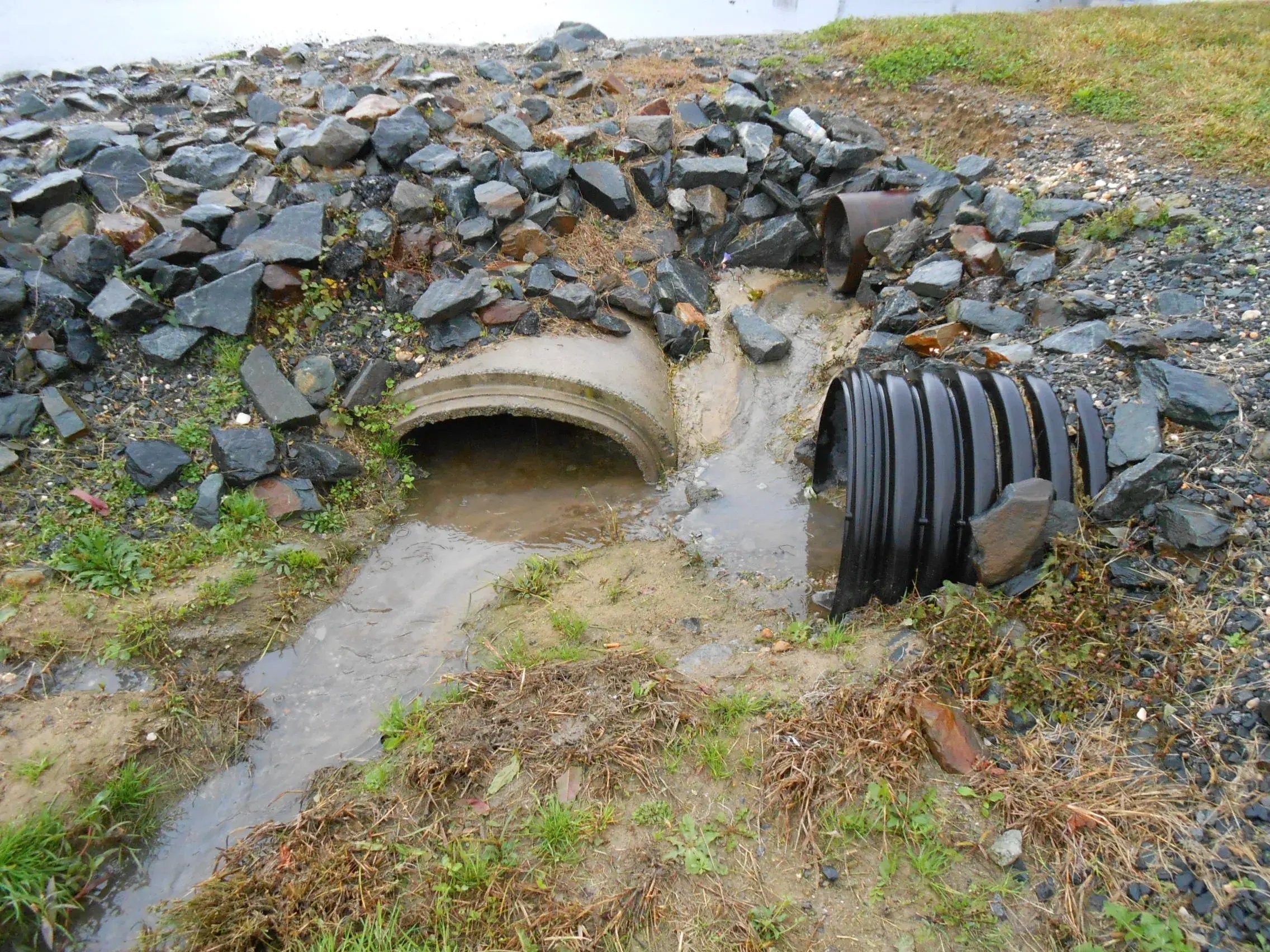
How New Jersey Separates Mining and Quarrying (R13) From Sand and Gravel (RSG) Stormwater Permits, and How to Pick the One That Fits Your Site
If you run a quarry, a sand pit, or a gravel operation in New Jersey, you probably already know NJDEP regulates the rain that falls on your site. What's less obvious is that the state has two separate general permits for your industry, and they don't split along the lines most people expect. A stone quarry and a sand pit both count as mining, but the permit you land on depends mostly on where your water goes when it leaves the work area, and only partly on what you dig up.
The short answer is that the Mining and Quarrying Activity (R13) general permit is the broader one and can cover discharges to surface water, while the Sand and Gravel Activity (RSG) general permit is a narrower permit for sand and gravel sites whose stormwater goes only to groundwater. Below, we walk through a side-by-side comparison table, the SIC codes each permit uses, what each one asks of you, and what happens when your site changes. If you'd rather have a second set of eyes on your situation, you can always reach out to RMA.
Table of Contents
TL;DR
New Jersey splits mining stormwater between two general permits. The R13 covers mines and quarries, including stormwater and certain process wastewater going to surface water. The RSG covers sand and gravel operations whose stormwater goes only to groundwater, with no surface water discharge. If any of your water leaves the site to a stream, ditch, or storm drain, you're usually looking at the R13. If it all stays on site and soaks in, and your SIC code is a sand and gravel code, the RSG is likely the better fit. Confirm the details against NJDEP's current permits before you apply.
What Are the R13 and RSG Stormwater Permits in New Jersey?
NJDEP regulates stormwater at industrial sites through NJPDES, the New Jersey Pollutant Discharge Elimination System, which is the state's version of the federal NPDES program. Instead of one catch-all permit, New Jersey writes general permits around specific industries. A general permit is one permit NJDEP issues for a whole category of facilities, and you apply for coverage under it by submitting a Request for Authorization (RFA) rather than getting a permit written just for you. Our guide on which NPDES permit you need covers the general, individual, and no exposure options if you want the bigger picture.
The R13 is NJDEP's Mining and Quarrying Activity general permit. NJDEP describes it as authorizing stormwater and certain process wastewater discharges to surface water, plus stormwater-only discharges to groundwater, for mining and quarrying facilities. NJDEP also states that mining and quarrying activities are no longer authorized under the Basic Industrial Stormwater General Permit (5G2) or the Construction General Permit (5G3), so a mine or quarry can't simply fall back on the basic permit. The RSG is the Sand and Gravel Activity general permit. It authorizes stormwater discharges to groundwater for sand and gravel mining and quarrying operations, and NJDEP says operations with no discharges to surface water may be eligible.
The RSG grew out of the R13. NJDEP's own renewal materials describe the R13 as the RSG's precursor, created for sand and gravel facilities that don't discharge to surface water and therefore don't need the monitoring that comes with surface water discharges. The first RSG was issued in 2014, and NJDEP issued a renewed version effective January 1, 2026. The R13 has a different story. A 2022 NJDEP permitting overview listed an August 31, 2022 date for it, and general permits in New Jersey run on five-year terms, so check NJDEP's R13 page for whether a renewed permit is available to new applicants before you build your plans around it.
How Do the R13 and RSG Permits Compare Side by Side?
Here's how the two permits line up on the points that decide most real-world cases. Treat the table as a starting point, because the permit text controls and NJDEP updates these documents.
| Question |
R13 (Mining and Quarrying Activity) |
RSG (Sand and Gravel Activity) |
| Written for |
Mines and quarries, including stone, sand and gravel, industrial sand, and clay operations |
Sand and gravel operations with no surface water discharge, plus soil and fill excavation |
| SIC codes NJDEP lists |
1411, 1423, 1429, 1442, 1446, 1459 |
1442, 1446, 1499 |
| Stormwater to surface water |
Yes |
No |
| Stormwater to groundwater |
Yes, stormwater only |
Yes |
| Process wastewater to surface water |
Certain process wastewater, as the permit allows |
No, process water can't go to surface water |
| Stormwater sampling and monitoring |
Set by the permit and tied to what you discharge, so read the current permit for parameters and frequency |
NJDEP's renewal materials say the permit has no monitoring section |
| Written plan |
Stormwater pollution prevention plan, with contents set by the permit |
Stormwater pollution prevention plan, plus drainage control plan and mapping requirements |
| Current status |
NJDEP's overview dated its last term to August 2022, so confirm renewal status on NJDEP's R13 page |
Renewed permit effective January 1, 2026 |
Why Does Surface Water vs. Groundwater Decide Between R13 and RSG?
For sand and gravel sites, the deciding question is where your water ends up. Surface water means streams, ponds, ditches, and the storm drains that lead to them. Groundwater means water that soaks into the ground on your site, through the pit floor, an infiltration basin, or the soil around a stockpile area. The RSG was written for operations that keep everything on the groundwater side, and NJDEP states that RSG-eligible facilities can't have a discharge to surface water.
That makes process water the usual trap. Stormwater is rain and snowmelt running off your site. Process water is water you've used for something, like washing aggregate or pumping out a pit that's filled up. Our article on the difference between stormwater and process water goes deeper, but the practical point is simple. A sand pit that pumps dewatering water or wash water to a nearby creek has a surface water discharge, and that points back to the R13. A pit where every drop stays on site and infiltrates is the situation the RSG was built for.
It's worth walking your site during a rain event, or right after one, before you decide. Overflow pipes, ditches that leave your property, and a low corner where water pools and then spills over can all count as discharges to surface water, even when you've always thought of the site as self-contained. If you aren't sure, NJDEP and your engineer can help confirm where the water goes, and a facility that's wrong about this can end up on the wrong permit.
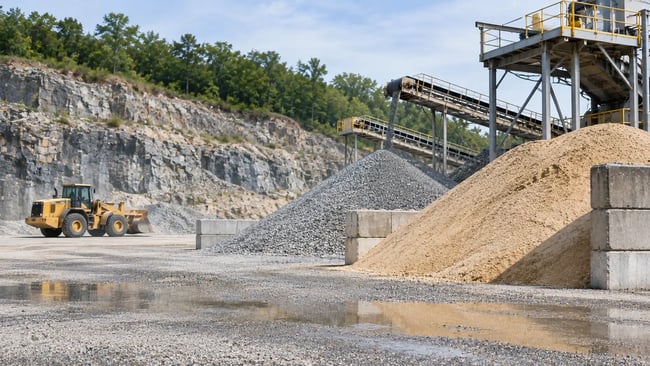
Which SIC Codes Point to the R13 and Which to the RSG?
An SIC code, short for Standard Industrial Classification code, is a four-digit number describing the main thing a business does at a specific location. NJDEP uses it to decide whether your site is regulated and which permit fits. For mining, the R13 lists SIC 1411, 1423, 1429, 1442, 1446, and 1459, which together cover dimension stone, crushed stone, construction sand and gravel, industrial sand, and clay and similar minerals. The RSG lists 1442 (construction sand and gravel), 1446 (industrial sand), and 1499, which NJDEP's renewal materials tie to facilities that excavate soil and fill dirt.
That overlap on 1442 and 1446 is why the SIC code alone can't pick the permit for you. A construction sand and gravel operation could fall under either one, and the water question breaks the tie. A stone quarry using code 1423 or 1429, or a clay operation using 1459, doesn't appear on the RSG's list at all, so the R13 is the general permit that fits those sites. If your code is 1499 because you excavate soil and fill, the RSG is the one NJDEP's materials point to. Our write-up on stormwater associated with industrial activity explains why NJDEP treats these sites as industrial in the first place.
What Do the R13 and RSG Permits Require After You're Covered?
Both permits ask you to prepare and follow a written stormwater plan. NJDEP calls it a Stormwater Pollution Prevention Plan and abbreviates it SPPP. You'll also hear it called an SP3 or just a stormwater plan, but we'll say SWPPP, which is the term most people recognize. Our explainer on what a SWPPP is walks through the pieces. The plan covers the sources of pollution on your site and the best management practices you use to keep them out of your water, such as dust control, stockpile management, and fueling and maintenance areas.
The RSG's renewal materials from NJDEP describe a few more specifics. The permit calls for an SPPP, a drainage control plan, and new mapping requirements, along with an annual report and training for employees and contractors working on site. NJDEP also says the permit contains no monitoring section, which is a big reason it's a lighter lift than the R13 for sites that qualify. The R13 can authorize surface water discharges and certain process wastewater, so its conditions follow what you discharge. The monitoring parameters, frequencies, and limits are in the current R13 text, and we'd rather you read them there than take our summary as the final word.
If your permit does call for sampling, we recommend taking your own samples. You know your site, and storm events don't wait for a consultant's schedule, so we train your team to sample correctly rather than showing up with a cooler. Our article on why you need to take your own stormwater samples explains the reasoning, and our online environmental training library is a good place to look for ready-made staff training. NJDEP bills annual permit fees and sets the amounts, so check its current fee schedule, and expect approval of your RFA to take anywhere from a few weeks to a few months, as we describe in our guide to how long a New Jersey stormwater permit takes.
What Happens to Your R13 or RSG Permit When the Site Changes?
Sites change. A quarry that retires its outfall and sends everything to an infiltration basin may start looking like an RSG candidate, as long as its SIC code is one of the RSG's sand and gravel codes. A sand pit that adds a wash plant and starts discharging process water to a stream is heading the other way, toward the R13. Neither switch is automatic. Before you change how water leaves your site, talk to NJDEP about how your authorization gets modified or replaced, because running a new discharge under an old authorization is how operators end up out of compliance.
If neither general permit fits, NJDEP can issue an individual NJPDES permit written for one facility. That's usually the case for sites with discharges the general permits weren't designed for, and it tends to come with site-specific limits and monitoring. Our article on whether you need an individual NJPDES industrial permit covers when that happens.
New pits, plant buildouts, and expansions bring a separate set of construction-phase requirements. Depending on what you're doing, those can include soil erosion and sediment control certification through your local Soil Conservation District, stormwater management design under N.J.A.C. 7:8 when a project qualifies as major development, and local site plan approvals. RMA doesn't prepare construction-phase permits or approvals, and we don't do engineering design, so you'll work with your engineer, contractor, or a soil erosion specialist on that piece. What we do handle is the operating side once you're running: the right NJPDES permit, the SWPPP, inspections, training, and annual reporting. We're also glad to help you work out what the construction phase needs and point you toward the right people.
How Does RMA Help With R13 and RSG Stormwater Permits?
We're a New Jersey firm, we work with mining operations in the state, and we handle NJPDES stormwater work for quarries and sand and gravel sites. If you're sorting out whether you belong under the R13 or the RSG, we can look at your SIC code, walk through where your water goes, and tell you which permit fits and why. We can also help with the RFA, build your SWPPP, train your team, and stay on as annual support for reminders, interpreting results, inspection prep, and plan updates, either hands-on or hands-off depending on how much you want us involved.
We'll also tell you when you don't need us. Some operators are comfortable applying themselves, and our article on whether you can get a stormwater permit yourself lays out what that involves. We use senior staff for the work, we're sometimes pricier than other consultants and usually a bit less than an engineering firm, and we're upfront when your timeline is tighter than we can meet. You can look at our NPDES permitting pricing to get a feel for costs, and if you'd like to talk it through, you can call, email, or fill out the form on our website. There's no pressure and no obligation, so feel free to contact RMA whenever you're ready.