Practical Guidance on RAP Piles, Aggregate Stockpiles, Liquid Asphalt and Fuel Tank Areas, Truck Loadout, and Sediment Control at Hot Mix Asphalt Plants
If you run a hot mix asphalt plant in New Jersey, rain touches almost everything that makes your site work. There are aggregate stockpiles and bins, a pile of reclaimed asphalt pavement (RAP), liquid asphalt and fuel tanks, a loadout where trucks get sprayed and filled, and a lot of dusty ground in between. The New Jersey Department of Environmental Protection (NJDEP) treats the water that runs off that ground as a regulated discharge, and the permit written for your industry is the Hot Mix Asphalt Producers general permit, known as R4. The short answer to the question in the title is that you keep material, oil, and sediment away from rainwater wherever you can, and you write down how you do it in a stormwater pollution prevention plan, then follow that plan every day.
This article walks through the parts of an asphalt plant that cause the most stormwater trouble: RAP and aggregate piles, sediment leaving the site, tank areas, and truck loadout. We also cover the inspections, records, and monitoring that sit behind all of it. The goal is practical guidance you can walk your yard with, whether you're writing a plan for the first time or checking one that's been on the shelf for years, and if you'd rather have an experienced person look at your site, you can reach out to RMA at any point.
Table of Contents
TL;DR
Asphalt plants in New Jersey are covered by the R4 general permit, which centers on a written stormwater plan, good housekeeping, inspections, and annual certification. In practice that means putting RAP and aggregate on stable pads with barriers at the edges, keeping sediment from leaving the site, containing and checking every tank area before water is released, and handling truck loadout and wash water so nothing oily reaches the ground. Monitoring details depend on the current permit and where your water goes, so read the permit NJDEP has posted today and keep your plan matched to what's really on the ground.
What Does the R4 Hot Mix Asphalt Stormwater Permit Require?
NJDEP regulates stormwater at industrial sites through its NJPDES program, which stands for the New Jersey Pollutant Discharge Elimination System. Instead of one catch-all permit, New Jersey writes general permits for specific industries, and R4 is the one for hot mix asphalt producers. A general permit is a single permit NJDEP writes once for a whole category of facilities. You apply for coverage by submitting a Request for Authorization (RFA), and asphalt plants include a supplemental form with it. R4 fits facilities that manufacture hot mix asphalt under SIC code 2951 and NAICS code 324121, and it authorizes stormwater discharges to both surface water and ground water. If you're not sure R4 is the right fit for your site, our guide to which NPDES permit you need lays out how general, individual, and no exposure options differ.
The heart of the permit is a written stormwater pollution prevention plan. New Jersey's rules call it an SPPP, and you'll also hear it called an SP3 or just a stormwater plan, but we'll use SWPPP since that's the term most of the industry uses. The plan describes your site, where water flows, what could pollute it, and the best management practices (BMPs) you use to keep pollution out. If BMPs are a new term, our explainer on what stormwater BMPs are covers the basics. NJDEP posts the R4 permit, its fact sheet, and an attachment listing what the SPPP must contain, and we'd read all three before you change anything on your site. Permits get renewed and wording shifts over time, so the version NJDEP has posted today is the one that counts, not a summary from a few years ago. For a plain-English look at the program overall, see our piece on NJPDES stormwater permit requirements.
It helps to think of the plant as a set of areas, each with its own way of getting rainwater dirty. The table below is the map we use for the rest of this article.
| Plant area |
What runoff can pick up |
Common controls |
| Aggregate stockpiles and bins |
Sediment, fines, dust |
Stable pad, toe barriers, inlet protection, defined pile footprint |
| RAP piles |
Sediment, oil staining, asphalt residue |
Paved or compacted pad, controlled drainage, covers where practical |
| Liquid asphalt and fuel tanks |
Oil, fuel, additives |
Sound containment, locked drain valves, sheen checks, drip pans at transfer points |
| Truck loadout |
Release agent, mix, oily drips |
Non-petroleum release agent, contained spray area, daily sweeping |
| Haul roads and yard |
Sediment tracked and washed off |
Sweeping, stabilized surfaces, basins and traps that get cleaned out |
How Should You Manage RAP Piles and Aggregate Stockpiles for R4 Compliance?
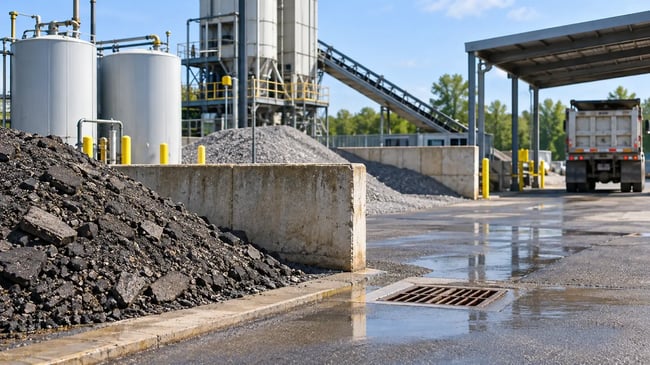
Aggregate and RAP are the biggest sources of solids on an asphalt plant, and they're the first thing an inspector sees when they pull in. The goal for every pile is the same. Put it on a stable base, keep it from spreading past its footprint, and make sure water leaving the pile area goes somewhere that catches sediment before it reaches a drain, a ditch, or the ground.
How Should You Handle RAP Piles?
RAP is crushed old pavement, so it carries asphalt binder, fine material, and sometimes oil staining and trash from wherever it was milled. Runoff from a RAP pile can show a sheen and carry sediment in a way clean stone doesn't. A paved or well-compacted pad that slopes toward a controlled low point is the best starting point. A berm, compost sock, or similar barrier at the toe keeps loose material from creeping off the pad. Plenty of plants cover piles that sit for months, and covering ahead of heavy storms or over the winter is a reasonable middle ground when a permanent cover isn't practical. Keep new RAP deliveries off bare ground, and watch how the loader works the pile, because a bucket pushing material toward a drainage path undoes a lot of good design.
What About Aggregate Stockpiles and Bins?
Separate stockpiles by material and keep each on a defined pad instead of letting them sprawl across the yard. The edges are where plants lose control. A loader bucket pulls material outward, trucks drive through the toe of the pile, and over a season the whole stockpile migrates toward the nearest inlet. Mark the footprint, grade the area so water doesn't run through the pile, and protect nearby storm drain inlets with barriers that you inspect and clean out. Fine material like screenings and baghouse fines moves with wind and water, so keep it in bins, silos, or under cover rather than in an open pile near a drain.
How Do You Control Sediment and Track-Out at an Asphalt Plant?
Sediment is the most common pollutant at an asphalt plant, because a plant is mostly stone, sand, and dust moving around on trucks and loaders. Sweeping is the least glamorous control and one of the most effective. A regular sweeping schedule for the loadout area, scale approach, and haul roads, with a street sweeper or vacuum truck for the paved areas, keeps material from being there when it rains. Where trucks leave the property, a stabilized exit and a sweep of the public road apron keep track-out from becoming a neighbor's complaint or an NJDEP question.
Many plants also rely on a basin, trap, or similar structure to settle solids before water leaves. These only work if they have room. A basin that's half full of sediment doesn't settle anything, so build cleanout into your routine and look at the outlet after big storms. Sizing and designing new basins is engineering work, and RMA doesn't do engineering design, so that part belongs with your engineer. If a plant expansion triggers construction-phase permits, such as construction stormwater coverage or soil erosion and sediment control certification, those also sit with your engineer, contractor, or soil erosion specialist and not with us. Our focus is the operating side, keeping the plant and its plan working once it's running. Dust suppression water is worth a mention too. A wet yard that sends muddy water to a drain solves an air problem by creating a water one, so spray where it evaporates or soaks in, not where it runs off.
How Should Liquid Asphalt and Fuel Tank Areas Be Contained and Drained?
Most plants have heated liquid asphalt tanks, diesel or fuel oil tanks for the burner and hot oil heater, and sometimes smaller tanks for additives. Those tanks usually sit inside a dike or containment area, and rainwater collects in it. The rule of thumb is simple: treat water inside containment as potentially contaminated until you've looked at it. Keep the drain valve closed and locked, check the water for sheen before releasing anything, and keep a short log of when you released it and who checked. If there's a sheen, don't release it, and manage it as oily water. Cracked or leaking containment is a stormwater problem and a spill problem at once, so repair it when you find it.
Transfer points deserve the same attention as the tanks. Unloading a liquid asphalt tanker or filling a fuel tank is where most small drips happen, so do it over a paved, contained area with drip pans under the fittings and a spill kit within reach. If oil does reach water and leaves a sheen, there are reporting duties, which our article on the sheen rule for oil spills explains.
Tanks also pull in a second plan. Your SWPPP covers keeping oil out of rainwater, while a Spill Prevention, Control, and Countermeasure (SPCC) plan covers keeping oil from reaching waterways if it spills. The federal SPCC rule applies once a facility's oil storage in aboveground containers passes a total capacity threshold, and liquid asphalt, fuel oil, hydraulic oil, and lubricants all count toward it, so add up everything on site before you decide you're under it. Our comparison of an SPCC plan and a SWPPP shows how the two fit together.
What Stormwater Controls Belong at an Asphalt Truck Loadout?
The loadout is where trucks sit under the plant, mix drops, and drivers spray something in the bed so the load doesn't stick. That release agent is the detail to get right. If you still use a petroleum-based product, switching to a non-petroleum release agent removes a source of oily runoff, and wherever you spray it, do it over a paved area that drains to a collection point or is contained, never over bare soil. Keep the loadout pad paved and swept, and pick up spilled mix daily instead of letting it get pushed into the yard. Rejected loads and cold mix need a designated, covered, or bermed place to go, not a pile at the edge of the lot.
Wash water needs its own thought. Water from rinsing trucks, equipment, or the lab is process water, not stormwater, and it generally can't just flow to the same place rain does. Our article on the difference between stormwater and process water explains why the line matters, and you should confirm how your own wash water is handled before it goes to a basin or a drain. Mobile equipment fueling is the last piece at most loadouts. Fuel on a paved, covered, or contained spot with a spill kit nearby, and not wherever the loader happens to be when the gauge drops.
How Do Inspections and Your SWPPP Keep an Asphalt Plant in Compliance?
Good controls fade without a routine. R4 expects you to inspect the plant, maintain the BMPs, and keep records, and the permit includes an annual certification that your plan is prepared and implemented. A walk of the site after significant storms and on a regular schedule is the easiest habit to build, and our guide to a stormwater visual inspection shows what to look for. Write down what you find and what you fixed, because a log of corrected problems tells an NJDEP inspector you're running the plan and not just filing it.
The plan has to track the plant. When you move the RAP pile, add a tank, change the loadout, or reroute drainage, update the SWPPP the same month. A plan that describes last decade's layout is hard to defend in an inspection. The people doing the work matter as much as the paper, since loader operators and yard crews decide where piles go and whether a drain valve gets closed. If you want to build that knowledge in-house, our online training library is a good place to start, and our article on common NPDES permit problems covers the slips we see most often.
What Stormwater Monitoring Should an R4 Asphalt Plant Expect?
Monitoring is where plants most often want a number, and it's also where the honest answer is to read your current permit. Which parameters you test, how often, and where you sample depend on the permit version in effect and on where your water goes, whether that's a stream, a storm sewer, or soaking into the ground through a basin. Because R4 covers discharges to both surface and ground water, a plant that infiltrates most of its runoff can look different on paper than one that discharges to a ditch. Check what your permit says about laboratory certification, and line up a lab before the first storm instead of after it.
One thing we'll say plainly: we don't take the samples for you. Storms don't give anyone much notice, and nobody knows your outfalls like your own crew, so we train your people to sample correctly instead. Our article on why you should take your own stormwater samples makes the case in more detail. When results come back higher than you hoped, what you do next shapes how it plays out, and our guide on what to do when stormwater results are high walks through a sensible response.
How Does RMA Help New Jersey Asphalt Plants With R4 Stormwater?
We're based in New Jersey and we know NJDEP's permit categories well, including R4. We help asphalt producers write or update a SWPPP that matches the plant, train the crew to sample and inspect, prepare for NJDEP visits, and stay on top of annual certification and reporting afterward. Some plants want us hands-on, others just want reminders and someone to call with questions, and we're fine with either. We don't do engineering design of basins or treatment systems, and we don't prepare construction-phase permits, so we'll tell you early if a question belongs with someone else. If your plan is current and your crew follows it, you may not need us at all beyond an occasional look.
If you'd like to talk it through, there's no pressure and no obligation. You can call us at 888-RMA-0230, email, or fill out the form on our website, and you can also contact RMA directly to tell us about your plant. We'll tell you straight whether we're the right fit.