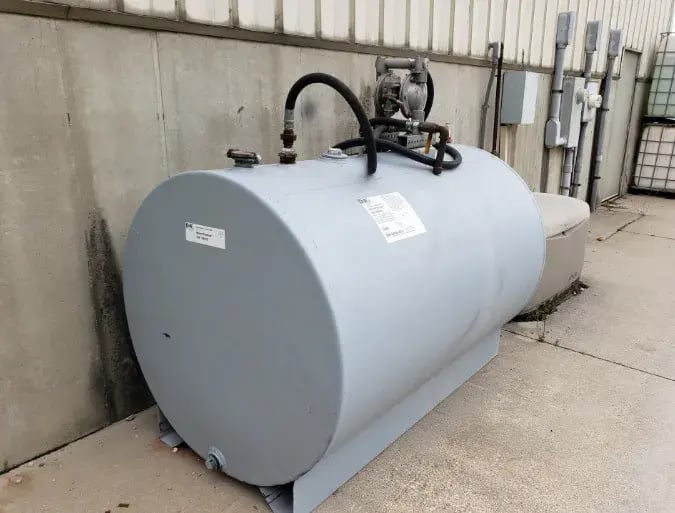
Which Containers, Tanks, and Facilities the Federal Oil Spill Rule Doesn't Cover, and Why an Exempt Tank Can Still Matter Under New Jersey's Spill and Tank Laws
If you store diesel, hydraulic oil, or used oil at a New Jersey facility, you've probably wondered whether the federal oil spill prevention rule applies to you. That rule is the Spill Prevention, Control, and Countermeasure rule, or SPCC, and it requires a written plan and physical spill controls at facilities with more than 1,320 gallons of oil in aboveground containers. The rule also exempts a short list of containers and operations: containers under 55 gallons, permanently closed containers, vehicle fuel tanks (motive power containers), hot-mix asphalt, heating oil at a single-family home, pesticide application equipment, milk and milk product containers, certain wastewater treatment facilities, and some completely buried tanks that are already covered by underground tank rules.
This article walks through each exemption in plain terms, shows how the 1,320-gallon threshold treats exempt containers, and explains where New Jersey's own tank and spill rules pick up what the federal rule leaves out. An exemption can be narrower than it sounds, and some of the most common assumptions don't hold up against the rule text. If you'd rather have someone check your inventory, you can reach out to RMA at any time, but many readers will be able to answer this question for themselves by the end.
Table of Contents
TL;DR
SPCC doesn't cover containers under 55 gallons, permanently closed containers, vehicle fuel tanks, hot-mix asphalt, single-family heating oil, pesticide application equipment, milk containers, qualifying wastewater treatment facilities, or buried tanks fully regulated under underground tank rules. A facility is out of the rule only if its aboveground oil totals 1,320 gallons or less (counting containers of 55 gallons or more) and its buried capacity is 42,000 gallons or less. Exempt tanks can still be covered by New Jersey's Spill Act, its underground tank program, and its plan rules for larger facilities, so confirm each one separately.
What Does an SPCC Exemption Mean for a New Jersey Facility?
SPCC stands for Spill Prevention, Control, and Countermeasure. It's an EPA rule at 40 CFR Part 112, and in New Jersey it's enforced by EPA Region 2. A facility needs an SPCC plan when it has more than 1,320 gallons of oil in aboveground containers (counting only containers of 55 gallons or more) and could reasonably be expected to discharge oil to navigable waters or adjoining shorelines. The rule's definition of oil is broad. It covers petroleum, used oil, hydraulic and lubricating oil, mineral oil in transformers, and vegetable oils and animal fats. If you want the full background first, our guide on what an SPCC plan is covers the basics, and our four-step check for whether you need an SPCC plan walks through the applicability question from the top.
The exemptions in 40 CFR 112.1(d) come in two kinds. Some take a specific container or operation out of the rule entirely, so it never needs to appear in a plan. Others take a whole facility out of the rule because its combined storage stays under the thresholds. Mixing the two up is a frequent source of confusion, and it leads people to treat a tank as exempt when it's really just one of several tanks adding up toward a total.
Being exempt from SPCC means one federal rule doesn't apply to a given tank or site. It doesn't mean the oil is unregulated, and we'll cover New Jersey's own layer later in this article.
Which Containers and Equipment Are Exempt From SPCC?
The table below lists the exemptions in the federal rule, the paragraph where each one lives, and the catch that trips people up. We checked the list against the current text of 40 CFR 112.1 and 112.2.
| What's Exempt |
What the Rule Says |
The Catch |
| Containers under 55 gallons |
Any container with a storage capacity of less than 55 gallons of oil is exempt (112.1(d)(5)). |
A 55-gallon drum is not under 55 gallons. It's covered and it counts. |
| Permanently closed containers |
A closed container isn't counted toward the facility total (112.1(d)(2)). |
"Permanently closed" has a specific definition. An empty or idle tank usually doesn't meet it. |
| Motive power containers |
Onboard tanks that power a motor vehicle, or its onboard oil-filled operating equipment, are exempt (112.1(d)(7)). |
Fueling vehicles at a regulated facility isn't exempt, and tanks that store or move fuel for distribution aren't motive power containers. |
| Hot-mix asphalt and its containers |
Hot-mix asphalt, and any container of it, is exempt (112.1(d)(8)). |
Fuel, hydraulic oil, and other oils stored at an asphalt plant still count. |
| Heating oil at a single-family residence |
Any container for heating oil used solely at a single-family residence is exempt (112.1(d)(9)). |
Apartment buildings, offices, and shops don't qualify. Their heating oil tanks count. |
| Pesticide application equipment |
Pesticide application equipment and related mix containers are exempt (112.1(d)(10)). |
Diesel or other oil stored nearby for the equipment still counts. |
| Milk and milk product containers |
Milk and milk product containers, with their piping and appurtenances, are exempt (112.1(d)(12)). |
Other oil on a dairy site, like a farm fuel tank, still counts. |
| Wastewater treatment facilities |
A facility, or part of one, used exclusively for wastewater treatment is exempt (112.1(d)(6)). |
It loses the exemption if it's used to satisfy a Part 112 requirement. Producing, recovering, or recycling oil isn't wastewater treatment. |
| Some completely buried tanks |
Buried tanks subject to all the technical requirements of 40 CFR Part 280, or of an approved state program, are exempt (112.1(d)(4)). |
Tanks that those underground tank programs don't fully cover, like many heating oil tanks, don't get this exemption. |
The permanently closed exemption deserves a closer look because it's so easy to assume you qualify. Under the definition in 40 CFR 112.2, a container is permanently closed only when all liquid and sludge has been removed from the container and its connecting lines, the piping has been disconnected and blanked off, the valves have been closed and locked, and conspicuous signs on the container state that it's permanently closed and give the date of closure. A tank that's simply empty, or that you stopped using last spring, is still a container under the rule. The same goes for containers used for standby, seasonal, or temporary storage, which the rule specifically keeps in scope.
How Does the 1,320-Gallon SPCC Threshold Treat Exempt Containers?
The second kind of exemption works at the facility level. Under 112.1(d)(2), a facility that's otherwise subject to EPA's jurisdiction is exempt only if it meets two conditions at once: its completely buried storage capacity is 42,000 gallons or less, and its aggregate aboveground storage capacity is 1,320 gallons or less. Fail either one and the facility needs a plan. For the aboveground count, only containers of 55 gallons or more are counted, and the rule says what to leave out: permanently closed containers, motive power containers, hot-mix asphalt and its containers, single-family heating oil containers, pesticide application equipment and mix containers, and milk and milk product containers.
| Counts Toward the 1,320 Gallons |
Doesn't Count |
| Diesel, gasoline, used oil, hydraulic, lube, and transformer oil in containers of 55 gallons or more |
Containers under 55 gallons, no matter how many you have |
| Vegetable oils and animal fats, including used cooking oil |
Permanently closed containers |
| Heating oil tanks at offices, shops, apartment buildings, and other non-residential sites |
Motive power containers, like a truck's own fuel tank |
| Tanks feeding stationary generators and boilers |
Hot-mix asphalt, single-family heating oil, pesticide application equipment, and milk containers |
| Standby, seasonal, and temporary storage containers |
Propane and other non-oil products |
Capacity is what counts, not what's in the tank on the day of your count. The rule defines the storage capacity of a container as its shell capacity, so a 1,000 gallon tank that's usually half full counts as 1,000 gallons. Here's how that plays out. Say a shop has a 1,000 gallon diesel tank and a 275 gallon used oil tank. That's 1,275 gallons, which is under the line. Add a single 55 gallon drum of hydraulic oil and the total is 1,330, which is over it, and the whole facility now needs a plan. That's why people ask us about whether 55-gallon drums are included in SPCC plans, and why cooking oil and used cooking oil gets the same question from restaurants and food processors.
Where Do the Motive Power, Asphalt, and Wastewater Exemptions Stop?
Three of the exemptions on the list cause most of the disagreements about scope, so they're worth walking through one at a time.
Motive power containers are the onboard tanks that power a vehicle's movement or its onboard oil-filled operating equipment. A delivery truck's own diesel tank qualifies, and so does the fuel tank on a concrete mixer truck. The exemption stops at the vehicle, though. The rule states that transferring fuel or other oil into a motive power container at an otherwise regulated facility isn't eligible for the exemption, so the bulk fuel tank at your yard and the fueling area around it are covered. Tanks that store or transfer oil for further distribution aren't motive power containers either, which is why fuel trucks and mobile refuelers don't qualify. A tank feeding a stationary generator isn't a vehicle fuel tank, so it counts, as we explain in our post on emergency backup generators. Concrete operations run into all of this at once, and we cover it in our piece on concrete plants.
The hot-mix asphalt exemption covers hot-mix asphalt and any container of it. An asphalt plant still stores fuel for burners and equipment, hydraulic oil, lubricants, and often other petroleum products, and those are covered by the rule like anywhere else. Whether a particular material at your plant falls within the rule's hot-mix asphalt exemption is worth checking against the text before you rely on it.
The wastewater treatment exemption applies to a facility, or part of a facility, used exclusively for wastewater treatment and not used to satisfy any requirement of Part 112. Those two conditions do the work. If you lean on a treatment unit to meet an SPCC requirement, it isn't exempt. And the rule states that producing, recovering, or recycling oil isn't wastewater treatment, so an oil recovery system doesn't qualify just because water flows through it.
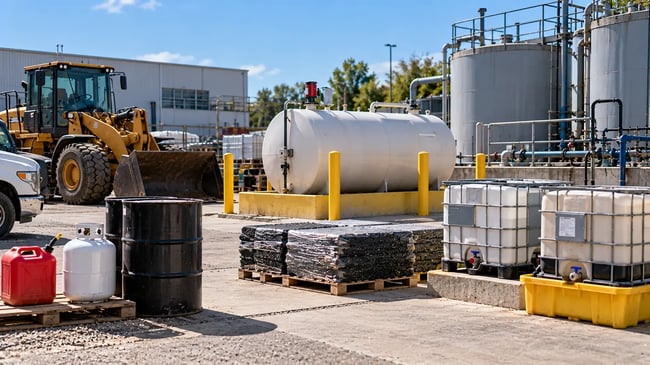
Do Buried Tanks and New Jersey UST Rules Exempt a Facility From SPCC?
Completely buried tanks get a conditional exemption, and the condition is where New Jersey facilities get into trouble. Under 112.1(d)(4), a completely buried tank, along with its connected underground piping and containment, is exempt when it's subject to all of the technical requirements of 40 CFR Part 280, the federal underground storage tank rules, or of a state program approved under Part 281. The word "all" matters. A tank that's only partly covered by those programs doesn't qualify. Tanks in vaults, bunkered tanks, and partially buried tanks aren't completely buried at all, and the rule treats them as aboveground containers.
New Jersey's underground storage tank program is run by NJDEP under N.J.A.C. 7:14B. That chapter exempts several kinds of tanks from its requirements, including tanks of 2,000 gallons or less used to store heating oil for onsite consumption in a nonresidential building, heating oil tanks in residential buildings, flow-through process tanks, and wastewater treatment tanks. NJDEP calls the heating oil tanks unregulated heating oil tanks, and work on them such as closure and certain other services still has to be done by NJDEP-certified individuals and firms. The practical point for SPCC is that a buried heating oil tank that sits outside the underground tank technical requirements generally can't use the buried tank exemption, because the exemption requires the tank to be subject to all of those requirements. Its capacity can end up counting toward your facility's buried total, and in some cases it can pull the tank into your plan. Whether that happens depends on the rest of the facility's storage, so run the numbers before assuming the tank is out of scope.
Installing, repairing, or closing an underground tank in New Jersey involves state permits and certified contractors. RMA doesn't handle those construction-phase approvals, and most facilities work with their tank contractor on that side. Where we help is the operational side once the tanks are in service, which is whether the tanks belong in an SPCC plan and what the plan has to say about them.
Does an SPCC Exemption Excuse You From New Jersey's Spill Act and DPCC Rules?
No. The Spill Compensation and Control Act, usually called the Spill Act, is the state's main law on discharges of petroleum and other hazardous substances. NJDEP states that all facilities and individuals in the state, even homeowners, are subject to the discharge reporting requirements of N.J.A.C. 7:1E-5 when a hazardous substance is discharged. A heating oil tank at a single-family home is exempt from SPCC, but a leak from it is still a reportable discharge under state rules, and the cleanup obligations that follow don't depend on whether the tank had a federal plan. Our guide to the sheen rule for reporting an oil spill covers how reporting works for oil, and the NJDEP hotline details are on NJDEP's website, so check there for the current number before an emergency rather than during one.
The state also has a plan requirement of its own for larger sites. Facilities that meet New Jersey's definition of a major facility under N.J.A.C. 7:1E must prepare and submit a Discharge Prevention, Containment, and Countermeasure plan (DPCC) and a Discharge Cleanup and Removal plan (DCR). According to NJDEP, a major facility has total storage capacity of 200,000 gallons or more of hazardous substances of all kinds including petroleum products, or 20,000 gallons or more of hazardous substances other than petroleum. The counting rules aren't the same as the SPCC counting rules. They cover hazardous substances beyond oil, NJDEP publishes guidance on what is included and excluded from the capacity calculation, and the rule has been under proposed amendment, so check the current version of N.J.A.C. 7:1E and the guidance against your own inventory instead of assuming your SPCC count carries over.
Spill Act liability is strict and can be joint and several, which in general terms means a party can be held responsible for cleanup and its costs without anyone proving negligence. If a discharge, an enforcement action, or a question about liability is on the table, an environmental attorney is the right person to advise you on your specific exposure. Local fire officials also enforce the statewide Uniform Fire Code, which can add its own tank requirements that don't depend on SPCC status.
Can the Location Exemption or EPA Authority Change an SPCC Exemption?
There's a location-based exemption in 112.1(d)(1)(i) for a facility that, because of where it is, couldn't reasonably be expected to discharge oil to navigable waters or adjoining shorelines. The rule limits how you can argue it. The determination has to rest solely on geography and location, such as distance to water, land contour, and drainage, and it can't take credit for manmade features like dikes, berms, or other structures that would hold a spill. In a state with as many streams, ditches, and storm drains as New Jersey, this is a narrow exemption and a hard one to support.
Two other provisions are worth knowing. Under 112.1(f), the EPA Regional Administrator can require a facility to prepare and implement an SPCC plan even when it would otherwise be exempt, after written notice and an opportunity to respond. And 112.1(e) says compliance with Part 112 doesn't relieve an owner or operator from other federal, state, or local laws, which is the federal rule's own acknowledgment of everything we covered in the last section. For more on how enforcement works, see our post on who enforces SPCC plans and our rundown of SPCC violations and fines.
How Can You Check Whether Your Facility Qualifies for an SPCC Exemption?
For many small facilities, this is a job for a pencil and a clipboard, and you may not need a consultant at all. Walk the site and list every container of oil you find, noting its shell capacity (the nameplate or the tank's rated size) and whether it's aboveground, in a vault, or buried. Cross off the items that are truly exempt, using the definitions above rather than your best guess. Then add up what's left. If the aboveground total is 1,320 gallons or less and your completely buried capacity is 42,000 gallons or less, you're likely under the threshold. Keep that inventory and your reasoning somewhere you can find it, because it's the first thing an inspector or an insurer may ask for.
Tanks get added over time, a contractor leaves a drum behind, and oil-filled equipment such as transformers and hydraulic systems is easy to forget even though it isn't exempt. If you land within a couple of hundred gallons of the line, or you have buried tanks or vegetable oil, an outside review can pay for itself. Our full overview of SPCC plans is a good next read, and staff who handle oil day to day may benefit from the online training library as well.
Then run the state-level checks separately. Ask whether any of your storage makes you a major facility under N.J.A.C. 7:1E, whether any underground tanks fall under NJDEP's UST program or its unregulated heating oil tank rules, and whether your local fire official has tank requirements. Our overview of SPCC plans in New Jersey covers how the federal and state pieces fit together.
How Can RMA Help You Sort Out SPCC Exemptions in New Jersey?
We're a family-run firm based in New Jersey, so we work with NJDEP's rules and EPA Region 2 every day, and we've been helping facilities with oil storage questions since 1992. If you're not sure whether your tanks, drums, and equipment add up to a plan requirement, we can review your inventory against the rule and tell you plainly where you land. If a quick count shows you're under the threshold, we'll say so, and you may not need to hire anyone. If you do need a plan, or you're close enough to the line that a second set of eyes helps, we can walk you through what's required.
There's no pressure and no obligation. You can call us, email us, or fill out the form on our website, and someone from our team will get back to you. If you'd like to contact RMA about an exemption question, we're glad to talk it through.