Tier I, Tier II, or PE-Certified: Which SPCC Plan Do I Need?
How New Jersey Facilities Figure Out Whether They Can Self-Certify an SPCC Plan or Need a Professional Engineer, Plus a Simple Decision Table
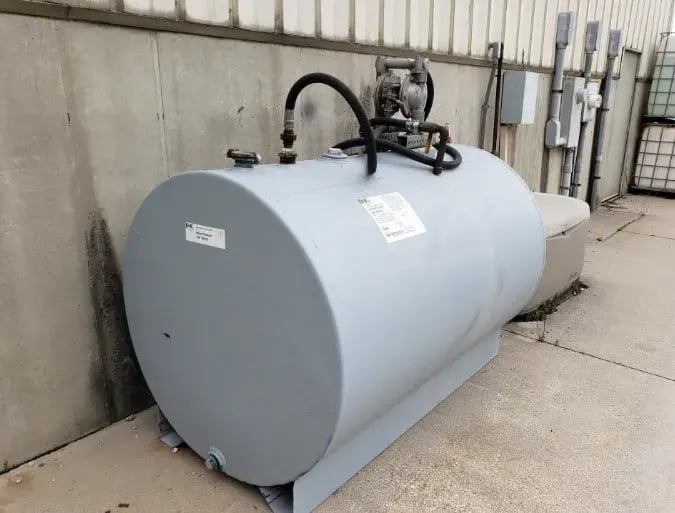
If your facility stores more than 1,320 gallons of oil aboveground, federal rules say you need an oil spill plan, formally called a Spill Prevention, Control, and Countermeasure (SPCC) Plan. What most people don't know is that the rule comes in three flavors. Smaller facilities with a clean spill record can write and sign their own plan, and everyone else needs a licensed professional engineer (PE) to certify it. Here's the short answer: if your total aboveground oil storage capacity is 10,000 gallons or less and you haven't had a reportable spill to water in the last three years, you're a "qualified facility" and can self-certify. If no single aboveground container is bigger than 5,000 gallons, you're Tier I and can use EPA's fill-in template. If one or more containers are bigger than 5,000 gallons, you're Tier II and you write your own plan. Over 10,000 gallons, or a bad spill history, and you need a PE.
Below, we walk through each plan type, lay out a decision table you can check your facility against in a couple of minutes, explain exactly how the spill history test works, and cover where New Jersey's own discharge rules come into play. We'll also clear up a naming mix-up that trips up a lot of New Jersey facility managers, because "Tier II" means something completely different in chemical reporting. If you'd rather have someone look at your tank list and tell you which plan you need, reach out to RMA and we'll give you a straight answer, even if that answer is that you can do it yourself.
Table of Contents
TL;DR
If your facility has 10,000 gallons or less of aboveground oil storage capacity and no single spill to water over 1,000 gallons (or two spills over 42 gallons each in any 12 months) during the past three years, you can write and sign your own SPCC Plan. With no aboveground container over 5,000 gallons you're Tier I and can use EPA's template, and with a bigger container you're Tier II and write your own plan. Everyone else, including any facility over 10,000 gallons, needs a professional engineer to certify the plan. SPCC Tier II has nothing to do with New Jersey's Tier II Community Right to Know chemical reporting, which is a separate annual filing with NJDEP.
What Are the Three Types of SPCC Plans?
The SPCC rule lives in 40 CFR Part 112, and it applies to facilities that store more than 1,320 gallons of oil in aboveground containers (counting only containers of 55 gallons or more) or more than 42,000 gallons in completely buried tanks, where a spill could reasonably be expected to reach a river, stream, wetland, or shoreline. The count is based on capacity, not on how much oil is in the tanks on a given day. Diesel, gasoline, hydraulic oil, lube oil, used oil, oil-filled transformers and equipment, and even vegetable oils all count. Propane doesn't, and fuel tanks on vehicles and equipment used to move them (motive power containers) are exempt. If you're not sure whether you're over the line at all, our guide on the four steps to figure out if you need an SPCC Plan is the place to start.
Once you're in, the rule sorts facilities into three groups. The default is a full plan reviewed and certified by a licensed PE, who has to visit the site and attest that the plan follows good engineering practice. In 2008, EPA carved out an exception for smaller, cleaner facilities it calls "qualified facilities," which can self-certify. Qualified facilities split into Tier I (the smallest, which can use EPA's template) and Tier II (which write a plan from scratch). Our post on the different types of SPCC Plans covers the history of how these categories came about.
In New Jersey, the federal SPCC rule is enforced by EPA Region 2, which covers New Jersey, New York, Puerto Rico, and the U.S. Virgin Islands. NJDEP doesn't approve or collect SPCC Plans. The state runs its own parallel programs, which we get to further down, and those apply no matter which SPCC tier you land in.
No, and this mix-up comes up constantly. "Tier II" shows up in two unrelated environmental programs, and New Jersey facilities often deal with both. SPCC Tier II is a category of oil spill plan under the Clean Water Act. Tier II chemical inventory reporting is an annual report under the Emergency Planning and Community Right-to-Know Act (EPCRA), and in New Jersey it's filed with NJDEP through the state's Community Right to Know Survey. Being a Tier II qualified facility under SPCC says nothing about whether you owe a Community Right to Know report, and filing a Community Right to Know report doesn't satisfy any part of the SPCC rule.
| |
SPCC Tier II Qualified Facility |
Tier II Community Right to Know Reporting |
| What it is |
A category of oil spill prevention plan you can self-certify |
An annual inventory of hazardous chemicals stored on site |
| Federal law |
Clean Water Act, 40 CFR Part 112 |
EPCRA Section 312, 40 CFR Part 370 |
| Who oversees it in NJ |
EPA Region 2 |
NJDEP, through the Community Right to Know Survey |
| Do you submit anything? |
No. You keep the plan on site and implement it |
Yes, every year by March 1 |
| What triggers it |
Oil storage capacity and spill history |
Quantities of hazardous chemicals on hand |
Plenty of facilities have both obligations. A site with a few diesel tanks and a stock of lubricants might need an SPCC Plan and also cross the chemical reporting thresholds, since diesel and many oils can count toward Community Right to Know quantities too. If that's you, our explainer on what Tier II Community Right to Know reporting is covers the chemical side. The rest of this article is about the SPCC tiers.
SPCC Plan Type Decision Table for New Jersey Facilities
To use this table, you need two things: an accurate list of every aboveground oil container of 55 gallons or more with its shell capacity, and your spill records for the past three years. Add up the capacities for your aggregate number, then find the largest single container. Don't forget oil-filled equipment like transformers, hydraulic systems, and generator day tanks, and remember that a row of 55-gallon drums adds up fast. Our post on whether 55-gallon drums are included in SPCC Plans walks through that piece.
| Aggregate aboveground oil capacity |
Largest single aboveground container |
Spill history (past 3 years) |
Plan you need |
Who certifies |
| 1,320 gallons or less (and no more than 42,000 gallons completely buried) |
Any |
Any |
No SPCC Plan required |
Not applicable |
| Over 1,320 up to 10,000 gallons |
5,000 gallons or less |
Clean |
Tier I (EPA template) |
Owner or operator |
| Over 1,320 up to 10,000 gallons |
Over 5,000 gallons |
Clean |
Tier II (plan you write) |
Owner or operator |
| Over 1,320 up to 10,000 gallons |
Any |
Clean, but you need alternative measures (such as containment that's impracticable) |
Tier II "hybrid" plan |
Owner or operator, with a PE certifying the alternative measures |
| Over 1,320 up to 10,000 gallons |
Any |
Not clean |
Full PE-certified plan |
Licensed PE |
| Over 10,000 gallons |
Any |
Any |
Full PE-certified plan |
Licensed PE |
Two notes on reading it. First, you can always choose a more rigorous plan than your tier requires. A Tier I facility can choose to write a Tier II plan or hire a PE, and a Tier II facility can always go the PE route. Some owners do that on purpose because they'd rather have an engineer's signature on the document than their own. Second, "clean" has a specific regulatory meaning, which is the next section.
How the SPCC Qualified Facility Spill History Test Works
Under 40 CFR 112.3(g), a facility only qualifies for self-certification if, in the three years before the date you self-certify the plan, it hasn't had a single discharge of more than 1,000 U.S. gallons, or two discharges of more than 42 U.S. gallons each within any twelve-month period. If the facility has been subject to the rule for less than three years, the look-back covers the time since it became subject. Discharges caused by natural disasters, acts of war, or terrorism don't count against you.
The test only counts discharges as described in 40 CFR 112.1(b), which means oil that reached navigable waters or adjoining shorelines in a harmful quantity (generally enough to cause a sheen or violate water quality standards). A 300-gallon diesel spill that stayed on your paved yard and got cleaned up with absorbent never reached water, so it doesn't count toward the qualified facility test. A 50-gallon spill that ran into a storm drain and left a sheen on a creek does count, and a second one like it within twelve months knocks you out of qualified status. Our article on the sheen rule and when to report an oil spill explains how EPA decides what's harmful.
Don't confuse this federal test with New Jersey's reporting duty. Under the Spill Compensation and Control Act (the Spill Act), New Jersey requires you to report discharges of oil and other hazardous substances to NJDEP's hotline, and the state's definition of a reportable discharge is far broader than the federal SPCC test. A spill onto soil or pavement can be reportable in New Jersey even though it has no effect on your SPCC tier. Check NJDEP's website for the current hotline number and keep it posted where your staff can see it.
What a Tier I Self-Certified SPCC Plan Involves
Tier I is built for the smallest oil storage sites: a concrete plant with a couple of 2,000-gallon diesel tanks, a fleet yard with a fuel tank and some drums, or an office park with backup generators. If you qualify, you can complete the template in Appendix G of 40 CFR Part 112 and sign it yourself. EPA publishes the template and filled-in examples, and for a simple site the work is mostly gathering information and making honest commitments. Our post on what a Tier I self-certified SPCC Plan is goes into the template section by section.
Signing that template isn't a formality. You're certifying that you're familiar with the SPCC rule, that you've visited and examined the facility, that the plan follows accepted industry practices, that you've set up procedures for inspections and testing, and that management has committed the resources to fully implement it. A Tier I plan also can't use any alternative measures. That means no claims that secondary containment is impracticable and no "environmentally equivalent" substitutes. If your site can't meet a requirement as written, Tier I is off the table, and you'll need at least a Tier II hybrid plan.
Tier I does have some simplified requirements. Instead of the full engineering sections, the template uses a straightforward failure analysis, a rule that bulk storage containers have secondary containment for the largest container plus room for rainfall, and a requirement that every container have a system or documented procedure to prevent overfills. If your facility later adds a container over 5,000 gallons or pushes past 10,000 gallons in total, you have six months from the amendment to move up to a Tier II plan (if you still qualify) or a PE-certified plan.
What a Tier II Self-Certified SPCC Plan Involves
Tier II is for facilities that pass the 10,000-gallon and spill history tests but have at least one aboveground container larger than 5,000 gallons. A typical example is a manufacturer with a single 6,000-gallon fuel oil tank and a handful of drums. There's no federal fill-in template for Tier II, so you write a plan that meets the general requirements of 40 CFR 112.7 and the applicable parts of Subparts B and C, the same substantive requirements a PE-certified plan covers. You then self-certify it with essentially the same statements a Tier I owner makes. The details are in our article on Tier II self-certified SPCC Plans.
In practice, Tier II is where self-certification gets demanding. You need a facility diagram, sized secondary containment calculations, inspection and testing procedures that reference industry standards, a description of drainage and how a spill would flow, and the rest of the content a full plan carries. Getting the containment math right for a bigger tank is the part people most often get wrong, so our guide on how big your SPCC containment needs to be is worth reading before you start.
The Tier II Hybrid Plan
Tier II has one option Tier I doesn't. If part of your facility can't meet a requirement as written, for example a tank where building a dike is impracticable, you can still self-certify the plan overall and have a licensed PE review and certify only those alternative measures. The PE has to visit the site, and for each environmentally equivalent method they provide a written statement explaining why the facility doesn't conform and how the alternative protects the environment just as well. Later technical amendments that touch those PE-certified portions also need a PE. This hybrid route can save money for a site that's mostly simple but has one awkward spot.
When a New Jersey Facility Needs a PE-Certified SPCC Plan
You need a full PE-certified plan if your aggregate aboveground oil storage capacity is over 10,000 gallons, if your spill history disqualifies you, or if you'd simply rather have an engineer's certification. The PE reviews the plan, visits the facility (personally or through an agent), and attests that the plan follows good engineering practice and applicable industry standards, that inspection and testing procedures are in place, and that the plan is adequate for the facility. That certification doesn't shift responsibility off you. The owner or operator still has to implement the plan. Our article on professional engineers and SPCC Plan requirements covers what PEs can and can't do, and our post on PE-certified SPCC Plans explains the format.
Facilities often cross the line without noticing. Adding a second generator, bringing in a few totes of hydraulic oil, or installing a new transformer can tip a site from 9,500 gallons to over 10,000. If you were a Tier II facility and your aggregate capacity goes over 10,000 gallons, you have six months after the change to prepare and implement a PE-certified plan. Every SPCC Plan also needs a review at least once every five years, and our post on SPCC Plan 5-year reviews covers whether that review means an update, a renewal, or a full redo.
Picking the wrong tier has real consequences. Under 40 CFR 112.3(d), a plan has to be PE-certified to be effective unless the facility meets the qualified facility criteria. A facility that self-certifies without qualifying hasn't met that certification requirement, and an inspector from EPA Region 2 will look at the plan type alongside everything else. Our post on the top SPCC Plan violations and fines covers what that can cost.
How New Jersey's DPCC and DCR Rules Fit With SPCC Plan Types
New Jersey adds its own layer under the Spill Act and N.J.A.C. 7:1E, the Discharges of Petroleum and Other Hazardous Substances rules. Facilities that meet the state's definition of a "major facility" must prepare a Discharge Prevention, Containment and Countermeasure (DPCC) plan and a Discharge Cleanup and Removal (DCR) plan and submit them to NJDEP. Under the current rule, a major facility generally has a total storage capacity of 200,000 gallons or more of all hazardous substances combined, including petroleum, or 20,000 gallons or more of hazardous substances other than petroleum.
Because a Tier I or Tier II SPCC facility tops out at 10,000 gallons of aboveground oil, it will almost never become a major facility because of its oil alone. That doesn't mean the state rules can't apply. A small-oil facility that also stores large volumes of acids, caustics, or other listed chemicals can cross the 20,000-gallon non-petroleum threshold and owe NJDEP a DPCC/DCR plan regardless of its SPCC tier. Whether you count as a major facility depends on everything you store and how your containers are counted, so check N.J.A.C. 7:1E against your full inventory, not just your oil. Our overview of SPCC Plans in New Jersey covers the state layer in more detail.
Underground tanks are another place New Jersey differs. Completely buried tanks don't count toward the 10,000-gallon aboveground limit for qualified facility status, but many of them fall under NJDEP's underground storage tank program at N.J.A.C. 7:14B, which has its own registration, testing, and certified contractor requirements. Local fire officials also enforce the Uniform Fire Code on aboveground tanks, so your SPCC tier doesn't settle every tank question on its own.
What Each Type of SPCC Plan Costs
A Tier I plan can cost nothing but your time if you complete EPA's template yourself, and for a truly simple site we'll tell you that's a reasonable choice. Where owners get into trouble is miscounting capacity, overlooking oil-filled equipment, or signing commitments the facility doesn't follow through on. Our post on whether you can get an SPCC Plan online covers the do-it-yourself and low-cost options honestly.
When facilities hire us, new SPCC Plans generally run from about $2,500 to $15,000. Simpler self-certified plans sit at the low end, and larger PE-certified plans with complicated containment sit at the high end. Updating a simple Tier I plan typically runs around $1,500, while updating a complex PE-certified plan is often $7,500 or more. The things that move the price are total storage capacity, the number and type of containers, whether a PE certification is needed (for the whole plan or just hybrid portions), and whether secondary containment has to be evaluated or calculated. If the facility is also a New Jersey major facility, DPCC/DCR work is quoted separately based on what's stored on site. For more detail, see SPCC Plan costs explained, or use the calculator below to estimate what RMA's help would cost for your facility.
How RMA Helps New Jersey Facilities Choose the Right SPCC Plan
We've been helping facilities with SPCC Plans since 1992, and we're based in New Jersey, so EPA Region 2 and NJDEP's discharge rules are familiar ground for us. We can review your container list and spill records, tell you which tier you fall into, and say so plainly if a Tier I template you fill out yourself is all you need. When you do need more, our senior staff prepare Tier II plans, coordinate PE certification for hybrid and full plans, handle updates and five-year reviews, and help you sort out whether New Jersey's DPCC/DCR or Community Right to Know requirements apply too. We can also train your team through our online environmental training library, since every plan type requires trained oil-handling staff.
There's no cost or obligation to ask. Give us a call, send us an email, or fill out the form on our website, and we'll take a look at your situation. If you'd like to get started, reach out to RMA and we'll help you figure out the simplest plan that keeps your facility compliant.