Transformers, Hydraulic Presses, and Elevators: The Hidden Oil That Can Push a Pennsylvania Business Over the SPCC Threshold
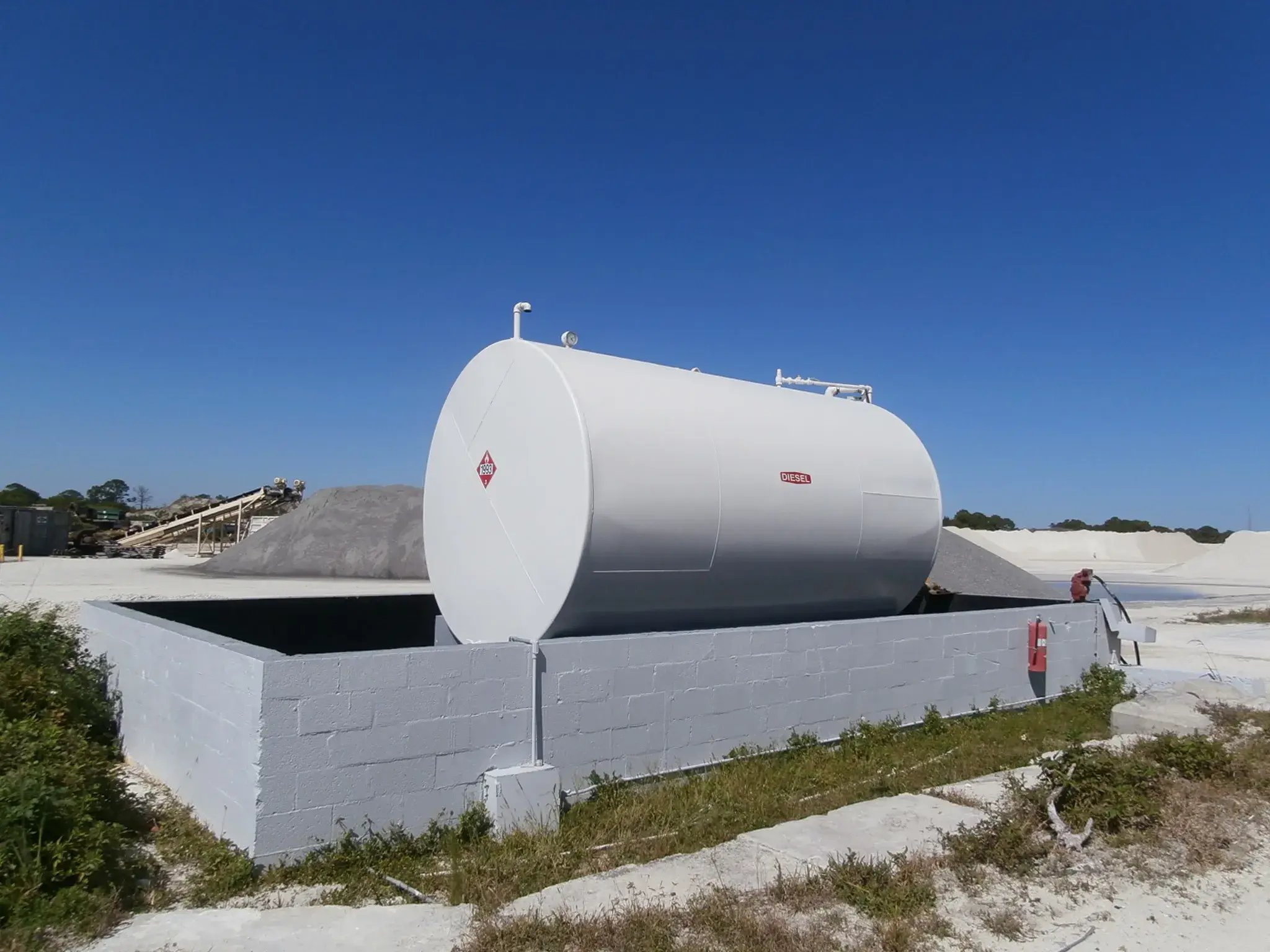
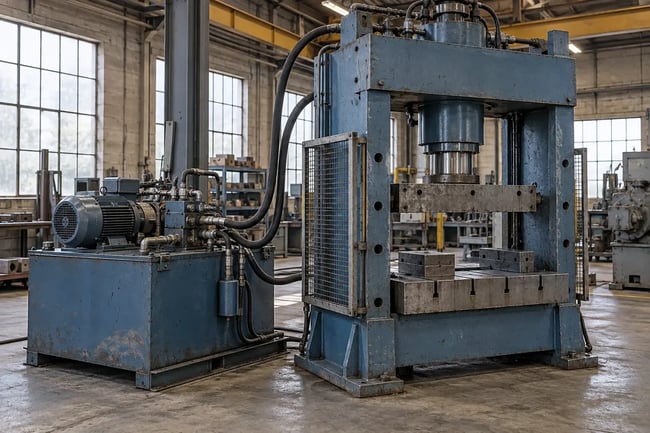
Ask a plant manager how much oil the facility stores and you'll usually hear about the diesel tank out back and a few drums of hydraulic fluid. You almost never hear about the oil sitting inside the equipment. The transformer by the loading dock, the hydraulic presses on the floor, the elevator in the office wing, and the big gearbox on the conveyor drive all hold oil. Under the federal oil spill prevention rule, any of them with a reservoir of 55 gallons or more counts toward the threshold that triggers an oil spill plan, and for a lot of Pennsylvania manufacturers and utilities, that's the difference between "we don't need one" and "we've needed one for years."
Below, we'll explain what the rule means by oil-filled operational equipment, how it gets counted, and where it hides at manufacturing plants, utility sites, and commercial buildings. We'll also cover a part of the rule many facilities never hear about: an option that lets qualifying equipment use a contingency plan and an inspection program instead of built secondary containment. If you'd like help figuring out whether your equipment puts you over the line, you can always reach out to RMA and we'll talk it through.
Table of Contents
TL;DR
Yes. Under the federal oil spill prevention rule, any transformer, hydraulic press, elevator, compressor, gearbox, or other equipment holding 55 gallons of oil or more counts toward the 1,320-gallon aboveground threshold, even though it isn't a storage tank. A few pieces of equipment can push a small facility into needing an oil spill plan. Qualifying equipment can often skip built containment and use a written contingency plan, a response commitment, and a routine inspection program instead. Pennsylvania's tank registration program generally doesn't cover this equipment, but the federal rule, enforced by EPA Region 3, still does.
What Is Oil-Filled Operational Equipment Under the SPCC Rule?
The federal rule here is the Spill Prevention, Control, and Countermeasure rule, or SPCC, at 40 CFR Part 112. It requires facilities that store more than a set amount of oil, and could spill it into a creek, river, or storm sewer, to keep a written plan for preventing and responding to spills. Our guide on everything you need to know about SPCC Plans covers the basics.
The regulation defines oil-filled operational equipment as equipment with an oil container inside it where the oil is there only to make the device work. EPA's own examples include hydraulic systems, lubricating systems for pumps and compressors, gearboxes, machining coolant systems, heat transfer systems, transformers, circuit breakers, and electrical switches. The rule draws two lines around it. It isn't a "bulk storage container," so it doesn't carry tank-specific requirements like full-capacity containment sizing or scheduled integrity testing. And it's separate from oil-filled manufacturing equipment, where oil flows through as part of the process, like a quench tank. Both types count toward your threshold, but only operational equipment is eligible for the contingency plan option we cover later.
How Oil-Filled Equipment Counts Toward the SPCC Threshold
A facility falls under SPCC when its aboveground oil storage capacity is more than 1,320 gallons, or its completely buried capacity is more than 42,000 gallons, and it could reasonably be expected to discharge oil to navigable waters or adjoining shorelines. Only containers of 55 gallons or more count toward the aboveground total, the same line that applies to drums, which we cover in our article on whether 55-gallon drums count toward SPCC.
Capacity counts, not contents. The rule defines storage capacity as shell capacity, so a 120-gallon reservoir counts as 120 gallons even if it runs at 90. A transformer pulled offline but still holding oil still counts. To drop out, equipment has to be permanently closed under the rule's definition: drained, disconnected, blanked off, valves locked, and signed with the closure date. The location test also can't lean on manmade structures like building walls or curbs, so an indoor press near a floor drain that ties into a storm sewer running to the Schuylkill or the Susquehanna is still in play. Our four steps to figure out if you need an SPCC Plan lays out the full process.
Here's how fast equipment changes the math at a hypothetical Berks County metal fabricator that has always assumed it's under the threshold.
| Container or Equipment |
Capacity |
Counts? |
| Diesel tank for the forklift and generator |
500 gallons |
Yes |
| Six drums of hydraulic oil |
330 gallons |
Yes |
| Pails of gear oil and cutting fluid |
5 gallons each |
No |
| What the shop usually counts |
830 gallons |
Under 1,320 |
| Three hydraulic presses |
150 gallons each |
Yes |
| Company-owned pad-mounted transformer |
300 gallons |
Yes |
| Actual total |
1,580 gallons |
Over 1,320 |
The volumes are illustrative, and real equipment varies a lot by model. The tank farm didn't change, but once the equipment is on the list, the facility is over the line.
Hidden Oil at Pennsylvania Manufacturing Plants
From stamping in the Lehigh Valley to plastics around Erie, metals near Pittsburgh, and food processing in Lancaster and York counties, Pennsylvania manufacturing runs on hydraulics and lubrication. These are the pieces we most often find missing from oil inventories.
| Equipment |
Where It Shows Up |
Often 55 Gallons or More? |
| Hydraulic presses and press brakes |
Stamping, forming, balers |
Often, on larger tonnage units |
| Injection molding and die casting machines |
Plastics, auto parts |
Often |
| Thermal oil (heat transfer) systems |
Food, asphalt, chemical |
Usually |
| Central machining coolant systems |
CNC and precision shops |
Sometimes |
| Large gearboxes and drives |
Conveyors, crushers, mills |
Sometimes |
| Compressor lube oil systems |
Large centrifugal units |
Sometimes |
Small reservoirs add nothing. A plant air compressor with a few gallons in its sump never counts, no matter how many you have. The 55-gallon test applies to each container, so if a press has a separate hydraulic power unit, look at that reservoir's nameplate or the manufacturer's manual. Sort operational from manufacturing equipment as you go, too, since it affects which containment options each piece gets.
A pad-mounted transformer at a service entrance can hold a few hundred gallons of mineral oil, and substation power transformers can hold thousands. Circuit breakers, regulators, and oil-filled switches add more. For municipal electric departments, rural electric cooperatives, and water and wastewater authorities with large pump stations, this equipment is often the whole reason a site has an SPCC Plan.
The first question with any transformer is who owns and operates it. The rule ties a facility's boundaries to the ownership and operation of the equipment on the site. If your utility owns and maintains the transformer at your service entrance, it's generally part of the utility's compliance picture. If your company owns it, which is common at industrial sites with their own unit substations, it's yours to count. Check rather than assume. Data center campuses are an extreme case of oil in electrical gear, which our data center guide to SPCC Plans covers. And if you're inventorying older units, it's a good time to check for PCBs, which fall under a separate federal program.
Elevators, Vehicle Lifts, and Building Hydraulics Under SPCC
Hydraulic elevators sit in a machine room, get serviced by an outside contractor, and show up on an inspection certificate in the lobby, not on the environmental inventory. But they run on a pump and reservoir, and many of those reservoirs hold 55 gallons or more. Hospitals, schools, office buildings, and multi-story plants from Philadelphia to Pittsburgh have them. Traction elevators, which use cables, carry much less oil.
Vehicle lifts are the other common one. Most lift reservoirs are small, but larger in-ground systems for trucks and buses at fleet shops, municipal garages, and bus depots can hold more. Those sites usually already have used oil tanks and drums, so a couple of big lifts can be what tips the total over 1,320 gallons. If building hydraulics go into your plan, make sure whoever does the plan's inspections knows to check the machine room.
The SPCC Contingency Plan Option for Oil-Filled Equipment
Nobody wants to build a berm around every press or transformer. The rule offers an alternative at 40 CFR 112.7(k) for qualified oil-filled operational equipment, based on spill history. To qualify, the facility can't have had a single reportable discharge from this equipment of more than 1,000 gallons, or two reportable discharges of more than 42 gallons each within any 12-month period, in the three years before the plan is certified (or since becoming subject to the rule, if that's sooner). Spills from natural disasters, war, or terrorism don't count. "Reportable" means discharges reaching water in harmful quantities, explained in our article on when you have to report an oil spill.
If you skip containment for qualified equipment, the rule requires three things instead:
- Documented inspection procedures or a monitoring program to detect equipment failure or a discharge.
- An oil spill contingency plan that follows 40 CFR Part 109.
- A written commitment of manpower, equipment, and materials to quickly control and remove any harmful discharge.
Facilities with a Facility Response Plan under 112.20 don't need the separate contingency plan and commitment. For everyone else, the contingency plan spells out who gets called, how a spill gets stopped, and who cleans it up, and management signs off on the resources. Inspections can be routine visual checks for leaks and staining, level alarms, or a documented maintenance program, as long as records are kept.
Contingency Plan vs. Secondary Containment for Oil-Filled Equipment
The contingency option is a choice. For some equipment, containment is simpler. For spread-out equipment, it can save a lot of money and disruption.
| Factor |
General Containment, 112.7(c) |
Contingency Option, 112.7(k) |
| Who can use it |
Any oil-filled equipment |
Operational equipment at facilities meeting the spill history test |
| Requirement |
Containment for the typical failure mode and most likely spill |
Inspections, Part 109 contingency plan, resource commitment |
| Physical work |
Curbing, drip pans, berms, or sorbents |
Little or none |
| Best fit |
Equipment already on curbed pads or sealed floors |
Scattered transformers and equipment where containment is costly |
Even with containment, this equipment doesn't need the full-capacity-plus-freeboard sizing bulk tanks do. The general requirement at 112.7(c) asks you to address the typical failure mode and most likely spill, which is often a leaking fitting or a burst hose, and it allows active measures like sorbents and spill kits. Our article on how big SPCC oil spill containment needs to be shows how tank sizing differs.
The 112.7(k) option also isn't the impracticability route at 112.7(d), which requires a Professional Engineer to explain why containment can't be installed. With 112.7(k), you just meet the spill history test and do the three things listed. Either way, write it into the plan piece by piece. A vague line saying equipment is "covered by the contingency plan," with no plan attached and no inspection records, is a common inspection finding, as our rundown of top SPCC Plan violations and fines shows.
How Pennsylvania's Tank Rules Treat Oil-Filled Equipment
Pennsylvania facilities deal with two layers. SPCC is enforced here by EPA Region 3, out of Philadelphia. PA DEP separately runs its storage tank program under the Storage Tank and Spill Prevention Act and 25 Pa. Code Chapter 245, covering tank registration and DEP-certified installers and inspectors. Our article on who enforces SPCC Plans breaks down who handles what.
For equipment, the layers don't line up. Chapter 245's definitions exclude equipment or machinery holding regulated substances for operational purposes, naming hydraulic lift tanks and electrical equipment tanks as examples. So transformers, presses, and elevator reservoirs generally aren't "tanks" to DEP's registration program, but they still count under federal SPCC. A manager who's been through tank registration may reasonably assume that list is the full oil inventory. For SPCC, it isn't. Spills from equipment still count, too. A transformer leak that reaches a creek can trigger federal and state reporting either way, and the 1988 Floreffe tank collapse on the Monongahela is a reminder of why regulators here take that seriously.
How to Inventory Oil-Filled Equipment for Your SPCC Plan
Start with the tank registration list and any existing SPCC Plan, then walk every building and outdoor area with someone from maintenance. Look for reservoirs, sight glasses, and nameplates. Check the electrical yard and confirm who owns each transformer. Don't skip the elevator machine room, the fleet shop, or idle equipment that isn't formally closed. For each item at 55 gallons or more, record shell capacity, oil type, location, and whether it's operational or manufacturing equipment.
If you're still at or under 1,320 gallons, you don't need an SPCC Plan. Keep the inventory on file to show your work. If you're over and have no plan, you'll need one, and depending on your capacity and spill history you may qualify for a self-certified plan, as our article on the different types of SPCC Plans explains. If your plan left equipment out, it needs an amendment, covered in when you should update your SPCC Plan. Then add the equipment to your SPCC monthly inspections and train the maintenance techs who top off reservoirs, since they're oil-handling personnel. Our online environmental training library includes SPCC courses they can take on their own schedule.
On cost, our published ranges for SPCC Plans run about $2,500 to $15,000. Simple Tier I updates often run around $1,500, while PE-certified amendments for complex, equipment-heavy sites can reach $7,500 or more. Our article on how much an SPCC Plan costs explains what drives those numbers, and the SPCC pricing calculator below gives a ballpark for our help at your facility.
How RMA Helps Pennsylvania Facilities With Oil-Filled Equipment and SPCC
We've been helping facilities with SPCC since 1992, and equipment inventories are one of the most common places we find gaps. We can help you work out whether your transformers, presses, and elevators put you over the threshold, decide which pieces fit containment or the contingency option, and write or amend your plan so it holds up during an EPA Region 3 inspection. We're based in New Jersey, we work with facilities across Pennsylvania, and our senior staff do the work themselves. If you turn out to be under the threshold, we'll tell you.
There's no pressure and no obligation. Give us a call, send an email, or fill out the form on our website, and reach out to RMA whenever you're ready.