A Plain-Language Look at What NJDEP Means by "Discharge," Where "Waters of the State" Begin, and When Rainwater Leaving Your Property Becomes Regulated
If you run a business in New Jersey, the word "discharge" probably brings to mind a pipe pouring something into a river. The New Jersey Department of Environmental Protection (NJDEP) uses the word much more broadly. Under the New Jersey Pollutant Discharge Elimination System (NJPDES), the state's version of the federal NPDES program, a discharge is just about anything that leaves your property and reaches the waters of the state, and that includes the water underground.
That broad definition is why so many New Jersey business owners are surprised to learn that rain running across their yard can fall under the same rules as a wastewater pipe. In this article we'll walk through what a discharge is, what counts as "waters of the state," whether rainwater itself is regulated, and how to tell when runoff from your site becomes something NJDEP cares about. If you'd rather talk it through with someone, you can always reach out to RMA.
Table of Contents
TL;DR
In New Jersey, a discharge is any release of a pollutant that reaches the waters of the state, including groundwater, whether it happens on purpose or by accident. Rainwater that picks up pollutants from industrial activity on your site and carries them off is regulated as stormwater, and depending on your industry and how your site is set up, you may need an NJPDES permit, a no exposure exclusion, or nothing at all.
What Does "Discharge" Mean Under NJPDES?
In plain terms, a discharge is a pollutant getting out of your control and into the environment. NJDEP's rules describe it as releasing, spilling, leaking, pumping, pouring, emitting, emptying, or dumping a pollutant into the waters of the state, or onto land or into wells from which it might flow or drain into those waters. It also covers pollutants released into a municipal treatment works, which means a discharge to a sewer counts too.
Two parts of that definition catch people off guard. First, it doesn't matter whether the release was intentional. A drum that leaks overnight and a pile of material that washes away in a storm are discharges just like a pipe that was built to carry water off site. Second, an omission counts as much as an action. If you let something happen by not covering, containing, or cleaning up, you can still be the one responsible for the discharge.
The word "pollutant" is broad as well. It isn't limited to chemicals and oil. NJDEP's rules also reach things like sand, dirt, and industrial waste, which is why sediment washing off a stockpile can matter just as much as a fuel leak.
What Are "Waters of the State" in New Jersey, and Does Groundwater Count?
When NJDEP says "waters of the state," it means more than the creek behind your property. The term covers surface waters such as streams, rivers, and lakes, ocean waters within the state's jurisdiction, and groundwater. Most facility managers think about the first group and forget the last one.
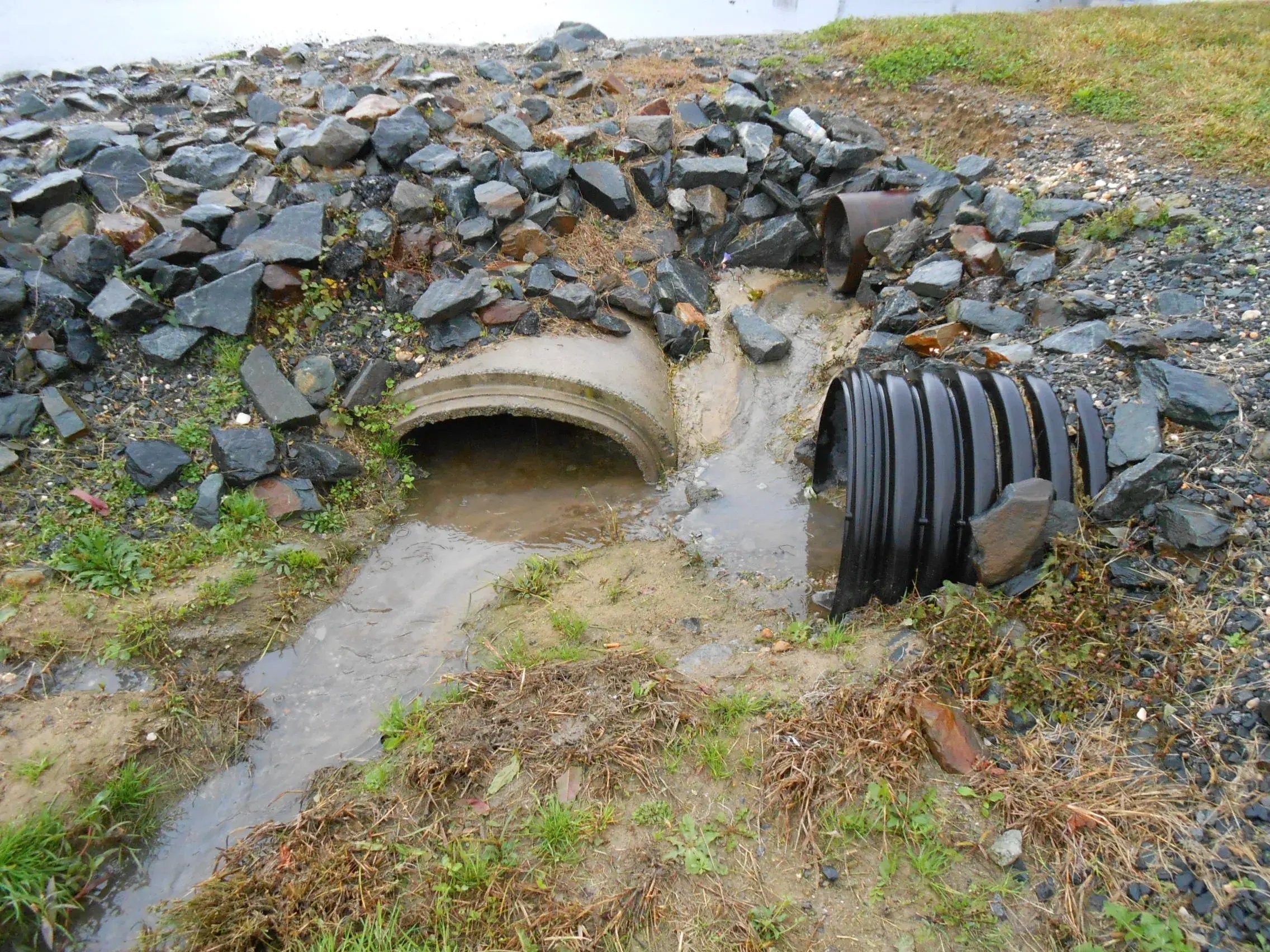
Groundwater matters because a discharge doesn't need a pipe, a ditch, or a visible stream. If a pollutant soaks into the ground at a gravel yard or a storage area and might make its way down to groundwater, that's a discharge to groundwater, which NJDEP abbreviates as DGW. Discharges that reach rivers and streams are discharges to surface water, or DSW. New Jersey's stormwater rules address both, and the general permits for industrial stormwater can cover discharges to surface water, groundwater, or both.
Does Rainwater Count as a Discharge in New Jersey?
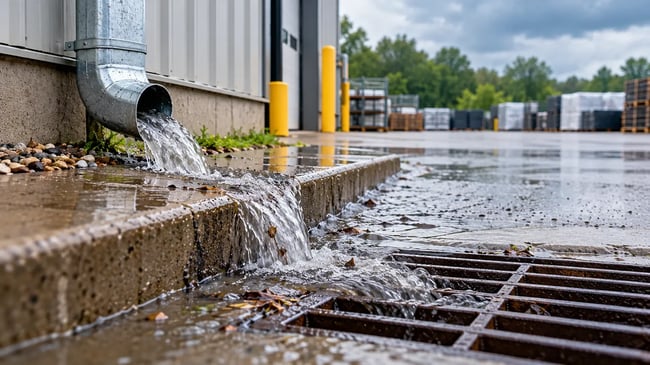
Rain falling from the sky isn't a pollutant, and NJDEP isn't regulating the weather. Clean rain that lands on a roof or a lawn and soaks in or runs off isn't what these rules are aimed at. The trouble starts when rain lands on your site, touches industrial activity, and leaves carrying something with it.
That's the line the rules draw. NJPDES requires permits for stormwater discharges associated with industrial activity, and it generally exempts stormwater that doesn't fall into the categories the rules list. So the question for your site isn't whether rain falls on it. The question is whether the rain runs through an area where your operations expose materials, equipment, or waste, and whether it then leaves the property.
| Situation |
How NJDEP's rules generally treat it |
| Rain on a clean roof draining to a landscaped area |
Usually not the concern of an industrial stormwater permit |
| Rain running across a yard with uncovered stockpiles or equipment, then leaving the site |
Possibly stormwater associated with industrial activity, which raises the permit question |
| Oil or fluid leaking from equipment and washing away in a storm |
A discharge of a pollutant, permit or not, and it may carry spill reporting duties |
| Rain soaking into bare ground where materials are stored outdoors |
Possibly a discharge to groundwater |
Each of these depends on the details, including what's stored, how it's exposed, and where the water ends up. The table shows how the logic works. It isn't a ruling on any particular site.
When Does Rainwater Become Industrial Stormwater in New Jersey?
The regulatory term is "stormwater associated with industrial activity." It means runoff from the parts of a site where industrial work happens, such as plant yards, material storage areas, loading docks, equipment maintenance and cleaning areas, and waste handling. We cover the federal version of that idea in our guide to stormwater associated with industrial activity.
Whether your site needs a permit depends on your type of industry, how much of your activity is exposed to rain, and where the water goes. New Jersey doesn't use one general permit for everyone. It uses the Basic Industrial Stormwater General Permit, known as 5G2, industry-specific general permits for categories like concrete products manufacturing, hot mix asphalt, and scrap metal, individual permits for sites that don't fit a general permit, and a no exposure exclusion for facilities that keep everything under cover. We break down how those options differ in our article on which NPDES permit you need, and in our explanation of the 5G2 permit.
Plenty of businesses end up needing no permit at all. Many warehouses, offices, and other operations that keep their work indoors fall into that group, and we'll tell you so if that's your situation. Building a new facility is a separate matter. Stormwater during construction falls under its own set of requirements, which RMA doesn't prepare. Once the facility is up and running, though, the operational permits and plans are where we help.
What Should a New Jersey Facility Do About Stormwater Discharges?
Start by walking your site during a rain. Watch where the water goes, which areas it crosses, what's sitting outside, and where it leaves the property. Note whether it enters a storm drain, a ditch, a stream, or soaks into the ground. That simple walk tells you more about your discharge picture than any map does.
Where the water goes matters for the rules that apply. Some older New Jersey cities have combined sewer systems, and if your runoff goes to a sewerage authority instead of a stream or a storm drain, that authority's rules may apply in place of an NJPDES stormwater permit or alongside one. We can't tell you flatly what applies to a given address, so confirm where your site drains before you assume anything.
Next, figure out whether your industry falls into a regulated category and whether you can truly keep your activities covered. If you want to understand the difference between rain runoff and the water your processes produce, read our piece on stormwater versus process water. Process wastewater is a separate discharge issue and often needs its own approval. For the permit side of things, our guide to NJPDES stormwater permit requirements walks through what a New Jersey facility has to do once it's covered.
If something is actively leaking or spilling, safety and containment come first. Get people clear, stop the release if you can do it safely, and report it as your requirements direct. The permit questions can wait until the situation is under control.
How Can RMA Help With New Jersey Discharge and Stormwater Questions?
We're based in New Jersey and we work with NJDEP's permit categories regularly, so we can usually tell you quickly whether runoff from your site is something to worry about. We can look at your operations and your drainage, explain which permit or exclusion fits, and help you put the plan and paperwork in place if you need them. If you don't need us, we'll say that too.
There's no pressure and no obligation. You can call us, email us, or fill out the form on our website, and one of our team will get back to you. When you're ready, contact RMA and tell us what you're seeing on your site.