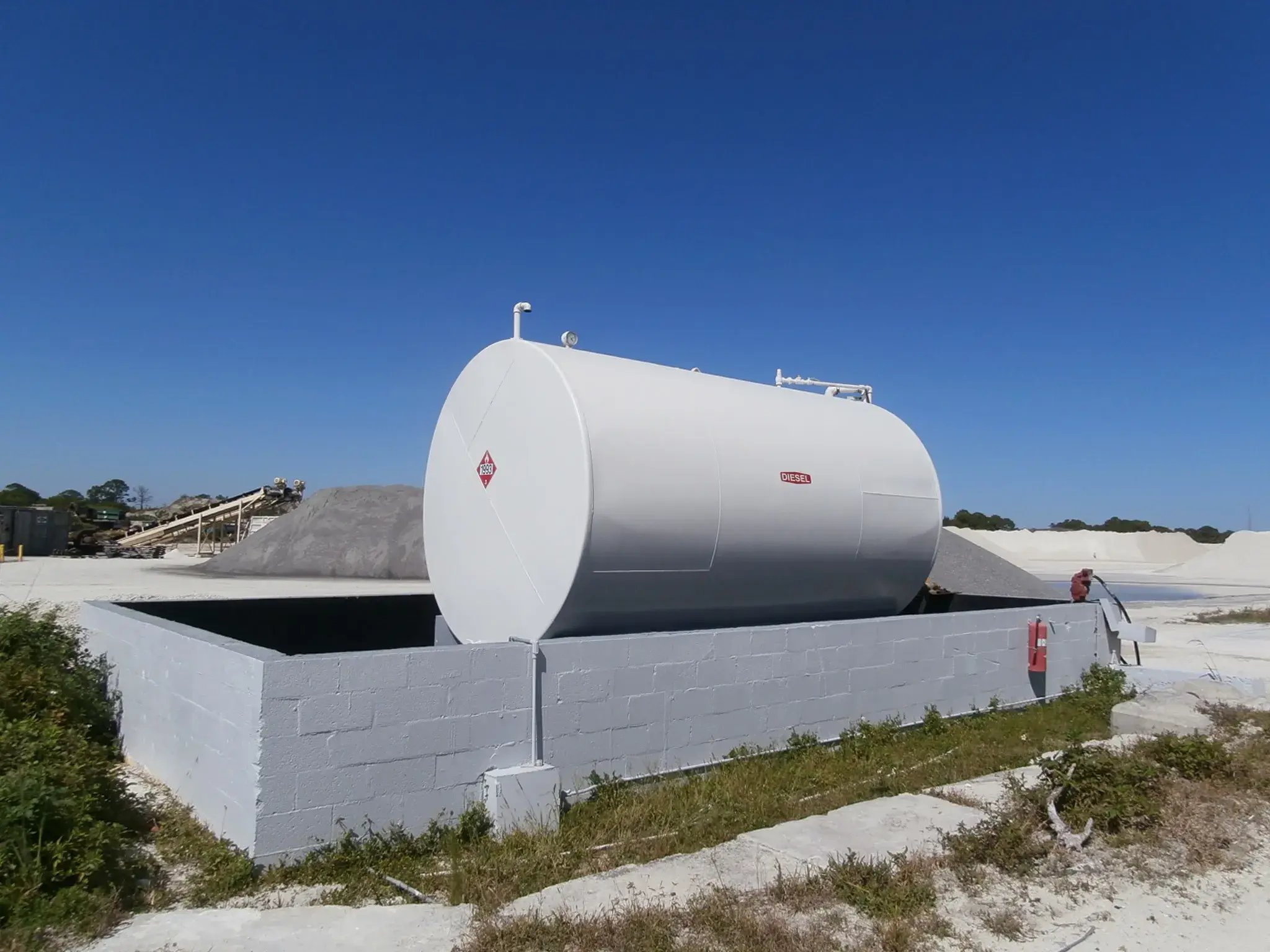
It's More Than Fuel: How Diesel, Hydraulic Oil, Transformer Oil, Asphalt, and Even Cooking Oil Count Toward an SPCC Plan at Pennsylvania Businesses
Say "oil storage" to most business owners and they picture a big fuel tank at a truck stop or a refinery. So when they hear there's a federal rule requiring some businesses to keep an oil spill plan, they figure it doesn't apply to a bakery, a machine shop, or a ready-mix plant. The trouble is that federal rules define oil far more broadly than everyday language does. Under the federal oil spill rule, oil means oil of any kind and in any form. That covers gasoline, diesel, and heating oil, but also hydraulic and lube oils, used oil, transformer oil, asphalt cement, synthetic oils, and animal fats and vegetable oils like the fryer oil in a commercial kitchen.
Because of that definition, some Pennsylvania businesses need a spill plan without knowing it. In this article, we'll explain the definition in plain terms, give you a table of the oils we find at different kinds of businesses, cover what doesn't count, and work through a few gray areas. If you'd like help sorting out what's on your own site, you can reach out to RMA anytime.
Table of Contents
TL;DR
Under the federal oil spill rule, oil means oil of any kind in any form, so it includes fuels, hydraulic and lube oils, used oil, transformer oil, asphalt cement, synthetic oils, and animal fats and vegetable oils like cooking oil. Propane, natural gas, DEF, antifreeze, and most non-oil chemicals don't count, and milk and hot-mix asphalt are specifically exempt. Every type of oil adds together toward the same 1,320-gallon threshold, so a kitchen's fryer oil and a generator's diesel go into one total.
What Does "Oil" Mean Under the Federal Spill Plan Rule?
The federal oil spill rule is called the Spill Prevention, Control, and Countermeasure rule, and the written plan it requires is an SPCC Plan: a document describing the oil a site stores, how it's kept from leaking, and how a spill would be contained and cleaned up. The rule lives at 40 CFR Part 112, and in Pennsylvania it's enforced by the U.S. EPA through its Region 3 office in Philadelphia. If you're new to the whole idea, our overview of what an SPCC Plan is is a good starting point.
The rule defines oil as oil of any kind or in any form. It then names examples on both sides of a line. On one side are petroleum oils, which the rule describes as petroleum in any form, including crude oil, fuel oil, mineral oil, sludge, oil refuse, and refined products. On the other side are non-petroleum oils, which include synthetic oils, animal fats from animal, fish, or marine mammal sources, and vegetable oils from seeds, nuts, fruits, and kernels. Oil mixed with wastes is still oil.
The practical takeaway is simple. If it's oily, greasy, or fatty and it's liquid or can flow, assume it counts until you've confirmed otherwise. The rule doesn't care whether the oil is new, used, refined, food grade, or sitting inside a machine.
Which Petroleum Oils Count Toward an Oil Spill Plan?
Petroleum oils are the ones most people expect, but the list runs well past fuel. Gasoline, diesel, kerosene, and heating oil all count, and so does fuel stored in a generator's base tank or a day tank inside a building. Lubricating oils count too: motor oil, gear oil, transmission fluid, compressor oil, and the hydraulic oil in presses, lifts, balers, and loaders. Used oil counts the same as new oil, so the drum or tank collecting drained crankcase oil belongs in the picture. We explain how used oil is handled separately from the spill plan in our article on used oil vs. waste oil.
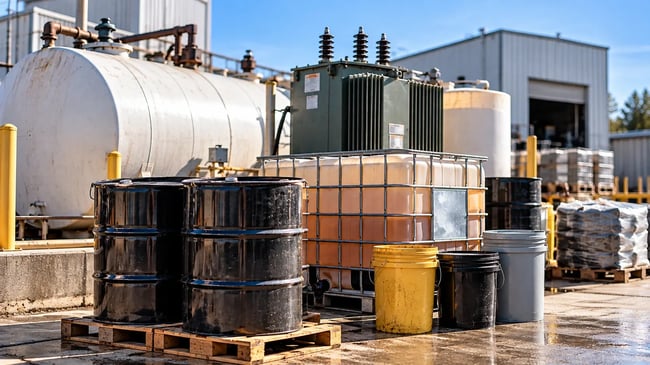
A few petroleum oils surprise people more than others. Transformer oil (also called dielectric or mineral insulating oil) counts, so a pad-mounted transformer your business owns is part of your oil storage. Asphalt cement counts as well. Cutting and machining oils, quench oils, and form release oils made from petroleum all count. So does sludge and oily residue collected from equipment or cleanup.
Oil inside equipment is still oil. The rule calls it oil-filled operational equipment, meaning machinery where the oil is there to make the equipment work, like hydraulic systems, transformers, and gear boxes. Any of those with 55 gallons or more of oil count toward your storage capacity, even though nobody would describe them as tanks.
Do Cooking Oil and Animal Fats Count as Oil?
Yes, and this is the piece that catches food plants and commercial kitchens off guard. Vegetable oils like soybean, canola, corn, palm, and olive oil count. So do animal fats like lard, tallow, and fish oil. That means bulk frying oil, the used cooking oil container out back, and a food processor's tank of rendered fat all go into the same tally as a diesel tank.
EPA doesn't give food oils a pass because they're edible or biodegradable. A large release of vegetable oil coats wildlife, smothers aquatic life, and uses up oxygen in a stream much like petroleum does. For a deeper look at how this plays out for restaurants and food businesses, read Do I Need an SPCC Plan for Cooking Oil or Used Cooking Oil?
Biodiesel falls on this side of the line as well, since it's made from vegetable oils or animal fats. A business blending its own fuel or storing biodiesel for its fleet should count those tanks along with everything else.
What Oils Do Pennsylvania Businesses Commonly Store?
When we walk sites across Pennsylvania, the same oils show up over and over, just in different combinations depending on the industry. Here's what we commonly find.
| Type of Business |
Oils We Commonly Find |
| Concrete and aggregates |
Diesel for loaders and mixers, hydraulic oil, form release oil, gear oil, used oil |
| Manufacturing and machine shops |
Hydraulic oil, cutting and machining oils, quench oil, lube oil, transformer oil |
| Data centers |
Generator diesel in base and day tanks, bulk diesel, transformer oil |
| Food plants and commercial kitchens |
Cooking oil, used cooking oil, lard, tallow, food-grade hydraulic and gear oils |
| Auto repair and fleet yards |
Gasoline, diesel, motor oil, transmission fluid, gear oil, used oil |
| Recycling and scrap yards |
Hydraulic oil in balers and shears, diesel for equipment, used oil |
| Paving contractors |
Asphalt cement, diesel, heating oil for burners, hydraulic oil |
| Office and warehouse buildings |
Generator diesel, heating oil, elevator hydraulic oil, owner-owned transformers |
Two industry guides on our site go deeper on specific cases: whether a concrete plant needs an SPCC Plan, and a data center's guide to SPCC Plans. Generators show up in nearly every row of that table, so if you're adding backup power, our article on emergency backup generators and environmental permits is worth a read too.
What Doesn't Count as Oil Under the SPCC Rule?
Plenty of liquids on a typical site aren't oil, and leaving them out of your tally matters just as much as counting the ones that are. Gases like propane and natural gas aren't treated as oil under the rule. Most chemicals that aren't oils also fall outside it, though some of them are covered by other programs, like hazardous chemical reporting or hazardous waste rules. The rule also carves out a few specific exemptions for materials that would otherwise count.
| Material |
Why It Doesn't Count |
| Propane and natural gas |
Gases, not liquid oils |
| Diesel exhaust fluid (DEF) |
Urea and water, not oil |
| Antifreeze and coolant (glycol) |
Not an oil, though it has its own disposal rules |
| Acids, caustics, and water treatment chemicals |
Not oils, though they may be reportable under other programs |
| Water-based (latex) paints |
Not oils |
| Milk and milk products |
Specifically exempted, including associated piping |
| Hot-mix asphalt |
Specifically exempted, along with its containers |
The hot-mix asphalt exemption needs a careful read. Finished hot-mix asphalt and the containers holding it don't count, but the asphalt cement that goes into the mix does. A paving operation with a heated asphalt cement tank still has to count that tank. Milk is the other notable carve-out, which is good news for Pennsylvania's dairy farms and processors, though the diesel, hydraulic oil, and any vegetable oils on those sites still count.
How Should You Handle Oil Mixtures, Solvents, and Other Gray Areas?
Not every product sorts neatly. Since the rule covers oil in any form, mixtures that contain oil can count. Oily wastewater held in a tank, an oil-water mix collected from a separator, and water-based coolants with an oil component can all come into play. There's an exemption for parts of a facility used only for wastewater treatment, but it's narrow, and recovering or recycling oil doesn't qualify as wastewater treatment.
Solvents are another gray area. Petroleum-based solvents like mineral spirits are petroleum products, so they can count. Chlorinated solvents and other chemicals that aren't petroleum-based generally don't fall under the oil rule, even though they may be regulated elsewhere. Specialty products like rust inhibitors, release agents, and lubricant blends vary a lot from one manufacturer to the next.
The fastest way to settle a gray-area product is its Safety Data Sheet. If the SDS lists petroleum distillates, mineral oil, base oils, or vegetable or animal oils as main ingredients, treat the product as oil. If you still can't tell, it's safer to count the container and note why than to leave it out and have an inspector disagree with you later.
How Do Different Oil Types Add Up Toward the SPCC Threshold?
Here's where the broad definition starts to matter. A business needs an SPCC Plan when its aboveground oil storage capacity is more than 1,320 gallons, counting only containers of 55 gallons or more (or more than 42,000 gallons buried), and a spill could reasonably reach a creek, river, or a storm drain leading to one. All the oil types add together. You don't get a separate 1,320 gallons for fuel and another for cooking oil. You count the full size of each container, whether it's full or empty.
Take a mid-size bakery outside Lancaster as an example. It has a 1,000-gallon bulk soybean oil tank for its fryers, a 300-gallon used cooking oil container, a backup generator with a 200-gallon base tank, and two 55-gallon drums of food-grade hydraulic oil for its packaging line. The owner thinks of only one of those as fuel. Added up, the site has 1,610 gallons of oil storage capacity, which puts it over the federal threshold. Our article on whether 55-gallon drums are included in SPCC Plans covers the container-size rule in more detail.
Does Pennsylvania's Tank Program Define Oil the Same Way?
Not exactly. Pennsylvania has its own storage tank program, run by the Department of Environmental Protection (DEP) under the Storage Tank and Spill Prevention Act and 25 Pa. Code Chapter 245. The state passed that law after the 1988 Floreffe tank collapse sent diesel into the Monongahela River. DEP's program is built around what the state calls regulated substances, which center on petroleum products and certain hazardous substances, and it has its own size thresholds and exclusions.
The result is that the two programs don't line up perfectly. A tank of vegetable oil can count toward your federal spill plan threshold without being the kind of tank DEP's program focuses on. A tank holding a hazardous chemical that isn't oil can fall under DEP's program without counting toward the federal spill plan at all. Neither program substitutes for the other, so it's best to check each one separately. The federal question is usually the one businesses have never looked at.
What Should You Do If You Store More Oil Than You Thought?
Start with a simple inventory. Walk the site and list every container and piece of equipment holding 55 gallons or more of anything oily, including the generator, the hydraulic equipment, the used oil drums, and anything in the kitchen. Write down each container's full capacity, not how much is in it. Then add it all up. Our four steps to figure out if you need an SPCC Plan walks through the rest of the decision.
If you're over 1,320 gallons, you may still be able to handle the plan yourself. Sites with 10,000 gallons or less of aboveground oil storage, no single container over 5,000 gallons, and a clean recent spill history can usually self-certify using EPA's Tier I template, which we explain in our article on Tier I self-certified SPCC Plans. When outside help makes sense, the plans we prepare generally run from $2,500 to $15,000, depending on the size of the site and whether a Professional Engineer has to certify the plan. Our breakdown of SPCC Plan costs explains what drives the price, and you can get a quick estimate for our help using the pricing calculator below.
How RMA Helps Pennsylvania Businesses Sort Out Oil Storage
We're a family-run environmental consulting firm based in New Jersey, and we've been helping facilities with oil storage and spill plans since 1992, including many businesses across Pennsylvania. We can go through your products and containers with you, sort out what counts as oil and what doesn't, and tell you plainly whether you're over the federal threshold. If a Tier I template is all you need, we'll say so. If you need a full SPCC Plan, an update, or training for your team through our online environmental training library, we'll explain what's involved and what it costs up front.
There's no pressure and no obligation. You can call, email, or fill out the form on our website. If you're looking at a shelf of drums and an SDS binder and aren't sure where to start, get in touch with our team and we'll help you work through it.