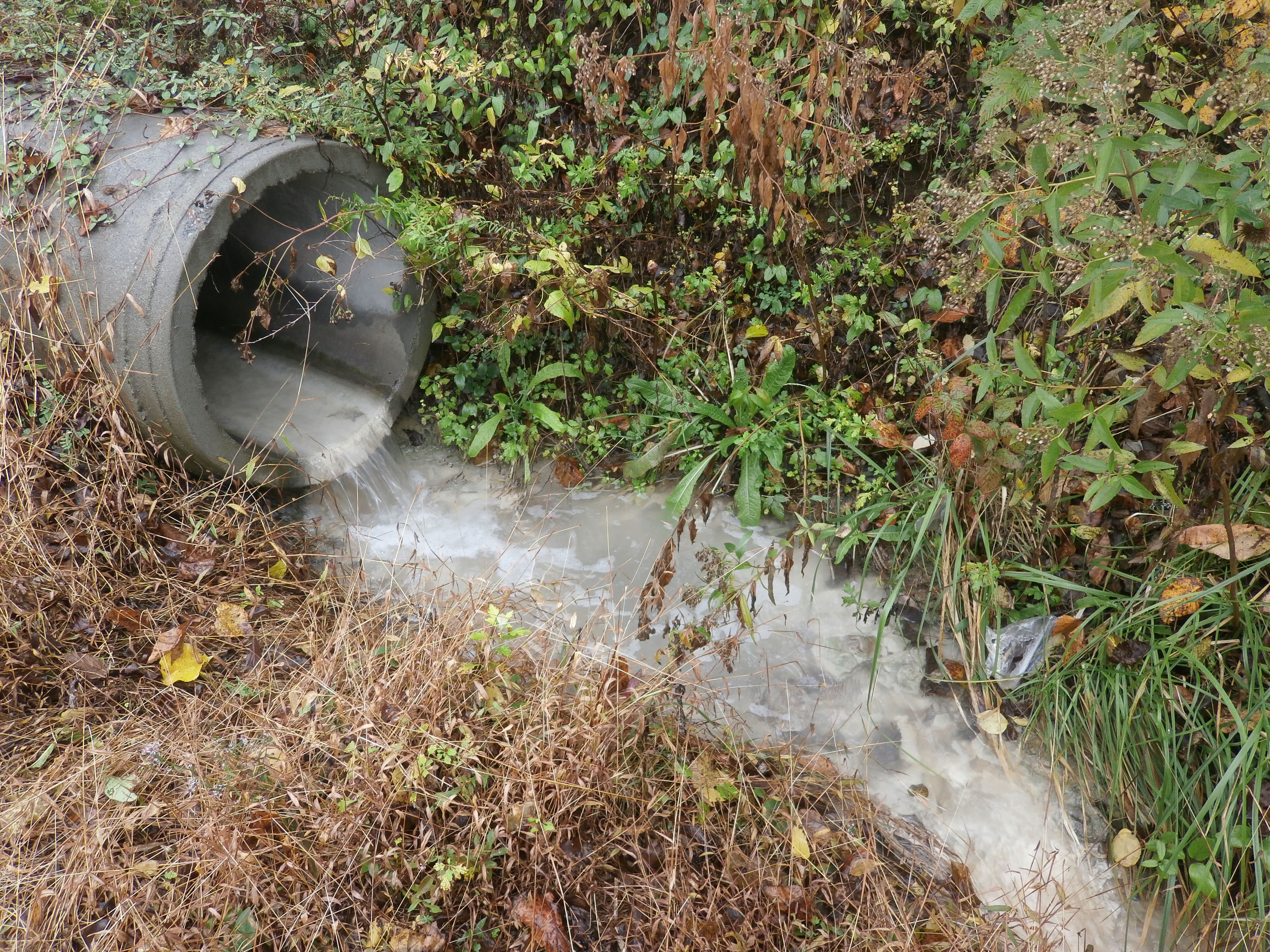
How Pennsylvania's Environmental Agency Permits, Inspects, and Enforces, and What Usually Brings an Inspector to Your Door
If you run an industrial facility in Pennsylvania, the Department of Environmental Protection (PA DEP) is probably the agency you think about least until a letter arrives or an inspector shows up at the gate. Then it's all anyone at the plant talks about. Most facility managers know DEP issues permits. Far fewer know who inside the agency handles their site, what sets off an inspection, or what happens once an inspector is walking the yard.
This article covers what PA DEP does, how its regional offices and EPA split the work, the usual reasons an inspector ends up at a business, and what follows if problems turn up. DEP runs a lot more than stormwater, so we'll touch on its air, waste, and storage tank programs along the way, but most of this article focuses on stormwater and NPDES permits, since that's where many industrial facilities first run into DEP. We also look at how to get ready before a visit and what compliance costs next to an enforcement action. If you'd rather talk through your own situation, you can reach out to RMA any time, and if your paperwork is already in order, you may not need us at all.
Table of Contents
TL;DR
PA DEP is the state agency that issues Pennsylvania's environmental permits, inspects facilities, and enforces the rules through six regional offices, covering air, waste, storage tanks, and water, with stormwater permits often being an industrial site's first contact. Inspectors usually arrive because a facility is on a routine inspection list, someone filed a complaint, a spill got reported, or the paperwork DEP receives raised questions. Penalties under the Pennsylvania Clean Streams Law can reach $10,000 per day for each violation, which adds up fast next to the cost of getting covered. Knowing your permit status, keeping your stormwater plan current, and filing reports on time covers most of what an inspector will ask about.
What Does PA DEP Do for Industrial Facilities?
PA DEP is Pennsylvania's environmental regulator, and for an industrial or small business facility it does three jobs. It writes and issues permits, it inspects facilities to see whether they're following those permits, and it takes enforcement action when they aren't. It does that across several separate programs, each with its own staff, rules, and thresholds, so being in good shape with one tells you nothing about the others. Here are the ones industrial facilities run into most outside of stormwater.
| DEP program |
What it covers at a typical facility |
| Air quality |
Plan approvals and operating permits for boilers, spray booths, generators, and dust sources under 25 Pa. Code Chapter 127, with exemptions for many small sources. Philadelphia and Allegheny County run their own air programs. |
| Waste management |
Hazardous waste generator rules, plus Pennsylvania's residual waste program for non-hazardous industrial waste like scrap, sludges, and off-spec product. |
| Storage tanks |
Registration of aboveground tanks over 250 gallons and underground tanks over 110 gallons that hold regulated substances like fuel. |
| Water (including NPDES) |
Industrial stormwater permits, process wastewater discharges, and construction stormwater during building projects. |
A few things people lump in with DEP sit elsewhere. SPCC oil spill plans are a federal EPA rule, Tier II chemical inventory reports go to the Pennsylvania Department of Labor & Industry, and process water sent to a public sewer is usually controlled by the local sewer authority. The rest of this article sticks mostly to stormwater and NPDES permitting, because that's where a lot of industrial facilities run into DEP first and where we see the most facilities caught off guard.
The NPDES program comes out of the federal Clean Water Act, but EPA doesn't run it day to day in Pennsylvania. EPA authorized the state to issue NPDES permits in 1978 and general permits, like PAG-03, in 1991. When you submit a Notice of Intent, file a discharge monitoring report, or apply for a renewal, DEP is the agency receiving it. Pennsylvania also has its own law, the Clean Streams Law, which governs discharges to the waters of the Commonwealth, so a single problem at your site can be a federal permit violation, a state law violation, or both.
Does EPA Still Have a Say in Pennsylvania?
It does, in the background. When EPA hands a state the NPDES program, it keeps its own authority to take enforcement action for permit violations in that state, and it has used that authority in Pennsylvania. Day to day, though, DEP is the agency you'll deal with.
How Do PA DEP Regional Offices Handle Stormwater and NPDES Work?
DEP's central office in Harrisburg handles regulations and policy, and its Bureau of Clean Water oversees the NPDES program statewide. The staff who review your application, inspect your site, and follow up on violations work out of one of six regional offices: Southeast in Norristown, Northeast in Wilkes-Barre, Southcentral in Harrisburg, Northcentral in Williamsport, Southwest in Pittsburgh, and Northwest in Meadville. Which office covers you depends on your county.
DEP reports that it generally conducts over 4,000 NPDES inspections and completes over 500 NPDES enforcement actions every year. Those numbers cover everything from sewage plants to industrial sites, so they don't tell you your own odds. They do show that inspections and enforcement are routine work for the agency, not rare events.
Where Do County Conservation Districts Fit In?
You'll hear about conservation districts too. DEP has delegated parts of the construction stormwater and erosion control work to them. If you run an operating industrial site, your contact is usually the DEP regional office, though a district can get involved if you're moving a lot of dirt on the property. RMA doesn't prepare construction-phase permits, which usually fall to your engineer or contractor, but once the site is running, the operational permits and plans are where we help.
Which Pennsylvania Facilities Need NPDES Stormwater Permit Coverage?
If your industrial activities or materials are exposed to rain or snowmelt, you may need NPDES coverage for the stormwater leaving your site. Pennsylvania gives you three routes. PAG-03 is the general permit most industrial facilities use. Facilities that aren't eligible for PAG-03, including those discharging to High Quality or Exceptional Value waters, need an Individual NPDES Permit. And facilities that keep every qualifying material and activity indoors or under shelter can request a No Exposure Certification instead, which DEP has to approve and which gets renewed every five years. Our guide to which NPDES permit you need walks through the differences, and our article on who needs an NPDES stormwater permit is a good place to start if you're not sure your site qualifies.
Coverage is also what puts a facility into DEP's system. A permitted facility has a file, a Notice of Intent, a PPC Plan, and a reporting schedule. A facility that needs coverage and doesn't have it has none of that, and it tends to come to DEP's attention in other ways, which is where the next section picks up.
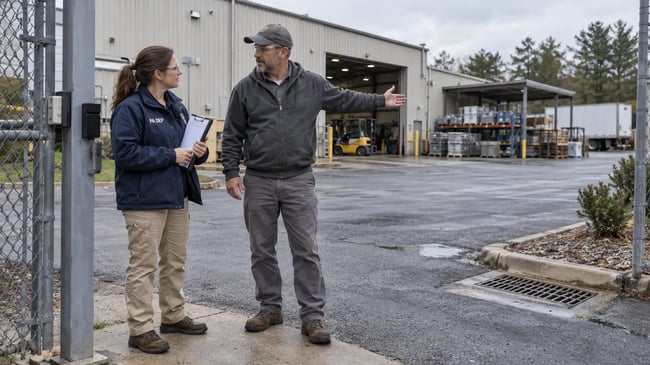
Why Would PA DEP Show Up at My Business?
Several things can bring an inspector to a facility, and some of them have nothing to do with anything you did wrong.
The most common is the routine inspection. DEP sets inspection goals each year through a compliance monitoring strategy, and that strategy has every industrial stormwater facility with an individual NPDES permit slated for an inspection, plus a percentage of the other industrial stormwater facilities. Being on the list doesn't mean DEP suspects a problem. It means your facility's turn came up.
Complaints are the second route. Regional offices respond to environmental complaints, and DEP has an online process open to the public. A neighbor who sees muddy or discolored water leaving your yard is enough to start one. A spill or release that reaches a storm drain or a stream can also bring a response, whether you report it or someone else does.
Your own paperwork is the third. PAG-03 permittees report through DEP's eDMR system, so DEP staff can see your sampling results, your late reports, and your missing ones. Applications, renewals, and permit changes also put your facility in front of DEP reviewers, and a review can lead to questions or a site visit.
Stormwater isn't the only program that sends people out, either. DEP's air quality, waste, and storage tank programs run their own inspections. A facility that keeps a careful PPC Plan but has an unregistered fuel tank or an air source that never got a plan approval can still end up with a notice of violation from a different part of the agency.
Can PA DEP Inspect a Facility That Doesn't Have a Permit?
Yes. An inspection can be where an unpermitted discharge gets discovered, whether it started with a complaint or a site visit for another reason. If you think you might need coverage and don't have it, sort that out before DEP does it for you. We cover the timeline in our article on how long it takes to get PAG-03 coverage in Pennsylvania.
What Do PA DEP Inspectors Look At During a Facility Visit?
Every inspection is a little different, but the questions are predictable because they come straight from your permit. For a facility with PAG-03 coverage, the inspector typically works through the site and the paperwork side by side, and the exact list depends on your permit and its appendix. Expect questions about:
- Your PPC Plan, and whether it matches what's on the ground today
- Outfalls, drainage areas, and where stormwater leaves the property
- Exposed materials, housekeeping, and BMPs like berms, covers, and sediment controls
- Sampling records, lab reports, and eDMR submissions
- Inspection logs, corrective actions, and employee training records
We walk through the visit itself in our article on what happens during a PA DEP stormwater inspection, so we won't repeat the full play-by-play here. The short version is that inspectors compare what your documents say to what they see, and any gap between the two is where questions start.
What Happens After a PA DEP Inspection Finds Problems?
Findings come in different sizes. Some are minor, like a missing inspection log or a berm that needs repair, and they get handled with a written response and a fix. Findings that point to a violation of your permit or the Clean Streams Law can lead to formal enforcement, which typically starts with a notice of violation asking for a written response and corrective action. If problems aren't resolved, or are serious from the start, DEP can escalate to orders, consent agreements, and civil penalties. Once things reach that stage, an environmental attorney may be worth bringing in alongside your technical help.
On the dollar side, the Clean Streams Law lets DEP assess a civil penalty of up to $10,000 per day for each violation. Federal law adds its own layer, since EPA keeps the authority to act in Pennsylvania and can seek Clean Water Act penalties currently set at up to $68,445 per day per violation. Both numbers are ceilings, and neither is a prediction of what a typical facility pays.
When DEP sets a penalty amount, it weighs factors like whether the violation was willful and how much damage it caused to the waters of the Commonwealth. A facility that found its own problem, fixed it, and can show records is in a very different spot than one that ignored it. If your sampling results come back high, our article on what to do if your stormwater sampling results are high covers the steps to take before anyone asks.
How Can I Prepare for a PA DEP Inspection Before It Happens?
Start by knowing where you stand. You should be able to say which path applies to your facility, whether that's PAG-03, an Individual permit, or No Exposure, and where your coverage paperwork lives. If you can't, that's the first thing to settle. If you'd like a look across every program at once, including air, waste, and tanks, an environmental audit can find gaps before an inspector does.
Next, keep your plan current. Your PPC Plan should describe the site as it is now, not the site from the year it was written, so walk the yard against it regularly and whenever storage areas, drainage, or operations change. If you're not sure how a PPC Plan differs from a SWPPP, our comparison of PPC Plans and SWPPPs for PAG-03 explains it.
Then look at your reporting. Sampling results, lab reports, and eDMR submissions are the part of your program DEP can review without leaving the office, so get them in on time and keep copies. Our guides to Pennsylvania's eDMR reporting, PAG-03 stormwater sampling, and discharge monitoring reports cover the details.
Finally, make sure the people on site know the program. Whoever meets the inspector at the gate should know what to do, and your employees should understand their part of the plan. We explain whether stormwater training is required, and our online training library has courses for teams that need them.
What Should I Do When the Inspector Arrives?
Be polite and cooperative, and don't guess. If you don't know an answer, say you'll find it and get back to them rather than making one up. Ask for a copy of the inspection report, and follow up in writing on anything you promised.
Do I Need a Consultant to Prepare for a DEP Inspection?
Not necessarily. If you have coverage, a plan someone keeps current, and a person on staff who owns sampling and reporting, you can run all of this yourself, and plenty of facilities do. Even the permit application can be a do-it-yourself project, as we explain in can you get a PAG-03 permit yourself. Help tends to make sense when nobody owns the program, the plan has drifted from the site, or DEP has already sent a letter.
How Much Does PA Stormwater Compliance Cost Compared to a DEP Enforcement Action?
For PAG-03, PA DEP charges a $500 application fee and a $500 annual fee. The bigger cost is preparing what the permit requires, including the site evaluation, mapping, PPC Plan, and application package. For a relatively straightforward facility, professional help with the full application typically runs about $5,000 to $10,000, and ongoing compliance support can run another $3,000 to $6,000 per year depending on your site and how much help you want. An Individual NPDES Permit is more involved and can cost considerably more. Our breakdown of what a PAG-03 permit costs in Pennsylvania goes through the pieces.
Set that next to an enforcement action. A single violation can carry a penalty of up to $10,000 per day, and that's before the cost of fixing the problem on DEP's deadline and the staff time spent responding. Coverage costs are predictable. Enforcement costs aren't.
If you'd like a number for your own site, the calculator below gives an instant estimate of what RMA's help would cost. It prices our work, not DEP's fees.
How Does RMA Help Pennsylvania Facilities with PA DEP Compliance?
We help Pennsylvania facilities figure out whether PAG-03, an Individual NPDES Permit, or No Exposure applies, then handle the site evaluation, PPC Plan, Notice of Intent, and DEP review that follow. After coverage, we can keep helping with sampling, eDMR reporting, training, and plan updates. Outside of stormwater, we also help with SPCC Plans, Tier II reporting, and waste management. Senior staff do the work on every project, and you can see how it runs on our NPDES permitting process page.
If you want to talk it through, you can call, email, or fill out the form on our website, or contact our team whenever it suits you. There's no pressure and no obligation, and if we're not the right fit, we'll tell you.