How DEP's Individual Industrial Stormwater Permit Application Compares to a PAG-03 NOI, and Why It Takes More Time, Data, and Money
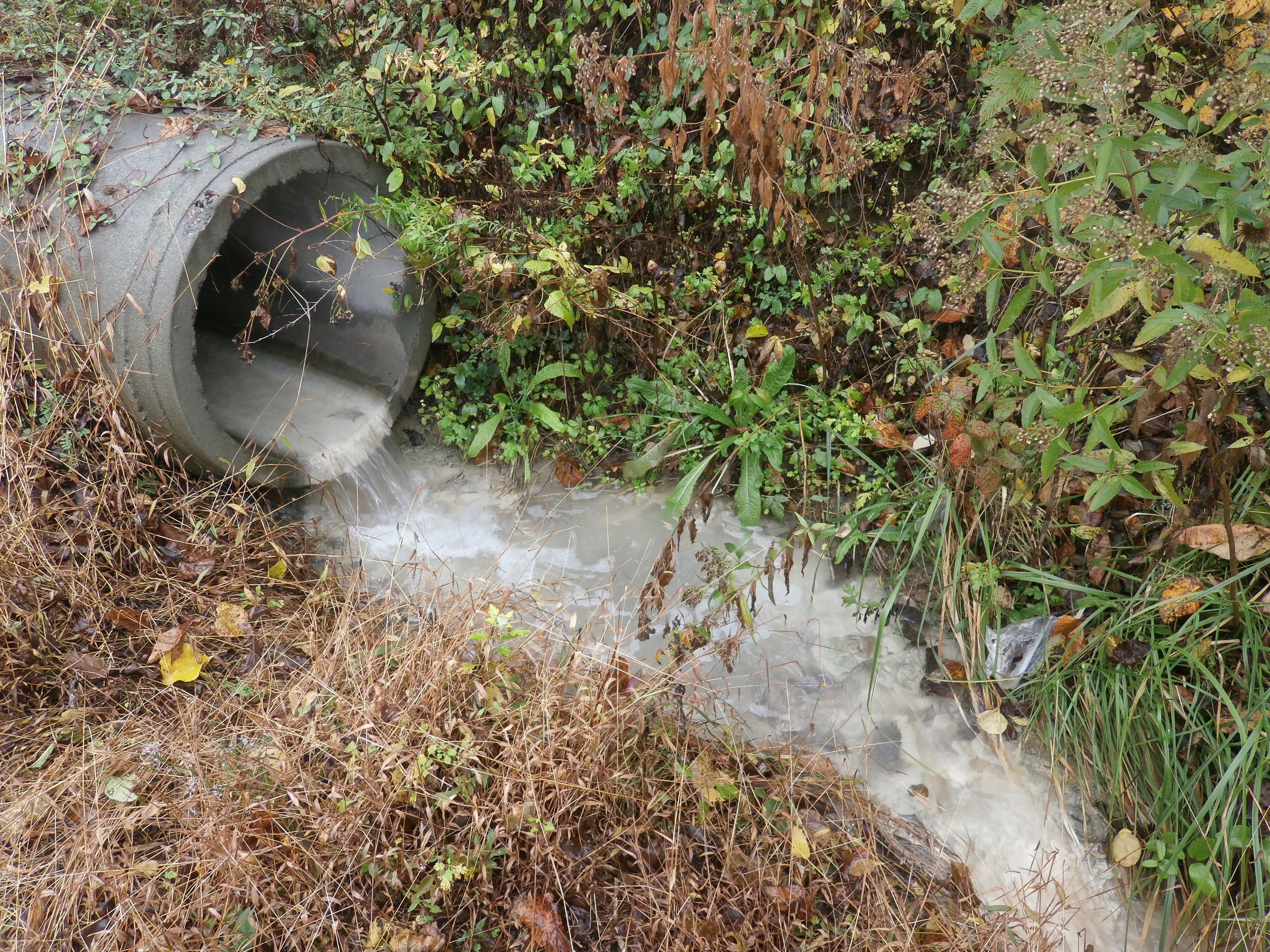
Many Pennsylvania facilities that need industrial stormwater coverage get it under PAG-03, the general permit the Pennsylvania Department of Environmental Protection (DEP) uses for stormwater from industrial activity, by filing a Notice of Intent (NOI). Facilities that can't use it, such as a site that discharges to a High Quality or Exceptional Value stream, apply for an individual NPDES permit instead. NPDES stands for National Pollutant Discharge Elimination System, the federal permit program DEP runs in Pennsylvania. An individual application includes DEP's industrial stormwater form, detailed outfall and receiving stream information, stormwater sampling results, maps and a site plan, notices to your municipality and county, and a $3,000 fee. DEP then reviews it, publishes it for public comment, and writes a permit for your facility alone.
This article walks through each piece of the package, compares it to a PAG-03 NOI, and explains why the individual route takes longer and costs more. It also covers why the quality of your sampling data and site plan shapes how DEP's review goes. We work with Pennsylvania facilities on both kinds of applications all the time, so if you'd rather talk through your situation than read about it, you can reach out to RMA whenever you're ready.
Table of Contents
TL;DR
An individual NPDES stormwater application is the site-specific alternative to a PAG-03 NOI, used mainly when a facility can't get general permit coverage, such as when it discharges to a High Quality or Exceptional Value stream. It asks for detailed facility and outfall information, stormwater sample results, maps and a site plan, municipal, county, and newspaper notices, a $3,000 DEP fee, and often a written plan for preventing and responding to pollution. DEP then reviews the package, publishes it for a 30-day public comment period, and writes a permit just for your site, which is why it takes longer and costs more than PAG-03. Clean sample data and an accurate site plan keep that review moving.
When Does a Pennsylvania Facility Need an Individual NPDES Stormwater Permit?
If a facility's industrial activities and materials are exposed to rain or snowmelt and the runoff leaves the site, Pennsylvania generally requires NPDES permit coverage, unless everything stays indoors or under roof and the facility qualifies for a No Exposure Certification. Whether the rule applies to you at all depends on your primary SIC code (the industry classification code for your main business activity) or the industrial activity you carry out. For a broader look at the three paths, see our guide to which NPDES permit you need. For many eligible facilities the coverage comes from PAG-03, and the individual permit is for the facilities PAG-03 can't take.
DEP's guidance names the most common reason: a discharge to a High Quality or Exceptional Value watershed, whether the stream is designated that way under Chapter 93 of DEP's regulations, which assigns each Pennsylvania stream a designated use, or DEP finds it has that existing use. Neither PAG-03 nor a No Exposure Certification is available there. DEP's FAQ lists other triggers: vehicle wash water discharged with stormwater, new salt storage piles designed to hold at least 3,000 tons (unless the runoff enters a permitted municipal storm sewer system), and asphalt emulsion plants, whose federal effluent limits have to be written into the permit itself. DEP can also require an individual permit from a facility that keeps exceeding PAG-03 benchmark values.
We wouldn't choose the individual route if PAG-03 fits. It's usually faster and less expensive.
How Does an Individual NPDES Application Differ From a PAG-03 NOI?
Both routes give your facility permission to discharge stormwater, but they work in different ways. PAG-03 is a permit DEP already wrote, and you ask to be covered by it. An individual permit is one DEP writes for you. The table shows where that changes the work.
| |
PAG-03 General Permit |
Individual NPDES Permit |
| Who uses it |
Eligible facilities that don't discharge to High Quality or Exceptional Value waters |
Facilities that can't get PAG-03 coverage, or that DEP requires to have one |
| What you file |
A Notice of Intent (form 3800-PM-BCW0083b) with supporting maps and sampling information |
The Individual NPDES Permit Application for Industrial Stormwater (3800-PM-BCW0403b), maps, a site plan, sampling results, and notices |
| Permit conditions |
Standard conditions from the general permit and the sector appendix that fits your activity |
A permit written for your facility, with monitoring and special conditions set during DEP's review |
| Public notice |
No public comment period for general permit NOIs |
Notice in the Pennsylvania Bulletin, a 30-day comment period, and a possible public hearing |
| DEP review |
DEP reviews the NOI and approves coverage |
Completeness review, technical review, draft permit, then a final decision |
| Term |
Runs with the general permit's five-year term |
Generally five years, with a renewal application due at least 180 days before expiration |
The NOI route leans on a permit DEP already wrote and published. The individual route asks DEP to evaluate your discharge from scratch, so every piece of the package has to hold up on its own.
What Goes Into a Pennsylvania Individual NPDES Stormwater Application Package?
DEP's package is the Individual NPDES Permit Application for Industrial Stormwater (3800-PM-BCW0403), made up of the form itself (3800-PM-BCW0403b) and instructions on what to attach (3800-PM-BCW0403a). Forms get revised, so pull current versions from DEP's industrial stormwater page before you start.
Facility, Outfall, and Receiving Water Information
The form asks what your facility does, which industrial materials and activities are exposed to stormwater, how water drains across the site, and where it leaves. Each outfall, meaning each point where stormwater discharges from your site, gets described along with the stream or storm sewer that receives it. If the stream is High Quality or Exceptional Value and your discharge is new, increased, or existing but never permitted, you also submit Module 1 (3800-PM-BCW0403d), DEP's antidegradation analysis, which looks at whether the discharge could lower the stream's quality. DEP encourages applicants to meet with the agency before filing that module. New applications should also include DEP's General Information Form (0210-PM-PIO0001). If the stream is already impaired for a pollutant, that shapes what DEP asks you to sample, and our article on TMDLs and impaired waters covers how those listings affect stormwater permits.
Maps and Site Plan
DEP's instructions call for a topographic or aerial map with your facilities and outfalls identified, plus a site plan showing significant site features. A reviewer who has never visited your site relies on those drawings to understand where water goes, so the drainage areas, outfalls, and material storage on paper need to match what's on the ground. We start by walking the facility and tracing how runoff reaches each outfall. An outfall that's on the map but missing from the form, or the reverse, is the kind of mismatch that brings questions back from DEP.
PPC Plan, Notices, and Filing
PPC stands for Preparedness, Prevention, and Contingency. A PPC Plan is the written plan Pennsylvania uses to describe how a facility keeps pollutants out of stormwater and responds when something spills or fails. The application treats attaching it as optional, but the permit DEP issues requires you to have and carry out one, so finishing it before you file gives the reviewer the full picture. Our article comparing PPC Plans and SWPPPs in Pennsylvania covers how Pennsylvania's plan relates to the stormwater pollution prevention plan (SWPPP) most other states use.
Two notice requirements come with the application. Act 14 requires written notice to each municipality and county where the facility is located, with proof of that notice in your package. For a new discharge, or a renewal with a substantial change in the location, quantity, or quality of the stormwater, you also publish notice in a local newspaper, and DEP's checklist asks for evidence of publication over four consecutive weeks. The $3,000 application fee and the completed package go to the DEP regional office that covers your facility's location.
How Does Stormwater Sampling Data Shape an Individual NPDES Permit Application?
DEP wants to see what's in your stormwater before it decides what your permit will require. Under DEP's FAQ, you analyze and report the pollutants listed on the application form, any pollutants covered by an effluent limitation guideline (ELG, a national treatment standard for a specific industry) that applies to your activity, any pollutants causing impairment in the receiving stream, and other pollutants you know or suspect are present from the pollutant groups in the instructions.
DEP's instructions say this data helps the agency decide whether stormwater monitoring belongs in your permit and what it should cover. Under PAG-03, a benchmark is a target concentration that triggers a corrective action plan when exceeded for the same pollutant at the same outfall in two or more consecutive monitoring periods. An effluent limit is an enforceable number, and an individual permit can include one where a federal industry standard calls for it, as with asphalt emulsion plants. A thin or inconsistent data set gives DEP less to work with, which can mean more questions before it can draft anything.
Sampling also takes time. DEP's sampling guidance defines a storm event as precipitation greater than 0.1 inch that produces a discharge and follows at least 72 hours after the previous storm, and it expects grab samples in the first 30 minutes of a discharge when possible. If you need samples from several outfalls, you're waiting on rain that qualifies, and a dry stretch can push the whole application back. We also have articles on taking a good stormwater sample, choosing a water testing lab, and benchmark values versus effluent limits.
What Happens After You Submit an Individual NPDES Stormwater Application to DEP?
After you file, the package moves through stages a PAG-03 NOI never touches. DEP first checks the application for completeness, and a complete package goes to technical review, where staff look at your outfalls, receiving waters, sample data, and proposed controls. Anything missing or unclear comes back to you, and your answers go back through review. Once DEP is satisfied, it prepares a draft permit and publishes notice of the application and its tentative decision in the Pennsylvania Bulletin, the state's official register of agency notices.
Publication starts a 30-day comment period, which DEP can extend once by 15 days. You're also required to post a public notice near the entrance to your facility, and it stays up for 30 days. Anyone can request a hearing, and DEP may hold one if it finds significant public interest. DEP then considers the comments and issues or denies the permit.
What you get is a permit written for your site. Draft industrial stormwater permits typically list your outfalls, required best management practices, routine inspections, a PPC Plan, and stormwater monitoring requirements. After issuance, you sample at the frequency set in Part A of your permit and report through eDMR, DEP's electronic discharge monitoring report system, which every industrial stormwater permittee uses. Our guide to Pennsylvania eDMR reporting covers that step, and our article on what happens during a PA DEP stormwater inspection covers what to expect once you're permitted.
How long all of this takes depends on how complete your package is on day one, how busy the regional office is, whether the comment period draws questions, and how many rounds of back and forth technical review needs. The individual path has more built-in steps than PAG-03, so expect it to take longer. Our article on how long it takes to get PAG-03 coverage in Pennsylvania covers the general permit side.
How Much Does an Individual NPDES Stormwater Permit Cost in Pennsylvania?
DEP sets its fees in 25 Pa. Code §92a.26 for applications and §92a.62 for annual fees. An individual industrial stormwater permit carries a $3,000 application fee, which covers DEP's review, issuance of the permit, and the first year of coverage, followed by a $1,500 annual fee on each anniversary of the permit's effective date. DEP no longer charges a renewal application fee for individual industrial stormwater permits. DEP reviews its fee schedule periodically, so check the current regulation before you budget.
| Cost item |
PAG-03 General Permit |
Individual NPDES Permit |
| DEP application fee |
$500 NOI filing fee |
$3,000 |
| DEP annual fee |
$500 |
$1,500 (the application fee covers year one) |
| Renewal |
A renewal NOI |
A renewal application at least 180 days before expiration, with no renewal application fee |
| Professional help |
RMA's published range is about $5,000 to $10,000 for a straightforward facility |
More involved, and typically considerably more |
The agency fees are the smaller part. Most of the cost is the work behind the application, and an individual application has more variables in it: the number of outfalls and drainage areas, how many sampling rounds and lab parameters DEP expects, whether the stream is High Quality or Exceptional Value and needs the antidegradation module, whether current maps and a PPC Plan already exist, and how many rounds of questions DEP sends back. Our article on what a PAG-03 permit costs in Pennsylvania covers the general permit side. The pricing calculator below gives you an estimate for our help with your NPDES permitting.
Why Do Preparation and Data Quality Affect an Individual NPDES Permit Timeline?
The steps that stretch an individual application are mostly ones you control: getting representative samples, building drawings that match the site, and answering DEP's questions in one round instead of three. A package with accurate outfall information and clean lab results can move toward a draft permit, while one with gaps goes back for more information, and each trip back adds time to a process that already includes a public comment period. This is also where the cheapest bid for the work tends to cost the most, because maps copied from an old plan or thin sample data come back as questions you then pay to answer.
You can prepare an individual application yourself if you have staff who are comfortable with site mapping, sampling, and DEP's forms, and our article on doing a PAG-03 permit yourself versus hiring a consultant covers that question for the general permit. DEP's Division of NPDES Permitting at 717-787-5017 is the place to start with questions about the forms.
If you're building or expanding the facility, keep the two permit tracks separate. Construction-phase stormwater approvals, such as PAG-02 coverage or an individual construction permit under Chapter 102, along with county conservation district approvals, cover the building work, and we don't prepare them. Most facilities handle that piece with their civil engineer, contractor, or an erosion and sediment control specialist, and we're glad to point you toward the right people. The operating permit in this article, along with the plans and sampling that go with it, is where we help.
How Can RMA Help With a Pennsylvania Individual NPDES Stormwater Application?
We help Pennsylvania facilities figure out which path they're on first, because the answer isn't always an individual permit. If PAG-03 or a No Exposure Certification fits, we'll say so, and that's usually the less expensive route. When an individual permit is the right one, we walk your site, trace the drainage, coordinate the sampling, build the maps and PPC Plan, assemble the application, and stay involved through DEP's questions and the comment period. After the permit is issued, we can help with sampling, eDMR reporting, annual reports, and renewals. Our page on how our NPDES permitting process works lays out the steps.
There's no pressure and no obligation. You can call us, email us, or fill out the form on our website, tell us what's going on at your facility, and we'll tell you what we think you need. If you're ready to talk, contact RMA and we'll take it from there.