New Jersey's Stormwater Pollution Prevention Plan Explained Simply, and Who Needs One
If your business handles materials outdoors in New Jersey, someone at NJDEP, a customer, or a consultant has probably thrown the letters SPPP at you without explaining them. An SPPP is New Jersey's Stormwater Pollution Prevention Plan. It's a written plan that lists what at your site could pollute rainwater runoff and what you do to keep that from happening. Most businesses that need one never knew the permit existed, so the plan tends to arrive as a surprise.
This article explains what an SPPP is, why New Jersey calls it that instead of a SWPPP, which businesses need one, what goes into it, and what you have to do with it once it's written. The basics don't take a consultant to understand, but if you'd like to talk through your own site, you can reach out to RMA whenever you're ready.
Table of Contents
TL;DR
An SPPP is New Jersey's name for a stormwater pollution prevention plan. It's a written plan, kept at your facility, that describes the materials and activities that could contaminate rainwater runoff and the controls you use to prevent it. Businesses covered by an NJPDES industrial stormwater permit need one, and the contents and details depend on which permit you have. Facilities where nothing is exposed to rain may qualify for an exclusion instead. You don't send the plan to NJDEP. You keep it current, inspect against it, train your people on it, and certify each year that you're following it.
What Is an SPPP in New Jersey Stormwater Permitting?
An SPPP is a document your facility writes, signs, and keeps on file. It describes the materials and activities at your site that could end up in rainwater runoff, and the practices you use to keep them out. A good one reads like a description of your actual property. It names your dumpsters, your loading dock, your storm drains, and who is responsible for each.
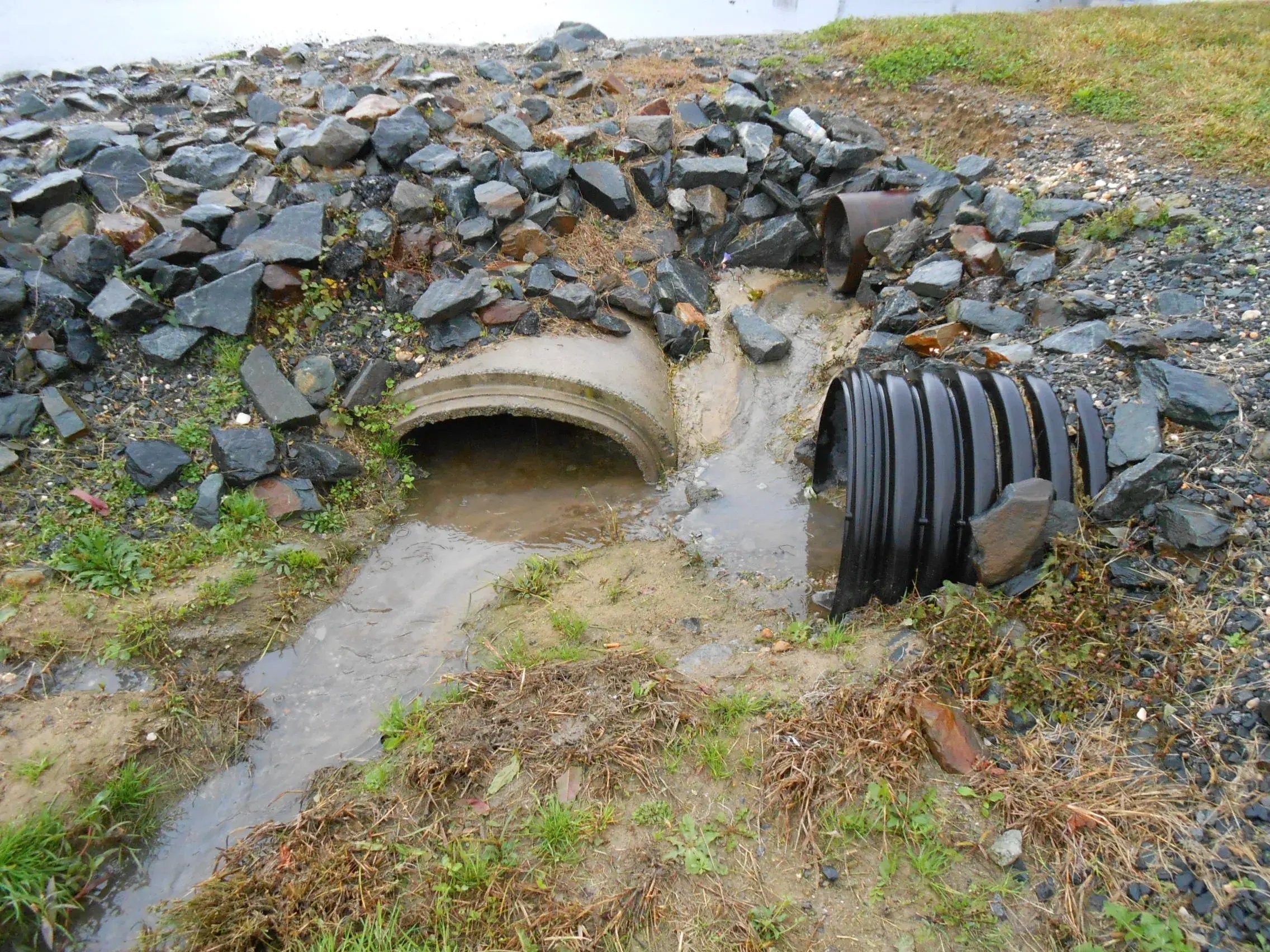
The plan comes out of the industrial stormwater permits NJDEP issues under the New Jersey Pollutant Discharge Elimination System (NJPDES). When rain falls on a yard, picks up oil, dust, metal, or chemicals, and runs to a storm drain, a ditch, a stream, or into the ground, that's a discharge, and New Jersey regulates it under the Water Pollution Control Act. The SPPP is how a permitted facility shows it's controlling that runoff. NJDEP's Basic Industrial Stormwater General Permit, known as the 5G2, leans on the plan heavily because its core goal is to keep industrial materials and activities from being exposed to rain in the first place. Our guide to the 5G2 Basic Industrial Stormwater Permit covers that permit in more depth.
The SPPP isn't something you mail to Trenton. The certification form NJDEP uses for 5G2 facilities specifically says not to submit the plan with it. The plan stays at your facility, and you hand it over when NJDEP asks to see it. Inspectors do ask, and they read it with your site in front of them.
Why Does New Jersey Call It an SPPP Instead of a SWPPP?
Most of the country, including EPA's federal industrial permit, uses the term SWPPP, short for Stormwater Pollution Prevention Plan. New Jersey's permits and forms drop the W and say SPPP. It's the same idea with a different label, and you'll hear all kinds of names for it in conversation: SWPPP, SP3, or just "the stormwater plan." If you want the general national picture, our explainer on what a SWPPP is applies here too.
The name matters less than the fit. A plan built from an out-of-state template can miss what a New Jersey permit spells out, because NJDEP ties the plan's contents to its own permit categories and certification forms. When you're comparing proposals or templates, ask which New Jersey permit the plan is meant to satisfy.
One more source of confusion: New Jersey towns and highway agencies write SPPPs too, under their own municipal and highway stormwater permits. Those plans cover things like public education and street maintenance. This article is about SPPPs for industrial and commercial facilities.
Who Needs an SPPP for Industrial Stormwater in New Jersey?
Businesses covered by an NJPDES industrial stormwater permit need one. New Jersey doesn't use a single permit for everyone. It uses the 5G2 for facilities that can keep industrial materials and activities away from rain, plus industry-specific general permits for Concrete Products Manufacturing (CPM), Hot Mix Asphalt (R4), Mining and Quarrying (R13), Sand and Gravel (RSG), Scrap Metal (SM and SM2), Vehicle Recycling (RVR), and Wood Waste Recycling and Leaf Composting (WRC). Facilities that don't fit a general permit may need an individual permit, which we cover in our article on individual NJPDES industrial permits. Each permit carries its own expectations for the plan, so the right answer to "what does my SPPP need?" starts with "which permit do I have?"
Plenty of businesses don't need an industrial stormwater permit at all, and an honest answer to the question often is "probably not." Coverage depends on your industry classification, whether materials or activities are exposed to rain, and where your runoff goes. The table below shows how that usually plays out, but it's a starting point and not a determination for your site.
| Your situation |
What it usually means for an SPPP |
| Industrial activity or materials outdoors, with runoff reaching a storm drain, waterway, or the ground |
You likely need permit coverage and an SPPP. Which permit depends on your industry. |
| Your industry has its own general permit (concrete, asphalt, scrap, and so on) |
The industry permit sets the plan's requirements, and they differ from the basic permit. |
| Everything stays indoors or under cover, with nothing exposed to rain |
You may qualify for a no exposure exclusion, which means no industrial stormwater permit and no permit-required SPPP. |
| Your site drains to a sewerage authority's system instead of the storm sewer |
The authority's rules may apply instead of, or alongside, NJDEP's. Confirm where your water goes. |
| A warehouse, office, or similar operation with no industrial activity outside |
Often no permit at all, but it's worth confirming before you assume. |
The no exposure option is worth a close look if your operation is mostly indoors. NJDEP lets qualifying facilities certify that industrial activities aren't exposed to stormwater, and facilities that do aren't covered by the industrial permit. Our articles on what no exposure means and which type of permit you need walk through the choices.
If you're building or expanding a facility, a separate set of construction-phase stormwater approvals applies while the work is underway, such as soil erosion and sediment control certification and construction stormwater coverage. We don't prepare those, and you'll usually work with your engineer or contractor on them. What we help with is the operational side: the plan and permit your facility needs once it's running, which for a new site generally has to be ready before operations begin.
What Goes Into a New Jersey SPPP?
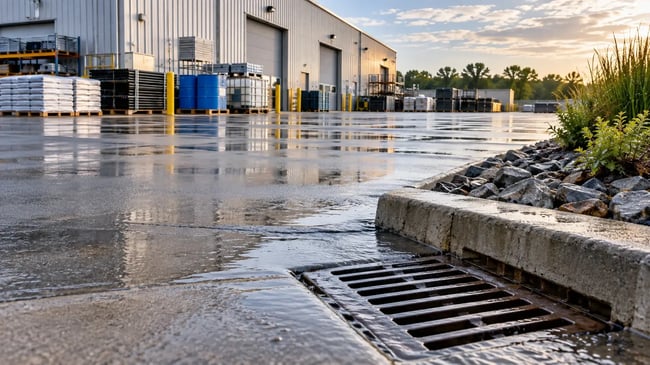
The exact contents come from your permit, and permit versions get renewed, so treat this as a high-level tour and check your own authorization for the current list. NJDEP's basic permit asks for a plan built around the same logic a good inspector would use: what do you have, where is it, how does water move across your site, and what stops the two from meeting.
| Plan element |
What it covers |
| Inventory |
The source materials used, stored, or located at the site, the industrial activities you carry out, and any non-stormwater discharges such as process water or cooling water. |
| Site map |
Buildings, paved areas, drainage patterns, storm drains and discharge points, and where materials and activities sit, including loading areas, outdoor storage, and waste areas. |
| Facility assessment |
A narrative of how materials are handled and moved, which practices already protect runoff, and where water goes. |
| Best management practices (BMPs) |
The specific controls you use, plus a schedule for putting in any you haven't finished. |
| Maintenance and inspections |
How you keep structural controls working, update written procedures, and record and correct problems you find. |
| Related plans and training records |
References to your SPCC plan or other spill plans where they apply, and records of the employee training you've done. |
The inventory is where plans most often go sideways. A "source material" is anything that could end up in runoff, and the permit's definition is broad: raw materials, products, wastes, by-products, machinery, and things like fuels, lubricants, solvents, and detergents. A facility that lists only its main product and forgets the used oil drum, the dumpster, the scrap pile, and the pallet of spill absorbent has a plan that doesn't match the site.
BMPs are the heart of the plan. Some are structural, like roofing over a storage area, a berm, a containment pad, or a drain cover. Others are routine habits written into procedures, like sweeping, keeping dumpster lids closed, using drip pans, and cleaning up spills right away. For the basic permit, the cleanest BMP is to remove materials from the rain or put a cover over them. Our guide to stormwater BMPs gives examples that fit different kinds of facilities. If you keep oil on site, your SPPP also points to your SPCC plan, and our article on the difference between an SPCC plan and an SPPP or SWPPP explains how the two fit together.
Industry-specific permits add their own requirements on top of this foundation, and some of them involve sampling, which the basic permit approach doesn't center on. Sampling rules vary by permit category, so check the one that applies to you before you assume anything.
What Do You Do With an SPPP After It's Written?
The plan only counts if the site matches it. Under NJDEP's basic permit, a facility prepares the plan, puts the practices in it into action, and keeps the plan signed, dated, and current. When operations change, such as a new product line, a moved storage area, or a new drain, the plan gets amended to match. Hold on to earlier versions for the retention period your permit sets.
Each year you do a self-inspection of the facility to confirm the plan is current, the BMPs are in place, and they're keeping materials away from stormwater. You also train employees on the plan, at minimum on the BMPs that apply to their work. Our online environmental training library has courses that can cover part of that need. If the inspection turns up a compliance problem, the permit expects you to document how you're fixing it and how you'll prevent a repeat.
Then you certify. Facilities send NJDEP a certification form stating the plan was prepared and implemented and that the annual inspection happened, and the due date is tied to the calendar quarter printed on your authorization page. The form goes in, and the plan stays with you. It's a short form with real weight behind it, since you're certifying under penalty of law. NJDEP inspects permitted facilities, and violations can bring notices of violation and penalties under the Water Pollution Control Act that the permit language has put as high as $50,000 per day, per violation. Most inspection problems we see come from a plan that says one thing while the site does another.
Can You Write Your Own SPPP?
Often, yes. As far as we know, NJDEP's basic permit doesn't require an engineer or other licensed professional to sign off on the plan, and a facility with a simple footprint and a few materials can write a sound one if someone takes the time to walk the site and be honest about what's out there. We cover the trade-offs in writing your own SWPPP, and it's a fair option for a lot of small operations.
Where self-written and bargain plans fall apart is predictable. They're copied from a template or another company's plan and describe a site that doesn't exist. The map is a decade old. The BMP list sounds good but nobody does the things on it. Or the plan gets written once and never touched again while the business adds a second building and a new storage yard. An inspector compares the plan to the property, and any mismatch becomes the finding. If your site is larger, has multiple activities, falls under an industry permit, or you simply don't have time to do it right, having an experienced person build it is worth the money. The cheapest option usually becomes the most expensive one after the first notice of violation.
How Does RMA Help With New Jersey SPPPs?
We're based in New Jersey and have worked with NJDEP's industrial stormwater permits for decades. For SPPPs, that usually means working out which permit category fits your site, writing or updating a plan that matches what your facility does day to day, and showing your team how to run the inspections and training the permit expects. Our senior staff do the work themselves, and we'll tell you plainly if you don't need us, whether that's a facility that qualifies for no exposure or a small site that can handle the plan in-house. Construction-phase permits and approvals fall outside what we do, but we're glad to point you toward the right people for that piece.
If you'd like a second set of eyes on your plan or a straight answer on whether you need one, you're welcome to call us at 888-RMA-0230, email the team, or fill out the form on our website. There's no pressure and no obligation, and you can contact RMA whenever the timing works for you.