The Documents, Drawings, and Site Details That Help Us Build Your Oil Spill Plan Faster, and What to Do When You Don't Have Them
If you store oil at a New Jersey facility, you've probably heard you need a Spill Prevention, Control, and Countermeasure (SPCC) plan, which is the federal oil spill prevention plan. What most people don't know is what the process asks of them. A lot of facility managers picture weeks of digging through filing cabinets before a consultant will even return a call. That worry keeps plenty of people from picking up the phone, and it shouldn't.
The truth is that starting an SPCC plan takes far less homework than most people expect, and you don't need to have everything in hand when you first talk to us. This article walks through the information we typically ask for, why each piece helps keep your cost and timeline down, and what we do when you can't find something. If you'd rather skip the reading and talk to a person, you can reach out to RMA at any point.
Table of Contents
TL;DR
To start a New Jersey SPCC plan, we typically ask for a list of your oil containers, any existing plan and inspection records, a site layout, details on how fuel is delivered and moved around, what you know about your state tank and spill history, and one person who knows the site. You don't need all of it up front. We'll tell you exactly what your facility needs, and we can help you gather whatever you don't have.
What Does RMA Need to Start a New Jersey SPCC Plan?
In short, we need a good picture of what oil you store, where it sits, how it gets there, and what's around it. Think of what follows as a general overview. Don't worry, we'll tell you the exact list of what you need to know for your facility. You might not need all of it, and we can help you get some of it if you don't know it. This is the stuff we may or may not need, depending on the specifics of your project.
The reason the list exists is that the federal SPCC rule (40 CFR Part 112) applies to facilities that store more than 1,320 gallons of oil in aboveground containers of 55 gallons or more, added up across the whole site and counted by container capacity, not by how full the containers happen to be. The plan has to describe your real site, and every fact we have to chase down later costs time. Having the basics gathered up front means fewer back-and-forth emails and fewer questions during the site review. Time spent chasing missing details is one of the main places a plan's cost and timeline grow. If you're curious how those pieces add up, our guide to what an SPCC plan costs covers it, and our timeline article shows where the days go. For the full background on the rule itself, see everything you need to know about SPCC plans.
Here's the quick version of what we may ask for and why each item helps.
| What We May Ask For |
Why It Helps |
| Container inventory |
Shows whether you need a plan, what type, and how much secondary containment you need |
| Existing plan and records |
Tells us what was there before and what has changed since |
| Site drawings or an aerial photo |
Lets us build the facility diagram and see where spilled oil would go |
| Fuel delivery and transfer details |
Covers the spots where spills happen most often |
| New Jersey tank and spill information |
Tells us which state programs also apply to your site |
| A point of contact |
Gets our questions answered in one conversation instead of five |
Why Does Your Oil Container Inventory Matter for an SPCC Plan?
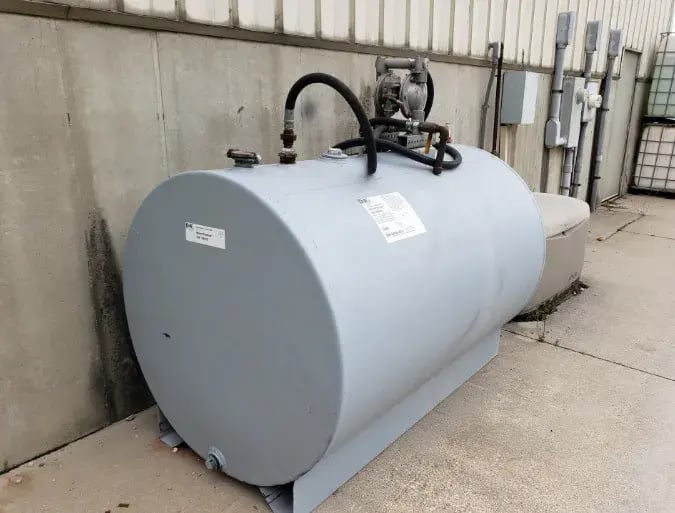
The container inventory is the foundation of the whole plan. For each container, we want to know what's in it, how big it is, whether it's a tank, drum, tote, or piece of equipment, whether it sits indoors or outdoors, and whether it has any kind of containment around it. Oil-filled equipment counts too, so transformers, hydraulic systems, and generator day tanks belong on the list along with fuel tanks, used oil tanks, and vegetable oil. Propane doesn't count, and some containers, like motive power tanks on a vehicle, are exempt.
This list drives nearly every decision that follows. It tells us whether your site crosses the 1,320 gallon line, which type of plan fits, and how large your secondary containment has to be. Because the rule looks at capacity and not contents, a 10,000 gallon tank holding 2,000 gallons counts as 10,000. Drums are a common blind spot, and our article on whether 55-gallon drums count toward SPCC explains how they add up. For sizing, see how big your SPCC oil spill containment needs to be.
You don't need a polished spreadsheet. A walk around the site with your phone, snapping a photo of each container and its nameplate, gives us most of what we need. If you're not sure what's out there or how big something is, tell us. We can often work through it with you over photos and a video call, which is how our remote SPCC process handles it for facilities that suit that approach.
Which Existing SPCC Plan and Inspection Records Should You Share?
If you already have a plan, send it, even if it's old, out of date, or written by someone who no longer works with you. We'll be straight about how we use it. When someone else wrote a plan, we generally don't patch it up. We rebuild it so we can stand behind every page. Still, the old plan shows us what was on site, what the earlier author assumed, and what has changed since, and that saves us from asking questions you've already answered once. If your plan is approaching or past its five-year mark, our article on SPCC plan five-year reviews explains what that review involves.
Records matter alongside the plan. Inspection logs, tank or piping integrity tests, training records, amendments, and any past spill reports all show how the site runs, not just how the paperwork says it should. If a plan needs a Professional Engineer to review and approve it, that engineer will want to know what's been installed, removed, or modified since any earlier version, so a rough list of site changes is valuable. Our guide to Professional Engineers and SPCC plan requirements covers when that step applies. And if you don't have a plan at all, that's the most common situation we see, and it's fine.
Do You Need Site Drawings to Start an SPCC Plan?
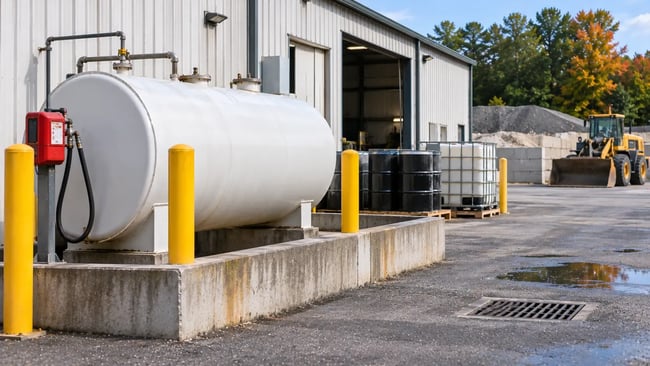
Drawings help, but you don't need engineering-grade ones. The federal rule calls for a facility diagram that shows where your containers are and what's in them, so we need some kind of map to work from. A site plan, a fire insurance drawing, or a utility layout all work if you have one. If you don't, a satellite image from an online map with your containers marked on it is usually enough to get going, and a hand sketch beats nothing.
What we're after is the layout: buildings, tanks, loading areas, floor drains, storm drains, and anything nearby that oil could reach, like a ditch, stream, or wetland. New Jersey has a lot of water close to a lot of industrial sites, and knowing which way a spill would run is part of what makes the plan realistic. If the layout has changed since your last drawing, tell us what moved.
Why Do Fuel Delivery and Transfer Details Matter for SPCC Planning?
Spills at facilities often happen during a transfer, not because a tank failed: a delivery truck unloading, a worker filling a generator from a portable tank, a forklift being refueled, or a used oil pickup. So we ask how fuel gets onto your site and how it moves once it's there. Who delivers, how often, what size of truck, where it parks, how the hose connects, and what's near the unloading spot all help.
The rule looks closely at areas where tank trucks load or unload, including whether there's containment and what procedures keep an overfill from reaching a drain. If your delivery driver follows a set routine, or you have written procedures, send them along. If nobody has ever written it down, just describe what you see on delivery day. The people who handle those deliveries should also know what to do if something goes wrong, and our online training library is one option for getting them up to speed once the plan is in place.
What New Jersey Tank and Spill Information Helps With an SPCC Plan?
The SPCC rule is federal, and in New Jersey it's enforced by EPA Region 2. The state adds its own layer through NJDEP, and that layer covers more than oil. The Spill Compensation and Control Act, usually called the Spill Act, deals with discharges of petroleum and other hazardous substances, and it comes with reporting duties and broad responsibility for cleanup. Our article on SPCC plans in New Jersey lays out how the pieces fit, and who enforces SPCC plans covers the federal side.
You don't need to sort any of this out before you call. What helps is whatever you already know about your site's history under those programs. That could include any past discharge reports to NJDEP, or cleanup paperwork from a Licensed Site Remediation Professional (LSRP), such as a Response Action Outcome letter. It could include underground tanks and any state registration for them, since regulated underground tanks fall under New Jersey's tank program (N.J.A.C. 7:14B) and are generally handled separately from SPCC. We still want to hear about them so we can sort out what counts where. And it includes any notice or prior plan from NJDEP under N.J.A.C. 7:1E, the rule for what the state calls major facilities, which must submit Discharge Prevention, Containment and Countermeasure (DPCC) and Discharge Cleanup and Removal (DCR) plans. Whether a site is a major facility depends on its total storage capacity and what it stores, so the rule has to be checked against your actual inventory.
If you've been through a serious release, or you're unsure about your liability, an environmental attorney is a reasonable call to make alongside ours. We'll tell you where we can help and where we can't. Local fire permits under the Uniform Fire Code are worth mentioning too, since your local fire official may already have tank information on file.
Pick one person who knows how the site runs day to day. They don't have to be an environmental specialist. They need to be able to answer questions about deliveries, maintenance, and equipment, and to arrange access if we need to see something. When our questions go to one person instead of being passed around the building, the project moves faster, which is one of the simplest ways to keep your timeline short.
Plans also need sign-off from someone with the authority to commit resources to the measures in them, and that's often a different person than the day-to-day contact. It helps to know early who that is. If you manage several locations, tell us that up front as well, because the same information can often be collected once and reused across sites.
How Does RMA Help You Start a New Jersey SPCC Plan?
We're based in New Jersey, and we've been working with facilities on environmental compliance since 1992. When you reach out, we'll ask a handful of questions about your site, work out which pieces of this list apply to you, and tell you plainly what we need. If something's missing, we'll help you track it down or work around it. And if it turns out a simpler route fits your situation, we'll say so.
There's no pressure and no obligation. You can call us at 888-RMA-0230, or contact RMA through the form on our website, and a member of our team will follow up.