Your Checklist for a First SPCC Plan Call: Tanks, Drums, Generators, Records, and Site Plans
If you store oil at your facility, you've probably had that nagging feeling that you need a Spill Prevention, Control, and Countermeasure (SPCC) plan, or that the one sitting in a binder somewhere is out of date. Picking up the phone to call a consultant can feel like it requires homework first. It doesn't. A handful of basic details makes the first conversation much more useful, and most of them can be pulled together in an hour or so.
This article walks through what to gather before you call, what we'll talk about once we're on the phone, and what to do if you can't find everything on the list. None of it has to be perfect, and if you'd rather skip the prep and just talk, you can reach out to RMA at any point and we'll help you sort out the rest.
Table of Contents
TL;DR
Before your first SPCC plan call, jot down a rough list of your oil containers (tanks, drums, generators, and oil-filled equipment) with approximate sizes, find any existing plan along with inspection and spill records, and have your facility address or a site plan handy so we can look at aerial images. On the call, we'll work out whether you need a plan, what type, and what the next steps look like. Missing details are fine, and we'll work with what you have.
Why Does a Little Prep Make an SPCC Plan Call Go Faster?
Whether you need an SPCC plan comes down to a few questions that are easy to answer once you know what's on your property. Generally, a facility needs one when it stores more than 1,320 gallons of oil in aboveground containers, counting only containers of 55 gallons or more, and a spill could reasonably reach a waterway, including through storm drains or ditches. The tricky part is that people often don't know their own total. Add up a couple of large tanks, a row of drums, a generator, and some hydraulic equipment, and the number climbs quickly.
If you want a plain-language refresher before you call, our article on what an SPCC plan is covers the basics. Otherwise, the rest of this post is the short list of what to dig up, and the reason for each item.
Which Oil Containers Should You List for an SPCC Plan?
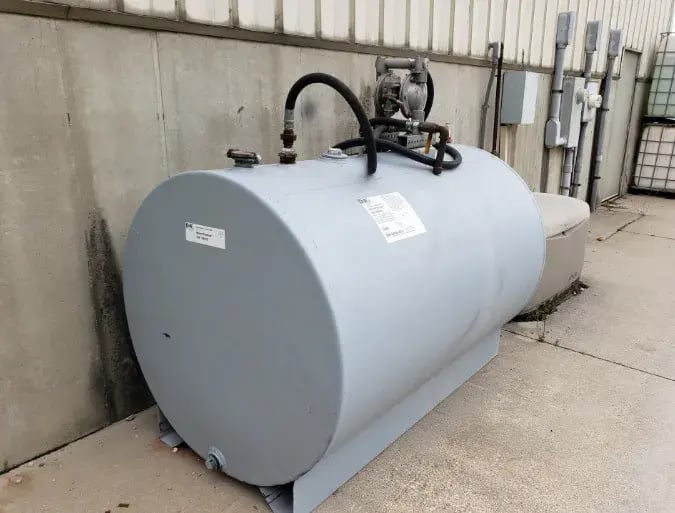
The most useful thing you can bring is a rough inventory of every container that holds oil. A handwritten list or a quick spreadsheet works fine. For each item, we want to know what it holds, roughly how big it is, and where it sits on the property. Think about fuel, lubricating oil, hydraulic oil, transformer oil, used oil, and vegetable oils, since all of them count. Propane doesn't, and completely buried tanks are generally handled under separate underground tank rules, but mention them anyway so we have the full picture of your site.
| What to Look For |
What to Jot Down |
| Aboveground tanks |
Size in gallons, what's inside, and whether it sits indoors or outdoors |
| Drums and totes |
Roughly how many, the size of each, and where they're stored |
| Generators and day tanks |
Fuel tank capacity, and whether there's a separate larger tank feeding it |
| Oil-filled equipment |
Transformers, hydraulic units, compressors, and similar equipment, with oil capacity from the nameplate if you can find it |
| Used oil and waste oil containers |
Container sizes and where they're kept |
Drums trip people up more than anything else, so if you're unsure whether yours count, our article on whether 55-gallon drums are included in SPCC plans explains the rule. We count capacity, not how full a container happens to be on the day you look, so a half-empty tank still counts at its full size.
What Existing SPCC Plan Documents and Records Should You Have Ready?
If you already have an SPCC plan, find it, even if it's old, incomplete, or written by someone who left the company years ago. We'll want to know when it was written and whether anyone has reviewed it since. Plans need a review at least every five years, and many facilities discover during a first call that theirs slipped past that mark without anyone noticing. Our article on what to do when your SPCC plan is over five years old goes through your options.
An older plan is still useful to us as a record of what used to be on site. That said, we generally build a fresh plan we can stand behind rather than patching one someone else wrote, and our piece on whether an SPCC plan can be updated explains why.
Beyond the plan itself, gather whatever paperwork you can find on how the facility has operated. Inspection logs, spill or release records, any reports made to an agency, and training records all help us understand your history. If an insurer, lender, customer, or inspector has asked about your plan, bring that along too, because it often tells us how urgent the situation is and who's waiting on the result.
Which Site Plans and Address Details Help With an SPCC Plan?
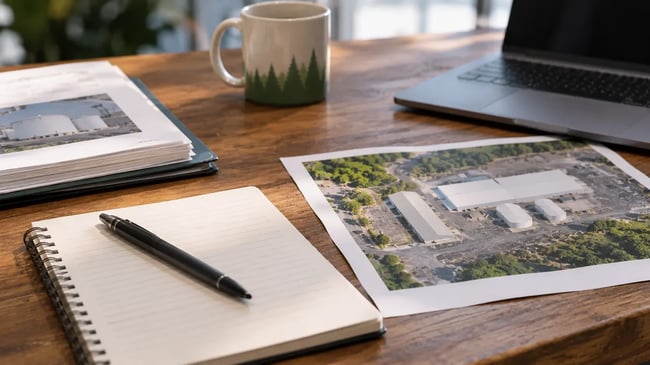
Before we ever talk about scheduling a visit, we can learn a lot from aerial imagery of your property, so the facility address is the single easiest item to have ready. If you have a site plan, facility drawing, or even a rough sketch showing where buildings, tanks, and loading areas sit, that helps even more. We're looking for where oil is stored, where it's moved or transferred, where storm drains and ditches run, and how close the property is to any water.
Many SPCC plans can be developed remotely, depending on how complex the site is, and we'll tell you honestly if yours needs a visit. Our guide on how remote SPCC development works lays out the process, and this article on whether your facility is a good fit helps you gauge which way yours is likely to go. A few cell phone photos of your tanks and containment areas can fill in gaps, but they're a bonus, not a requirement.
What Will We Cover on Your First SPCC Plan Call?
The first call is a conversation, not a sales pitch. We'll start by confirming whether your facility needs an SPCC plan at all, and if it doesn't, we'll say so and point you toward anything else that might apply. If you do need one, we'll figure out which kind makes sense. Some smaller facilities qualify for a self-certified plan, while larger or more complex sites need a Professional Engineer to review and approve the plan. Our overview of the different types of SPCC plans shows how those differ.
From there, we'll talk through how the work would go, whether it can be done remotely or needs a site visit, and roughly how long it takes. Our article on how long an SPCC plan takes gives you a feel for timelines. We'll also cover what drives cost, such as the number and size of containers, the type of plan, and how much secondary containment needs evaluating. You can get a head start with our SPCC plan pricing calculator or read how SPCC plan costs work. By the end, you should know what we need from you and what happens next.
Call anyway. Nobody has every nameplate, drawing, and inspection log sitting in one folder, and we don't expect you to. Rough numbers are fine, as long as you say they're rough. "About 500 gallons" is a perfectly good answer, and so is "I'm not sure, but it's about the size of a pickup bed." We can fill in the details later through aerial imagery, follow-up questions, or a site visit.
If you're still on the fence about hiring outside help at all, our article on what it's like to hire an SPCC plan consultant walks through what working with us looks like from start to finish.
How Does RMA Help With Your SPCC Plan?
We've worked with facilities across the country since 1992, and our senior staff handle the work themselves rather than passing it down the line. For SPCC, that means helping you figure out what applies, building a plan that fits your site, and making sure a Professional Engineer reviews and approves it when your facility calls for one. If you don't need us, we'll tell you.
If you'd like to talk, there's no obligation and no pressure. You can contact our team by filling out the form on our website, emailing us, or calling 888-RMA-0230, and we'll help you work out the next step with whatever information you have on hand.