Where New Jersey Storm Drains Lead, What You Can't Send Down Them, and How Industrial Stormwater Permits Fit In
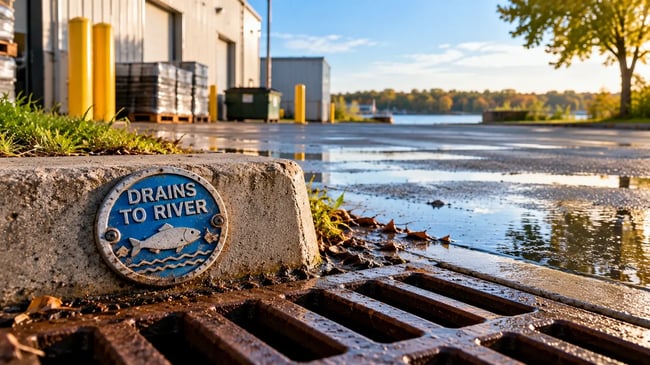
If you've driven through almost any New Jersey town, you've seen the markers on storm drains, or a stenciled message near the curb that says something like "Dump No Waste, Drains to Waterways." Most people read that as a note for homeowners and the guy changing his oil in the driveway. It applies just as much to a business with a loading dock, a wash area, or a stockpile sitting out in the yard.
In this article we'll walk through where those drains lead, what can't go down them, and how the rule connects to New Jersey's industrial stormwater permits. If you'd rather talk through your own site, you can reach out to RMA any time.
Table of Contents
TL;DR
In most of New Jersey, a storm drain sends runoff to a nearby creek, river, or bay, usually without treatment, which is why the markers say what they say. Town ordinances and state law prohibit sending anything other than stormwater down those drains, including wash water, spilled fluids, and process water. If your business has industrial activity outdoors, you may also need an NJPDES industrial stormwater permit or a no exposure exclusion, but even a permit only covers rainwater runoff, not whatever gets hosed into the drain.
Where Do New Jersey Storm Drains Lead?
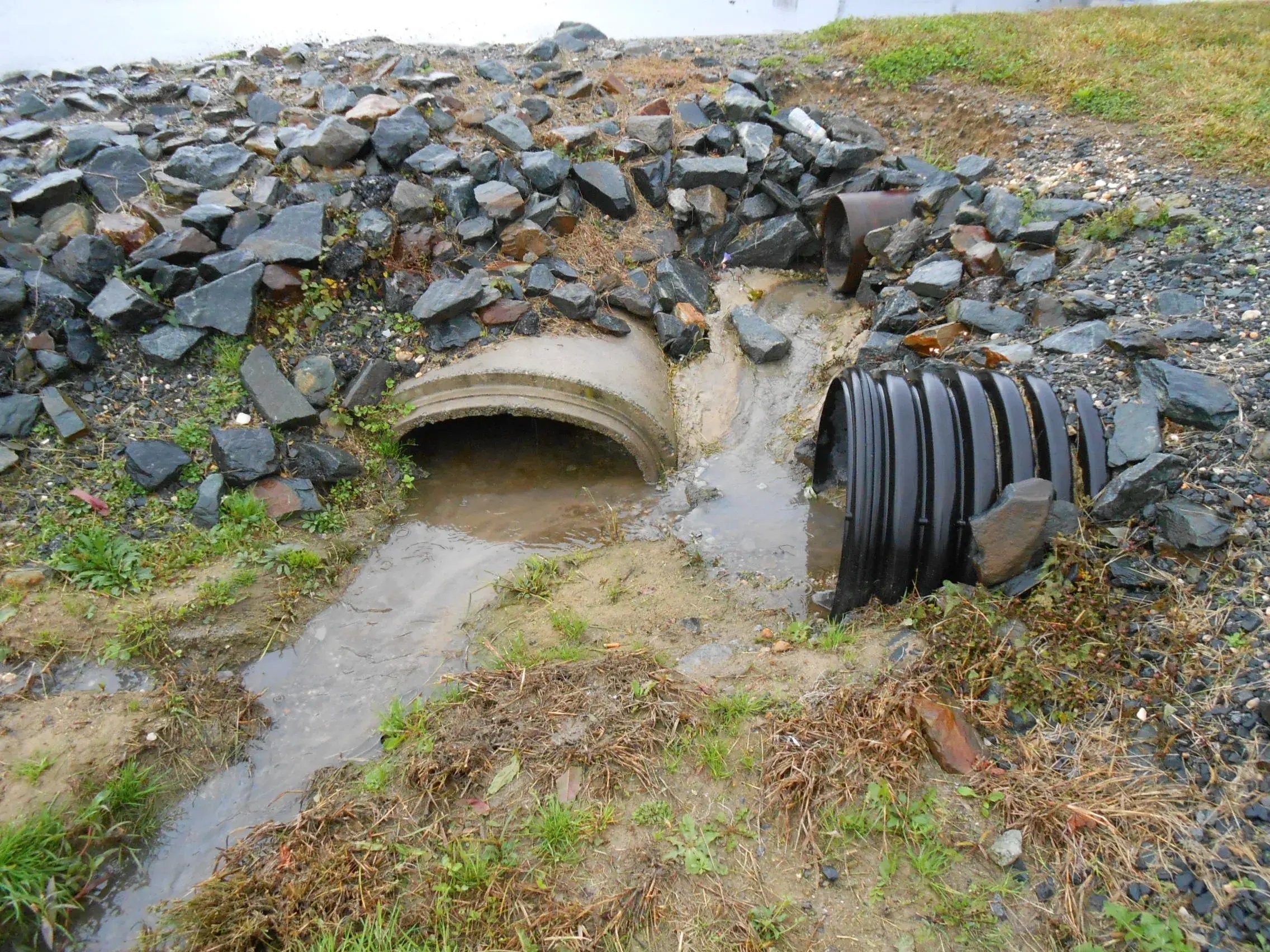
Most towns have two separate sets of underground pipes. One is the sanitary sewer, which carries wastewater from toilets and sinks to a treatment plant. The other is the storm drain system, which collects rain and snowmelt from streets, parking lots, and yards and sends it to the nearest waterway. In most places that second system has no treatment step. Whatever goes into the grate comes out in the creek, river, or bay, which is the whole point of the marker.
Regulators call the storm drain system the municipal separate storm sewer system, or MS4. "Separate" just means it's kept apart from the sanitary sewer. Every town in New Jersey operates its MS4 under a stormwater permit from the New Jersey Department of Environmental Protection (NJDEP), issued under the state's version of the federal NPDES program, called the New Jersey Pollutant Discharge Elimination System (NJPDES). Labeling drains is one of the most visible pieces of those town programs, and the same permits are why towns adopted ordinances against dumping, which we'll get to below.
There's one wrinkle. Some older parts of the state still have combined sewers, where a single pipe carries both sewage and stormwater, and the rules look a little different there. Where your site drains is something to confirm with your town or your local sewerage authority rather than assume.
| System |
What It Carries |
Where It Ends Up |
| Sanitary sewer |
Wastewater from toilets and sinks, plus some approved industrial wastewater |
A sewage treatment plant |
| Storm drain (MS4) |
Rain and snowmelt runoff from roads, lots, and yards |
A nearby stream, river, or bay, usually untreated |
| Combined sewer (older areas) |
Sewage and stormwater in the same pipe |
Depends on the system, so check locally |
What Can't Go Down a New Jersey Storm Drain?
New Jersey towns adopted ordinances, as part of their own stormwater permits, that prohibit spilling, dumping, or disposing of anything other than stormwater into the storm sewer system. Most ordinances carve out a short list of exceptions, such as water line flushing, uncontaminated groundwater, and air conditioning condensate, but the exact wording varies from town to town. Everything else is off the table, and on a business property the usual suspects are easy to name: pressure wash water from trucks and equipment, concrete washout, rinse water from parts or paint, hydraulic fluid or oil hosed off the pavement, liquid leaking from a dumpster, and process water of any kind.
The other way businesses end up in trouble is the illicit connection. That's a pipe, either one you can see or one buried and forgotten, that sends something other than stormwater into the storm drain system. Town ordinances typically define it as any connection that carries sewage, process wastewater, noncontact cooling water, or other industrial waste to the MS4. Sometimes a floor drain or a wash bay was tied into the storm system decades ago by someone who's long gone, and nobody at the current company knows until an inspector traces it.
Penalties come from two directions. Under New Jersey's Water Pollution Control Act, NJDEP can assess civil administrative penalties of up to $50,000 for each violation, and towns can enforce their own ordinances on top of that. If you've already received a notice of violation, an environmental attorney is worth talking to alongside your consultant.
How Do Storm Drain Rules Connect to NJPDES Industrial Stormwater Permits?
Rain that lands on a pile of scrap, a stockpile, or a fueling area picks up whatever's there and carries it to the nearest drain. NJDEP requires certain industrial facilities with that kind of outdoor exposure to hold an industrial stormwater permit. The most common is the Basic Industrial Stormwater General Permit, known as 5G2. New Jersey also has industry-specific general permits for categories like concrete products manufacturing, hot mix asphalt, mining, sand and gravel, scrap metal, vehicle recycling, and wood waste recycling, plus individual permits for facilities that don't fit a general one. Our article on which NPDES permit you need walks through the differences, and the one on the 5G2 permit in New Jersey goes deeper on the basic one.
Whether you need a permit at all depends on your industry classification, what's exposed to weather, and where your runoff goes. Plenty of businesses don't need one. A facility that keeps its industrial materials and activities indoors or under cover can often file a no exposure certification with NJDEP instead, which is explained in our piece on what no exposure means. If you're not sure how NJDEP defines the regulated activity, start with stormwater associated with industrial activity.
Here's where the storm drain rules and the permit meet. A 5G2 permit authorizes stormwater discharges only. Other discharges aren't covered, even when they get mixed in with stormwater. A permit holder who rinses a mixer truck or a piece of equipment into the yard drain is still sending something to the drain that the permit doesn't allow. We cover that distinction in the difference between stormwater and process water.
Permit holders also write a stormwater pollution prevention plan, or SWPPP (sometimes called an SPPP, an SP3, or just a stormwater plan). It maps the site's drains, lists what's exposed, and spells out the practices that keep pollutants out of runoff. If you want the basics, we explain what a SWPPP is in a separate article.
What Should New Jersey Businesses Do About Their Storm Drains?
Start by walking the property with a site map, ideally during or right after a rain. Find every drain, grate, and ditch, and write down where each one goes. If you can't tell whether a drain connects to the storm system or the sanitary sewer, ask your town or sewerage authority before you assume. Then look at everything that happens outside: washing, rinsing, fueling, material storage, and dumpsters. Each of those either needs cover and containment, or needs a different place for the water to go. Whether wash water can go to the sanitary sewer depends on your permit, your town, and your sewerage authority, so check before you hose anything down.
Keep spill kits and absorbents near the drains, and train the people who work outside. The person holding the hose is rarely the person who read the permit, which is why we offer an online environmental training library for exactly that audience. If your site is a small shop with nothing stored or done outdoors, most of this is housekeeping you can handle yourself, and you may not need a permit at all.
How Can RMA Help With New Jersey Stormwater Compliance?
We're a family-run environmental consulting firm based in New Jersey, and we've been working with NJDEP and the state's permit categories since 1992. We help facilities figure out whether they need an industrial stormwater permit, a no exposure exclusion, or nothing at all, and we write the SWPPP, train your team, and support you after you're permitted. We're also upfront about where we're not the right fit. We don't do engineering design or treatment system construction, so if your site needs that, you'll want an engineering firm for that piece.
If you'd like a second opinion on where your drains go or whether your permit status is right, there's no pressure and no obligation. You can call us, email us, or fill out the form on our website, and we'll tell you honestly what we think. You can also contact RMA directly to get started.