How Pennsylvania MS4 Programs and Industrial Stormwater Permits (PAG-03 and No Exposure) Overlap, and Who Is Responsible for What
If your township has ever sent a letter about storm drains, or someone has asked where the runoff from your parking lot and yard goes, you've probably wondered how that fits with the stormwater permit your facility already holds, or the one you're not sure you need. Two separate programs are in play. Many Pennsylvania municipalities hold a permit for their own storm sewer system, called an MS4 (municipal separate storm sewer system), while industrial facilities have their own obligations under PA DEP's PAG-03 general permit or through a No Exposure Certification.
In this article, we'll explain how the two programs differ, who is responsible for what, where they overlap, and what that means for a facility sitting inside a municipality with an MS4 permit. Along the way we'll define the terms as we go, since most of this vocabulary doesn't get explained anywhere in plain language. If you'd rather talk through your specific site, you can reach out to RMA anytime.
Table of Contents
TL;DR
A township's MS4 permit covers the municipality's own storm sewer system as a whole, while your PAG-03 coverage or No Exposure Certification covers your facility's industrial stormwater. One doesn't replace the other. They overlap where your site drains into the township's system, because the township has to find and stop illicit discharges, can ask questions or inspect under its local ordinances, and may require local approvals when you change your site. Know where your drains go, keep your plan and permit paperwork current, and keep anything that isn't stormwater out of the storm drains.
What Is an MS4 Permit, and How Is It Different From PAG-03?
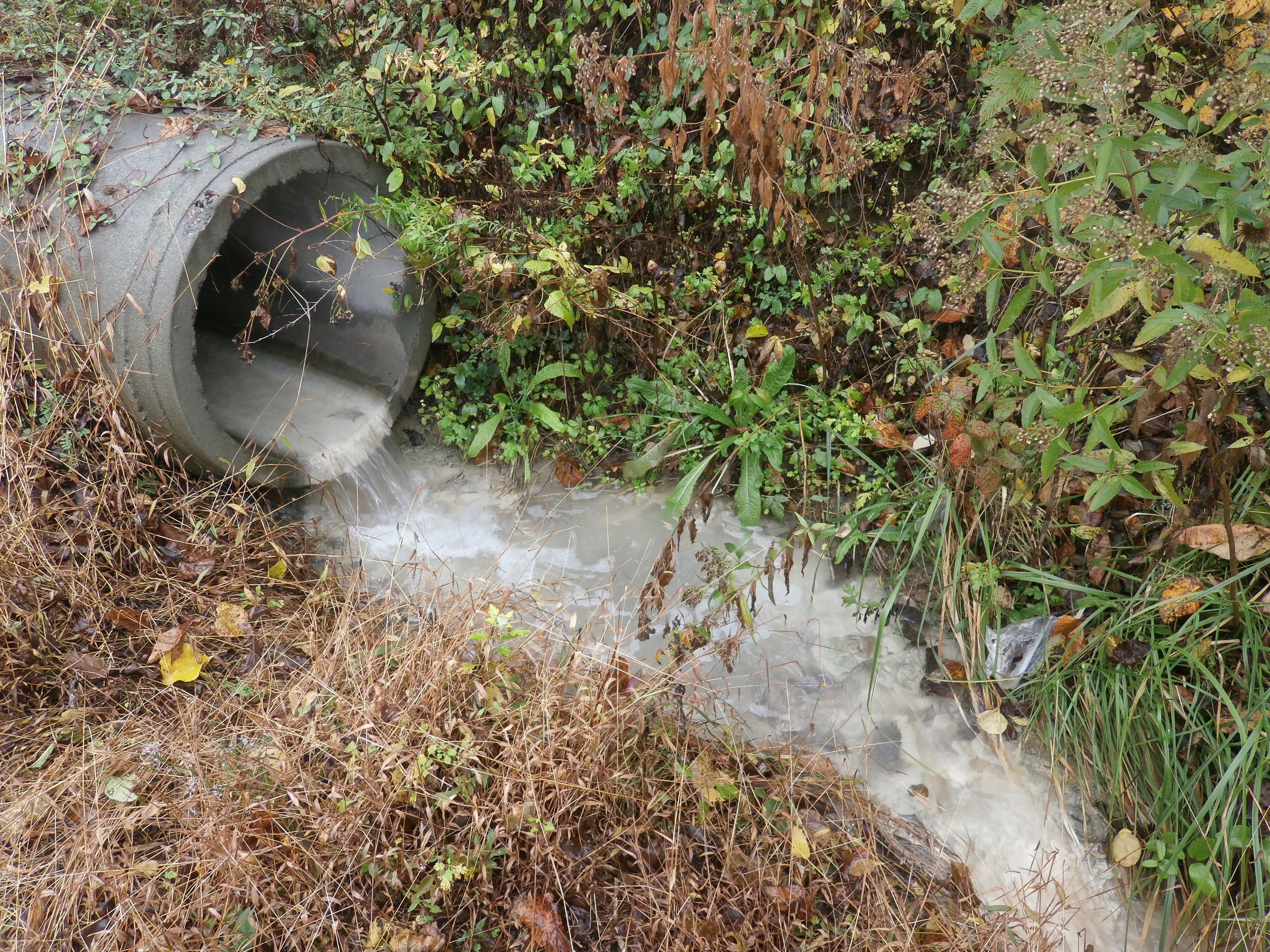
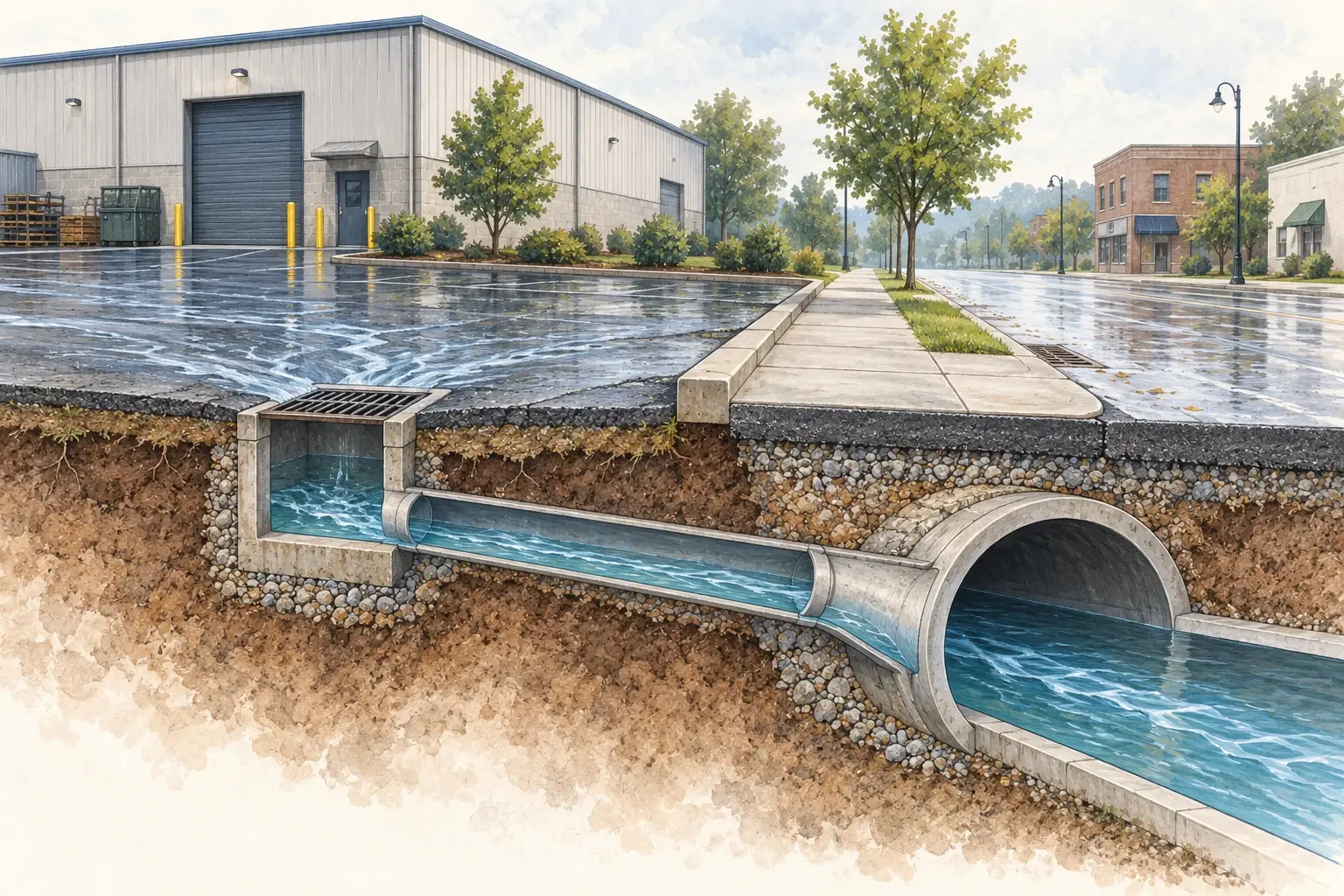
A municipal separate storm sewer system is the network of inlets, pipes, roadside ditches, and outfalls that carries rain and snowmelt runoff away from streets and properties and into local creeks and rivers. It's called "separate" because it's kept apart from the sanitary sewer that carries wastewater to a treatment plant. The municipality, or another public entity like a county, a college, or a transportation agency, owns and operates that system, and federal rules require many of them to hold an NPDES permit (National Pollutant Discharge Elimination System, the permit program behind the Clean Water Act) for what the system discharges.
In Pennsylvania, most small municipalities cover themselves under PAG-13, DEP's general permit for small MS4s. A few use an individual permit written specifically for them, as PennDOT and the Pennsylvania Turnpike Commission do. Either way, the permit holder has to run a stormwater management program built around six minimum control measures. Those include public education, public involvement, illicit discharge detection and elimination, construction site runoff control, post-construction stormwater management, and pollution prevention at municipal operations.
PAG-03 is a completely different animal. It's DEP's general permit for stormwater associated with industrial activity, and it covers one facility's discharges rather than a whole community's. A No Exposure Certification is the alternative for qualifying industrial facilities that keep all industrial materials and activities indoors or under cover, so rain never touches them. We cover how those options compare in our guide on which NPDES permit a facility needs, and our post on Pennsylvania's PAG-03 permit goes deeper on the permit itself.
Who Is Responsible for What Under an MS4 Program and a PAG-03 or No Exposure Permit?
The simplest way to picture it is to follow a raindrop. Rain lands on your yard, runs to a drain or ditch on your property, enters a pipe, and eventually reaches the township's storm sewer or a nearby stream. Your permit governs the first part of that trip, and the township's permit governs the system that takes over from there. The diagram below shows where each responsibility sits.
Your facility
Yard, loading areas, roofs, and on-site drains |
→ |
Property line
Where your outfall or pipe meets the public system or a stream |
→ |
Township storm sewer (MS4)
Public inlets, pipes, ditches, and outfalls |
→ |
Creek or river
Receiving water |
| Facility's responsibility: PAG-03 coverage or a No Exposure Certification from DEP |
Township's responsibility: its MS4 permit (PAG-13 or an individual permit) |
|
Not every facility connects to the township's system. Some discharge straight to a stream or a wetland, and some send runoff somewhere else entirely, so your own drainage map decides which part of the picture applies to you. Here's how the two sets of responsibilities compare side by side.
| |
Township MS4 Program |
Your PAG-03 or No Exposure Certification |
| Who holds it |
The municipality or other owner of the storm sewer system |
The owner or operator of the industrial facility |
| What it covers |
Discharges from the public storm sewer system as a whole |
Stormwater from industrial activity at one site, or a certification that industrial materials and activities are protected from stormwater |
| Main duties |
Mapping the system, screening outfalls, finding and stopping illicit discharges, adopting ordinances, educating the public |
A PPC Plan, best management practices, inspections, and sampling and reporting where the permit requires it; for No Exposure, keeping materials covered and renewing the certification |
| Geographic reach |
Everything draining to the municipality's system, including private property that connects to it |
Your site only |
| Overseen by |
PA DEP |
PA DEP |
A PPC Plan, short for Preparedness, Prevention, and Contingency Plan, is the written plan DEP expects industrial facilities to keep for stormwater and spill prevention. If you want the details on how it compares to the SWPPP most other states use, see our article on Pennsylvania SWPPPs versus PPC Plans.
Where Do MS4 Programs and Industrial Stormwater Permits Overlap?
The biggest overlap is illicit discharge detection and elimination. An illicit discharge is any discharge into the storm sewer that isn't made up of stormwater or one of the non-stormwater discharges the MS4 permit specifically allows. Think wash water, oily floor drain overflows, process wastewater, sewage, or dumped chemicals. Townships have to maintain a written program for finding these and shutting them down, and they have to identify priority outfalls where problems are more likely.
Those priority outfalls get walked and screened, often during dry weather, because flow coming out of a pipe when it hasn't rained recently usually means something besides rain is getting in. Township programs commonly treat older industrial and commercial areas as higher risk, so a facility upstream of a flowing outfall can end up on the township's list. When the township finds a problem, it traces the flow back up the pipe network to its source, which sometimes ends at a facility's property line.
Can a Township Inspect or Ask Questions About Your Industrial Facility?
Often, yes. The authority comes from the township's own stormwater or illicit discharge ordinance rather than from your permit, and the details vary from one municipality to the next. Some ordinances let the township investigate suspected discharges, require industrial permit holders to comply with and show compliance with their permits, suspend a property's access to the storm sewer when a discharge is causing harm, and bill the property owner for cleanup and abatement costs. York City's illicit discharge ordinance is one example of that kind of language.
Townships have a good reason to take this seriously. In 2017, EPA Region III proposed a $5,000 penalty against Steelton Borough for MS4 problems that included missed outfall screenings and failing to take adequate enforcement action against an illicit discharge. A township that gets burned for not policing its system tends to start asking harder questions of the businesses draining into it. Having your drainage map, your PPC Plan, and your permit paperwork ready makes those conversations short. If a township or agency has already cited your facility, an environmental attorney may be worth bringing in too. Our article on what happens during a PA DEP stormwater inspection covers the agency side of this.
What Local Stormwater Approvals Can a Township Require for Site Changes?
The MS4 permit also requires townships to control runoff from construction sites and to manage stormwater from new development after it's built. That's the reason many municipalities review stormwater whenever a property adds a building, expands paving, or changes its drainage. The township does this through its local stormwater management ordinance and its land development or building approval process, and the requirements differ from place to place.
RMA doesn't prepare construction-phase permits or approvals. That covers construction stormwater coverage (PAG-02), erosion and sediment control plans under Chapter 102, county conservation district reviews, and township land development stormwater approvals. For those, facilities usually work with their site engineer, contractor, or an erosion and sediment control specialist. If you're expanding a facility, we're happy to help you work out what the construction phase is likely to need and point you toward the right professionals.
Where we do come in is everything the facility needs once it's running. A change to your site can move your outfalls, change how water leaves your property, or put materials in the rain that used to be covered. Any of those can mean your PPC Plan needs an update, or that a facility holding a No Exposure Certification no longer qualifies and needs PAG-03 coverage instead. A new or expanded operation almost always needs its operational stormwater coverage sorted out on top of whatever the township approves.
Does a Township's MS4 Permit Replace Your PAG-03 or No Exposure Certification?
No. The township's permit covers the township's discharges, not your facility's industrial activity. Whether your facility needs its own coverage depends on what you do on site (specifically your industrial classification), whether those activities are exposed to rain or snowmelt, and where your runoff ends up. Being located inside an MS4 area doesn't create that requirement, and it doesn't remove it either.
Plenty of businesses don't need an industrial stormwater permit at all. Warehouses, body shops, dealerships, and most contractors often fall outside PAG-03. Others in covered industries keep everything indoors and file a No Exposure Certification, which DEP has to approve and which is renewed on a five-year cycle. No Exposure isn't available to facilities discharging to High Quality or Exceptional Value waters, which is one of the situations where an individual NPDES permit may come into play instead. Our explanation of stormwater associated with industrial activity and our post on what No Exposure means will help you sort out where you land.
Local situations add another wrinkle. Some older cities have combined sewers, where stormwater and wastewater share the same pipes and head to a treatment plant. A facility there may answer to the local sewer authority rather than needing a DEP stormwater permit, and cities, townships, and sewer authorities can have their own rules and fees on top of state requirements. We can't tell you whether your specific address needs PAG-03 without looking at your operations and where your water goes, so confirm your situation before assuming either way.
How Should an Industrial Facility Prepare for Township Stormwater Questions?
Start by knowing where every drain on your property goes. Walk the site after you've looked at your drainage map, and confirm which inlets lead to the township's system, which lead to a stream or basin, and which tie into a sanitary sewer. Floor drains and sinks are where many problems start, because people assume anything that goes down a drain gets treated. If it reaches the storm sewer, it doesn't.
Next, deal with non-stormwater. Equipment wash water, process water, concrete washout, and similar flows are the usual culprits when a township finds dry-weather flow at an outfall. Our post on the difference between stormwater and process water and our guide to what you can discharge under a stormwater permit spell out what's allowed and what isn't.
Finally, keep your paperwork in one place and your people informed. That means your permit or No Exposure Certification, your PPC Plan, your inspection records, and a copy of your township's ordinance. Employees who know what a spill, a leak, or a wash-down mistake means for the storm drain are your best defense, and our online environmental training library is one way to cover that. If the township calls or writes, respond promptly and cooperatively. Townships are under their own pressure to document that they followed up, and a fast, organized answer usually ends the conversation.
How Does RMA Help Pennsylvania Facilities With Industrial Stormwater Permits?
We're a family-run firm based in New Jersey, and we work with industrial facilities across Pennsylvania. When a township's MS4 program starts asking questions, we help you figure out whether your facility needs PAG-03 coverage, an individual NPDES permit, or a No Exposure Certification, and we help prepare the application, the PPC Plan, and the drainage and outfall work behind them. Once you're covered, we can help with sampling, inspections, eDMR reporting, training, and plan updates as your site changes. If you're in a situation where you don't need us, or where the real work belongs with your engineer, we'll tell you that too.
There's no pressure and no obligation. You can call us, email us, or fill out the form on our website, tell us a little about your facility and what your township is asking, and we'll help you work out what applies. To get started, contact RMA whenever you're ready.