What AI Can Help With, Where It Falls Apart on a PAG-03 PPC Plan, and What Getting It Wrong Can Cost Your Facility
If your Pennsylvania facility needs a PPC Plan, there's a decent chance you've already typed the question into ChatGPT. It's a reasonable instinct. The tool answers in seconds, it sounds like it knows the regulations, and a consultant's quote is a lot more money than a free chatbot. The trouble is that a PPC Plan isn't a document you can write from general knowledge. It describes your property, your materials, and your drainage, and a chatbot has never seen any of them.
We've tried AI on this ourselves, and in this article we'll walk through what it's good for, where it goes wrong, what you'll still have to do by hand, and what a mistake can cost you. If you'd rather talk through your own situation instead of reading about it, you're welcome to reach out to RMA at any point.
Table of Contents
TL;DR
You can use ChatGPT to learn the vocabulary, build an outline, and make a list of questions, but you shouldn't use it to write the PPC Plan you submit to Pennsylvania DEP. A PPC Plan is a site-specific spill and emergency plan, and a chatbot can't see your site, so it fills the gaps with confident guesses. A plan with wrong outfalls, missing materials, or invented requirements can stall your permit application, hand an inspector easy findings, and leave your employees following bad instructions during a real spill. Clean Streams Law penalties run up to $10,000 per day for each violation, which is why most facilities still hire a professional.
What Is a Pennsylvania PPC Plan and Who Needs One?
PPC stands for Preparedness, Prevention, and Contingency. A PPC Plan is a site-specific emergency response plan that Pennsylvania DEP (the Department of Environmental Protection) requires for certain facilities that handle materials capable of polluting water. It lays out what you store and where, how you keep it from leaking or spilling, and exactly what your people do in the first minutes after something goes wrong. DEP's general rule sits in 25 Pa. Code § 91.34, which says anyone who stores, uses, processes, or transports pollutants has to take the measures needed to keep them out of Pennsylvania waters, whether the cause is an accident, carelessness, or weather. The same section lets DEP require a report or plan for those activities.
Most industrial facilities run into the PPC Plan through PAG-03. That's Pennsylvania's general permit for stormwater from industrial activity, and it's part of the federal NPDES (National Pollutant Discharge Elimination System) program that regulates what leaves your property in rain and snowmelt. The permit requires a PPC Plan, and the version reissued in 2023 for a new five-year term has permittees submit their current plan to DEP along with their Notice of Intent, which is the application for permit coverage. Whether you need PAG-03 in the first place depends on your industry, whether your materials and activities are exposed to weather, and where your runoff goes, and our guide to which NPDES permit you need walks through that decision. We also compare the PPC Plan with its federal cousin in Pennsylvania stormwater plans, SWPPPs versus PPC Plans.
What Is ChatGPT Useful for When You're Working on a PPC Plan?
We aren't going to tell you AI is worthless, because it isn't. Used as a study aid, it can save you some time before you ever pick up a pencil. It's good at turning dense regulatory language into plain English, so if you've pasted in a paragraph of permit text and can't tell what it's asking for, a chatbot can give you a readable version. It can sketch an outline of the sections a PPC Plan usually includes, which gives you something to organize your thoughts around. It can also help you build a list of questions to answer before you walk your site, like what chemicals you keep, where the floor drains go, and who would respond to a spill at 2 a.m.
That's about where its usefulness ends, and even there you need to check its work. The permit, DEP's guidance, and the regulations are the source, and a summary from a chatbot is only as good as what it happened to absorb. We'd treat anything it tells you about a Pennsylvania requirement the way you'd treat advice from a stranger at a trade show: interesting, worth checking, and not something to put your signature under.
Where Does ChatGPT Go Wrong on a Pennsylvania PPC Plan?
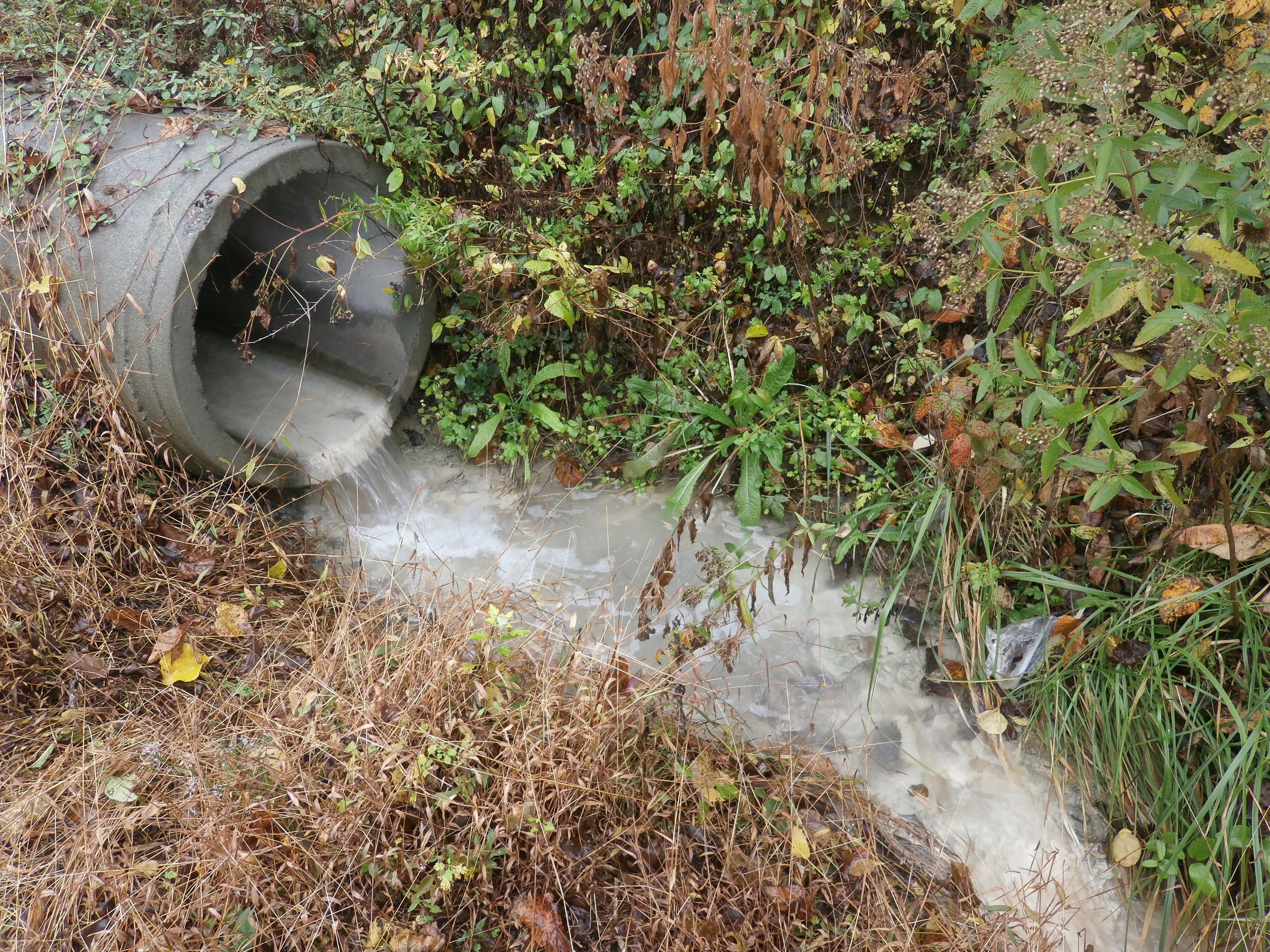
We've tried it ourselves, and we weren't impressed. The drafts read well, which is part of the problem. They come out in confident, professional language, but the specifics aren't right, and a PPC Plan is made almost entirely of specifics. A chatbot doesn't know your site. It can't see your buildings, your storage areas, your drains, or where water leaves your property, so anything it writes about them is either generic filler or a guess. When it doesn't have a fact, it often makes one up, and it makes it up in exactly the same tone it uses when it's right.
| What a PPC Plan Needs |
What ChatGPT Can Do |
What You Often Get |
| A site map showing structures, drainage, and outfalls |
Can't see or walk your property |
A generic description, or an invented one |
| An accurate list of materials, quantities, and storage locations |
Only knows what you type in |
Boilerplate lists that don't match your site |
| The points where stormwater leaves your site |
Can't trace how water moves across your property |
Missing, extra, or misplaced outfalls |
| Current permit and DEP guidance language |
May blend old versions, other states, or invented rules |
Confident text citing requirements that don't exist |
| Your real spill history and response contacts |
Doesn't know your history or your people |
Placeholder procedures and names |
| Someone to tell you what's wrong with the draft |
Tends to agree with whatever you give it |
Reassurance that everything looks fine |
That last row is the one that worries us most. If you already know the regulations well enough to spot every error, you didn't need the chatbot. If you don't, you can't see what it got wrong, and it won't flag the problem for you. It can tell you your drainage is fine when it isn't. It can steer you toward the wrong number of outfalls, or describe a drainage pattern that doesn't match your property, and your plan ends up documenting a site that doesn't exist. Nothing in the tone of the answer will warn you.
This is also why RMA doesn't use AI to produce client deliverables. A PPC Plan is only as good as the person who walked the site and checked the drains, and we'd rather have a senior person doing that than a language model guessing at it.
What Will You Still Have to Do Yourself for Your PPC Plan?
Even if you let a chatbot produce a first draft, every piece that makes the plan real is still on you. Someone has to walk the property and write down what's there. Someone has to trace where stormwater flows and identify the outfalls, which are the points where runoff leaves your site and heads for a stream, a storm sewer, or a ditch. Someone has to draw an accurate site map, and DEP's application materials ask for a site plan and topographic map showing your facilities and discharge locations. Then the plan has to be checked against the permit and guidance that apply to you today, not the ones a chatbot half remembers.
| Task |
Why It Can't Be Handed Off to a Chatbot |
| Walk the site and inventory materials |
It takes someone on the property looking at what's really stored and where |
| Trace drainage and identify outfalls |
Water moves based on grading, pavement, and drains that only show up in person |
| Draw the site map |
The map has to match your property, and DEP compares it to your application |
| Document spill and leak history |
Only your team knows what has happened at the site |
| Set response procedures with real names and numbers |
Your employees will follow these during a real spill |
| Check against the current permit and DEP guidance |
Requirements change, and the official documents are the only reliable source |
| Sign and certify the application |
The person who signs is vouching that the information is accurate |
The work also doesn't end when the plan is submitted. You'll need to update it when your operations change, like when you add a storage area, move a fueling station, or start handling a new material. Your employees need to know what's in it, and our online environmental training library is one way to get them there. A plan that sits in a binder and describes a site from three years ago isn't protecting anyone.
What Happens If Your Pennsylvania PPC Plan Is Wrong?
Delayed or Denied Permit Applications
The first cost is time. DEP reviews the plan as part of your application, and an incomplete or inconsistent package can be denied or sent back with questions. While you wait, your facility may be discharging stormwater without the permit coverage it needs, which creates its own exposure. A plan that doesn't match your site map, or a map that doesn't match your drainage, also tends to produce a round of follow-up questions that a correct plan wouldn't have drawn.
The second cost shows up at inspection. Your plan is the document an inspector reads against what they see on your property, and every gap is a finding. If the plan says you have two outfalls and the inspector finds three, or the plan says a material is stored indoors and it's sitting in the yard, you've handed over an easy violation. We cover what that visit looks like in what happens during a PA DEP stormwater inspection.
Penalties Under the Clean Streams Law
The Pennsylvania Clean Streams Law allows DEP to assess civil penalties of up to $10,000 per day for each violation (35 P.S. § 691.605), and Commonwealth actions under that section carry a five-year statute of limitations. Those are maximums, and DEP weighs factors such as how willful the violation was, the damage to the waters, and the cost of restoring them. But the math works against you quickly, because the penalty is per day and per violation. A permit that's violated across several categories for months can add up to a number that makes the cost of a professionally prepared plan look small. Federal Clean Water Act penalties are separate and can exceed $68,000 per day for each violation after inflation adjustments, and EPA can pursue those alongside the state.
The penalty is also the smaller part of the risk. The PPC Plan is what your employees pick up when something spills, and a bad plan sends them to the wrong drain, the wrong shutoff, or a phone number that no longer works. A release that reaches a stream means cleanup costs, possible damage to the waterway, and a very different conversation with DEP than one about a paperwork error. If you're already dealing with a notice of violation, a consent order, or any enforcement action, an environmental attorney may be appropriate alongside any consultant you hire.
How Much Does Professional PPC Plan Help Cost Compared to Getting It Wrong?
On the DEP side, PAG-03 coverage carries a $500 application fee and a $500 annual fee. Those fees are the same whether you write the plan yourself or hire someone. The real cost is preparing everything the permit requires, including the site evaluation, mapping, PPC Plan, and application package. For a relatively straightforward facility, professional help with the full application typically runs around $5,000 to $10,000, and ongoing compliance support may add another $3,000 to $6,000 per year depending on your site and how much help you want. What pushes those numbers up or down is the size and complexity of your site, how many outfalls you have, what materials you handle, and whether you already have a usable plan.
Set that against a penalty structure that runs in thousands of dollars per day, and the case for getting the plan right the first time is mostly arithmetic. We also break down the numbers in how much a PAG-03 permit costs in Pennsylvania, and if you're weighing doing it yourself, can you get a PAG-03 permit yourself gives a straight look at when that makes sense. If you'd like a number for your own facility, the calculator below estimates what our help would run based on your situation.
How Can RMA Help With Your Pennsylvania PPC Plan?
We work with Pennsylvania facilities all the time, and a PPC Plan is one of the things we build most often. A senior person from our team walks your site, traces how stormwater moves, identifies your outfalls, and builds the maps and the plan around what's really there. We don't hand it to a junior staffer, and we don't use AI to write it. If you've already got a draft, whether it came from a chatbot, a template, or an old plan from a previous owner, we're glad to look it over and tell you plainly whether it holds up. And if you don't need our help, we'll tell you that too.
If you'd like to talk it through, you can call us, email us, or fill out the form on our website, with no pressure and no obligation. Tell us a little about your facility and we'll help you figure out what applies and what the next step should be. When you're ready, just contact RMA, and if you're still deciding whether to hire anyone, our guide on choosing a PAG-03 consultant in Pennsylvania covers what to look for.