Why Vehicle Wash Water Isn't Stormwater, and What New Jersey Facilities Can Do With It Instead
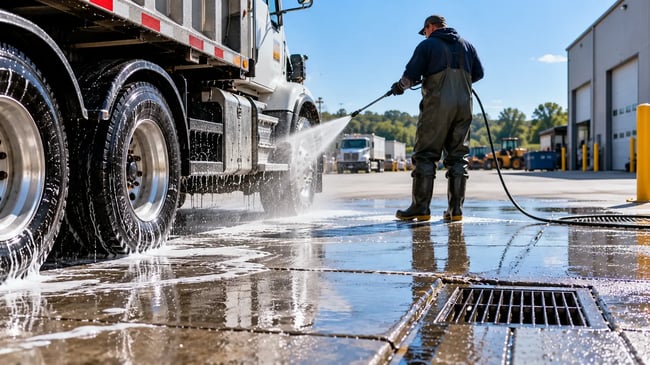
Picture the end of a workday at a New Jersey yard. The dump trucks and loaders are caked with mud, someone grabs a hose or a pressure washer, and the rinse water runs across the pavement toward a catch basin. Nobody thinks twice about it, because it looks like ordinary housekeeping. Under New Jersey's water rules, though, that rinse water is a wastewater discharge, and the stormwater permit you may already hold doesn't cover it.
So can you wash trucks and equipment outside in New Jersey? Rinsing a vehicle on pavement and letting the water reach a storm drain, a ditch, or the ground generally isn't allowed without its own authorization, but there are several legitimate ways to handle the water instead. This article walks through why wash water isn't stormwater, who regulates it depending on where it goes, the options facilities use, and how washing ties into your stormwater plan. If you'd like to talk through your own yard, you're welcome to reach out to RMA at any point.
Table of Contents
TL;DR
Water you use to wash trucks and equipment isn't stormwater, and New Jersey's stormwater permits aren't built to cover it. Letting it run to a storm drain, a waterway, or into the ground without its own authorization can violate the state's Water Pollution Control Act. Facilities usually handle wash water by recycling it, capturing and hauling it, sending it to the sanitary sewer with the local sewerage authority's approval, moving the washing off site, or getting a separate discharge permit. Which one fits depends on where your wash area drains, how much water you use, and what's on the equipment.
Why Isn't Truck Wash Water Covered by a New Jersey Stormwater Permit?
New Jersey regulates water leaving industrial sites through the New Jersey Pollutant Discharge Elimination System, or NJPDES, which NJDEP (the New Jersey Department of Environmental Protection) runs under the state's Water Pollution Control Act. A stormwater permit under NJPDES covers one thing: rain and snowmelt that runs off your property. Wash water is a different animal. You added it, it picked up whatever was on the truck, and it would be there on a dry day too. That puts it in the wastewater category, which has its own permit types.
The Basic Industrial Stormwater General Permit, usually called the 5G2, is the permit most New Jersey industrial facilities hear about first. It's built around keeping industrial materials and activities out of the rain, and NJDEP's current master permit took effect February 1, 2023. Washing used to be part of that permit's story. Earlier versions let facilities with existing wash water discharges keep them temporarily, until May 31, 2009, while they found another way to handle the water. NJDEP's fact sheet for a later renewal explains that the equipment and vehicle washing section was dropped because that discharge had been eliminated in 2009. The takeaway is that you shouldn't count on the basic permit to cover routine washing, and it's worth reading the current permit text to be sure. Our guide to the 5G2 basic industrial stormwater permit in New Jersey covers what that permit does include.
The industry-specific stormwater permits, such as the ones for concrete, asphalt, scrap metal, and vehicle recycling, are also built around stormwater. Some of them handle certain washdown or process water in their own ways, so read the permit you hold rather than assuming it either covers washing or doesn't. If you're not sure which permit applies to your site, we explain the choices in which NPDES permit you need.
What Counts as Vehicle and Equipment Wash Water?
NJDEP's earlier basic permit used the phrase "equipment and vehicle wash wastewater" and spelled out that it included rinse water with or without detergents. That's a broad net. A hose-down of a dump truck counts. So does pressure washing a loader, rinsing an undercarriage, washing a forklift, or cleaning mud off a trailer. Adding soap doesn't change the category, and leaving it out doesn't get you off the hook either. Volume affects which path fits your site, but a Friday afternoon hose-down is still wash water, the same as a drive-through bay.
Some washing creates a tougher problem than mud and road film. Engine degreasing and parts washing put solvents and oils in the water. Concrete truck and mixer washout produces a high-pH slurry full of fine solids, and it has its own rules and equipment. We cover that in our producer's guide to concrete plants and stormwater permits. The general idea is the same across all of these. Water that touches your operations and then leaves is process wastewater, and our explanation of the difference between stormwater and process water shows why regulators treat the two so differently.
Who Regulates Truck Wash Water Depending on Where It Goes?
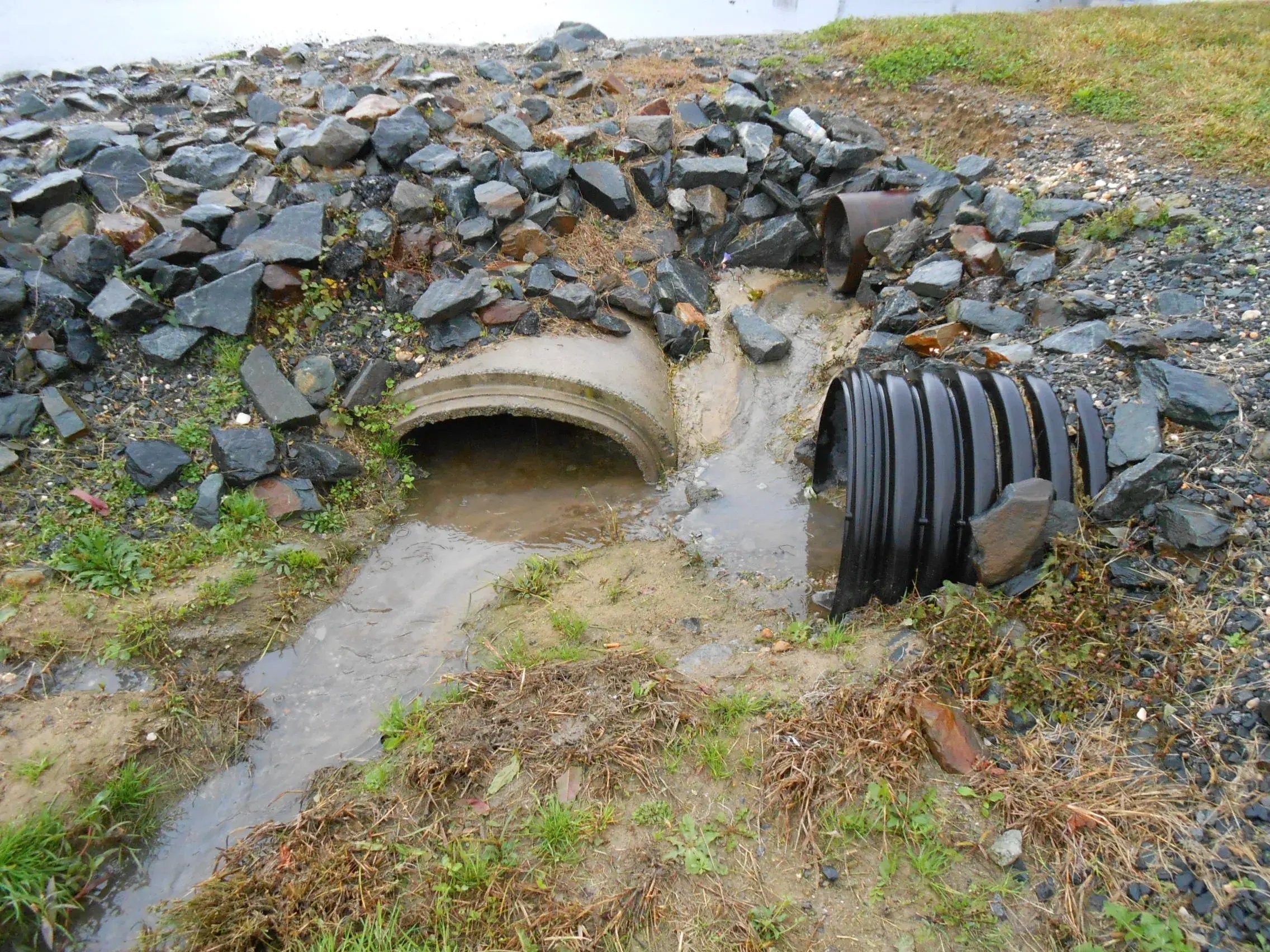
Where the water ends up decides who you answer to. A storm drain, a ditch, and the soil behind your shop all look like "away" from the wash pad, but they land in different regulatory buckets. The table below sorts the common destinations.
| Where the wash water goes |
Who's involved |
What it usually means |
| A storm drain, ditch, stream, or overland flow toward a waterway |
NJDEP, through NJPDES |
A direct discharge to surface water, which needs its own NJPDES discharge permit. A stormwater permit doesn't authorize it. |
| Into the ground (soaking into soil, a seepage pit, or a similar structure) |
NJDEP, through NJPDES |
A discharge to ground water, which NJDEP also regulates. Soaking it in isn't a loophole. |
| A sanitary sewer |
Your local sewerage authority, with NJDEP oversight |
You become an indirect user. The authority's rules apply, and larger industrial users may need a pretreatment permit. |
| A combined sewer (stormwater and wastewater in the same pipe) |
Depends on the authority |
The authority's rules may apply instead of, or alongside, NJPDES. Confirm with them rather than assuming. |
| A holding tank, then hauled off site |
The hauler and the receiving facility |
The water is managed as a waste, so the paperwork follows the load. |
| A closed-loop recycling system |
Depends on the system's design |
Reused water stays on site, but solids and any bleed-off water still need a plan. |
The sanitary sewer route is the one most facilities want to know about, so a bit more detail helps. NJDEP describes a facility that sends non-domestic wastewater to a sewer for treatment at a public plant as an indirect user. Not every indirect user needs an individual NJPDES permit, but all of them have to meet minimum requirements, and a significant indirect user (SIU) needs an NJPDES SIU permit. Depending on where you are, that permit can come from a delegated local agency or directly from NJDEP. Some sewerage authorities also require their own agreement or permit, and NJDEP is clear that a permit or contract from a local authority doesn't replace a state SIU permit when one is required.
Older New Jersey cities often have combined sewers, and the rules there can differ. We'd never tell you flatly that a site in a particular town does or doesn't need a permit. Where your wash area drains is a site-specific question, and the sewerage authority is the first call to make, followed by NJDEP if the authority can't answer it.
What Are Your Options for Handling Truck and Equipment Wash Water?
When NJDEP phased out the temporary allowance for wash water discharges, its permit listed the ways a facility could stop an unpermitted discharge. The list still describes the realistic choices, and it maps well onto what we see at New Jersey facilities today.
| Option |
How it works |
What to watch |
| Install a wash water reclaim or recycling system |
Wash water is collected, cleaned enough to reuse, and sent back to the washer. |
Solids and sludge build up and have to be removed. Some systems still produce water that needs a destination. |
| Capture the water and haul it for disposal |
A sealed wash pad or sump feeds a holding tank, and a hauler takes it away. |
Hauling costs scale with volume. Know what's in the water before you pick a disposal route. |
| Connect to the sanitary sewer |
The wash pad drains to the sewer through a pretreatment step such as a settling basin or oil/water separator. |
Needs local sewerage authority approval, and the authority may set limits on what you can send. |
| Stop washing on site |
Trucks and equipment go to a commercial wash. |
Cheapest to start, and often the right answer for a small fleet. Costs add up with a big one. |
| Get a separate NJPDES permit |
An individual discharge permit authorizes a treated discharge to surface or ground water. |
Takes time and detailed technical work. Usually the last resort rather than the first. |
For a yard with a handful of pickups and a couple of loaders, we'd usually point you toward a commercial truck wash or a simple dry-cleaning routine (sweeping, scraping, brushing) with washing only when it's needed. A full recycling system or a sewer connection is a real project, and it makes sense once the washing volume justifies it. Larger fleets and plants that wash daily tend to land on recycling, the sewer, or a combination of the two.
If your plan involves building a wash bay, expect a construction side to the project. That typically means building and plumbing permits, municipal approvals, an engineer to design the pad, drainage, and treatment, and possibly sign-off from NJDEP or the sewerage authority before work starts. RMA doesn't prepare construction-phase permits or approvals, and your engineer and contractor will lead that part. Where we can help is on the operating side, which we cover near the end of this article.
What About Wash Water Solids, Oil, and Sheen?
Wash water carries sediment, oil and grease, metals from brakes and tires, and whatever soaps or degreasers you add. Settling basins and oil/water separators clean that up, but they don't make it disappear. What they catch becomes a waste you have to manage, and the answer to "how" depends on what's in it. A yard that washes dirt off dump trucks has a different sludge than a shop that degreases engines or a fleet that hauls chemicals. Test or characterize the material before you pick a disposal route, and keep the records. If you want the waste side of that explained, our waste and hazardous waste team can walk you through it.
Sheen deserves its own attention. NJDEP's earlier permit conditions for wash water discharges said the discharge couldn't cause foaming or show a visible sheen, and a rainbow on water leaving your site is a red flag no matter what permit you hold. Oil on water can also trigger spill reporting duties, which is a separate set of rules from the stormwater permit. Our article on when you have to report an oil spill explains the sheen rule in plain terms.
How Do Wash Areas Fit Into Your SWPPP, and What Are the Penalties?
If your facility has a stormwater permit, you have a stormwater pollution prevention plan. People call it a SWPPP (said "swip"), an SPPP, an SP3, or just the stormwater plan, and we'll use SWPPP here. The plan includes a site map showing how water moves across your property, where storm drains and discharge points are, and where industrial activities happen. A wash area belongs on that map. NJDEP's plan requirements have asked facilities to account for process wastewater and to describe the practices that keep it from reaching the storm sewer or the ground, and the specific wording has changed over the years, so check your current permit. Our overview of what a SWPPP is shows what the plan should hold.
On the ground, the practices that keep wash water out of trouble are simple ones. Wash in a designated spot with a berm or a curb around it. Cover or plug nearby storm drains during washing. Know where the pad drains. Make sure everyone who holds a hose knows the rule, since a good plan falls apart when one employee rinses a truck behind the shop on a Saturday. Our online environmental training library is one way to get your team up to speed. An inspector who sees a stained storm drain inlet or a wash pad draining to the lot will likely ask where that water goes.
Penalties are where a casual hose-down gets expensive. NJDEP's stormwater permits state that violations can bring a notice of violation and significant monetary penalties of up to $50,000 per day, per violation, under the Water Pollution Control Act. You can violate that law without holding a stormwater permit at all, since it applies to anyone who discharges pollutants to state waters without authorization. If you've already received a notice of violation over wash water, an environmental attorney may be worth involving alongside technical help, and our guide to what you can discharge under a stormwater permit is a good place to see where the lines fall.
How Can RMA Help With Truck Wash Water in New Jersey?
We're based in New Jersey and work with NJDEP's permit categories all the time, so we're a good fit for sorting out a wash water question. We can help you trace where your wash water goes and figure out which of the paths above fits your situation. We can also check what your current permit and SWPPP say about washing, update the plan so it matches how you really operate, and train your team on what belongs on the wash pad and what doesn't. If you need a wash bay designed or built, that's work for an engineer and a contractor, and we'll tell you so rather than stretching into it.
If you only wash a few vehicles and a commercial wash solves the problem, you may not need us at all, and we'll say that on the first call. If you'd like a second set of eyes, there's no pressure and no obligation. You can call us, email us, or fill out the form on our website, and you can reach out to RMA whenever you're ready.