Several Older New Jersey Cities Have Combined Sewers, and Where Your Drains Lead Can Change Who Regulates Your Runoff
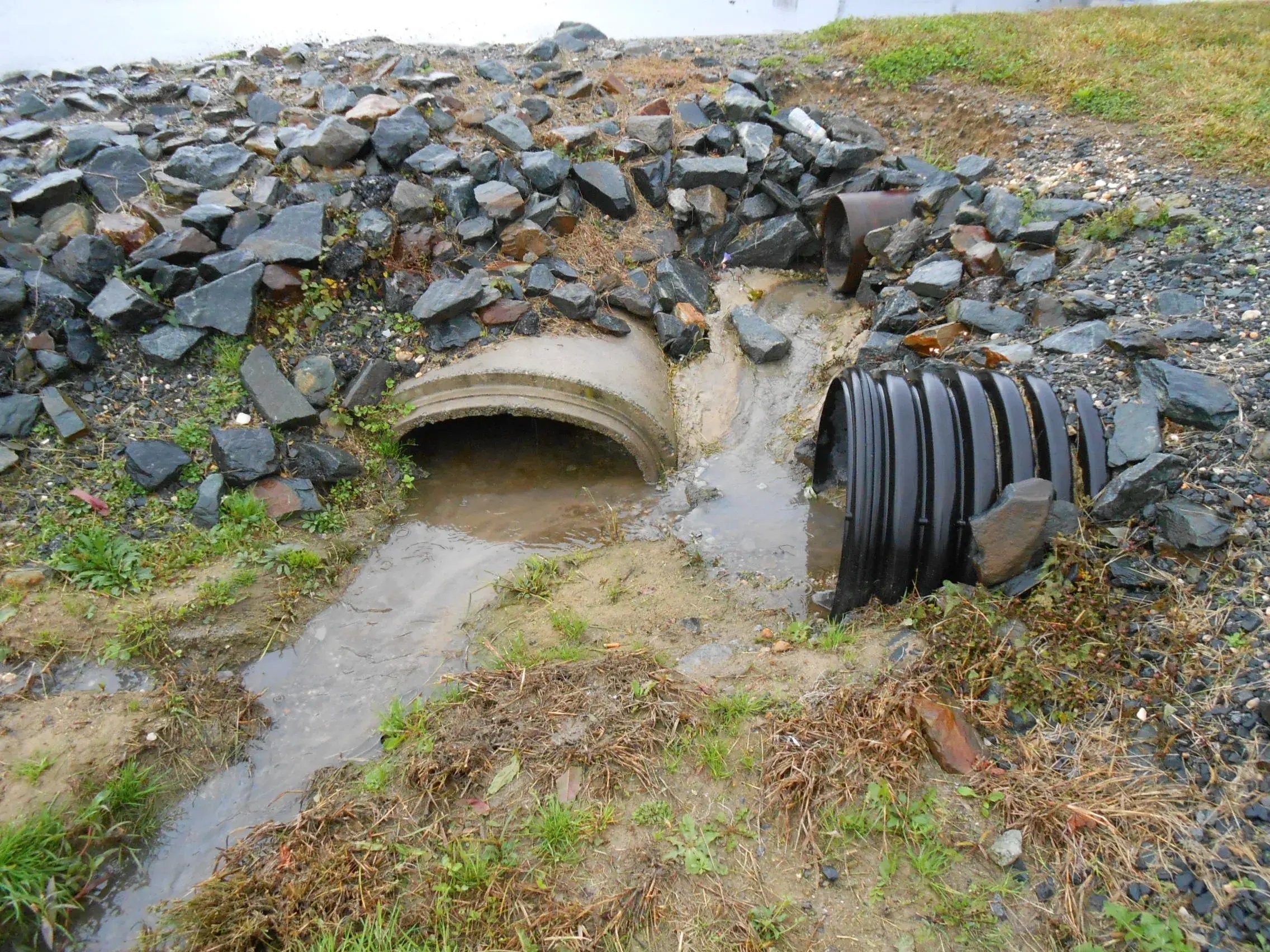
When rain runs off your parking lot or loading dock in New Jersey, it goes somewhere. For most sites it's a storm drain that empties to a stream, a ditch, or the ground, and that's the situation New Jersey's industrial stormwater permits are written around. In several of the state's older cities, though, some drains lead to a combined sewer, a single pipe system that carries rainwater and sanitary sewage together to a treatment plant. Where your runoff ends up can change which rules apply to it, and in some cases it can change whether the state's stormwater permit program covers you at all. So the short answer to the question above is yes, it can matter a great deal, and the answer for your site depends on where its drains lead.
This article explains what a combined sewer is, which cities have them, how the state's permit program and local sewerage authorities each fit in, and how to find out where your own drains go. We can't tell you from a city name whether a facility needs a stormwater permit, and nobody else should either without looking at the site. If you'd like a second set of eyes on your situation, you're welcome to reach out to RMA at any point.
Table of Contents
TL;DR
Yes, combined sewers can change how your stormwater is regulated in New Jersey. Several older cities have them, and parts of those cities often have separate storm sewers instead, so a city name tells you very little. Runoff that goes to a stream, a ditch, or the ground falls under the state's NJPDES stormwater program, while runoff that goes only into a sanitary or combined sewer is generally handled under the local sewerage authority's rules. Don't assume either way. Find out where each drain on your site leads, and confirm what applies with the authority and NJDEP.
What Is a Combined Sewer, and Which New Jersey Cities Have Them?
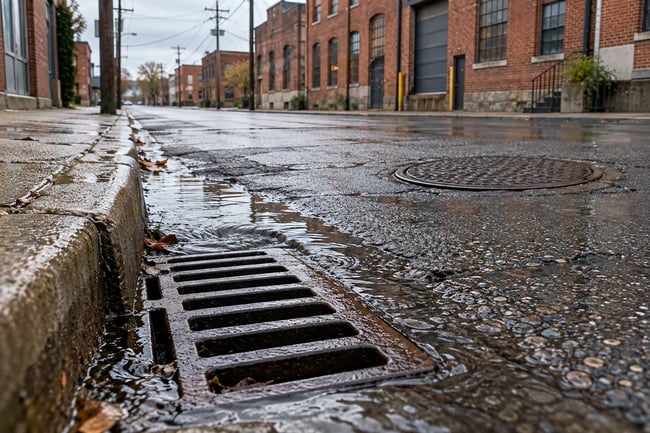
A combined sewer is an older way of building a city's underground pipes. Instead of one system for sewage and a second for rain, a single pipe carries both to a treatment plant. In dry weather that works fine. During a heavy rain or snowmelt, the volume can exceed what the pipes or the plant can handle, and the extra is released through permitted outfalls into a nearby river or stream. That release is called a combined sewer overflow, or CSO. New Jersey no longer allows new communities to build combined systems, but many older cities were permitted to keep operating the ones they already have.
NJDEP, the New Jersey Department of Environmental Protection, regulates those systems through NJPDES, the New Jersey Pollutant Discharge Elimination System, which is the state's version of the federal NPDES program. Its CSO permits have gone to roughly two dozen cities and sewer utilities. Cities that appear in NJDEP's CSO program materials include Newark, Jersey City, Paterson, Hoboken, Elizabeth, Bayonne, Kearny, Harrison, Hackensack, and Perth Amboy, along with other northern New Jersey communities in the Hudson River and Passaic River area, and Camden and Gloucester City along the Delaware. The list changes as permits are renewed, so NJDEP's CSO permittee page is the place to check the current one.
Two cautions come with any list like this. First, the CSO permits belong to the cities and utilities that own the systems. They don't set your obligations as a facility. Second, many of these cities have a mix of combined and separate sewers, so a facility's address in Newark or Camden doesn't tell you what's under the street in front of it.
Why Does It Matter Where Your Stormwater Drains Go?
NJDEP regulates rainwater at certain businesses, mostly ones in industrial categories where materials or activities are exposed to the weather. The permits it issues are built around discharges to the waters of the state, meaning streams, ditches, storm sewers that lead to them, and the ground. Which agency's rules apply depends on where the water goes, so the same parking lot can fall under different rules depending on which pipe its inlets connect to.
A facility that's covered by the state's industrial stormwater program generally ends up in one of a few places. The Basic Industrial Stormwater General Permit (5G2) is available to regulated facilities that have eliminated, or can eliminate within six months of authorization, all exposure of industrial materials and activities to stormwater. Some industries have their own general permits instead: Concrete Products Manufacturing (CPM), Hot Mix Asphalt (R4), Mining and Quarrying (R13), Sand and Gravel (RSG), Scrap Metal (SM and SM2), Vehicle Recycling (RVR), and Wood Waste Recycling and Leaf Composting (WRC). A facility that can't eliminate exposure and doesn't fit a general permit needs an individual permit, and a facility with no exposure at all may qualify for a no exposure exclusion. Our guide to which NPDES permit you need walks through how those options compare, and our article on the 5G2 basic industrial stormwater permit covers the most common one in detail.
The table below shows how the destination of the water changes who is in charge.
| Where the runoff goes |
Who generally regulates it |
What that usually means for a facility |
| A stream, a ditch, or a municipal storm sewer that leads to one |
NJDEP, through NJPDES |
An industrial stormwater permit (5G2, an industry-specific permit, or an individual permit) or a no exposure exclusion, plus a stormwater plan |
| The ground, through dry wells or infiltration areas |
NJDEP, as a discharge to groundwater |
The right permit category depends on the facility and what's discharged, so confirm it with NJDEP |
| A sanitary sewer |
The local sewerage authority, with NJDEP oversight |
The authority's sewer use rules apply, and some industrial users need a pretreatment permit |
| A combined sewer |
The sewerage authority's rules may apply instead of, or alongside, NJPDES |
Confirm with the authority and NJDEP rather than assuming either way |
How Do Combined Sewers Affect NJPDES Industrial Stormwater Permits?
The general framework is that NJDEP's industrial stormwater rules are written around discharges to surface water and groundwater. Stormwater that goes only into a sanitary or combined sewer isn't the situation those permits were designed for, and it's generally handled under the sewerage authority's rules instead. NJDEP has taken a similar position in its municipal stormwater program, which covers towns' own storm sewers. Areas that send stormwater only to combined or sanitary sewers may be excluded from that program. In other words, a facility whose every drain leads to a combined sewer may be outside the NJPDES industrial stormwater program, and a facility with at least one drain leading to a stream, a storm sewer, or the ground is probably inside it for that part of the site.
That's why we never tell a facility flatly that it does or doesn't need a stormwater permit because of the city it's in. Industrial sites often have several drainage paths. Roof leaders might tie into the street's combined sewer, while yard inlets lead to a separate storm sewer or a ditch at the back of the property. Older buildings sometimes have drains nobody remembers installing. The permit question is answered one drain at a time, and the answer also depends on your industrial category, which usually comes down to your SIC code, and on whether industrial materials or activities are exposed to rain and snow in the first place. Our article on what no exposure means under a stormwater permit explains how a facility can keep its activities fully under cover and avoid needing a permit.
Even where the state's stormwater permit doesn't apply, keeping materials out of the rain makes sense. Whatever washes off a site into a combined sewer reaches the authority's treatment plant, and during a big storm some of that flow can leave through an overflow outfall to a river. If your site has outdoor storage, scrap, bulk materials, or fueling and maintenance areas, covering them and keeping them clean is cheap protection no matter which agency's rules govern the drain.
What Do Sewerage Authorities Require From Industrial Facilities?
A sewerage authority, sometimes called a utilities authority, owns and runs the pipes and the treatment plant that serve your area. Authorities write their own sewer use ordinances, which set what can and can't go into their systems, and many of them administer industrial pretreatment programs on NJDEP's behalf. In NJDEP's terms, a facility that sends non-domestic wastewater to a sewer for treatment at a local plant is an indirect user. NJDEP says not every indirect user needs an individual permit, but all of them must meet minimum requirements, and a significant indirect user needs a permit. Depending on the area, that permit comes from a delegated local authority or directly from NJDEP. Some authorities ask every new industrial user to contact their pretreatment program for an evaluation before discharging. The Camden County Municipal Utilities Authority, for example, says all new industries in Camden County must do so.
Most of that applies to wastewater: wash water, floor drain water, and process water that you intentionally send to the sewer. Stormwater is a separate question, and the rules for it vary from one authority to the next. Some authorities have specific requirements about rain-driven flow entering their systems, and we can't tell you what yours requires without asking it. The safest way to avoid trouble is to keep the two streams straight. Rainwater is rainwater, and anything that's touched a process is process water, no matter how it reaches the drain. Our article on the difference between stormwater and process water explains why the distinction carries so much weight.
How Do You Find Out Where Your Facility's Drains Lead?
Start with the sewerage authority. NJDEP's pretreatment program pages let you click your municipality to find the authority that serves your area, and NJ-GeoWeb has a Sewer Service Area layer you can search by address. Neighborhoods sometimes share a name with a different municipality, so check that the listing matches your actual location. If your municipality isn't listed, or the listed agency says you aren't connected, NJDEP's pretreatment program can help sort out who serves you.
Once you know who runs the system, ask the authority or the town's engineering or public works department whether the sewer in your street is combined or separate. They keep sewer maps, and a combined sewer is a fact about the pipe, so it's one of the easier questions to get a straight answer to. Then look at the site itself. Your property survey, site plan, and utility drawings should show where roof drains, floor drains, and yard inlets connect. If the drawings are missing or look outdated, a plumber or engineer can trace the lines with dye or a camera. Ask your landlord or prior owner for any past drainage work as well, since a previous consultant may already have mapped it.
Roof drains, yard inlets, and floor drains can each lead somewhere different, so don't settle for a single answer about the whole property. Get the answer in writing from the authority or the town when you can, because it's the document you'll want if a question about it comes up later.
What Should You Do If Your Site Drains to a Combined Sewer?
If every drain on your property leads to a combined sewer, begin by asking the sewerage authority what rules apply to stormwater and to any wastewater you send into the system, and write down what you're told. Then check with NJDEP's stormwater program if you're unsure whether your industrial category and exposure put you in the permit program at all. If the authority and NJDEP both tell you a state stormwater permit doesn't apply, you've confirmed it rather than guessed, and that's a much better position to be in. It's also common to find that part of a site drains one way and part drains another. Where any portion leads to a storm sewer, a stream, or the ground, work out which permit option fits that portion. Our guides to the individual NJPDES industrial permit and to NJPDES stormwater permit requirements explain what each one asks of a facility.
Facilities that do end up under a stormwater permit need a stormwater pollution prevention plan, called a SWPPP in most of the country. New Jersey materials often call it an SPPP, and some people say SP3 or just the stormwater plan. We'll use SWPPP here. The plan is a written description of your site, the materials and activities that can touch rain, and the controls you use to keep pollutants out of runoff. Our explainer on what a SWPPP is covers what goes in one.
If you're building, expanding, or redeveloping a facility, how the new site drains and where it connects gets decided during design and approvals, usually with your engineer and the town. The construction phase has its own requirements, such as 5G3 construction stormwater coverage, soil erosion and sediment control certification through the local Soil Conservation District, stormwater management design under N.J.A.C. 7:8, and municipal site plan approvals. RMA doesn't prepare any of those, and your engineer, contractor, or a soil erosion specialist is the right person for them. Once the facility is running, it usually needs operational permits and plans, such as the right NJPDES industrial permit or a no exposure exclusion, a SWPPP, annual inspection and certification, and sampling where the permit requires it. That's the part we help with, and we can also point you toward the right construction-phase professionals if you don't already have them.
How Does RMA Help With Combined Sewer and Stormwater Questions?
We're based in New Jersey and have worked with NJDEP and the state's permit categories for a long time, so we know the 5G2, the industry-specific permits, and the no exposure exclusion well. When a facility isn't sure how its drains are set up, we can help work out which rules apply, whether a stormwater permit or exclusion fits, and what the plan, inspections, and certification should look like if it does. We'll also tell you when you don't need us. If your site drains only to a sewer and your authority and NJDEP both confirm that no stormwater permit applies, you may be able to handle the rest yourself.
If you'd like to talk it through, you can call us at 888-RMA-0230, send an email, or fill out the form on our website. There's no obligation, and we'll tell you honestly whether we're the right fit. You can also contact RMA to describe your site and ask what we'd look at first.