Phase I Environmental Site Assessment vs. Lighter Environmental Property Reviews
If you're reading this, there is a good chance you already know what a Phase I Environmental Site Assessment is. But sometimes, when it comes to Phase Is, we get the question: do I really need the whole thing this time?
Short answer: not always. Not every deal carries the same risk, and not every buyer needs the same level of protection. At the same time, a Phase I is not just a formality. In some cases, cutting scope or choosing a lighter review can leave you completely unprotected if something is discovered later.
The tricky part is that both a full Phase I and a lighter property review can be valid options. They just serve very different purposes. And if you don't understand that difference up front, it's easy to spend money on the wrong thing and only realize it after it's too late.
This article walks through those two paths (plus a bonus!), what they actually do, and how to decide which one makes sense for your situation. And if you want to talk through your deal with an actual person, you can always reach out to us here.
Table of Contents
Your Two (or Three) Main Options for Environmental Due Diligence
When it comes to environmental due diligence, you essentially have two realistic options.
One is a full Phase I Environmental Site Assessment, which is the formal, by-the-book approach and is primarily about protecting yourself if environmental issues are discovered later.
The other is a lighter-scope environmental property review, which is more flexible and usually focused on helping you understand the property well enough to decide whether to move forward.
There is technically a third option, called a Transaction Screen Assessment, or TSA. It exists, but it is used far less often and only in very specific situations. We'll explain why later.
These options are not interchangeable. They exist for different reasons. And to understand which one actually makes sense, you first need to understand how environmental liability works and why CERCLA, AAI, and ASTM matter in the first place.
CERCLA, AAI, and ASTM Explained
Let’s quickly backtrack so you understand the laws and standards that drive all of this.
CERCLA (the Comprehensive Environmental Response, Compensation, and Liability Act) is a federal law that allows the government to hold current property owners responsible for environmental contamination. It doesn't matter who caused the contamination or how long ago it happened. That means the Responsible Party (or RP) is the one to foot the bill, and ownership alone can be enough to be deemed the RP.
Basically, CERCLA says: if there is contamination, someone has to pay to clean it up, and the current owner is often the easiest person to point to.
Because that would obviously be unfair without a way for buyers to protect themselves, the government created a concept called All Appropriate Inquiries, or AAI. AAI is the government’s requirement for what kind of environmental homework you are expected to do before buying a property.
This is where ASTM comes in.
ASTM (the American Society for Testing and Materials) publishes the standard that defines how a Phase I Environmental Site Assessment has to be done in order to qualify as AAI. In other words, ASTM lays out "the rulebook" for what the government considers acceptable due diligence.
So when people talk about “ASTM-compliant Phase I ESAs,” what they really mean is this:
If you do a Phase I Environmental Site Assessment following the ASTM standard, you are meeting the government’s AAI requirements. And if you meet AAI, you may qualify for CERCLA liability protection (and not have to foot the bill for cleanup!).
Basically, ASTM tells you how to do a Phase I the “right” way so that it counts.
That's why Phase I ESAs are not customizable. Once you start removing required pieces or changing the scope, the report may still be informative, but it no longer meets ASTM. And if it does not meet ASTM, it does not satisfy AAI. And if it does not satisfy AAI, you lose the CERCLA protection people usually think they are getting.
With all that out of the way, let's take a look at your options.
Option 1: A Full ASTM-Compliant Phase I Environmental Site Assessment
A Phase I Environmental Site Assessment is the formal, standardized option. It is designed specifically to meet AAI requirements under CERCLA by following the ASTM standard that lenders, attorneys, regulators, and courts all recognize.
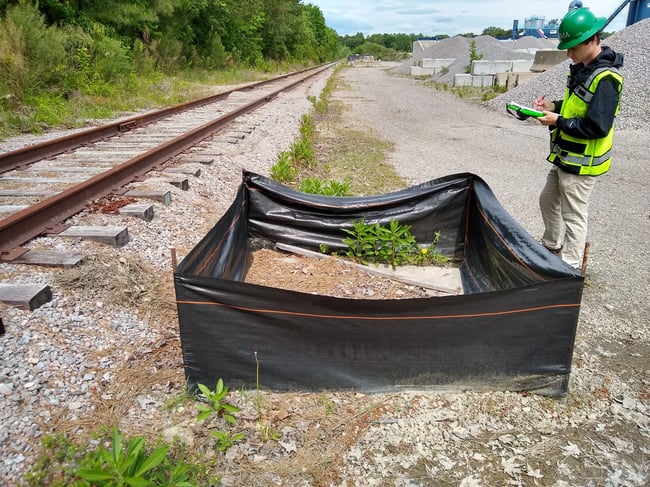
In practical terms, a Phase I looks at how the property has been used over time, reviews environmental databases and records, includes a site visit, and evaluates whether there are any Recognized Environmental Conditions (RECs) tied to the property.
If it is done properly and in accordance with ASTM, and it comes back clean, you are documenting that you did your environmental homework the way the government expects you to.
Basically: you checked the property the right way before buying it.
That does not mean contamination can never exist. It means that if something is discovered later, you have a strong argument that you should not be held responsible because you followed the rules before you bought the property.
This is why banks, attorneys, and investors often require a Phase I. They are not just looking for information. They are looking for liability protection that holds up if it is ever challenged.
If your transaction involves financing, legal review, or third-party reliance, this option is often non-negotiable.
Option 2: A Lighter-Scope Environmental Property Review
A lighter-scope environmental property review is a more flexible, decision-focused option. It is not designed to meet AAI requirements, and it does not provide CERCLA liability protection. Instead, it is meant to help you understand what you are buying so you can make a more informed decision.
These reviews can focus on things like historic land use, obvious industrial or commercial activity, and current site conditions. The goal is to identify practical red flags, not to create a legal shield.
Basically, this option helps answer the question: Is there anything here that should make me pause or dig deeper before moving forward?
For some buyers, that is enough. They may not be getting a loan. They may not be concerned about future liability. They just want clarity before making a decision.
What matters most is being honest about the limits. A lighter-scope review is not a Phase I. It does not follow ASTM. It does not satisfy AAI. And it does not provide CERCLA protection.
It can still be the right tool in the right situation, as long as everyone understands what it does and does not do.
Option 3: Transaction Screen Assessment (TSA)
A Transaction Screen Assessment, or TSA, is a very high-level environmental screen. It is lighter than a Phase I and is meant to flag obvious issues.
In theory, a TSA helps decide whether a Phase I is needed. In reality, once a property has been used, there is almost always something that raises a question. That might be an old structure, a past use, or activity on a neighboring property. The moment a question comes up, a TSA cannot answer it and a Phase I is required.
Because of that, TSAs almost always just become a step on the way to a Phase I, adding time and cost without changing the outcome.
There are rare cases where a TSA can make sense, like completely undeveloped land with no history of use and no nearby development. But as a general rule, if the property or surrounding properties have ever been used, a TSA is usually not the right call. Even old farmland often has contamination from historic pesticide or herbicide use.
That is why, in our experience, TSAs rarely stand on their own and usually point you back to a Phase I anyway. And that’s why we very rarely recommend or conduct them here at RMA.
Real-World Situations for Each Assessment Type
Let’s look at a couple of hypothetical examples of property transactions where each type of environmental assessment usually makes the most sense.
Phase I ESA
- An old warehouse that used to be a manufacturing facility, being purchased with lender financing.
- A former industrial or commercial building with a long or unclear history, even if it looks clean today.
- A property where neighboring sites have a history of industrial use, storage, or regulated activity.
- Any purchase involving a bank, attorney, or investors who need to rely on the report.
Lighter-Scope Environmental Property Review
- A relatively new apartment building with no known history of industrial use, being purchased without financing.
- Cleared land zoned for new commercial or industrial development, where the goal is to understand past use before moving forward.
- Vacant or cleared property that has been sitting unused for years and is surrounded by low-risk uses.
- A newer commercial property where the review is for internal due diligence rather than liability protection.
- Early-stage evaluation of multiple properties to identify obvious red flags before narrowing down options.
Transaction Screen Assessment (TSA) (Rare Cases)
- Completely undeveloped land with no known history of use and no nearby development.
Cost and Timing Compared
A lighter-scope environmental property review is cheaper than a full Phase I Environmental Site Assessment. That part is straightforward.
What tends to surprise people is that the difference is not always as big as they expect. Sometimes the savings are meaningful. Other times, they are fairly modest. It depends on the property, where it is located, and what still needs to be done to feel comfortable with the site.
Even with a lighter review, a site visit is basically always necessary. Someone still has to travel to the property. Experienced environmental professionals are still reviewing records, looking at historical uses, and applying judgment. So you’re still paying for travel, expertise, and time in the field, not just the length of the report.
A Phase I also takes longer. It has a defined scope and specific requirements that have to be completed and documented. If you have time before closing and know you need liability protection, that extra time and cost usually make sense.
Lighter-scope reviews are faster and more flexible. That is why we often see them used as a quick gut-check before moving forward. Sometimes a deal is moving fast. Sometimes someone just wants to know whether there are obvious red flags before closing. In those cases, people are usually not overly focused on squeezing every dollar out of the cost difference. They’re happy to save some money, but what they really want is clarity, quickly.
So the decision often comes down to this: do you need speed and insight to help you decide, or do you need formal protection and a report that holds up with lenders, attorneys, and investors?
At RMA, we focus on work that is thorough and defensible. We are not trying to be the cheapest option at all costs. If minimizing spend above everything else is the priority, a qualified local consultant may be a better fit for you, and that is okay.
What we want to avoid is giving you something that feels like a savings upfront but does not actually do what you needed it to do, which can end up costing more later.
Which Path is Right for You?
At RMA, we do full ASTM-compliant Phase I Environmental Site Assessments, and we also do lighter-scope environmental property reviews. We do not push one by default. We help you decide which one actually makes sense for your situation.
That usually starts with a simple conversation. We ask a few questions about the property, your timeline, how the deal is structured, and what you need the report to do for you. From there, we can tell you honestly whether a Phase I is worth the extra time and cost, or whether a lighter review is likely sufficient.
If you need liability protection or a report that lenders, attorneys, or investors can rely on, we will tell you that a Phase I is the right move. If you are looking for a faster, more practical gut-check to support an internal decision, we can work with that too.
Our goal is not to upsell you. It is to make sure you do not spend money on the wrong thing, or skip something that ends up costing you more later.
So if you're not sure which option fits your deal, or you just want to talk it through, reach out to us here. We'll help you sort out which assessment is best for your situation and take the next step with confidence.