What to expect, what to fix ahead of time, and how to protect deal value before going to market
If you're getting ready to sell a business or property, chances are a buyer’s Phase I Environmental Site Assessment is somewhere on your mental checklist. And if you're like most sellers, it probably feels like one of those things you hope just goes smoothly without drawing much attention.
Well, here’s the good news: a buyer’s Phase I is not something to fear. But it is something to prepare for. We see sellers run into trouble not because their site is a disaster, but because they walked into environmental due diligence unprepared and reactive.
We think about this the same way we think about financials or legal diligence. You would never wait for a buyer to “discover” your books for the first time. Environmental due diligence should be treated the same way. If you want help thinking through prep before the buyer shows up, this is exactly the kind of conversation we have every day at RMA. You can always start here by reaching out to talk about your deal.
Table of Contents
First, Understand What the Buyer’s Phase I Is Really About
One of the biggest misconceptions we hear from sellers is that a Phase I is an inspection or a compliance audit. It’s neither. A Phase I Environmental Site Assessment is a risk identification exercise. The buyer’s consultant is not there to fine you or shut you down. Their job is to identify potential environmental risks that could affect value, financing, or liability.
They are looking for evidence of current or historical releases, indicators of regulated materials, gaps in documentation, and conditions that might justify a deeper Phase II investigation. And they rely heavily on records, interviews, and what they observe on site.
That last part matters more than most sellers realize. The way information is presented, explained, and supported can shape how the entire report reads. Disorganization creates doubt. Clear documentation builds confidence.
Okay, with that out of the way, let's dive into how you can prepare for your buyer's Phase I!
Get Your Environmental House in Order Before You Go to Market
Before your property or business is ever listed, we strongly recommend pulling together your environmental documentation and reviewing it as if you were the buyer.
This usually includes prior Phase I or Phase II reports, permits and approvals, regulatory correspondence, spill or incident records, waste handling documentation, training records, and any closure or remediation reports tied to the site.
You do not need perfection. What you need is coherence. Missing records, inconsistent explanations, or unclear timelines are what raise red flags. When consultants see gaps, they fill them with caution. And caution often turns into recommendations for additional investigation.
If you aren't sure what you have or what matters, this is a great point to loop in a consultant who understands transactions, not just compliance. That is a big part of what we do at RMA. Give us a shout if you want a hand.
Walk Your Site Like You’ve Never Been There Before
Another common mistake we see is sellers forgetting how their site looks to someone seeing it for the first time.
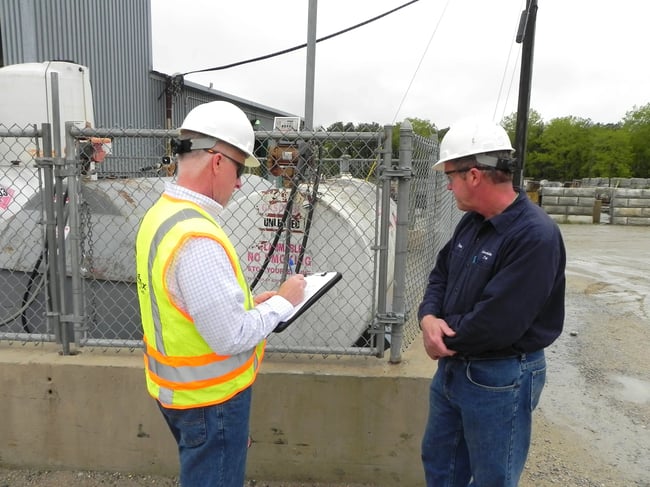
We always recommend doing a pre-sale walk-through with fresh eyes. Ask yourself some basic questions. Are drums labeled and in good condition? Are tanks, outfalls, or floor drains clearly understood and documented? Are outdoor storage areas clean and organized? Are there historical features that might raise questions if no one explains them?
If there are obvious red flags, clean them up! You're not staging the site, you're removing unnecessary ambiguity. Many Phase II requests are driven by simple questions that no one answered up front.
Be Ready to Explain, Not Just Defend
When a buyer’s consultant flags a potential concern, silence rarely helps.
Sellers who can calmly explain why a condition exists, how it has been managed, and what documentation supports that explanation tend to maintain credibility and control. Sellers who default to “we’ve never had a problem” or “that’s how it’s always been” usually invite deeper scrutiny.
Environmental due diligence is as much about confidence and clarity as it is about data. If you understand your site, it shows. And that perception matters more than most sellers expect.
Should You Do a Seller-Side Phase I or Readiness Review?
In many transactions, it makes sense for sellers to commission their own Phase I or a lighter environmental readiness review before going to market.
Doing this early allows you to identify issues on your own terms, gather missing documentation, and proactively frame known conditions. It also reduces the risk of a surprise Phase II request popping up late in the deal when leverage is already shifting.
This is all about controlling the narrative. Buyers are far more comfortable with known, well-documented conditions than surprises discovered under pressure. If you're wondering whether this makes sense for your deal, that's another good conversation to have early.
You can reach us here to discuss or schedule a seller-side environmental review.
What Typically Triggers Phase II Requests During a Sale
From a seller’s perspective, Phase II investigations are often where deals slow down or get more complicated.
What surprises many sellers is that Phase II requests are not always driven by contamination. More often, they are triggered by unanswered questions. Incomplete records, unexplained staining, inconsistent historical use descriptions, or poor housekeeping can all push a consultant to recommend sampling.
Preparation does not eliminate risk, but it does dramatically reduce uncertainty. And uncertainty is what buyers and lenders react to most.
The “We’ll Deal With It Later” Trap
Ah, one of the biggest traps we see sellers fall into. Look, environmental issues discovered late in a transaction almost always cost more. They delay closings, raise lender concerns, force price concessions, and shift cleanup responsibility.
Early clarity gives sellers options. Late surprises take them away. Even if conditions are not perfect, addressing them early allows you to plan, budget, and negotiate from a position of strength. That's how you sell smart.
How to Get Help with a Buyer's Phase I ESA When Selling Property
Well-prepared sellers do not eliminate environmental risk. They frame it.
When you can say, “We understand this condition,” “Here is the documentation,” and “Here is how it has been managed,” you look organized, credible, and lower risk. That perception can protect deal value, timelines, and negotiating power.
At RMA, we help sellers prepare for buyer environmental diligence the same way we help buyers evaluate it. Strategically, honestly, and with the deal in mind.
If you're thinking about selling and want to get ahead of environmental questions before they surface, now is the time to reach out here!