How PAG-03, PPC Plans, and Appendix P Monitoring Apply to Scrap Metal Yards, and Why No Exposure Rarely Fits
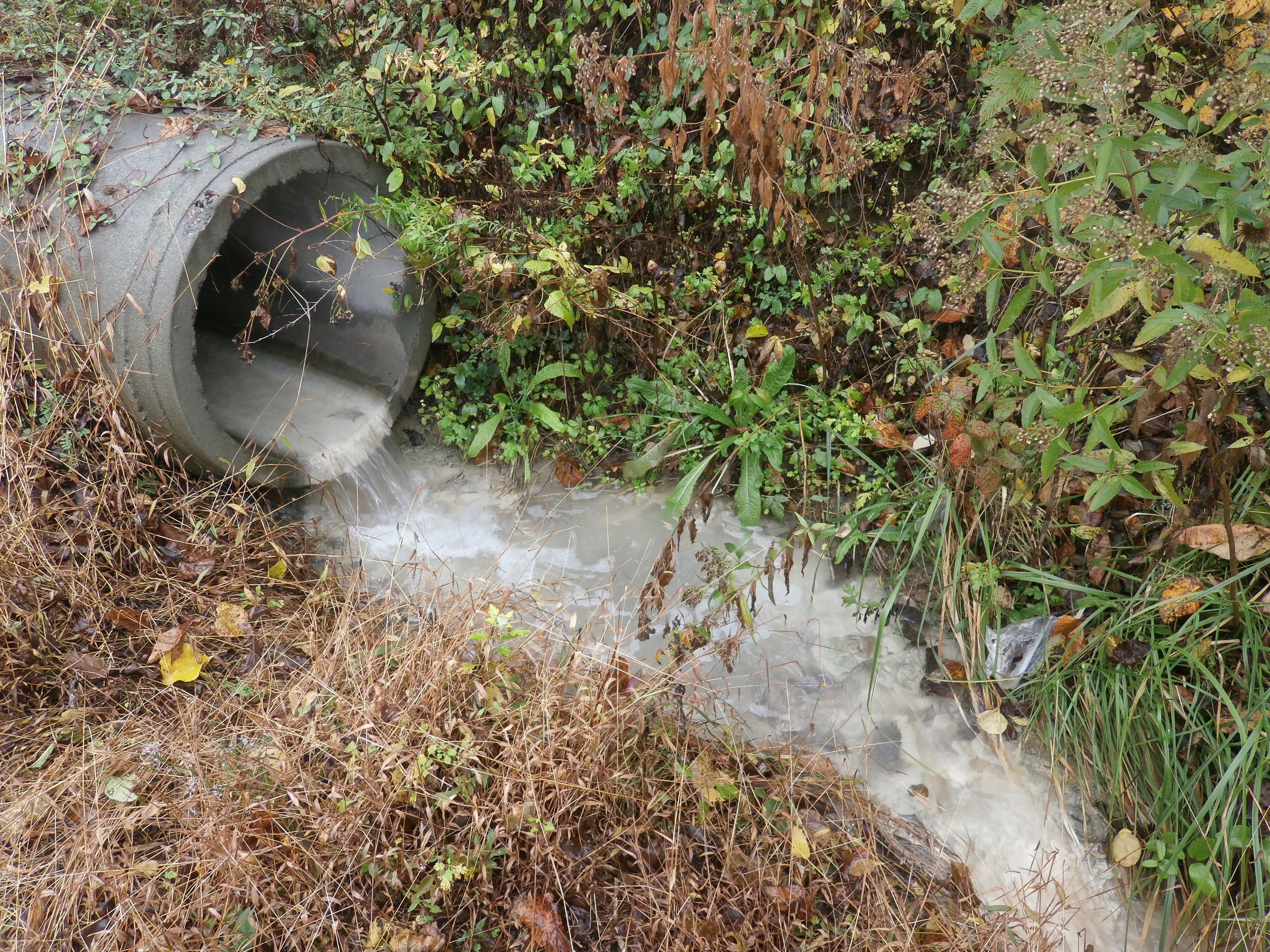
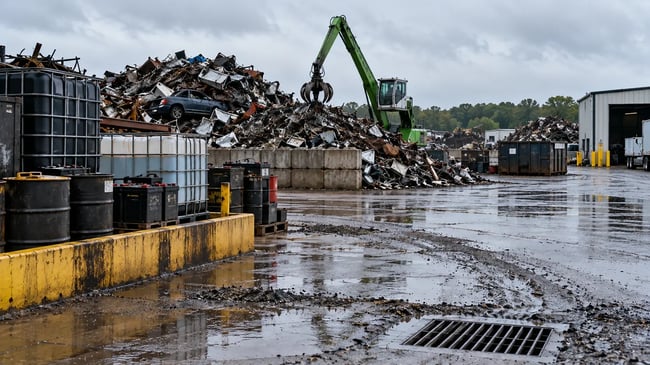
Anyone who has walked a scrap yard after a storm has seen it: rusty, cloudy water running off piles of shredded metal, past the equipment, and toward a drain, ditch, or creek. If you run a yard in Pennsylvania, that runoff is probably why you're asking whether you need a stormwater permit. In most cases, the answer is yes. Scrap and waste material processing is a covered industrial category, and nearly every working yard stores metal, vehicles, and equipment outdoors where rain can reach it.
Below, we walk through why Pennsylvania DEP pays so much attention to scrap yard runoff, which permit most yards end up with, what the required plan has to cover, and the problems we see over and over. We also explain why the "No Exposure" option almost never works for an active yard. If you'd rather talk through your own site, you can reach out to RMA at any point.
Table of Contents
TL;DR
Yes, most Pennsylvania scrap yards need stormwater permit coverage. Scrap and waste processing is a covered category, and outdoor metal piles, equipment, and vehicles count as exposure. Most yards get coverage under DEP's PAG-03 general permit, which means a Notice of Intent, a PPC Plan, twice-a-year sampling, and ongoing inspections and reporting. A No Exposure Certification is rarely realistic for a working yard, and yards that discharge to certain high-quality streams need an individual permit instead.
Is a Scrap Yard Covered by Pennsylvania's Industrial Stormwater Permit Rules?
Under the federal Clean Water Act, stormwater that picks up pollutants from industrial activity and leaves your site needs an NPDES permit. NPDES stands for National Pollutant Discharge Elimination System, and in Pennsylvania the program is run by PA DEP. Most industrial facilities get coverage through PAG-03, DEP's general permit for stormwater associated with industrial activity. A general permit is a standard set of conditions that many facilities can sign onto, instead of each one getting a custom permit written from scratch.
Scrap yards fall right into this. Facilities that process and sell scrap and waste materials are classified under SIC code 5093. SIC is the Standard Industrial Classification system, a numbering scheme for types of business that stormwater permits still use to decide who's covered. DEP puts SIC 5093 facilities under Appendix P of PAG-03, which sets the monitoring and best management practices for scrap and waste recycling. Auto salvage yards, classified under SIC 5015, fall under Appendix O instead, and a yard that does both can end up subject to both appendices. DEP's fact sheets for scrap yard permits show exactly that pairing.
We'd still avoid a flat "every yard needs one." Coverage depends on what you do on the site, whether those activities are exposed to rain and snowmelt, and where the water ends up. A small buy-back operation that keeps everything indoors is a different story from a yard with acres of outdoor piles. Local rules can also come into play. If your site's runoff goes into a combined sewer or a local sewer system instead of a stream or storm drain, the sewer authority or municipality may govern it, so confirm your situation before assuming PAG-03 is the answer.
Why Does DEP Pay Attention to Scrap Yard Stormwater Runoff?
It comes down to what rain does to a pile of metal. Water running over scrap picks up sediment, dissolved and particulate metals like copper, lead, zinc, aluminum, and iron, and whatever oil and grease has dripped from equipment, vehicles, and containers. Unpaved ground adds more sediment. All of it moves downhill toward a stream, and Pennsylvania's Clean Streams Law prohibits putting pollutants into state waters without authorization.
The sampling data DEP sees backs this up. In the fact sheets DEP publishes alongside scrap yard permits, baseline sampling at yards has shown elevated suspended solids and metals, which is why the monitoring list for scrap leans so heavily on them. A yard doesn't have to be sloppy to produce this runoff. Rain on exposed metal does it on its own, which is why the permit focuses on controlling it with covers, containment, sweeping, and drainage controls instead of pretending it won't happen.
Which Scrap Yard Activities Matter Most for Stormwater Permits?
Not every corner of a yard carries the same risk. The table below breaks down common scrap yard activities and how each one relates to stormwater, which is also roughly how an inspector or a consultant walks the site.
| Yard Activity |
Stormwater Relevance |
| Outdoor piles of ferrous and nonferrous scrap |
Main source of metals and sediment. Counts as exposure on its own. |
| Shredding, shearing, and baling outdoors |
Produces metal fines and dust that settle on the ground, plus hydraulic oil from the equipment. |
| Vehicle storage and dismantling |
Fluid leaks from engines and transmissions. Often brings Appendix O into play alongside Appendix P. |
| Battery and fluid storage |
Lead, acid, and oil exposure if containers sit uncovered or leak. A top item for the PPC Plan. |
| Equipment fueling and maintenance |
Oil and grease from drips, spills, and wash-down, especially on bare ground. |
| Unpaved yard areas and haul roads |
Sediment runoff and trucks tracking mud and metal fines onto public roads. |
| Open roll-off containers and bins |
Rain contacts mixed scrap and residue. Lids or covers help. |
| Sorting or processing fully indoors |
Low stormwater relevance, as long as materials really stay under roof and out of the weather. |
| Office, scale house, and employee parking |
Not industrial activity itself, but this runoff often mixes with yard runoff before it leaves the site. |
Can a Scrap Yard Qualify for a Pennsylvania No Exposure Certification?
Pennsylvania offers an alternative to PAG-03 called a No Exposure Certification. It's for facilities where all industrial materials and activities are stored and conducted indoors or under roof, so nothing touches rain or snowmelt. You submit the certification with a PAG-03 Notice of Intent, DEP has to approve it, and it must be renewed every five years. Facilities that discharge to High Quality or Exceptional Value waters can't use it.
For a working scrap yard, that bar is almost never met. Piles sit outside, equipment sits outside, trucks load and unload outside, and containers of fluids and batteries tend to live wherever there's room. Even if you tarp a pile or move a few things under a roof, the rest of the yard still has exposure. A yard that really did move its entire operation indoors, such as a small buyer of electronics or precious metals that never stores anything outside, could potentially qualify. That's the exception, not the rule.
If you've been told you can skip the permit because "it all drains clean," be skeptical. No Exposure is a formal eligibility status that DEP has to approve, not a judgment about how your yard looks. If you want a deeper look at the difference, our guide on general, individual, and no-exposure permit types and our explainer on what no exposure means under an NPDES stormwater permit cover it in more detail.
What Does PAG-03 Coverage Look Like for a Scrap Yard?
DEP reissued PAG-03 effective March 24, 2023, for a five-year term. Getting covered starts with understanding your own site: where stormwater flows, which areas have industrial activity, and where it leaves the property. From there you map the drainage and outfalls (the points where runoff leaves), prepare your PPC Plan, and submit a Notice of Intent, or NOI, to DEP. DEP charges a $500 application fee and a $500 annual fee for PAG-03. For the full process, see our articles on the PAG-03 permit and how to take stormwater samples and how long PAG-03 coverage takes.
Once you're covered, the work shifts to keeping up with it. Under Appendix P, DEP fact sheets for recent scrap yard permits describe sampling about once every six months, using grab samples, for suspended solids, oil and grease, chemical oxygen demand, aluminum, copper, lead, and zinc, along with nitrogen and phosphorus. Those fact sheets cite benchmark values of 100 mg/L for suspended solids, 30 mg/L for oil and grease, and 120 mg/L for chemical oxygen demand. You report results through DEP's electronic DMR system, which we cover in our guide to Pennsylvania eDMR reporting. You'll also need regular inspections, trained employees, and records that match what the plan says you do.
Benchmarks aren't effluent limits, so a single high result isn't automatically a violation. The permit does expect you to respond, though. Repeated exceedances, four in a row according to DEP's own BMP checklist, trigger a formal review of your stormwater controls. If your numbers come back high, read our piece on benchmark values versus effluent limits and what to do when sampling results are high.
One more fork to watch for. Yards that discharge to High Quality or Exceptional Value waters aren't eligible for PAG-03 and need an individual NPDES permit. DEP has issued individual permits for scrap yards on that basis. Those are written specifically for your site, take a more detailed application, and generally cost more to get and keep.
What Does a Scrap Yard PPC Plan Have to Address?
PPC stands for Preparedness, Prevention, and Contingency. A PPC Plan is Pennsylvania's version of a spill prevention and emergency response plan, and PAG-03 applicants submit one with their NOI. For a scrap yard, it needs to reflect what's on your ground, not a generic template. That generally means an inventory of materials and where they're stored, how you prevent spills and leaks, how you contain and clean up the ones that still happen, who does what in an emergency, and how often the yard gets inspected. Stormwater controls, like covers, berms, sweeping, and inlet protection, belong in the plan too. Our comparison of SWPPPs and PPC Plans for PAG-03 explains how the plan fits into the rest of your program.
When we look at scrap yards, the same handful of problems keeps coming up:
- Oil from equipment and vehicles. Hydraulic leaks, drained fluids, and fueling spills end up on bare ground or gravel with nothing to catch them. A visible sheen on runoff can also trigger reporting duties, which we cover in our guide to the oil sheen rule.
- Battery storage. Uncovered pallets or bins of batteries, especially near a drain or low spot, expose lead and acid to rain.
- Unpaved areas. Mud and metal fines wash off bare ground and get tracked onto public roads by truck tires.
- Piles near drains and ditches. Pile placement matters, and a pile sitting right next to an inlet needs a barrier or a new location.
- A plan that doesn't match the yard. Yards change constantly. If the plan describes last year's layout, inspections and corrective actions drift away from what's happening.
Training ties all of this together, because the people loading trucks and draining vehicles are the ones who prevent most spills. Our online training library has courses your team can take on their own schedule.
How Much Does Stormwater Permit Coverage Cost for a Scrap Yard?
The agency fees are the small part, at $500 to apply and $500 a year for PAG-03. Most of the cost is the work behind the application: the site evaluation, drainage mapping, PPC Plan, sampling, and NOI package. Our published ranges for a relatively straightforward facility are about $5,000 to $10,000 for the full application, with ongoing compliance support often running $3,000 to $6,000 per year. A scrap yard with several outfalls, a lot of drainage to sort out, or no plan in place today will usually land higher than a simple site. We break down what drives the number in our article on PAG-03 permit costs in Pennsylvania.
If you're weighing whether to do this yourself, that's a reasonable thing to consider, and we wrote about the trade-offs in our DIY versus consultant guide. For a number tied to your own site, RMA's pricing calculator is below. It doesn't ask for an email or a sales call.
How Can RMA Help With Your Scrap Yard Stormwater Permit?
We work with Pennsylvania facilities all the time, and scrap yards are a good fit for the kind of hands-on help we do. We can walk your yard, work out whether PAG-03, an individual permit, or a No Exposure Certification applies, map your drainage and outfalls, write a PPC Plan built around your actual operation, coordinate sampling, prepare your NOI, and handle questions from DEP during review. After you're covered, we can keep helping with inspections, training, eDMR reporting, and plan updates. If your yard already has coverage and just needs a few fixes, or if you really don't need a permit, we'll tell you that plainly instead of selling you work you don't need. You can see how we handle this on our Pennsylvania NPDES and stormwater services page.
If you're building or expanding a yard, a separate set of construction-phase approvals may apply, such as erosion and sediment control for earth disturbance and county conservation district review. We don't prepare those, and your engineer or contractor is the right person for them. What we can do is help you figure out what the construction phase needs and point you to the right people, and then handle the operational permit and PPC Plan the yard needs once it's running.
If you'd like to talk it through, there's no pressure and no obligation. You can call us, email us, or fill out the form on our website, and you can also contact RMA directly to ask about your yard. Tell us what's on your site and where the water goes, and we'll help you work out the next step.