How Diesel, Hydraulic Oil, Form Release Oil, and Used Oil Add Up to an SPCC Plan Requirement at New Jersey Concrete Plants
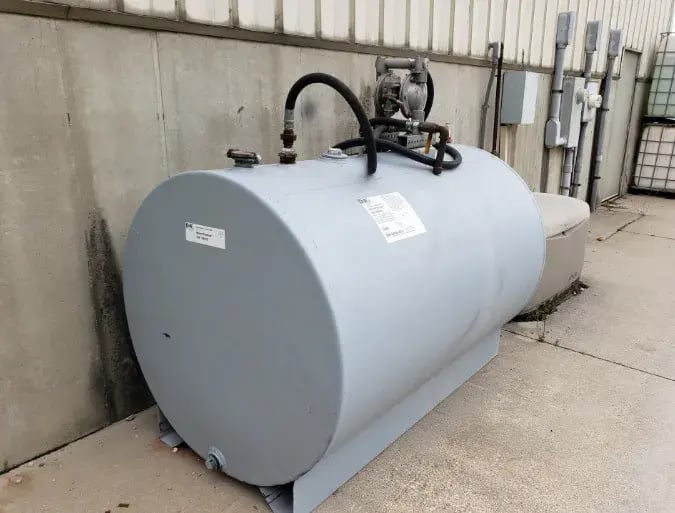
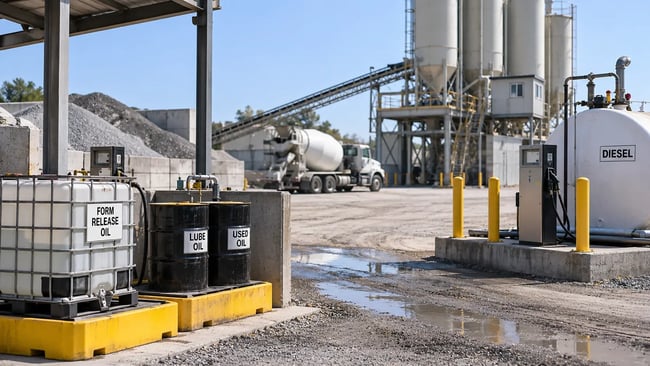
A ready-mix plant runs on oil. There's diesel for the loaders and the yard fuel tank, hydraulic oil for the plant and reclaimer, motor and gear oil for the shop, form release oil if you also make precast or block, and a tank or a few drums of used oil waiting on a pickup. Add up the capacity of every container that holds 55 gallons or more, and most ready-mix plants land above the 1,320-gallon line that triggers a federal oil spill plan, formally called an SPCC (Spill Prevention, Control, and Countermeasure) Plan. So the short answer is yes: a New Jersey ready-mix plant usually needs one.
This article walks through which containers count, why containment is harder in a dusty, high-traffic yard than the rule's wording suggests, how to set up fueling so spills don't happen in the first place, and what New Jersey adds on top of the federal rule. If you'd rather talk through your own plant with someone who's been inside a lot of them, you can reach out to RMA anytime.
Table of Contents
TL;DR
Most New Jersey ready-mix plants need an SPCC Plan, because diesel, hydraulic oil, lube oil, form release oil, and used oil easily add up to more than 1,320 gallons of aboveground storage. Count by container capacity, not by how full the container is, and leave out the fuel tanks on mixer trucks and loaders. The plan has to deal with dust in containment, loader and truck traffic, and your fueling and delivery routines. New Jersey adds its own discharge reporting rules through the Spill Act, so a spill means a call to NJDEP right away, and the plan itself should be reviewed and certified by a Professional Engineer unless your plant qualifies to self-certify.
When Does a Ready-Mix Plant Need an SPCC Oil Spill Plan?
The rule behind an oil spill plan is 40 CFR Part 112, EPA's Spill Prevention, Control, and Countermeasure rule, which everyone shortens to SPCC. In New Jersey, EPA Region 2 enforces it. Two things trigger it. First, your facility stores more than 1,320 gallons of oil in aboveground containers, counting every container that holds 55 gallons or more. Second, a spill could reasonably be expected to reach navigable waters or adjoining shorelines, which in practice includes the streams, ditches, and storm sewers that flow to them. When you judge that second test, you can't count on man-made structures like drains, curbs, or a neighbor's pond to stop the oil. In a state with this many streams, wetlands, and storm sewer outfalls, the second test is rarely what gets a plant off the hook.
Both tests look at capacity, not contents. A 2,000-gallon diesel tank that's usually a quarter full still counts as 2,000 gallons, because the rule cares about what could spill if it failed. The rule also covers more than petroleum. Vegetable-based form release agents are oil for SPCC purposes, so a precast or block plant that switched to a plant-based product still counts it. If your plant crosses the line, the requirement is a written, site-specific plan that you keep, follow, and keep current.
We've covered the basics of the rule in our guide to SPCC plans and the general concrete question in does a concrete plant need an SPCC plan. This article goes deeper on how it plays out in a New Jersey ready-mix yard, and our overview of SPCC plans in New Jersey covers the state picture more broadly.
What Oil Storage at a Concrete Plant Counts Toward the 1,320-Gallon Threshold?
Most of the oil at a ready-mix plant is easy to forget because it's spread around. The diesel tank gets all the attention, but the hydraulic oil totes behind the batch plant, the drums in the shop, and the used oil tank all add to the same total. This table shows where the common containers fall.
| Container or equipment |
Typical ready-mix example |
Counts toward 1,320 gallons? |
| Aboveground diesel tank |
Yard tank fueling loaders and trucks |
Yes, full capacity |
| Skid tank or portable fuel tank |
Tank parked near the loader or satellite yard |
Yes |
| Hydraulic and lube oil totes |
275 or 330-gallon totes by the plant or reclaimer |
Yes |
| Motor oil, gear oil, and grease drums |
55-gallon drums in the shop |
Yes, each drum counts |
| Form release oil |
Drums or totes at a precast, block, or pipe operation |
Yes, including vegetable-based products |
| Used oil tank or drums |
Tank or drums waiting on a hauler |
Yes |
| Oil-filled equipment and fuel for heaters |
Hydraulic power units, compressors, generators, oil-fired water or aggregate heaters |
Yes, when the oil capacity or tank is 55 gallons or more |
| Fuel tanks on mixer trucks, loaders, and other vehicles |
The saddle tank on a mixer truck |
No, exempt as motive power |
| Containers under 55 gallons |
5-gallon pails, grease tubes |
No |
| Underground tanks covered by the UST program |
Buried diesel tank |
No, but it's marked exempt on the plan's facility diagram |
Here's what the math looks like on a fairly modest plant: a 2,000-gallon diesel tank, a 330-gallon hydraulic oil tote, a 275-gallon lube tote, and a 500-gallon used oil tank. That's 3,105 gallons, more than double the threshold, and nobody would call it a big oil operation. A single 2,000-gallon diesel tank clears the line by itself. Plants that sit close to the line should be careful, because adding one tote during a reclaimer upgrade can push the total over without anyone noticing. Our articles on whether 55-gallon drums count and used oil regulations cover two of the most common surprises.
How Does SPCC Secondary Containment Work in a Dusty, High-Traffic Concrete Yard?
The rule's wording is simple. Bulk storage containers need secondary containment big enough to hold the entire capacity of the largest container in the area, plus extra room for rainfall. Mobile and portable containers, like totes parked in the yard or a fuel bowser that's sitting still, follow the same logic. Anything with a chance of leaking, including transfer areas and oil-filled equipment, needs general containment that can catch the most likely spill. And whatever you build has to be sufficiently impervious to oil.
A concrete plant has a head start, since poured slabs and walls are the usual way to build containment. The trouble is that a ready-mix yard is a rough place for it, and most of the problems we find come from the yard, not the design.
Why Do Cement Dust and Fines Defeat Containment Over Time?
Cement dust and aggregate fines settle in everything. In a dike, that layer takes up capacity you sized for oil and rain. It also coats the floor so a slow leak mixes into a paste and hides, instead of showing up as a wet spot. The SPCC rule expects you to remove accumulated oil from diked areas promptly, and that's hard to do when you can't see it. Dust also clogs drain valves and sits in rainwater, which turns the water cloudy and alkaline. Cracks and joints in old slabs need to be sealed, because an oil-soaked crack under a layer of dust is exactly the kind of thing an inspector finds.
What Happens When Trucks and Loaders Share the Yard With Oil Storage?
Older plants often have earthen berms around fuel tanks. Loader tires and mixer trucks wear those down, and gravel and fines pile up where they shouldn't. Poured concrete, or a prefabricated containment system, holds up far better. Double-walled tanks and totes with built-in sumps are also common choices, and whether a specific one meets the rule depends on its design, so the plan should document why it qualifies. Where the oil sits matters too. Tanks and totes that sit along a loader path get hit eventually, so they belong out of the traffic lane or behind bollards and barriers. The plan's security section expects you to control access too. That means locking pump controls and valves when nobody's there, which matters at plants where trucks roll out well before the office opens.
Draining rainwater from a dike needs a routine as well. The rule calls for manual, open-and-closed valves, not flapper valves, and for the valve to stay closed and sealed except when you're draining. You check the water for any sign of oil first, drain it under supervision, and keep a record. Because dike water in a concrete yard can carry dust, think about where it goes. Our guide on how big SPCC containment needs to be covers the sizing math, and our piece on stormwater versus process water at concrete plants explains why the destination of that water deserves its own look.
Where the yard drains matters for oil, too. If a fuel spill runs toward a washout pit, reclaimer, or settling basin, it's no longer just a spill. You've got oil in your process water and sludge, and that can turn a small cleanup into a bigger one. A good plan shows where yard drainage really goes and puts the oil storage where a failure can't reach those systems.
What Fueling Procedures Prevent Oil Spills at a Concrete Plant?
Most spills at ready-mix plants happen during transfers, not from a tank rupturing. A driver walks away from a nozzle, a delivery truck overfills a tank, or someone moves a tote with a loose fitting. The plan's procedures should cover each of these in plain terms.
How Should Drivers Fuel Mixer Trucks and Loaders?
Plants start early, and fueling often happens before the first load goes out, sometimes with nobody else around. The routine should require someone to stay with the nozzle through the whole fill, with automatic shutoff nozzles and no latch-open devices. The fueling spot should be a slab that's pitched toward a contained area, with a spill kit within reach and a clear way to shut off the pump. If a fuel truck tops off loaders around the yard, the rule streamlines containment for a mobile refueler, so it doesn't need a sized dike, but the general containment requirements still apply during transfers. That exemption also disappears if the truck is parked and used as a fixed tank. Oil changes and hydraulic top-offs around the plant need drip pans under every connection, and totes should sit inside containment when they're parked.
What About Diesel Deliveries and Overfill Protection?
A delivery is the biggest single transfer at the plant. The plan should say who is present, who confirms the tank has room before the driver starts, and who inspects the hose and fittings. Plants that receive deliveries near a storm drain often cover or block the inlet during the transfer, which costs nothing and helps a lot. For overfill, the rule requires each bulk container to have a recognized method of preventing it, such as a high-level alarm, a pump cutoff, or trained staff monitoring the gauge during the entire fill. Whichever you choose, it has to be tested or practiced and written into the plan. Our guide to overlooked SPCC requirements goes through several others that tend to get skipped.
What Do New Jersey's Spill Rules Add for a Concrete Plant?
The federal SPCC rule isn't the only one in play. New Jersey has its own layer, run by the Department of Environmental Protection (NJDEP), and it's stricter than most states in a few ways. This table separates the pieces so you know which one applies to what.
| Rule |
Who runs it |
What it means for a ready-mix plant |
| Federal SPCC rule (40 CFR Part 112) |
EPA Region 2 |
Written plan, containment, inspections, training for plants over 1,320 gallons |
| Spill Compensation and Control Act (the Spill Act) |
NJDEP |
Immediate reporting of discharges and responsibility for cleanup costs |
| N.J.A.C. 7:1E, DPCC and DCR plans |
NJDEP |
Applies to "major facilities," which are far larger than a typical plant |
| N.J.A.C. 7:14B, underground storage tanks |
NJDEP |
Applies if you have a buried fuel tank |
The Spill Act is the one that catches plants off guard. If oil is discharged, the person responsible has to notify NJDEP immediately at 1-877-WARNDEP (1-877-927-6337), and NJDEP's own guidance describes that as within 15 minutes. The state rule isn't tied to a sheen on water the way the federal reporting trigger is, so a spill onto the yard can count. A few narrow exceptions exist in N.J.A.C. 7:1E-5.3, but a plant manager shouldn't be reading the fine print during a spill. The default is to call. When oil reaches a waterway or creates a sheen, the National Response Center (1-800-424-8802) gets a call too, and our article on the sheen rule walks through the federal side. Liability under the Spill Act is strict and can be shared among the parties involved, so after a significant discharge, an environmental attorney is worth a call. Cleanup of a serious release generally involves a Licensed Site Remediation Professional (LSRP), and that's separate from the spill plan itself.
"Major facility" sounds like it might apply to you, so check it. Under N.J.A.C. 7:1E, a major facility is one with total storage capacity of 200,000 gallons or more of hazardous substances including petroleum, or 20,000 gallons or more of hazardous substances other than petroleum. Containers of 5 gallons or less and out-of-service tanks don't count. A typical ready-mix plant is nowhere near 200,000 gallons of oil, but the Spill Act's definition of hazardous substances reaches beyond oil, so a plant that stores large volumes of chemicals should check the list in N.J.A.C. 7:1E against its own inventory.
If you have a buried diesel or gasoline tank, you're in the state's underground storage tank program under N.J.A.C. 7:14B. That brings registration, required inspections, and NJDEP-certified contractors for work like installation and closure. Heating oil is treated differently, with nonresidential tanks of 2,000 gallons or less aggregate capacity generally outside the regulated program. Local fire officials also enforce the Uniform Fire Code on diesel and other combustible liquid storage, so check with yours before changing tank locations.
What Inspections, Training, and Records Does an SPCC Plan Require?
A plan on the shelf doesn't protect anyone. Inspectors check whether the plant does what the plan says, and the gap between the two is where most violations come from. Tanks and containment need regular visual inspections, and many plants do them monthly, with records kept for three years. Shop-built tanks also need periodic integrity testing to an industry standard, and visible leaks have to be fixed. Our list of things to check during monthly SPCC inspections is a useful starting point for a checklist built around a concrete yard.
Anyone who handles oil needs to know what's in the plan, and the rule requires spill prevention briefings at least once a year. At a plant, that includes drivers, loader operators, batch operators, and mechanics, not just the manager who signed the plan. We cover the requirements in annual SPCC training, and our online training library works well for crews spread across several plants and shifts.
The plan also has to stay current. It needs a review at least every five years, and an amendment when you add or move tanks, change containment, or alter procedures. Concrete plants change often, so a plan written for last decade's layout may describe a yard that no longer exists. Our article on SPCC plan five-year reviews explains the options, and what inspectors look for at a concrete plant shows how the checks tend to go. Federal civil penalties for violations are adjusted for inflation every year in 40 CFR Part 19 and can run to tens of thousands of dollars per day per violation, as we outline in top SPCC violations and fines.
How Much Does an SPCC Plan Cost for a Ready-Mix Plant?
SPCC Plans from RMA generally run from $2,500 to $15,000. Where a plant lands in that range depends on total storage capacity, the number and type of containers, how many locations are involved, and whether the plan needs a Professional Engineer's review and certification. That review matters. For larger facilities, the plan has to be reviewed and certified by a licensed PE who has examined the facility, so ask any provider who the PE is and how they'll review your site. Containment repairs or new construction, like replacing an earthen berm with a poured dike, are separate costs from the plan.
We'll also tell you when you don't need us. A facility with 10,000 gallons or less of total aboveground oil storage and a clean spill history for the prior three years may qualify to self-certify, and EPA publishes templates for those plants. You still have to get the containment and procedures right, but you may not need to pay for a full engineered plan. Our articles on the different types of SPCC plans, Professional Engineer requirements, and SPCC plan costs go into the details. You can also get a price for our help with your plant using the pricing calculator below.
How Does RMA Help New Jersey Concrete Plants With Oil Spill Plans?
RMA has worked with ready-mix, precast, block, and pipe producers since 1992. We helped develop NRMCA's Green-Star EMS, and our founder, Doug Ruhlin, has taught NRMCA's environmental course for years. We're based in New Jersey, so NJDEP's rules and the way they play out in a real yard aren't new to us. For an oil spill plan, that means we count your containers the way an inspector would, walk your drainage, look at containment and fueling areas, and build a plan around how your plant runs, with a Professional Engineer reviewing and certifying it where one is required. We can train your crew on it too.
If you're not sure whether your plant is over the line, or you've got a plan that doesn't match your yard anymore, we're glad to talk it through with no obligation. You can call us at 888-RMA-0230, send an email, or fill out the form on our website, and you can always contact RMA with a question about your plant.