EPA Rules for Pennsylvania Small Businesses: What Applies, Who Enforces It, and Where to Start
Yes, in some areas. EPA rules apply based on what a business does, not how big it is, so a three-person shop that stores a few drums of oil or creates a little hazardous waste can be covered while a much larger office-based company isn't. Plenty of small business owners assume the federal government doesn't care about them, then learn about a rule when an insurer, a lender, or an inspector asks for paperwork. It's also confusing because the U.S. Environmental Protection Agency (EPA) hands the day-to-day work on many of its programs to Pennsylvania's Department of Environmental Protection (DEP), while a few programs stay with EPA directly.
This article walks through the federal programs most likely to reach a small business: oil storage, hazardous waste, and chemical reporting. We'll cover who runs each one in Pennsylvania, give you rough thresholds so you can tell whether you're in the picture, and point out where small businesses most often get caught off guard. If you'd rather skip the research and talk to someone, you can reach out to RMA at any point.
Table of Contents
TL;DR
Yes, in some areas. EPA rules apply based on what a business does, such as storing oil, creating hazardous waste, or holding certain chemicals, and not on its size. In Pennsylvania, DEP runs many of the federal programs, including hazardous waste and water permits, the Department of Labor & Industry handles Tier II chemical reporting, and EPA directly oversees oil spill prevention plans. Storing more than 1,320 gallons of oil in aboveground containers is the rule small businesses most often miss.
What Decides Whether EPA Rules Apply to a Small Business?
EPA writes its rules around activities and materials. Do you store oil? Do you create hazardous waste? Do you keep certain chemicals on site above a set amount? Does rain or wash water leave your property after touching industrial activity? Do you run equipment that gives off air pollution? Each yes can bring a program with it, and none of those programs asks how many employees you have or what your revenue is.
Size shows up in a different way. Most rules use quantity thresholds measured in gallons, pounds, or kilograms, so a small business often lands below a threshold or in the lightest category of a program. A shop that creates a small amount of hazardous waste has far fewer obligations than a manufacturer that creates a lot, but fewer isn't zero. On the other hand, plenty of small businesses, such as offices, retail stores that sell packaged goods, and service companies with no bulk storage, touch very few of these programs. Our articles on whether small businesses have to follow EPA regulations and the top environmental requirements for small businesses cover the full range if you want a wider view.
Does EPA or Pennsylvania DEP Enforce Environmental Rules for Small Businesses?
Both, depending on the program. Many federal environmental laws let a state run the program once EPA approves the state's version, which is called authorization or delegation. Pennsylvania has taken on several of the programs small businesses run into, so the permits, paperwork, and inspections often come from DEP. EPA's Region 3 office, which covers Pennsylvania, still oversees how the state does the job, and a few programs never left EPA's hands. The state also adds rules of its own, so one activity can fall under a federal rule and a state rule at the same time.
| Topic |
Who runs it in Pennsylvania |
Small business example |
| Oil spill prevention plans (SPCC) |
EPA directly, through Region 3 |
A trucking yard with a fuel tank and drums of oil |
| Hazardous waste |
DEP, under EPA authorization |
A body shop with spent solvents and paint waste |
| Water discharge permits and industrial stormwater |
DEP, under EPA authorization |
A yard with exposed materials where rain runs off |
| Tier II chemical reporting |
Pennsylvania Department of Labor & Industry |
A facility with bulk fuel or a large chemical inventory |
| Air permits |
DEP, with Allegheny County and Philadelphia running their own air programs |
A shop with a spray booth or a larger generator |
That table is a starting point and not a complete list. Pennsylvania also has its own storage tank rules run by DEP, and local fire codes can apply to tanks and chemical storage. Fire codes are enforced by your municipality, so they vary from place to place. Our article on federal, state, and local environmental laws for small businesses explains how the layers fit together.
If you're building or expanding a facility, the construction phase brings its own approvals, such as construction stormwater and erosion control permits and building permits. We don't prepare those, and your engineer or contractor usually handles them. Once the doors are open, the operational plans and permits in this article are where we help.
Oil Storage and SPCC Plans: The Federal Rule Small Businesses Miss Most Often
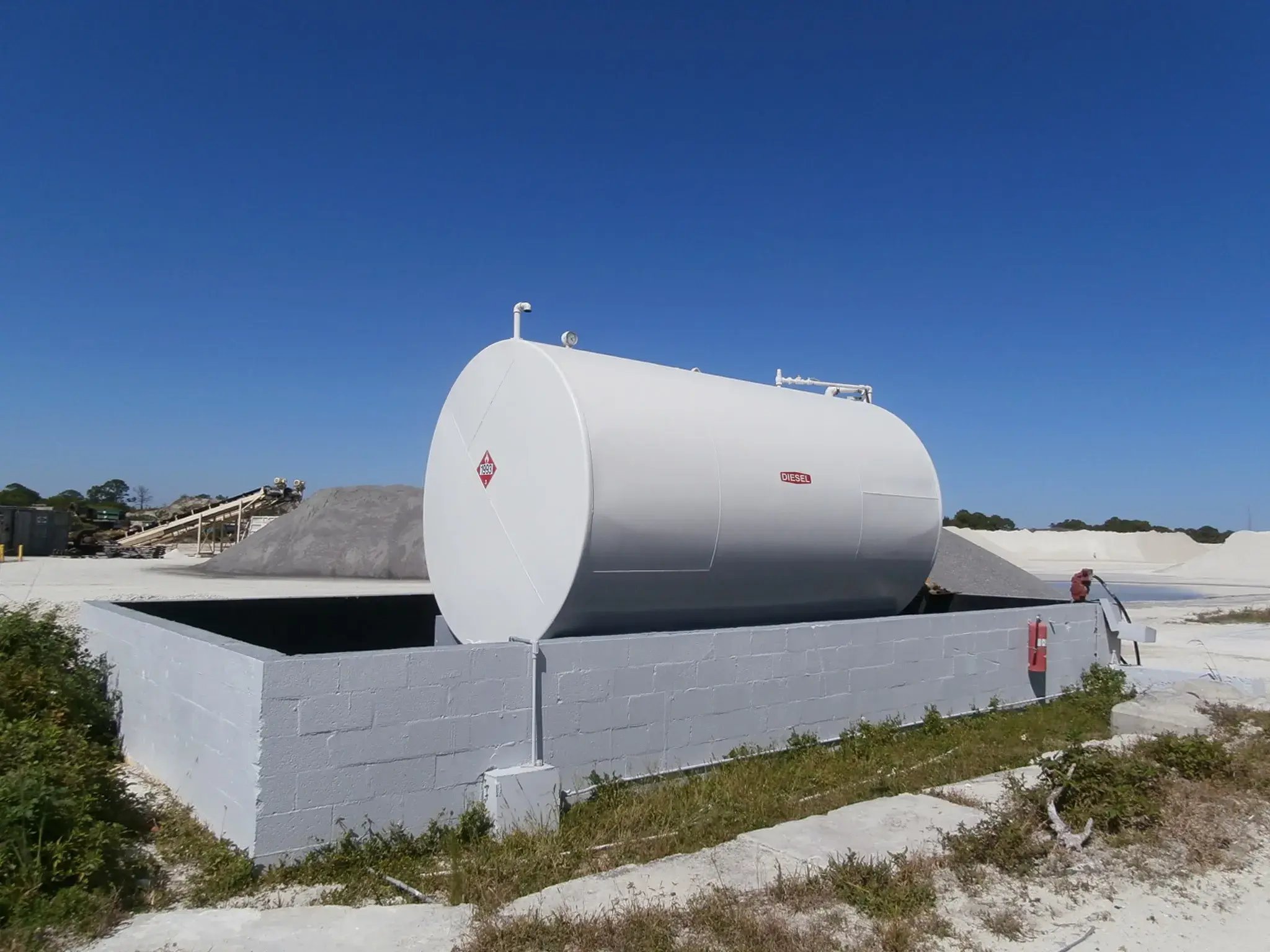
If your business stores oil, EPA has an oil spill prevention rule that many small businesses have never heard of. It's called SPCC, short for Spill Prevention, Control, and Countermeasure, and the written oil spill plan it requires is an SPCC Plan. The rule applies when you store more than 1,320 gallons of oil in aboveground containers, counting only containers of 55 gallons or more, or more than 42,000 gallons buried, and a spill could reasonably reach a stream, river, or other waterway. Storm drains and ditches count as pathways. Unlike hazardous waste, this program isn't delegated to DEP. EPA Region 3 enforces it directly, and our article on who enforces SPCC plans goes into the details.
The catch is how the gallons are counted. It's the total capacity of your containers, not how full they are, so an empty tank counts. Here's what goes on each side of the ledger.
| Counts toward the 1,320 gallons |
Doesn't count |
| Diesel, gasoline, hydraulic oil, lube oil, and used oil in containers of 55 gallons or more |
Containers smaller than 55 gallons |
| Oil-filled equipment, such as transformers, with a capacity of 55 gallons or more |
Propane and diesel exhaust fluid (DEF) |
| Animal fats and vegetable oils, including cooking oil |
Permanently closed containers |
| Empty tanks (capacity counts, not contents) |
Fuel tanks that only power a vehicle's own engine |
Here's how a business crosses the line without noticing. A small trucking yard might have a 1,000-gallon diesel tank, a 275-gallon used oil tank, and three drums of motor oil. Each one looks minor, but the capacities add up to 1,440 gallons. A restaurant or food processor with bulk cooking oil can get there the same way, and our articles on 55-gallon drums and SPCC and cooking oil and SPCC cover those cases. If you're close to the line, four steps to figure out whether you need an SPCC plan will help you count.
If you're over the threshold, you need an SPCC Plan. If you already have one, adding a tank or changing how you store oil can mean it needs updating, and plans get a review every five years. The plan describes your oil storage, the containment around it, your inspections, your spill response, and how your employees are trained. Many smaller sites with a clean spill history can write and self-certify a simpler plan, while larger or more complicated sites need a licensed professional engineer to certify it. Our guide to the different types of SPCC plans explains which one fits where.
Pennsylvania adds its own layer. DEP runs a storage tank program, and many aboveground and underground tanks have to be registered, inspected, or installed by certified professionals under it. Whether a particular tank is covered depends on its size, type, and use, so check yours against DEP's storage tank program. A single tank can fall under the federal SPCC rule, the state tank rules, and your local fire code. On cost, our simpler SPCC plans typically run about $1,500 to $4,000, and the overall range for SPCC plans is about $1,500 to $15,000 depending on the number of containers, the complexity of the site, and whether engineer certification is needed. Our SPCC plan cost breakdown shows what moves the price.
Hazardous Waste: Why Even Very Small Businesses Can Be Generators
Hazardous waste rules fall under a federal law called RCRA, and DEP runs the program in Pennsylvania. The rules sort businesses by how much hazardous waste they create in a month. A very small quantity generator creates 100 kilograms or less (roughly 220 pounds). A small quantity generator creates more than 100 but less than 1,000 kilograms. A large quantity generator creates 1,000 kilograms or more. EPA's table of state programs lists Pennsylvania as using the same categories as the federal rules, so the national thresholds are the ones to use.
Small businesses often have hazardous waste they don't think of that way. Spent solvents, leftover paints and thinners, parts washer fluid, and some cleaning products can all qualify. Fluorescent lamps and certain batteries fall under lighter rules for universal waste, and used oil is handled under its own rules and is separate from hazardous waste. If those terms are new, our articles on universal waste and used oil versus waste oil sort them out.
The smaller your category, the lighter your requirements, but even the smallest generators can't put hazardous waste in the dumpster or down the drain, and they have to send it to a facility that's allowed to take it. Your category decides your paperwork, how long waste can sit on site, and what training you owe your employees. The first step is figuring out which category you're in, and our guide to hazardous waste generator status includes a free estimator for that.
Tier II Chemical Reporting in Pennsylvania: Who Has to File?
Tier II reporting comes from a federal law called EPCRA, the Emergency Planning and Community Right-to-Know Act. It requires facilities that have to keep safety data sheets for hazardous chemicals to report their inventories once they pass a threshold, so local fire departments and emergency planners know what's stored in their community. The thresholds are 10,000 pounds for most hazardous chemicals and 500 pounds, or the lower threshold planning quantity, for extremely hazardous substances. The annual report is due March 1.
In Pennsylvania, Tier II reports go to the Department of Labor & Industry and not to DEP. You file them online through the state's Tier II system, called PATTS, and reports submitted through other electronic systems don't satisfy the state's requirement. Copies also go to your county emergency planning committee and local fire department, with some county differences. The state charges $10 per reportable chemical, with exemptions for certain facility types, and counties can add their own fees. Our guide to who needs to do Tier II reporting and our overview of how Tier II reporting works go deeper.
Most small businesses stay under these amounts, but liquids are counted by weight, so bulk fuel, a large battery bank, or a chemical tank can reach them. Diesel weighs roughly seven pounds a gallon, so about 1,400 gallons would be at the 10,000-pound mark. That's one reason oil storage often triggers both an SPCC Plan and a Tier II report.
How Can a Small Business Find Out Which EPA Rules Apply?
Start with a walk around your site and make five short lists. First, every container of oil that holds 55 gallons or more, plus any oil-filled equipment, with the capacity of each. Second, everything you throw out or pay someone to haul away, especially solvents, paint, and chemicals. Third, every hazardous chemical you keep, with the largest amount on site at any time. Fourth, where rain and wash water go when they leave your property. Fifth, any equipment that burns fuel or sprays coatings. Those five lists answer most of the question, and you can compare them against the thresholds in this article.
If you're well under every threshold, you may not need anything beyond good housekeeping, and we'd tell you that. A business with a couple of drums of oil and a small amount of ordinary trash isn't in the picture for most of these programs. If you're close to a line, or your lists raise questions, that's when it makes sense to ask someone. Our online environmental assessment is a low-effort way to start, and our article on whether your small business should hire an environmental consultant lays out how to decide. It's also smart to know what an inspection looks like before one happens, and how small businesses should prepare for environmental inspections walks through that.
How Does RMA Help Small Businesses With EPA Compliance?
We help small businesses work out which of these programs apply to them and then handle the ones that do, including oil spill plans (SPCC), hazardous waste generator status, Tier II reporting, and the permits and plans a facility needs once it's running. Senior staff do the work, and we don't use AI to produce client deliverables. Initial SPCC training is free with a new plan. If you only need a straight answer on whether you're covered, we're glad to give you one, even when the answer is that you don't need us.
You can call us, email us, or fill out the form on our website, and there's no obligation. If you'd like to talk through your site, contact RMA and we'll help you figure out where you stand.