How to Check Your Industrial Activity, Stormwater Exposure, Discharge Point, and Eligibility Before You Apply for PAG-03 Coverage
Most Pennsylvania facility managers don't go looking for a stormwater permit. The question shows up because DEP sent a letter, an insurer asked for proof of coverage, or someone noticed that the pallets, scrap bins, and trucks in the yard sit out in the rain. PAG-03 is the permit people end up searching for. It's the Pennsylvania Department of Environmental Protection's general permit for industrial stormwater, issued under the National Pollutant Discharge Elimination System (NPDES), the Clean Water Act permit program DEP runs in Pennsylvania. Whether it applies to you comes down to four checks.
The short answer is that you probably need PAG-03 coverage if your primary industrial activity is in a regulated category, that activity is exposed to rain or snow, and the runoff reaches a stream, river, wetland, or a storm sewer that leads to one. If everything industrial happens indoors or under a roof, you may qualify for a No Exposure Certification instead. If you sit in a High Quality or Exceptional Value watershed, you'll usually need an individual permit rather than PAG-03. And if nothing industrial happens at your site, you often don't need a permit at all. Below we walk through each check in order, and if you'd rather have someone look at your site, you can reach out to RMA.
Table of Contents
TL;DR
A Pennsylvania facility needs PAG-03 coverage when its primary industrial activity falls in a regulated category, that activity is exposed to rain or snow, and the runoff reaches surface waters or a storm sewer that leads to them. Facilities that keep everything under a roof can often request a No Exposure Certification instead, and facilities in High Quality or Exceptional Value watersheds generally need an individual permit. Sites with no industrial activity, like many warehouses, body shops, and offices, often need neither, but local sewer rules and DEP's own judgment can change the answer.
What Is a PAG-03 Permit and Which Pennsylvania Facilities Does It Cover?
PAG-03 is a general permit, which means DEP wrote one set of rules that many similar facilities can sign onto instead of each getting a custom permit. It covers stormwater associated with industrial activity, the federal term (defined at 40 CFR 122.26(b)(14)) for rain and snowmelt that runs across industrial areas and picks up oil, metals, sediment, chemicals, and whatever else is there. DEP reissued PAG-03 for a five-year term that took effect on March 24, 2023 and runs through March 23, 2028. Once DEP approves your coverage, it continues automatically each time the permit is reissued, and you don't need to refile unless DEP tells you to in writing.
DEP gives industrial facilities three routes: PAG-03 coverage, an individual NPDES permit written for your site, or a No Exposure Certification if nothing industrial is exposed to the weather. Our guide to which NPDES permit you need compares them, and our article on who needs a stormwater permit covers the national picture. PAG-03 coverage starts with a Notice of Intent (NOI) filed with the DEP regional office for your county, plus a Preparedness, Prevention and Contingency Plan, or PPC Plan, which is your site's written plan for keeping pollutants out of stormwater and responding to spills. Four checks tell you whether any of that applies to you.
Does Your Industrial Activity Fall Under PAG-03?
The first check is your primary industrial activity, which DEP identifies by Standard Industrial Classification (SIC) code. An SIC code is a four-digit number that classifies what a business does, and you can usually find yours on tax or insurance paperwork. PAG-03 sorts its requirements into sector-specific appendices, and DEP's permit fact sheet groups the covered sectors roughly like this.
| Sector Group |
Examples |
| Metals |
Steel mills, foundries, metal fabrication, plating (SIC 33 and 34) |
| Glass, clay, cement, and concrete |
Ready-mix and precast concrete, cement, brick, cut stone (SIC 32) |
| Food and beverage |
Meat, dairy, bakery, canning, and beverage plants (SIC 20 and 21) |
| Wood, paper, and printing |
Sawmills, pallet makers, paper mills, printers (SIC 24, 26, and 27) |
| Chemicals, plastics, and rubber |
Chemical and paint makers, plastics and rubber products (SIC 28, 30, and 39) |
| Textiles, apparel, and leather |
Textile mills, apparel makers, tanneries (SIC 22, 23, and 31) |
| Asphalt and petroleum products |
Asphalt paving and roofing material plants (SIC 29) |
| Transportation and fuel terminals |
Rail, bus, and trucking operations, airports, petroleum bulk terminals (SIC 40 to 43, 45, and 5171) |
| Recycling, salvage, and waste |
Auto salvage yards, scrap recyclers, hazardous waste facilities, landfills (SIC 5015, 5093, and 4953) |
| Power generation |
Steam electric generating stations (SIC 4911) |
| Catch-all |
Facilities whose code isn't named elsewhere, including machinery and electronics makers (SIC 35 to 38) |
Treat that table as a starting point. The SIC list in DEP's current NOI instructions is the one that counts, and DEP can require a permit from a facility outside the federal list if its runoff is polluting a stream, so a code that doesn't appear isn't an automatic pass. Some categories also cover only part of the property. Trucking, bus, rail, and airport operations are covered for their maintenance, equipment cleaning, fueling-related, and deicing areas, not every square foot of the site. A warehouse that stores and moves boxes usually isn't covered, and neither are most dealerships, quick-lubes, and contractors, though that depends on what happens outdoors. Steel service centers are often classified as wholesale and fall outside the permit. Quarries and mines go through DEP's mining program, and landfills, transfer stations, and compost sites bring in the waste program, so check with DEP or with us if you're in one of those groups. Our article on stormwater associated with industrial activity explains the federal definition in more detail.
Is Your Industrial Activity Exposed to Stormwater?
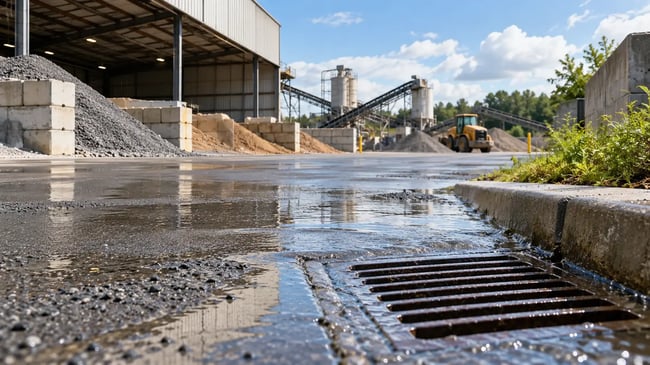
Being in a covered category doesn't settle it. The permit is aimed at stormwater that touches industrial materials or activities, so the second check is whether any of that is outside. Think of raw materials, scrap, or finished product stored in the yard, loading and unloading areas, vehicle and equipment maintenance or washing, fueling, waste containers, and process equipment that sits outdoors. If rain falls on any of it and runs off your property, that's exposure.
The alternative for facilities that can keep everything covered is the No Exposure Certification, or NEC. DEP's rule of thumb is that all industrial materials and activities must be stored and conducted indoors or under roof. With an NEC you don't hold a permit. DEP conditionally excludes you from needing one, with strings attached. The NEC isn't available in High Quality or Exceptional Value watersheds, it has to be renewed every five years, and DEP can deny it if your discharges are likely to contribute pollutants to a stream. If you later start storing something outside, you're expected to notify DEP and get coverage. A clean-looking yard doesn't qualify on its own either. So an indoor-only facility in a covered category usually files an NEC rather than doing nothing, and our article on what no exposure means goes through the details.
One more point from DEP's industrial stormwater FAQ. Employee parking lots and other non-industrial areas don't trigger the permit by themselves, but when their runoff mixes with runoff from a regulated industrial area, DEP treats the combined discharge and drainage area as needing coverage or an NEC.
Where Does Your Stormwater Discharge, and How Does That Affect PAG-03?
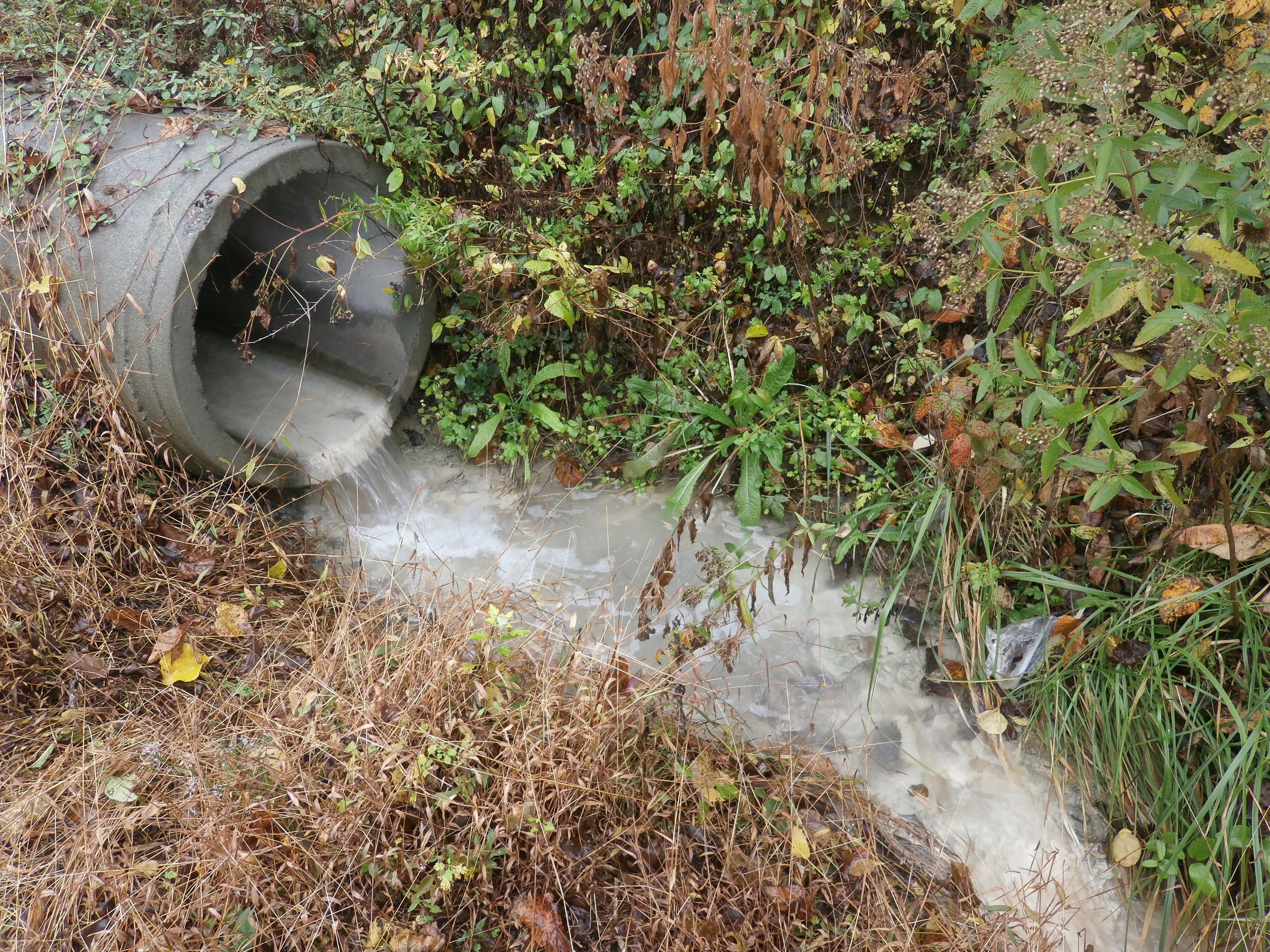
The third check is where the water goes. PAG-03 covers discharges to surface waters of the Commonwealth, meaning streams, rivers, lakes, and wetlands, and that includes water that travels through a storm sewer first. DEP's fact sheet is clear that sending your runoff into a storm sewer doesn't remove the need for coverage. A municipal separate storm sewer system (MS4) holds its own permit for the municipality's system, but that permit doesn't extend to your site's industrial activity, so you'd still need your own coverage or an NEC.
Sanitary and combined sewers are different. DEP's fact sheet says stormwater that goes to a sanitary or combined sewer doesn't need independent NPDES coverage. A combined sewer carries stormwater and wastewater to one treatment plant, and many older Pennsylvania cities have them. The sewer authority can still set its own rules and fees, and the answer for a given site depends on how the drainage is built and who controls it, so we won't tell anyone flatly that a facility in a particular city does or doesn't need PAG-03. Confirm with both the sewer authority and DEP before you rely on the sewer route.
Process water, like wash water or wastewater from production, isn't stormwater and raises separate permitting questions, which our piece on the difference between stormwater and process water sorts out. If your runoff soaks into the ground or stays on the property, the analysis changes, and we'd want to see the site before telling you that means no permit. Our article on sampling when water doesn't leave your site covers that situation.
Is Your Facility Eligible for PAG-03 or Does It Need an Individual Permit?
If you passed the first three checks, you need some form of coverage, and eligibility decides which one. DEP's PAG-03 fact sheet lists situations where the general permit isn't available and DEP can send a facility to an individual permit instead.
| Situation |
What It Usually Means |
| Discharge to a High Quality or Exceptional Value water |
Generally not eligible for PAG-03 or an NEC, so an individual permit is the usual path. PAG-03 has a narrow exception for grandfathered discharges. |
| You have, or need, an individual NPDES permit for non-stormwater discharges |
Your stormwater gets folded into that individual permit. |
| Discharge to an impaired stream, or one with a TMDL |
Not covered when your runoff carries the pollutants behind the impairment or is subject to a wasteload allocation. |
| Non-stormwater discharges beyond the permit's authorized list |
Those discharges need separate approval, which can push the site toward an individual permit. |
| Likely harm to an endangered species or its habitat, or DEP decides an individual permit is needed |
DEP can deny general permit coverage. |
| Construction, mining, or sewage treatment stormwater |
Excluded from PAG-03 and handled under other DEP programs. |
A TMDL, or Total Maximum Daily Load, is a pollution budget DEP sets for a stream that already fails water quality standards, and our article on TMDLs, impaired waters, and stormwater permits explains how they reach industrial sites. The permit does allow a short list of non-stormwater discharges, such as emergency fire-fighting water, potable water line flushing without measurable chlorine, uncontaminated air conditioner condensate, irrigation drainage, and certain wash water that doesn't use detergents. Anything outside that list needs its own approval.
The common thread is that DEP has discretion. A facility that looks eligible can still be sent to an individual permit if its discharge has the potential to pollute. An individual permit is written for your site, applied for on DEP's industrial stormwater application (form 3800-PM-BCW0403), and generally runs five years, with a renewal application due at least 180 days before it expires. It's typically a more involved process than PAG-03, so confirm your watershed before you plan around the general permit.
What Does PAG-03 Coverage Involve Once You Know You Need It?
If PAG-03 is your route, the application and the ongoing duties are where most of the work sits. DEP's fact sheet lists a $500 NOI fee, and the permit calls for a $500 installment each year after that, paid along with an annual report. The PPC Plan comes out of a site walk that identifies pollutant sources, drainage areas, and outfalls, which are the points where stormwater leaves your property. It also lays out your best management practices, or BMPs, such as covers, berms, sweeping routines, and spill kits. Our comparison of SWPPPs and PPC Plans for PAG-03 shows how the plan differs from what other states ask for.
After approval, the permit sets sector-specific stormwater sampling, benchmark values, visual inspections, training, and recordkeeping. Results go to DEP through its electronic Discharge Monitoring Report system, called eDMR, and our guide to Pennsylvania eDMR reporting walks through it. DEP added Total Nitrogen and Total Phosphorus monitoring to every appendix in the reissued permit, so older sampling routines may need updating. Our PAG-03 permit and sampling guide covers the sampling side. What all of this costs depends on your permit category, how much sampling your sector requires, the size and complexity of the site, and whether a PPC Plan already exists. We broke that down in how much a PAG-03 permit costs in Pennsylvania, and we're glad to quote your specific site.
Do Construction Stormwater Permits Replace PAG-03?
No. If you're building a new facility or expanding one, a separate set of requirements applies during construction. Earth disturbance above certain thresholds triggers erosion and sediment control requirements under Chapter 102 of DEP's rules, often with NPDES construction stormwater coverage, and conservation districts and townships review land development and stormwater plans. PAG-03 doesn't cover construction stormwater. It covers the operating facility.
RMA doesn't prepare construction-phase permits or approvals, so for that piece you'll work with your engineer, contractor, or a soil erosion specialist. We can help you figure out what the construction phase is likely to need and point you toward the right professionals. Where we come in is once the doors open, since a new or expanded facility almost always needs PAG-03 coverage or an NEC, a PPC Plan, inspections, and sampling, and often an SPCC plan or Tier II reporting if it stores oil or chemicals.
How Do You Choose Between PAG-03, No Exposure, and an Individual Permit?
Put your four answers side by side and the path usually shows itself. The table matches common situations to the route DEP is most likely to point you toward, though your own site's details can change the result. If you can't tell where your water goes or what counts as exposed, walk the site in the rain and map the drainage before deciding.
| If This Describes Your Site |
Likely Path |
| No covered industrial activity, such as an office, a typical warehouse, a dealership, or most contractor yards |
Probably no NPDES permit, but confirm your SIC code and what happens outdoors. |
| Covered category, everything industrial indoors or under roof, not in a High Quality or Exceptional Value watershed |
No Exposure Certification. |
| Covered category, industrial materials or activity outdoors, eligible for the general permit |
PAG-03 coverage. |
| High Quality or Exceptional Value watershed, impaired stream, existing individual permit, or discharges outside the authorized list |
Probably an individual NPDES permit. |
| All runoff goes to a sanitary or combined sewer |
Possibly no DEP permit, but the sewer authority's rules still apply. |
Plenty of facilities can handle the filing themselves, and we've written about whether you can get a PAG-03 permit yourself if you're weighing that. Timing is covered in how long PAG-03 coverage takes. If DEP has already contacted you about operating without coverage, talk to an environmental attorney as well as sorting out your permit path. We can handle the technical side, but legal exposure is a question for counsel.
How Can RMA Help You Decide Whether You Need PAG-03?
We work with Pennsylvania facilities all the time on exactly this question. A good first step is a conversation about your site: what you do, what's stored outside, and where the runoff goes. From there we can tell you whether PAG-03, an NEC, or an individual permit looks right, or whether you don't need anything. If you do need coverage, we can walk your facility, build the PPC Plan and site maps, prepare the NOI, stay involved while DEP reviews it, and keep helping with sampling, inspections, eDMR reporting, and annual reports. If you don't need us, we'll tell you that too.
There's no pressure and no obligation. You can call us, email us, or fill out the form on our website, or you can reach out to RMA directly and tell us a little about your facility. We'll let you know what we think applies and what the next step looks like.