Why Wash Water Isn't Stormwater, and What to Do Instead of Rinsing Your Dock Into the Drain
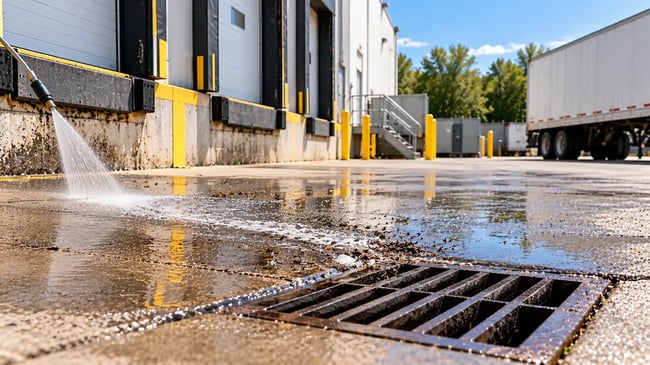
Loading docks get dirty fast. Forklift tires track in mud, a pallet splits open and leaves product on the concrete, a drum drips hydraulic oil, and somebody grabs the hose because it's the quickest fix. The water runs across the apron, finds the nearest catch basin, and the mess is gone. Most people doing this think of it as cleaning. The state of New Jersey sees it as a discharge.
So, is it illegal? In most cases, yes. When hose water picks up debris, oil, product, or soap and carries it into a storm drain, that's an unauthorized discharge of a pollutant, and it's the kind of thing the New Jersey Department of Environmental Protection (NJDEP) and local towns can fine you for. Below we explain why wash water doesn't count as stormwater, what the rules and penalties look like, how to clean a dock without the hose, and what to do with wash water you can't avoid making. If you want a second set of eyes on your own site, you can always reach out to RMA.
Table of Contents
TL;DR
Yes, in most cases it's illegal. Stormwater is rain and snowmelt. Hose water that picks up dirt, oil, product, or soap is wash water, and sending it down a storm drain is an unauthorized discharge under New Jersey's Water Pollution Control Act and your town's ordinance. NJDEP can assess penalties of up to $50,000 per violation, per day. Sweep and use dry cleanup first, keep the hose off the drain, and collect any wash water you can't avoid, then send it to the sanitary sewer only with your sewerage authority's approval or have it hauled off.
Why Isn't Wash Water Considered Stormwater?
Stormwater is rain and melting snow that runs off a site. Regulators treat it differently from other water because it's a natural event, and because facilities can manage what it touches by keeping materials covered and the ground clean. Hose water is a different animal. You're adding it on purpose, it's meant to pick up whatever is on the pavement, and it leaves the site carrying that material with it. Anything that isn't rain or snowmelt and flows into a storm drain is called a non-stormwater discharge, and wash water is one of the most common examples.
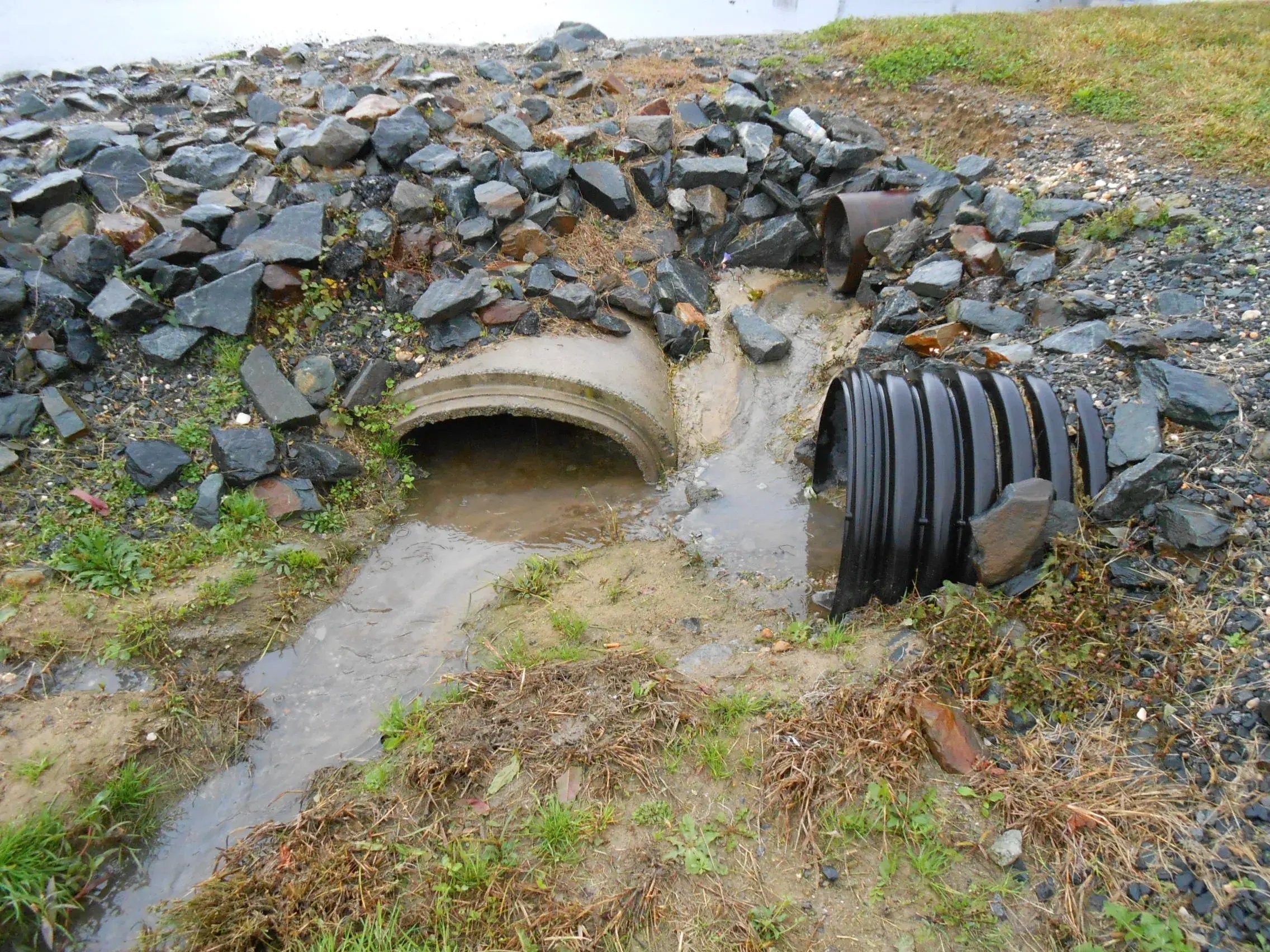
The storm drain itself is part of the reason this matters. In most of New Jersey, a storm drain isn't connected to a treatment plant. It's a pipe that leads to a ditch, a pond, or a stream, and whatever goes in comes out there. Some older cities have combined sewers where stormwater and sewage share pipes, so the answer for your site depends on where your dock actually drains. If you don't know, finding out is a good first step, and we cover the difference between rainwater and other site water in our article on stormwater versus process water.
What Do New Jersey Rules Say About Washing Into a Storm Drain?
There are two layers of rules. At the state level, New Jersey's Water Pollution Control Act (N.J.S.A. 58:10A-1 and following) and the New Jersey Pollutant Discharge Elimination System (NJPDES) rules at N.J.A.C. 7:14A say you can't discharge pollutants to state waters unless you're covered by a valid NJPDES permit. NJPDES is just New Jersey's version of the federal permit program for discharges to water. A storm drain that leads to a stream counts, so a hose full of oily or dirty water going into one is a discharge with no permit behind it.
At the local level, every New Jersey town with a municipal storm sewer system operates under a stormwater permit that requires it to adopt an ordinance against illicit discharges. Those ordinances typically prohibit spilling, dumping, or disposing of anything other than stormwater into the storm sewer system in a way that sends pollutants into it. Many of them list narrow exceptions, such as clean-water flushing or washing of sidewalks and streets, and those exceptions depend on the water not carrying pollutants. The wording varies from town to town, so read yours. A loading dock with oil drips, product residue, or tire marks rarely qualifies as clean.
On penalties, NJDEP can assess a civil administrative penalty of up to $50,000 for each violation of the Water Pollution Control Act, and each day a violation continues can count as a separate one. Courts can impose civil penalties on top of that, and towns have their own penalties under their ordinances. If you're already facing an enforcement action, an environmental attorney may be the right call.
Does an Industrial Stormwater Permit Cover Wash Water?
Usually not. If you hold New Jersey's Basic Industrial Stormwater General Permit (5G2) or one of the industry-specific stormwater general permits, that coverage is for stormwater. NJDEP has described the 5G2 as authorizing stormwater discharges only, and vehicle and equipment wash wastewater is something you'd handle separately. Having a permit doesn't give you a pass to hose the dock into the drain. Our guides to the 5G2 permit and to which permit type fits your facility go deeper if you're sorting that out.
How Can You Clean a Loading Dock Without Washing Into the Storm Drain?
Start with the assumption that the hose is the last step, not the first. Most of what makes a dock look dirty is dry material, and you can pick it up without water. Sweep the apron and the dock plates at the end of each shift, or more often if you handle powders, dusty products, or loose aggregate. A push broom and a shop vacuum with the right filter will remove more than a hose ever will, and the debris goes into the trash or the right waste container instead of into a stream.
For drips and small spills, keep absorbent pads, granular absorbent, and a spill kit near the dock doors where leaks happen. Drips from trailers, forklifts, and pallet jacks are usually small, and a pad caught early never reaches the pavement in a way that needs washing. Used absorbents may need to be managed as waste, and if they've soaked up something hazardous, they can be hazardous waste themselves. If a spill is large, involves a hazardous material, or leaves a sheen on water, put safety first, call 911 if anyone is in danger, and follow the reporting rules that apply. Our article on the sheen rule explains when an oil release has to be reported.
Good housekeeping like this belongs in your stormwater pollution prevention plan too. That plan is sometimes called an SPPP, an SP3, or just a stormwater plan, and we'll call it a SWPPP here. Writing down who sweeps, how often, and where the spill kits live gives your team a routine and gives an inspector something to see. If you want the basics of what goes in one, start with our explainer on what a SWPPP is and our overview of stormwater best management practices.
What Should You Do With Loading Dock Wash Water You Can't Avoid?
Sometimes dry cleanup isn't enough. A product that dried onto the concrete or a heavy buildup of grime may need water and a scrub brush. When that happens, the goal is to keep the water out of the storm drain and capture it. Cover or block the nearby inlets before you start using drain covers or inflatable plugs made for that purpose, use as little water as you can, skip the soap and degreaser unless you need them, and pick up the water as you go with a wet vacuum or a portable pump. Water left to pool or soak in doesn't solve the problem, because the residue gets picked up by the next rain.
Once you've collected it, where it goes depends on what's in it. Clean, low-solids water with no oil or chemicals can often go to the sanitary sewer through a floor drain or mop sink, but only with the okay of your local sewerage authority, since they set the limits on what their system will accept. Oily water may need an oil/water separator first, and water that has picked up chemicals or hazardous product may have to be hauled off by a licensed waste hauler. Call your sewerage authority before you send anything down an indoor drain so you know their rules.
| What's on the dock |
Better handling than the storm drain |
| Dirt, gravel, loose debris |
Sweep or vacuum, then dispose of it as solid waste |
| Oil or hydraulic fluid drips |
Absorbent pads or granular absorbent, then manage the used material as waste |
| Spilled product or powder |
Dry pickup first, and check whether the product is a hazardous waste |
| Stuck-on residue that needs water |
Block inlets, use minimal water, collect it, and get sewerage authority approval or a hauler |
| Dumpster leakage and trash residue |
Dry cleanup, a lid that closes, and collection of any rinse water |
Training matters here, because the person holding the hose at 4:30 on a Friday is rarely the person who read the permit. Short, regular refreshers on what can and can't go down the drain keep the habit from creeping back, and our online environmental training library is one way to cover your crew.
How Can RMA Help With Loading Dock Stormwater Compliance?
A lot of this you can handle yourself with a broom, a spill kit, and a conversation with your crew. If that's all your dock needs, you don't need a consultant, and we'd rather tell you that up front. Where we can help is with the questions that are harder to answer from the dock itself: where your site drains, whether you need a NJPDES stormwater permit or qualify for an exclusion, what belongs in your SWPPP, and how to set up housekeeping and training so the hose stays away from the drain.
If you'd like to talk it through, there's no pressure and no obligation. You can call us, send an email, or fill out the form on our site, and one of our senior staff will take a look at your situation. You can also contact RMA directly to get started.