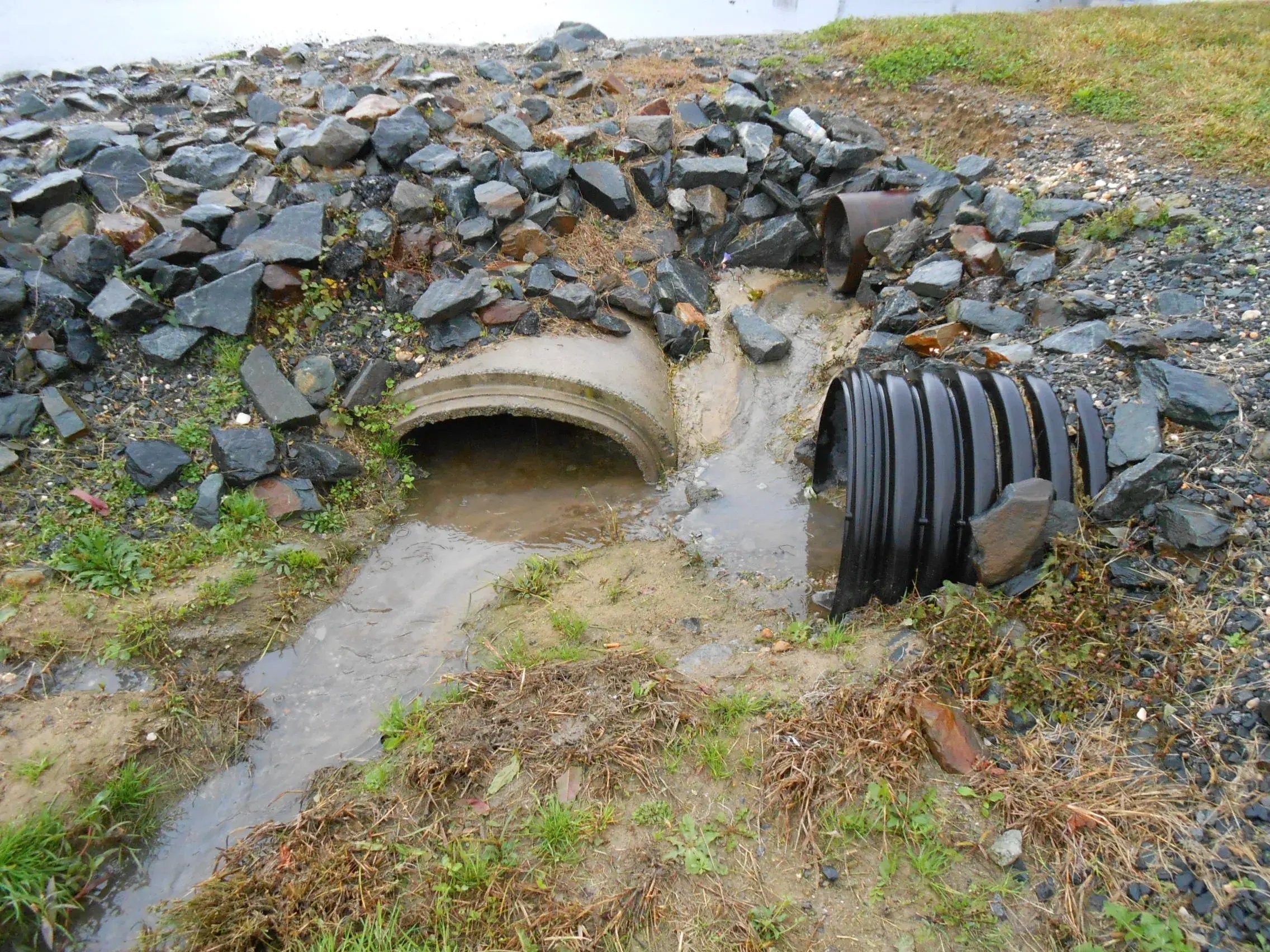
What Brown, Rainbow-Sheened, Rust-Colored, and Milky Runoff Means, Why NJDEP Treats It as a Red Flag, and How to Trace the Source
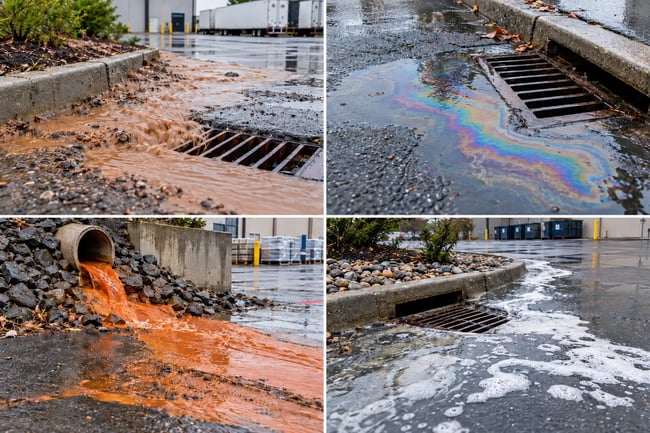
You walk your yard after a storm and the water running off your property doesn't look like rain. It might be the color of chocolate milk, or there's a rainbow film on the puddle by the loading dock, or the ditch along the fence line has turned rust orange. In New Jersey, that water can bring a facility real trouble, because NJDEP regulates what leaves business properties in rainwater, and discolored runoff is the easiest sign for an inspector, a neighbor, or a passing municipal employee to spot. The color usually tells you what to look for: brown or tan means sediment, a rainbow sheen means petroleum, orange means iron, and milky gray means concrete or another alkaline material, and every one of them tells you something on your site is getting into the water and needs to be found.
This article covers what each kind of discolored runoff typically points to, which New Jersey stormwater rules are in play, and how to trace the source on your own property. Plenty of these problems are fixable without a consultant, but if the trail leads to a permit question, a stormwater plan that needs updating, or a letter from NJDEP, you can reach out to RMA and we'll tell you honestly whether you need us.
Table of Contents
TL;DR
Discolored runoff means something on your site is touching rainwater and carrying it off the property. Brown water usually means sediment, a rainbow sheen means petroleum, orange means iron, and milky gray usually means concrete. Under New Jersey's stormwater rules that's a violation risk, with penalties of up to $50,000 per violation under the Water Pollution Control Act. If you see an oil sheen, call the NJDEP hotline at 1-877-WARNDEP, and for anything else, walk the flow path back to the source, fix it, and write it into your stormwater plan.
Why Is Discolored Stormwater Runoff a Red Flag Under New Jersey Rules?
Rain falling on a roof or a clean parking lot is just rain. Once it crosses a stockpile, a fueling area, a pile of scrap, or a muddy yard, it picks up whatever it touches and carries it to a storm drain, a ditch, or a stream. Regulators call this stormwater associated with industrial activity, and in New Jersey it's regulated under NJPDES, the New Jersey Pollutant Discharge Elimination System, which is the state's version of the federal NPDES program. The whole permit system is built around keeping materials from touching rainwater in the first place.
Discolored water is what failure looks like. You don't need a lab report to see a sheen or a plume of mud, and neither does anyone else. NJDEP inspectors look at it during site visits, and neighbors, watershed groups, and municipal staff report it to the state's hotline. Federal law also lets private citizens and groups bring suit over some discharge violations. The New Jersey Water Pollution Control Act lets NJDEP assess civil administrative penalties of up to $50,000 per violation, and each day a violation continues can be counted separately, so a runoff problem you ignore for a month costs far more than one you fix this week.
If the discharge involves a spill, or you've received a violation or penalty notice, an environmental attorney may be appropriate alongside any technical help. We're consultants, not lawyers, and we'll say so.
Which New Jersey Stormwater Permit Covers the Runoff Leaving Your Facility?
New Jersey doesn't use a single industrial stormwater permit. Most facilities in regulated industries are covered by the Basic Industrial Stormwater General Permit, known as 5G2, and we explain it in our guide to the 5G2 basic industrial stormwater permit. Several industries have their own general permits instead: Concrete Products Manufacturing (CPM), Hot Mix Asphalt (R4), Mining and Quarrying (R13), Sand and Gravel (RSG), Scrap Metal (SM and SM2), Vehicle Recycling (RVR), and Wood Waste Recycling and Leaf Composting (WRC). Facilities that don't fit a general permit may need an individual NJPDES industrial permit, and facilities that keep all their materials and activities sheltered from rain can qualify for a no exposure exclusion instead of a permit. Our overview of NJPDES stormwater permit requirements shows how those pieces fit together.
Whichever one you're under, the permit is built on a stormwater pollution prevention plan (SWPPP, pronounced "swip"), which you'll also hear called an SPPP, an SP3, or just the stormwater plan. The plan identifies what on your site can contact rain and what controls keep it out of the water. Discolored runoff tells you the plan is missing something, whether that's a source nobody listed or a control that isn't working. If you want the basics, our guide to what a SWPPP is covers them.
A stormwater general permit only covers stormwater. Wash water, process water, and leaks aren't stormwater, and NJDEP's own training materials have long described discharging them under a stormwater permit as a violation of the Water Pollution Control Act. If the discolored water is still flowing when it hasn't rained, that's a strong hint you're looking at a non-stormwater discharge, and it deserves attention before anything else. Our article on the difference between stormwater and process water explains where the line sits.
You may also be wondering whether you need a permit at all. Plenty of New Jersey businesses don't, and warehouses, data centers, and body shops often fall in that group, and we'll tell you so when it's the case. But sitting outside a permit category doesn't make oily or milky water leaving your lot acceptable, because discharging pollutants to waters of the state without authorization can still be a violation. Facilities that drain to a sewer instead of a storm drain may answer to a sewerage authority's rules, and which rules apply depends on where your site's water goes, so confirm that locally before assuming anything.
What Do Muddy, Oily, Rusty, and Milky Runoff Usually Mean?
Color and texture won't give you a diagnosis, but they narrow the search quickly. The table below lists what we see most often and where to look first. Treat it as a starting point, because a single site can have more than one problem at once.
| What You See |
What It Usually Means |
Common Sources |
Where to Look First |
| Brown or tan, cloudy |
Suspended sediment |
Bare soil, stockpiles, unpaved yards, truck tracking, eroded banks |
Slopes, pile edges, gravel entrances, clogged inlets |
| Rainbow or silvery sheen |
Petroleum such as diesel, gasoline, motor oil, or hydraulic fluid |
Leaking equipment, fueling areas, parked vehicles, drums, tanks |
Under equipment, fueling pads, dumpsters, tank and drum areas |
| Orange or rust red |
Iron, usually from corroding metal or iron-rich soil |
Scrap, steel stock, rusted equipment, metal roofing, groundwater seeps |
Metal piles, old equipment, spots where water seeps out of the ground |
| Milky gray or white |
Concrete, cement, lime, or another alkaline material |
Truck washout, slurry, saw cutting, dust and fines |
Washout areas, mixer rinse, cutting areas, and the pH of the water |
| Bright green or fluorescent |
Antifreeze or coolant, sometimes a dye |
Vehicle and equipment leaks, coolant draining or spilled |
Maintenance areas, parked fleet, coolant storage |
| Foam or suds |
Soaps and detergents, sometimes natural organic matter |
Vehicle and equipment washing, cleaning products |
Wash areas, floor drains, hose use |
| Dark, with a sewage or rotten odor |
Sanitary or organic waste, or leachate |
Failed lines, leaking dumpsters, organic piles |
Dumpsters, restroom plumbing, organic material storage |
| Clear but tea-colored |
Often natural tannins from leaves and soil |
Wooded areas, ponded leaf litter |
Whether the water crosses any activity at all |
Clear is not the same as clean. Dissolved pollutants such as some metals, nutrients, and chemicals can leave a site in water that looks fine, which is why permits lean on plans and inspections, with sampling added in some permit categories, and not only on what anyone can see.
Why Is Muddy Runoff Leaving Your New Jersey Property?
Sediment is the most common problem we hear about, and it's usually the easiest to explain. Bare ground, unpaved travel lanes, and open piles of sand, soil, gravel, or aggregate all shed particles when it rains. Trucks then carry mud onto paved roads, and a clogged inlet or a washed-out berm sends it straight to the storm drain. Sediment isn't harmless dirt. It clouds streams, settles over habitat, clogs drainage, and carries metals, nutrients, and oil along with it.
The fixes are mostly basic housekeeping: stabilizing bare areas with stone, vegetation, or pavement, covering or berming piles, keeping vehicle entrances stoned or swept, and cleaning out inlets and basins before storms. Our guide to stormwater BMPs walks through the common controls and which ones hold up best.
What If the Mud Is Coming From Construction or Site Work?
If you're grading, expanding, or redeveloping, the sediment may be a construction issue instead of an operations issue. Construction work in New Jersey typically brings its own requirements, such as soil erosion and sediment control plans certified through the local Soil Conservation District and, for some projects, 5G3 construction stormwater coverage. We'll say plainly that RMA doesn't prepare or manage those. Your engineer, contractor, or a soil erosion specialist handles them, and we can help you figure out what the construction phase calls for and point you toward the right people. Where we come in is the other side of it: once the facility is running, it still needs the right operational permit or exclusion, a SWPPP, and regular inspections.
What Should You Do When You See an Oil Sheen in Stormwater Runoff?
Start with safety. If you smell strong fuel or fumes, see a large volume, or anyone could be at risk, call 911 first. Otherwise, stop the source if you can do it safely, keep the oil from reaching a storm drain with absorbent socks or pads, and don't hose it down a drain or flush it off the pavement, since that only moves the problem into the water.
Then call the NJDEP hotline at 1-877-WARNDEP (1-877-927-6337). New Jersey rules require the person responsible for a discharge of petroleum or other hazardous substances to notify NJDEP immediately, with a few narrow exceptions, so don't try to judge whether a sheen is small enough to ignore. Federal law adds its own sheen standard for oil on navigable waters, and the National Response Center takes federal reports at 1-800-424-8802. Our article on when you have to report an oil spill and the sheen rule goes deeper.
Not every sheen is oil. Natural iron bacteria leave a metallic film that looks similar. A film that breaks into sharp, angular pieces when you poke it is usually bacteria, while petroleum swirls and flows back together. If you aren't sure, treat it as oil and call, because the call costs you nothing and a wrong guess can cost a lot.
If the oil came from a tank, drum, or piece of equipment, an SPCC plan (Spill Prevention, Control, and Countermeasure plan) may apply to your facility, and it's a separate document from the SWPPP. Our article on the difference between an SPCC plan and a SWPPP explains how the two fit together.
What Do Rust-Colored, Milky, Green, and Foamy Runoff Point To?
Orange or rust-red water means iron. The source may be scrap or steel stored outside, rusting equipment, metal roofing, or groundwater seeping out of iron-rich soil. Rust is a pollutant sign as much as a cosmetic one, since iron can show up in permit monitoring and sometimes travels with other metals. Our article on iron in stormwater monitoring explains how it comes into play.
Milky gray or white water at a concrete or aggregate site is usually cement. Truck washout, slurry from saw cutting, and fines carry highly alkaline material, often around pH 12, which is far outside the range natural streams tolerate. A cheap pH meter or test strip will confirm it in a minute. If you run a plant, our producer's guide to concrete plants and stormwater permits covers the washout and pH issues, and New Jersey has a general permit written specifically for concrete products manufacturing.
Fluorescent green points to antifreeze, foam to detergents from washing vehicles or equipment, and dark water with an odor to sanitary or organic waste. Washing deserves special attention. Wash water carrying soap, oil, and grime isn't stormwater, so rinsing a truck on a paved lot that drains to a storm drain can create the very problem you're trying to trace.
Any unusual bright color, whether ink, paint, or dye, usually means product residue from a spill, a leaking container, or a loading area. The reporting rules for hazardous substances may apply just as they do for oil, so treat an unknown chemical color the same way you'd treat a sheen and call the hotline if you aren't sure.
How Do You Trace the Source of Discolored Runoff on Your Property?
Tracing works best while it's raining or right after. Bring your phone, a site map, and boots, and work from the point where the water leaves your property back toward the sources. Here's the order we'd follow.
- Photograph the discharge point with the date, time, and recent rainfall, then walk upstream along the flow path.
- Check whether the water flows in dry weather. Flow without rain suggests a leak, a washing activity, or a connection that shouldn't exist.
- Open and inspect inlets, catch basins, swales, and pipes along the way, and note any sheen, sediment, staining, or odor.
- Compare what you find against your site map and SWPPP source list: piles, fueling, washing, loading docks, dumpsters, and equipment storage.
- Look beyond your fence. Neighbors, roads, and groundwater seeps can contribute, and it helps to know which part of the problem is yours.
- Narrow the cause with simple tests where they help, such as pH for milky water, then write down what you found.
If your permit requires sampling, collecting a sample right when you see the problem gives you useful evidence, but some New Jersey permit categories require sampling and others don't, so confirm what yours says. We're big believers in taking your own samples, and we explain why in why you need to take your own stormwater samples. We don't collect samples for clients. We train your team to do it correctly, because your people know the site and storm-event sampling windows are hard to hit from a distance.
How Do You Fix Discolored Runoff and Document It in Your SWPPP?
Fix the source first, then the pathway. Stopping a leak or covering a pile beats installing a filter downstream. Where you can't remove the source, add controls between it and the drain: berms, covers, absorbents, sweeping, curbing, or a washout area that holds its water instead of releasing it. Large drainage redesigns and treatment systems are engineering work, and we'll tell you honestly if that's where you've landed.
Then write it down. Update the SWPPP with the new source, the control, and who's responsible for maintaining it, and keep your photos and notes with the plan. The details of inspections and annual certification vary by New Jersey permit category, so check the requirements for yours. A regular inspection habit makes the next problem easier to catch, and our article on how to do a stormwater visual inspection the right way shows what to look for.
Train the people who cause these problems. Most of them come down to one person rinsing a mixer, fueling in the wrong spot, or parking a leaking truck over bare ground. Short, specific training does more than a binder on a shelf, and our online environmental training library is one place to start.
One more case worth checking. If you've certified no exposure and you're still seeing discolored runoff, something on the site is exposed. Read up on what no exposure means and take a hard look at your status, because the exclusion only holds while materials and activities stay sheltered from rain.
How Can RMA Help With Discolored Runoff and New Jersey Stormwater Permits?
We're based in New Jersey, and we know NJDEP's permit categories well. We help facilities work out which permit or exclusion applies, build or update the SWPPP, train their teams to inspect and sample, and stay on top of annual requirements. Some clients want us hands-on and others just want a call when something comes up, and either works for us. Our senior staff does the work, so the person you talk with is the person writing your plan.
We also know where we aren't the right fit. We don't do engineering design or treatment system construction, we don't handle construction-phase permits, and we're a small firm, so very tight timelines depend on our workload and we'll tell you that up front. We're also sometimes pricier than other consultants, and we're fine with that. Sometimes the honest answer is that you don't need us at all.
If you're looking at a strange-colored puddle and aren't sure what comes next, you're welcome to call us, email us, or fill out the form on our website. There's no pressure and no obligation. You can talk with our team and we'll walk through what you're seeing.