How New Jersey Treats Industrial Runoff That Goes to a Sanitary or Combined Sewer Instead of a Stream
Plenty of New Jersey businesses have yard drains and loading dock trenches that never lead to a creek. The pipes tie into the sewer, and the water ends up at a treatment plant. If that's your site, it's fair to wonder whether NJDEP's industrial stormwater permit applies to you at all, since the rainwater never reaches a stream.
The short answer is that water going into a sanitary or combined sewer generally falls outside NJDEP's industrial stormwater permit rules, and your local sewerage authority's rules cover it instead. The catch is that few industrial sites drain one way only. Below we walk through how the rules treat sewer drainage, how to map your drains, what a sewerage authority usually asks for, and when you'd still need an NJPDES permit or a no exposure certification. If you'd rather have someone look at your site with you, reach out to RMA.
Table of Contents
TL;DR
Rain and snowmelt that goes into a sanitary or combined sewer isn't covered by NJDEP's industrial stormwater permit rules. The local sewerage authority's rules apply to that water instead. Most sites don't drain one way only, though, so any runoff from industrial areas that reaches a storm drain, ditch, stream, or the ground can still call for an NJPDES permit or a Permanent No Exposure certification. Map every drain first, then confirm what applies with NJDEP and your sewerage authority.
How Does NJDEP Regulate Stormwater From a Business in New Jersey?
When rain or snowmelt runs across a yard, a loading area, or a roof where industrial work happens, it can pick up oil, metals, sediment, and other pollutants on its way to wherever the water goes. In New Jersey, NJDEP regulates that runoff at certain businesses through the New Jersey Pollutant Discharge Elimination System (NJPDES), the state's version of the federal NPDES program. The rules sit under the Water Pollution Control Act and N.J.A.C. 7:14A, and they cover water headed to surface water and to groundwater.
Which businesses fall under the program depends on what you do, not how big you are. The rules use the definition of stormwater associated with industrial activity, which lists covered operations by category and SIC code. New Jersey also doesn't hand out one permit. NJDEP uses the Basic Industrial Stormwater General Permit (5G2) for covered facilities that don't have a permit of their own, industry-specific general permits (Concrete Products Manufacturing, Hot Mix Asphalt, Mining and Quarrying, Sand and Gravel, Scrap Metal, Vehicle Recycling, and Wood Waste Recycling and Leaf Composting), individual permits, and an exclusion for sites with Permanent No Exposure. Our guide on which NPDES permit you need covers how those options differ in general terms.
The permits generally come with a written stormwater pollution prevention plan. NJDEP calls it an SPPP, and plenty of people call it an SP3 or just a stormwater plan, but we'll use the more common name, SWPPP, from here on. If you want the basics first, here's our explainer on what a SWPPP is.
Does Draining to the Sewer Mean You Can Skip a New Jersey Stormwater Permit?
For water that truly goes into a sanitary sewer or a combined sewer, usually yes, at least as far as NJDEP's industrial stormwater permit goes. The state's rules say stormwater discharges to combined or sanitary sewer systems fall outside the stormwater subchapter of the NJPDES rules, N.J.A.C. 7:14A-24. The logic is simple. Water that goes into a sewer is headed to a treatment plant instead of a stream, so the sewerage authority that runs the system sets the terms for what it accepts.
That doesn't mean nobody regulates the water. It means the rulebook changes. Your sewerage authority has its own ordinance or rules for what can enter its pipes, and those can restrict stormwater, wash water, and anything else you send down a drain. We cover what authorities typically ask for in a later section.
There's also a practical reason to document where your water goes. NJDEP's rules let the agency send a written notice to a business it believes has industrial stormwater and ask it to apply for a permit, submit a Permanent No Exposure certification, or explain why neither is required. If a letter like that ever lands on your desk, a drainage map showing that your industrial areas drain to a sewer is the explanation you'll want to hand back. So the first question isn't whether you have a permit. It's where every drain on your property leads.
What's the Difference Between a Sanitary Sewer and a Combined Sewer in New Jersey?
A sanitary sewer carries wastewater from restrooms, sinks, and floor drains to a sewage treatment plant. Rainwater isn't supposed to be in it. A separate storm sewer does the opposite, carrying runoff to a stream, river, or other water body without treatment. A combined sewer does both jobs in one pipe, carrying sewage and stormwater together to a treatment plant.
Several older New Jersey cities have combined systems, and NJDEP has issued combined sewer overflow permits to regulate stormwater in 21 towns that have them. Those permits go to the entities that operate the systems, not to the businesses connected to them. NJDEP's rules treat combined sewers that discharge to waters of the State as point sources in their own right, which puts the NJPDES responsibility on the system operator and leaves the sewerage authority's rules as the ones that reach your property.
Where you sit on that map is a question about your property, not your town. A city with combined sewers can still have separate storm drains on certain streets, and a business in a town without combined sewers can still tie a floor drain into a sanitary line. Don't assume anything based on your zip code. The reliable answer comes from tracing your own drains and confirming with your sewerage authority or municipal engineer.
Why Do Many Sites Drain Two Ways at Once?
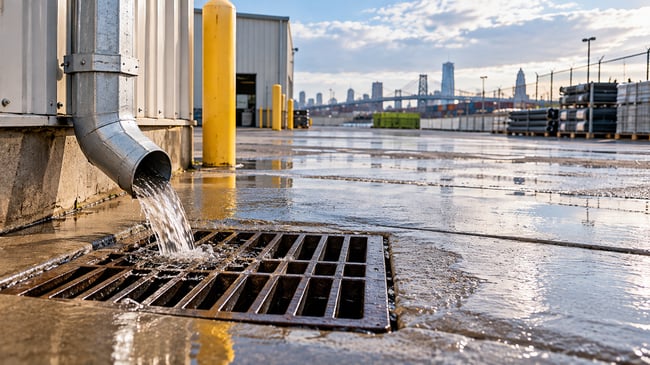
Few industrial properties have a single drainage path. A typical site might send roof runoff to a storm drain in the street, tie its floor drains and a truck wash bay into the sanitary sewer, let the back lot slope toward a ditch, and push parking lot runoff into an infiltration basin. Each of those paths has a different regulator, and your permit answer depends on which of them touch industrial activity.
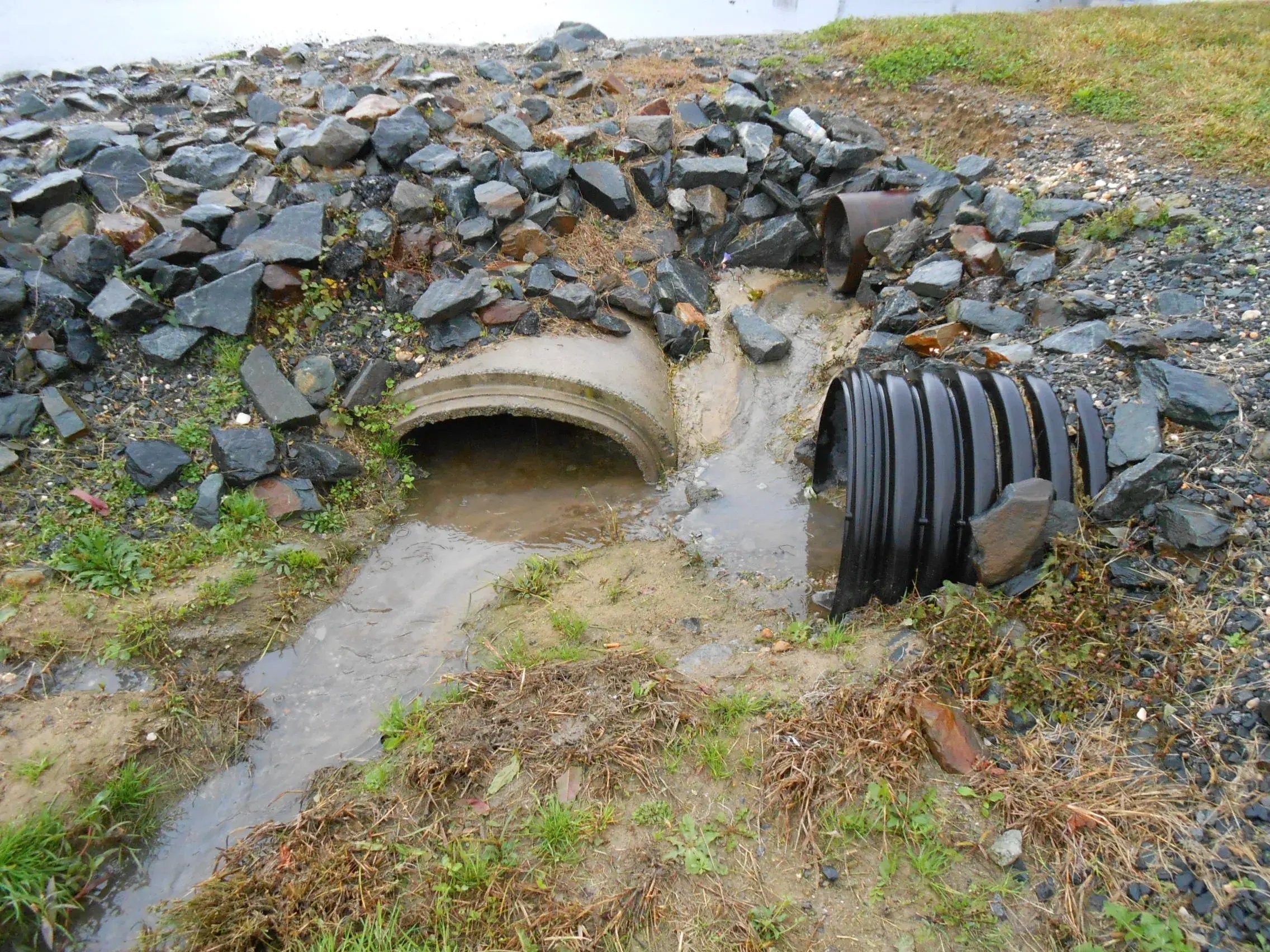
The sewer connection covers only the water that goes into the sewer. If runoff from a material storage area, a scrap pile, a fueling area, or any other outdoor industrial activity reaches a storm drain, a ditch, or a stream, you're back in NJPDES territory for that water. The same goes for runoff that soaks into the ground through a dry well or basin, since New Jersey regulates discharges to groundwater too. A single outfall to surface water can be enough to bring a site into the permit conversation.
The reverse happens as well. A site that assumes everything flows to a stream sometimes finds out its yard inlets tie into a sanitary line. That changes the picture in the other direction and brings a different set of rules into play.
How Do You Map Where Your Site's Drains Go?
Start with paper: site plans, as-built drawings, utility maps, and any past SWPPP or sewer connection approvals. Then walk the property, ideally during or right after a rain. Look at every inlet, trench drain, roof leader, loading dock drain, and floor drain, and note where each one seems to head. Mark the outdoor areas where industrial materials, equipment, or waste are stored or handled, because those are the areas the permit questions are about.
Plans are often out of date, particularly on sites that have changed hands or expanded. When a drain's destination is unclear, a plumber or engineer can confirm it with dye testing, smoke testing, or a camera inspection. Give your sewerage authority a heads-up before running dye into a line that connects to its system. Your municipal engineer and the authority may also have sewer maps showing which lines serve your street. Our post on the difference between stormwater and process water helps sort out which of your drains carry which kind of water.
Once you know, write it down. A labeled drawing and a set of photos of each drain give you something to hand an inspector, a lender, or the next person who runs the facility.
Where Does Your Runoff End Up, and Who's in Charge?
| Where the drain leads |
Who's mainly in charge |
What it means for you |
| Stream, ditch, or municipal storm sewer |
NJDEP, through NJPDES |
If it carries runoff from industrial areas, you may need a general or individual permit or a Permanent No Exposure certification |
| Groundwater (dry well, infiltration basin, or similar) |
NJDEP, through NJPDES |
Treated separately from surface water discharges, so a sewer answer for the rest of the site doesn't cover it |
| Sanitary sewer |
The sewerage authority |
The authority's approvals and limits apply, and the industrial stormwater permit doesn't |
| Combined sewer |
The sewerage authority and the system operator |
Same as a sanitary sewer for your site, while the operator holds the NJPDES permit for the system's overflows |
What Does a Sewerage Authority Require From Businesses Connected to Its System?
A business that sends wastewater to a public sewer is called an indirect user of the authority's treatment plant. Requirements vary from authority to authority, but they commonly include approval before you connect or change what you discharge, limits on what can go down the drain, pretreatment where the discharge needs it, and monitoring, reporting, and user charges. Some authorities run their own industrial pretreatment programs and issue their own discharge permits, and some authority ordinances count stormwater runoff as part of the wastewater they regulate.
Larger industrial users can also be classed as significant indirect users, which can bring a significant indirect user (SIU) permit under the NJPDES program for non-domestic process wastewater going to a public treatment plant. Who issues that permit depends on the authority. Whether your site lands in that category turns on the volume and type of wastewater, not on your stormwater. This sewer side is a separate program from the one NJDEP runs for stormwater, with different people reviewing it, so a clean answer on one doesn't settle the other.
If you're sending wash water, process water, or floor drain water anywhere, ask the authority what it needs from you before assuming your current setup is approved. Authorities differ on what they'll accept, and the conversation goes better when you can show them the drainage map from the last section.
When Does a Sewer-Connected Business Still Need an NJPDES Stormwater Permit?
You're back in NJDEP's permit program when runoff from industrial areas reaches surface water or groundwater, whether through a municipal storm sewer, a ditch, a stream, or a dry well. At that point the usual options apply. The 5G2 basic industrial stormwater permit is available to regulated facilities that have eliminated, or can eliminate within six months of authorization, all exposure of industrial materials and activities to stormwater, and it isn't tied to one industry. Facilities in the industry categories listed earlier may need that industry's own general permit instead. Sites that can't eliminate exposure and don't fit a general permit end up with an individual NJPDES industrial stormwater permit. Our overview of NJPDES stormwater permit requirements covers what coverage involves after you apply. Sampling requirements vary by permit category, and some permits require none.
What Does Permanent No Exposure Require in New Jersey?
New Jersey's version of the no exposure exclusion is strict. Permanent No Exposure means all industrial materials are stored, and all industrial activities are performed, inside a permanent building or structure anchored to a permanent foundation and completely roofed and walled. A few exceptions apply, including covered, leak-proof dumpsters, vehicles in good working order, and pipe that doesn't leak. Temporary covers don't count.
The exclusion is facility-wide, so you can't claim it for the sewered half of a site while the rest sits outdoors. You submit a signed certification to NJDEP every five years, NJDEP can inspect to verify it, and the exclusion doesn't transfer to a new operator. If exposure returns, the exclusion ends, and discharges made without a permit are treated as unpermitted. Anyone planning a change that would expose materials should apply for permit coverage before it happens. Our explainer on what no exposure means for stormwater permits covers the general idea.
Plenty of businesses end up with no permit requirement at all. Warehouses, data centers, and many dealerships and body shops often fall outside the industrial categories, because coverage turns on SIC code and what happens outdoors. If we look at your site and you don't need a permit, we'll tell you that.
How Can RMA Help With Drainage Mapping and Stormwater Permit Questions?
RMA is a family-run firm based in New Jersey, and we've worked with NJDEP's stormwater permits for decades. We can help you trace and document your drains, sort out which drainage paths NJDEP regulates and which belong to your sewerage authority, and tell you what questions to bring to the authority. If a general permit, an individual permit, or a Permanent No Exposure certification fits your site, we can prepare the paperwork and the SWPPP and help you keep up with the annual work that follows. We don't speak for NJDEP or for your authority, so we'll point you to the right office to confirm anything that only they can answer.
There's no pressure and no obligation. You can call us, send an email, or fill out the form on our website, and one of our team members will look at your situation and let you know whether we're the right fit. If you're ready to start, contact our team and tell us a little about where your drains lead.