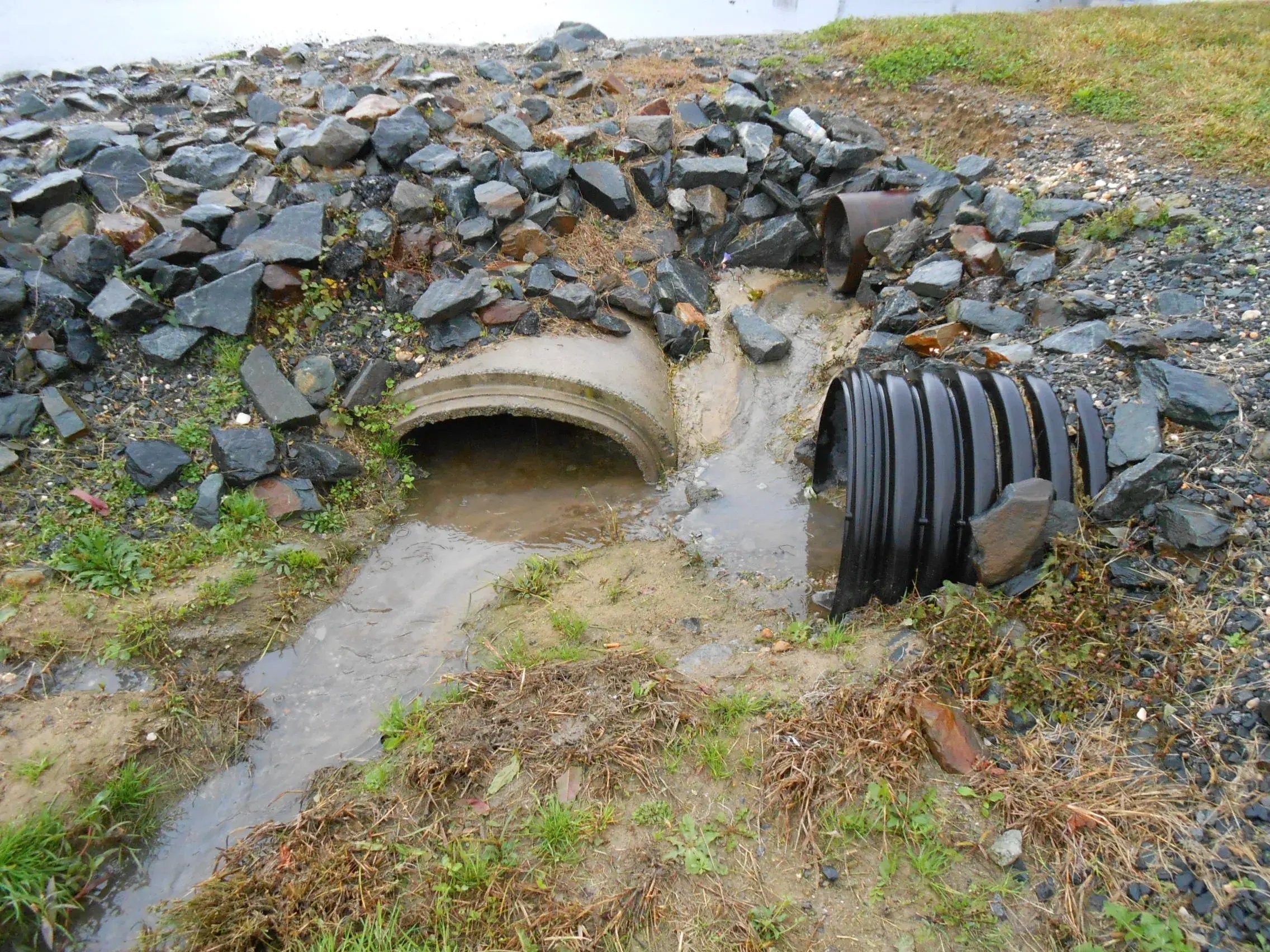
How NJPDES Industrial Stormwater Permits and Redevelopment Stormwater Rules Fit Together at a New Jersey Facility
If your facility sits inside a redevelopment area, it's fair to wonder whether the usual stormwater rules still reach you. The town has probably adopted a redevelopment plan, new buildings are going up nearby, and nobody has said a word about the rainwater running off your yard. The short answer is yes, the rules still apply. A redevelopment area is a local land-use designation, and it doesn't excuse a working facility from the state's rules on stormwater.
What makes this confusing is that two different sets of stormwater rules are in play. One covers a facility that's up and running, and the other covers building, expanding, or redeveloping a site. This article walks through both in plain terms, explains which permit goes with which situation, and tells you where our help starts and stops. If you'd like to talk through your own site, you can reach out to RMA at any point.
Table of Contents
TL;DR
Yes, stormwater rules still apply. A redevelopment area designation is a town's land-use label, and it doesn't change what the state expects from a facility that's operating there. If your business is in a regulated industrial category, you need state stormwater coverage or an approved no exposure certification, and plenty of facilities don't need either one. Building or redeveloping the site is a separate matter, with its own construction stormwater, soil erosion, and stormwater design requirements handled by different agencies and different professionals.
What Does a Redevelopment Area Designation Mean for Stormwater Rules in New Jersey?
In New Jersey, a municipality can declare an area "in need of redevelopment" under the Local Redevelopment and Housing Law and then adopt a redevelopment plan for it. The plan sets out what can be built, how land can be used, and how local approvals will work. It's a planning tool run by the town. It doesn't come from the New Jersey Department of Environmental Protection (NJDEP), and it doesn't change what NJDEP asks of a facility that discharges stormwater.
Two things hold inside the zone. Your operating permits stand on their own, whatever the redevelopment plan says about zoning. And anything you build or tear down still goes through the state's construction and stormwater design rules. Towns can also add their own expectations through the redevelopment plan or a local stormwater ordinance, so it's worth reading both before you assume the state rules are the whole picture.
Does an Operating Facility in a Redevelopment Area Need an NJPDES Stormwater Permit?
It depends on what your facility does. New Jersey runs the NJPDES program, short for New Jersey Pollutant Discharge Elimination System, which is the state's version of the federal discharge permit system. Under it, rainwater that runs off certain industrial facilities has to be covered by a permit. Whether yours is one of them comes down mostly to your SIC code, the standard industry classification for your main business, and to what's sitting outside where rain can reach it. Manufacturers, recyclers, mining and aggregate operations, and transportation facilities with maintenance, fueling, or equipment cleaning areas are common examples of regulated facilities. Many warehouses, data centers, and office-type operations fall outside the regulated categories, and in that case there's no industrial stormwater permit to get. A redevelopment designation isn't one of the factors the state's industrial stormwater rules use to decide who needs coverage.
Even a facility in a regulated category may not need a full permit. If your materials and activities are kept indoors or otherwise protected from stormwater, you can submit what New Jersey calls a Permanent No Exposure Certification instead. Redevelopment can move you in either direction here. A new building that brings operations indoors might put you in no exposure territory, while a new storage yard or loading area might do the opposite. Our articles on what no exposure means and who needs a stormwater permit go deeper on how that call gets made.
Which NJPDES Stormwater Permit Options Fit a Facility in a Redevelopment Area?
New Jersey doesn't have one stormwater permit for everybody. It has a handful of paths, and most readers have never heard the names, so here's the full menu in one place.
| Coverage path |
What it is |
Who it usually fits |
| No industrial permit needed |
The business falls outside the regulated industrial categories |
Many warehouses, data centers, and office-type operations |
| No exposure certification |
A regulated facility certifies that its materials and activities are protected from stormwater |
Operations that happen indoors or under cover |
| Basic Industrial Stormwater General Permit (5G2) |
NJDEP's standard general permit for regulated facilities, applied for through a Request for Authorization (RFA) |
Many regulated facilities that don't have a permit written for their industry |
| Industry-specific general permits |
Separate general permits for concrete products manufacturing, hot mix asphalt, mining and quarrying, sand and gravel, scrap metal, vehicle recycling, and wood waste recycling and leaf composting |
Facilities in those specific industries |
| Individual permit |
A permit written for one site |
Situations where a general permit isn't a fit |
Facilities regularly end up on the wrong permit by guessing, so it's worth taking the time to pick the right row. Our guides to the 5G2 basic industrial stormwater permit and to individual NJPDES industrial permits lay out how each one works. For a broader look at the full set of New Jersey requirements, see NJPDES stormwater permit requirements for New Jersey facilities.
Whichever path applies, coverage generally comes with a stormwater pollution prevention plan, sometimes called an SPPP, an SP3, or just a stormwater plan. We call it a SWPPP (pronounced "swip"), and our article on what a SWPPP is covers what goes in one. Sampling and reporting duties vary by permit category, and some categories require no sampling at all, so confirm what yours asks for before you budget for it.
What Stormwater Requirements Apply When You Build or Redevelop a New Jersey Facility?
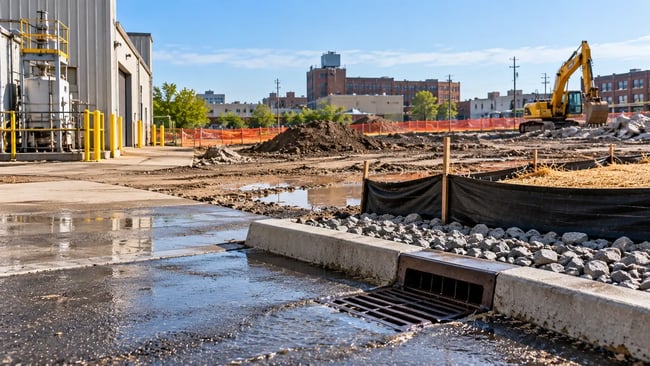
Building, expanding, or redeveloping a site brings a separate set of requirements. These are triggered by the work you're doing, not by what the facility produces, and they run through different agencies than the operating permit does. Three pieces come up most often:
- The 5G3 construction general permit is NJPDES coverage for stormwater from construction sites. NJDEP issues it for land disturbance of one acre or more, and for smaller disturbances that are part of a larger plan of development.
- Soil erosion and sediment control certification comes from the local Soil Conservation District, one of 15 around the state, under the Soil Erosion and Sediment Control Act. It generally applies once a project disturbs more than 5,000 square feet, and a 5G3 authorization is obtained in addition to it.
- Stormwater management design standards come from N.J.A.C. 7:8, the state's Stormwater Management Rules. They apply to "major development," which includes projects that disturb one acre or more or that add one-quarter acre or more of regulated impervious surface, with a similar one-quarter acre trigger for regulated motor vehicle surface.
| Requirement |
What triggers it |
Who it goes through |
Does RMA handle it? |
| 5G3 construction stormwater permit |
Land disturbance of one acre or more, or part of a larger plan of development |
NJDEP |
No |
| Soil erosion and sediment control plan certification |
Disturbance of more than 5,000 square feet |
Local Soil Conservation District |
No |
| Stormwater management design (N.J.A.C. 7:8) |
Major development, based on acres disturbed or new regulated surface |
Municipal land use approvals and, depending on the project, NJDEP |
No |
| NJPDES industrial permit or no exposure certification |
Your industry category and whether materials are exposed to stormwater |
NJDEP |
Yes |
Redevelopment doesn't get a free pass from the design rules, though it does get different treatment in places. N.J.A.C. 7:8 includes provisions for urban redevelopment, such as limited exemptions from the groundwater recharge standard, but the rule has its own definition of what counts, and a town's redevelopment designation doesn't automatically match it. The rules have also been amended more than once in recent years, so your engineer should work from the current version rather than from what a neighboring project did five years ago.
We want to be plain about our role here. RMA doesn't prepare construction-phase permits or approvals. That covers the 5G3 permit, soil erosion and sediment control certification, and stormwater management design for major development. Those pieces usually sit with your engineer, your contractor, or a soil erosion specialist. Where we do help is on the operating side, covered below, and we're glad to help you work out what the construction phase is likely to need and point you toward the right professionals for it.
How Does Where Your Stormwater Drains Change the Rules in a New Jersey Redevelopment Area?
Redevelopment areas tend to be older, built-up parts of a town, and the drainage there can be a mixed bag. Your runoff might go to a separate storm sewer, to a combined sewer that carries stormwater and sewage together, or straight to a nearby stream or river. Each of those can bring different parties into the picture. Where runoff goes to a sewerage authority, that authority's rules may apply instead of, or alongside, an NJPDES stormwater permit, and some towns also run stormwater utilities with their own fees, which are separate from anything NJDEP charges.
We can't tell you from here how your particular site drains or which rules follow from that, and we'd be wary of anyone who claims to without looking. The reliable way to find out is to trace your drains, then confirm the results with your town engineer, the sewerage authority if one serves the area, and NJDEP. Do this again after construction, because new buildings, regraded yards, and added pavement often change where the water goes.
Who Handles Which Stormwater Requirements on a Redevelopment Project in New Jersey?
Timing is where redevelopment projects most often go sideways. Construction approvals get all the attention, and the operating permit gets remembered the week before move-in. A better order of operations starts with the building decisions. Where materials get stored, whether loading happens under a roof, and where the drains end up all affect which operating permit you need, or whether you qualify for no exposure at all. Having an environmental consultant look at the site plan while it's still a drawing costs far less than reworking a yard afterward.
Once the building is up, the operating side takes over: the right NJPDES coverage or no exposure certification, a stormwater plan that matches what's actually on the ground, routine inspections, annual certification, and sampling where your permit calls for it. Permit timing varies, and our article on how long a New Jersey stormwater permit takes is worth reading before you set a move-in date. If you're already permitted and you're adding to the site, your plan and your coverage should be revisited as part of the project rather than after it.
The people who walk the yard every week are the ones who keep a permit in good shape, so we'd encourage you to train them. Our online environmental training library is one option, and we also teach clients to take their own stormwater samples correctly instead of relying on someone arriving in time for a storm.
How Does RMA Help With Stormwater Permits at New Jersey Facilities in Redevelopment Areas?
We're a family-run firm based in New Jersey, and we've worked with NJDEP's stormwater permit categories for a long time. For a facility in a redevelopment area, we can help you figure out whether you need an industrial stormwater permit at all, which permit or no exposure path fits if you do, and what the plan, inspections, and annual paperwork look like once you're covered. After you're permitted, we offer ongoing support, including reminders, help reading your results, plan updates, and inspection prep, either hands-off or hands-on depending on what you want.
We'll also tell you when you don't need us. If your business falls outside the regulated categories, there may be nothing for us to do, and we'd rather say so than sell you a permit you don't need. And we're not the right fit for the construction side, major engineering design, or treatment system construction, so on those pieces we'll point you elsewhere.
If you'd like to talk through your site, there's no pressure and no obligation. You can call us, email us, or fill out the form on our website, and a senior member of our team will take a look at your situation. You can also contact RMA directly to get started.