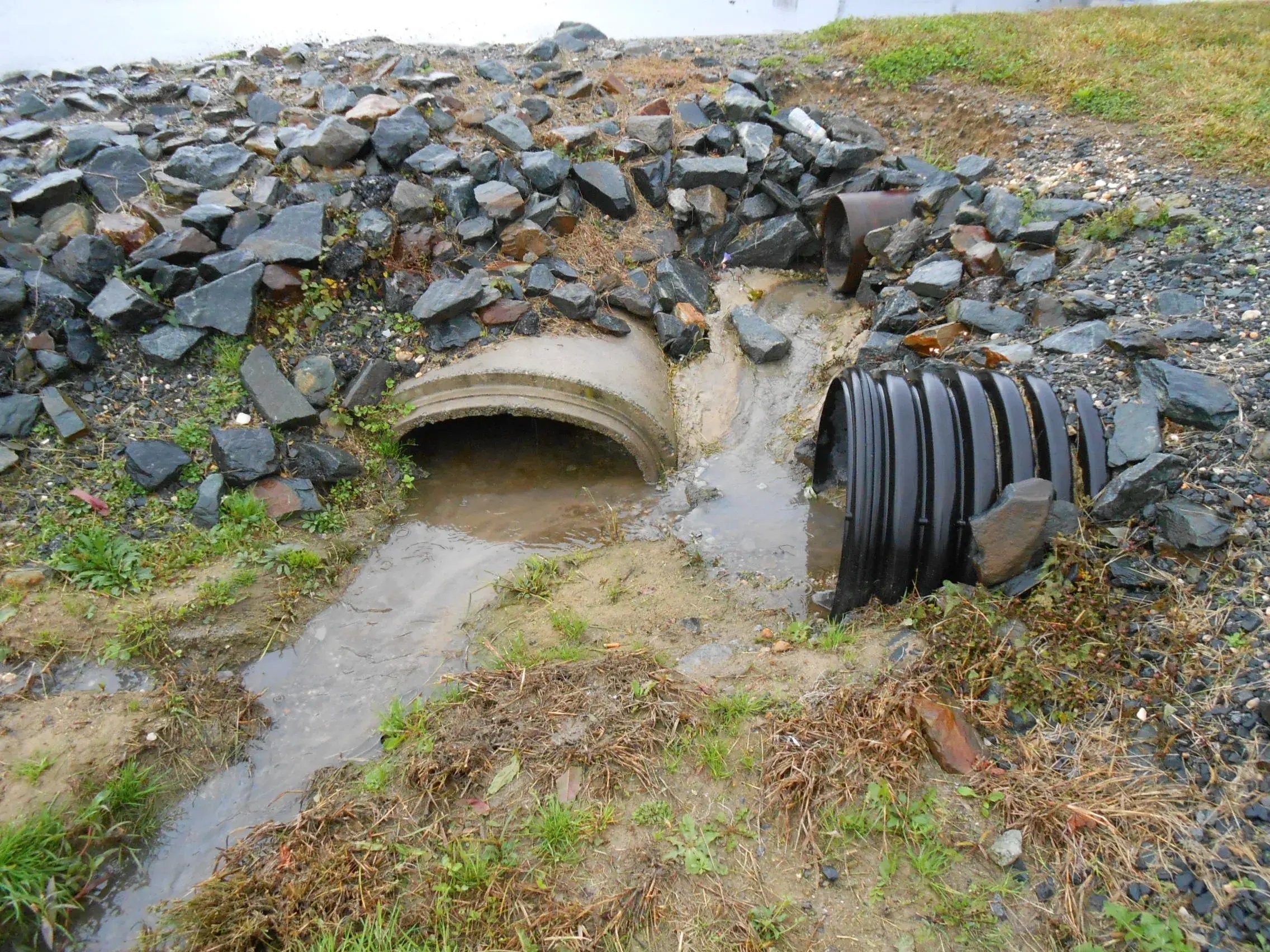
Scrap Metal Stormwater Sampling in New Jersey: What the SM2 Permit Asks For, How to Sample a Busy Yard, and What to Do With High Results
If you run a scrap yard in New Jersey, stormwater sampling is probably the part of your permit that feels least like the rest of your job. Your crew knows how to move metal, run a shear, and keep trucks rolling. Catching runoff in a bottle during a storm, getting it to a lab on time, and then explaining a lead or zinc number to NJDEP is a different skill set. The short answer to what the permit requires is that scrap metal facilities sample their stormwater on a regular schedule, send it to a certified lab for a set list of pollutants, and report every result to NJDEP.
This article walks through the monitoring the Scrap Metal Processing and Recycling (SM2) general permit calls for, how to pick sampling spots and collect clean samples at a yard with constant truck and crane traffic, and what to do when the lab report comes back high. If you'd rather have a New Jersey team look at your yard, plan, and results, you can reach out to RMA at any point.
Table of Contents
TL;DR
New Jersey scrap metal facilities covered by the SM2 general permit sample their stormwater each quarter and report every result to NJDEP on discharge monitoring reports. Samples go to a certified lab and are tested for solids, chemical oxygen demand, petroleum hydrocarbons, and several metals including iron, zinc, aluminum, lead, and copper. At a busy yard, the sampling spot and the sampling habits matter as much as the lab. A high result isn't automatically a violation, but it does need a quick look at the data, the permit, and the likely source on your site, followed by a fix you can document.
What Does the NJ Scrap Metal Stormwater Permit Require for Monitoring?
Most scrap metal facilities in New Jersey operate under the SM2 general permit, a stormwater permit NJDEP issues under the New Jersey Pollutant Discharge Elimination System (NJPDES), the state's version of the federal NPDES program. The older SM version of the permit has expired and is no longer available, so SM2 is the one you'll be working with. It's built for facilities that process and recycle scrap metal, including some that also sell used vehicle parts. A yard that only does vehicle recycling is pointed to a separate Vehicle Recycling (RVR) general permit, and some sites fit better under an individual permit or the Basic Industrial Stormwater (5G2) general permit. Our guide on which NPDES permit you need covers how that choice usually gets made.
Monitoring is one piece of a larger package. The permit also expects a Stormwater Pollution Prevention Plan (SPPP, New Jersey's term for the written plan that describes your site and the practices that keep pollution out of runoff), a drainage control plan, documented facility inspections, and an annual certification. Sampling is how NJDEP sees whether all of that is working. Our broader explainer, The NJ SM2 Scrap Metal General Stormwater Permit Explained, covers the full permit, so this article stays focused on the sampling side.
Which Pollutants Do Scrap Metal Yards Test For in Stormwater?
The SM2 monitoring list is built around what runs off a scrap yard: dirt and fines, fluids that leak from end-of-life equipment, and dissolved and particulate metals. The parameters we see on SM2 sampling are in the table below. Your own permit authorization and the current permit document are the final word on the exact list, units, and any numeric limits, so check them before you order a lab package.
| Parameter |
What it tells you |
Where it often comes from at a yard |
| Total Suspended Solids (TSS) |
How much dirt, grit, and fine particles the runoff is carrying |
Bare ground, track-out from trucks, fines from processing, unswept pavement |
| Chemical Oxygen Demand (COD) |
A broad read on organic material and oils in the water |
Fluids from equipment and scrap, residue from processing areas |
| Petroleum hydrocarbons |
Oil, fuel, and hydraulic fluid in runoff |
Leaking engines and compressors, fueling and maintenance areas, drained but not empty equipment |
| Total recoverable iron |
Rust and ferrous metal moving off the site |
Ferrous piles, shredded material, rusting stock |
| Total recoverable zinc |
Galvanized and coated metal breaking down |
Galvanized steel, appliances, roofing and siding scrap |
| Total recoverable aluminum |
Non-ferrous metal and dust in runoff |
Aluminum stockpiles, cans, extrusions, processing dust |
| Total recoverable lead |
Lead leaving the site in solids or water |
Batteries, wheel weights, cable, lead-bearing scrap |
| Total recoverable copper |
Copper in runoff, often toxic to aquatic life at low levels |
Wire, tubing, radiators, motors, brass fittings |
Notice that most of the metals are listed as total recoverable. That means the lab digests the sample to capture metal attached to particles as well as metal dissolved in the water, so a cloudy sample from a dusty yard can read high on metals even when the water itself looks clean. We've also seen these requirements apply whether a facility's runoff goes to surface water or to groundwater, so a site that drains to the ground still needs a sampling plan.
How Often Do Scrap Metal Facilities Sample and Report Stormwater?
The SM2 permit calls for sampling every quarter, and the results go to NJDEP on discharge monitoring reports (DMRs). Quarterly sounds easy until you remember that you can't schedule rain. A quarter with a dry stretch, a snowy stretch, or storms that arrive overnight on a holiday weekend can leave a yard scrambling in the last two weeks to catch a qualifying event. The facilities that stay out of trouble treat the first storm of each quarter as a sampling opportunity instead of waiting to see what the weather does later.
Reporting is where many yards get surprised. Every result you collect belongs on the DMR, including the ugly ones and including a second sample you take after a first one looked off. Our article on discharge monitoring reports explains how they work, and if a quarter goes by with no discharge to sample, there's a specific way to report that, covered in our guide to reporting no discharge. Facility inspections run on their own schedule, at least quarterly for most scrap metal operations, and we recommend monthly walkthroughs because they catch the housekeeping problems that later show up in your lab numbers.
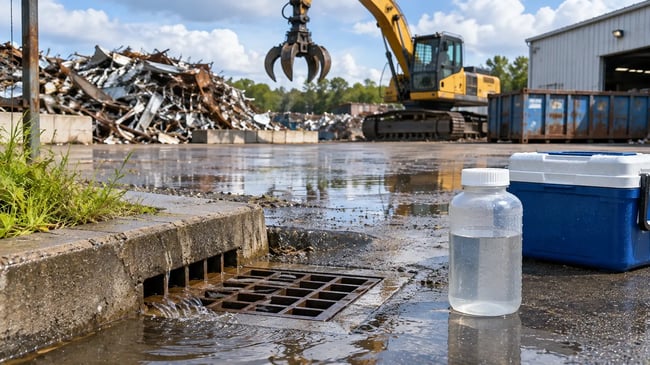
Where Should You Take Stormwater Samples at a Busy Scrap Metal Yard?
You sample where stormwater leaves your facility, at the discharge points identified in your SPPP and drainage control plan. On paper that's a tidy dot on a map. On a working yard it can be a pipe at the low corner, a swale behind the scale house, a section of curb that sheet flow crosses, or three separate outfalls because the grading splits the site. Walk the property during a rain, before your first required sample, and confirm where water really goes. Plans written years ago sometimes don't match what the pavement does today.
A busy yard adds problems that a quiet industrial site doesn't have. Trucks tracking through a ditch stir up sediment and drop it right where you want to sample. Cranes and loaders work close to outfalls. Piles shift, and a stockpile that sat 50 feet from an inlet last year may sit 10 feet away now. Pick sampling spots that are safe to reach during a storm, away from equipment travel paths, and consistent from quarter to quarter so your results can be compared. Mark the spots, put them in the SPPP, and make sure every person who might sample knows them. If water doesn't leave your site at all, our article on sampling when stormwater stays on site walks through your options.
How Do You Collect Clean Stormwater Samples at a Scrap Metal Facility?
Good sampling starts before it rains. Call your lab ahead of the quarter and get the right bottles, preservatives, labels, and chain of custody forms. Use a laboratory certified by New Jersey for the parameters you're testing, since a result from an uncertified lab can leave you with data NJDEP won't accept. Find out the hold times for each parameter and how fast the lab needs the cooler, because a sample that sits in a truck cab overnight can come back flagged or invalid. Our article on picking a stormwater testing lab covers what to ask.
The permit sets the rules for what counts as a qualifying storm and how quickly samples need to be collected once discharge starts, so read that language before the first forecast and follow it as written. On the day, assign one trained person, give them the gloves, the bottles, and a plan that keeps them away from moving equipment, and have them skip sampling if lightning is close. Collect from flowing water at the discharge point instead of a stagnant puddle or a ditch that a truck just drove through. Don't rinse bottles that contain preservative, and ask the lab which containers can be filled directly and which need a transfer container, since oil tends to cling to whatever it touches. Label each bottle with the location, date, and time, keep the cooler closed, and drive it to the lab promptly.
We're strong believers in doing this with your own people when you can. Our article on why you should take your own stormwater samples explains why waiting on a third party tends to cost you storms, and nine practical tips for taking good stormwater samples is a useful checklist to hand your sampler. If you want your staff trained, the online training library is a good place to start.
What Do High Stormwater Sampling Results Mean for a Scrap Metal Yard?
A high number tells you something is leaving your site, but whether it's a compliance problem depends on how your permit treats that parameter. Some parameters in a stormwater permit carry numeric limits, some carry benchmarks that trigger a closer look, and some are reported only. Which category each SM2 parameter falls into, and what the numbers are, should come straight from your permit document and not from a blog post or a neighbor. Our article on benchmark values versus effluent limits explains the difference, and what stormwater monitoring results mean helps you read a lab report line by line.
The pattern of results points you toward the cause. A spike in solids alongside iron usually means sediment and rust moving together, which is a housekeeping and grading problem. High zinc with normal solids can mean a galvanized pile that's exposed to rain. Petroleum hydrocarbons and COD that rise together tend to point at fluids from equipment, fueling, or drained-but-not-empty material. Lead and copper often trace back to a particular pile or processing area. Results that are high at every outfall every quarter suggest a systemic problem, while one odd number after a month of normal ones is more likely a sampling or handling issue.
What Should You Do After a High Stormwater Result at a Scrap Yard?
Start by making sure the number is real. Read the lab report for flags and detection notes, confirm the units, check that the sample came from the right location, and ask yourself whether anything went wrong in the field, like a bottle that scooped sediment or a sampler who stood upstream of the water. Our list of the top reasons stormwater samples come back bad covers the usual culprits. Then compare the result to what your permit says for that parameter, so you know whether you're looking at a limit, a benchmark, or a reporting item.
Report the result regardless. Hiding or skipping a bad number is a far bigger problem than the number itself, and our article on whether you have to report bad stormwater results goes through why. Once the report is handled, go find the source. Walk the drainage area upstream of the outfall during or right after a rain, look at what the water crosses, and compare what you see to the likely sources in the table above. Common fixes at scrap yards include sweeping or vacuuming on a set schedule, covering or relocating piles that drain toward inlets, adding berms or filter barriers, cleaning out catch basins, tightening up fluid drainage and storage, and controlling track-out at the gate. Our guide to stormwater best management practices lays out the options, and our walkthrough on what to do if your sampling results are high goes deeper on next steps.
Write down what you found and what you changed, and update the SPPP or drainage control plan if the fix changes how the site operates. A dated record showing that you spotted a problem, traced it, and corrected it is the best answer you can hand an NJDEP inspector. If you take a follow-up sample, plan on reporting that result too. And if NJDEP contacts you about results or the conversation turns toward penalties or an administrative consent order, that's the point to bring in an environmental attorney.
We're a New Jersey firm, and our senior staff do the work on scrap metal SM2 programs. We can help you confirm that you're on the right permit, write or update your SPPP and drainage control plan, set your sampling locations, build a quarterly sampling routine your own crew can follow, and review your lab results when they land. When a number comes back high, we help you work out whether it's the yard, the sampling, or the lab, and then what to change. We also tell people when they don't need us. If you have a trained sampler, a good lab, and a quiet set of results, you can run this program yourself, and our guide to taking your own samples will help.
If you'd like a second set of eyes, there's no pressure and no obligation. You can call, email, or fill out the form on our website, and we'll talk through where you stand. To get started, contact RMA and tell us a little about your yard.