Snow Piles, Road Salt, Frozen Outfalls, and Spring Melt: Winter Runoff Problems at Pennsylvania Facilities and How to Handle Them Under PAG-03
Ask most facility managers about stormwater and they'll picture a summer thunderstorm. Pennsylvania winters cause just as many problems, and they're harder to connect to a permit because the water shows up as snow, ice, and slush instead of rain. Plows push oily grit and debris into big piles that sit for weeks and then melt all at once. Salt and deicers get stored outside or spread heavily and wash straight toward drains. Outfalls freeze solid right when a sample is due. Then a warm spell in March moves a whole season's worth of buildup off the site in a few days. If your facility has PAG-03 coverage, Pennsylvania's general permit for industrial stormwater, all of that is still stormwater under your permit, and a little planning before the first storm keeps winter from wrecking your sampling results and your PPC Plan.
Below, we'll walk through where to pile snow, how to store and use salt and deicers, what to do when outfalls freeze and you can't sample, how to get through spring melt, and how to document winter conditions so your records hold up. We've also included a seasonal checklist you can print and hand to whoever runs your snow removal. If you'd like help building winter practices into your stormwater plan, feel free to reach out to RMA.
Table of Contents
TL;DR
Snowmelt and winter runoff are stormwater under a PAG-03 permit, and they often carry more oil, grit, metals, and salt than a summer storm. Pile plowed snow away from storm drains and streams, on pavement that drains to your controls. Keep salt and deicers covered, ideally on an impervious pad, and use only what you need. If outfalls freeze, sample a qualifying snowmelt or rain event when you can and document every attempt, and expect spring melt to flush a season of buildup, so clean up before it starts. Write down winter conditions, inspections, and sampling attempts as they happen.
Why Pennsylvania Winters Create Stormwater Problems at Industrial Facilities
Stormwater is rain and snowmelt that runs off a property. Under PAG-03, snowmelt counts just as much as rain, and it can be harder on your results. In summer, a storm rinses your yard a little at a time. In winter, nothing moves for weeks. Oil drips from equipment, grit and fine stone from trucks, metal dust, and spilled product all pile up on frozen ground and in snowbanks. Then a thaw releases all of it together, often over frozen soil that can't absorb anything, so nearly all of it runs off.
Winter adds pollutants of its own. Rock salt and deicers dissolve completely, and the chloride doesn't settle out or filter through most stormwater controls. Plows scrape asphalt, pavement sealant, and whatever was spilled on it into piles. Cinders and anti-skid sand add sediment. Vehicles idle and leak more in the cold. Across much of Pennsylvania, from Erie and the northern tier to the Poconos and Laurel Highlands, winter can run four months, which is a long time for buildup to collect.
That buildup shows up in a few predictable places. It drives up suspended solids, oil and grease, and metals in your samples, which are among the parameters many PAG-03 industry appendices track. It also clogs inlet protection and fills sediment traps. And because your PPC Plan, the Preparedness, Prevention and Contingency Plan PAG-03 requires, is supposed to describe how you control pollutant sources, a winter routine that isn't written down is a gap an inspector can point to.
Where to Pile Snow at an Industrial Facility to Protect Stormwater
Snow removal crews usually push snow wherever it's fastest. That's often the far edge of the lot, which is often where the storm inlet or the drainage swale is, or where the property drops toward a creek. A snow pile sitting on top of an inlet is a slow-motion discharge of everything the plow picked up.
Pick your snow storage spots before the season starts, mark them on your site map, and tell your plow contractor or crew exactly where they go. Good locations share a few traits. They're on pavement or another surface that drains toward your stormwater controls, like a sediment trap, vegetated swale, or oil-water separator, rather than straight to an inlet or outfall. They're well away from streams, ditches, wetlands, and storm drains. They're away from material storage areas, so melt doesn't run through stockpiles or drums on the way out. And they leave room for the melt to spread and drop its grit before it reaches a drain.
| Pile Snow Here |
Keep Snow Away From Here |
| Paved areas that drain to sediment traps, swales, or separators |
Storm inlets, catch basins, and outfalls |
| Flat areas with room for melt to spread out |
Stream banks, ditches, wetlands, and steep slopes |
| Spots away from material and waste storage |
Drum storage, scrap bins, and stockpiles |
| Locations shown on your site map and PPC Plan |
Fueling areas and secondary containment |
Two more habits help. Put a stake or tall marker on every inlet before the first storm, so plow drivers can see what's under the snow. And when piles start to melt, look at them. If melt from a pile is running black or oily toward a drain, add a temporary barrier like a sediment log, or move the pile. Clean up the grit and debris left behind once the pile is gone, before the next rain washes it away. For more options, see our article on stormwater best management practices.
Road Salt and Deicer Storage and Use Under PAG-03
Salt is one of the few pollutants that stormwater controls can't take out once it's dissolved, so the only real control is keeping it from getting wet. Store bulk salt and deicers under a roof or in a covered structure, on an impervious pad like concrete or asphalt, ideally with curbing so runoff doesn't flow through the pile. Bagged deicer belongs indoors or on pallets under cover, not stacked in the open where torn bags leak. Sweep up spilled salt around loading areas and spreaders instead of letting it wash away.
DEP's industrial stormwater FAQ draws a few useful lines here. Facilities whose business includes large salt stockpiles fall under their own PAG-03 appendix, and new piles designed to hold at least 3,000 tons should seek an individual NPDES permit instead. For smaller piles, the FAQ says the salt storage monitoring requirements don't apply as long as storage areas are under cover or appropriately tarped when not in use, and that storing salt for on-site use doesn't by itself require PAG-03 coverage. It also says using deicers for safety in parking areas and walkways doesn't disqualify a facility from a No Exposure Certification, as long as the deicer is stored the way No Exposure requires.
Use matters as much as storage. Spreading more salt than the conditions need doesn't make anyone safer, and the extra goes straight into your runoff. Calibrate spreaders, train whoever applies salt, pre-treat before storms where it makes sense, and avoid spreading next to inlets and drainage swales. If you hire a snow contractor, put your expectations in the contract, including where piles go and how much salt they use, so the practice matches what your PPC Plan says.
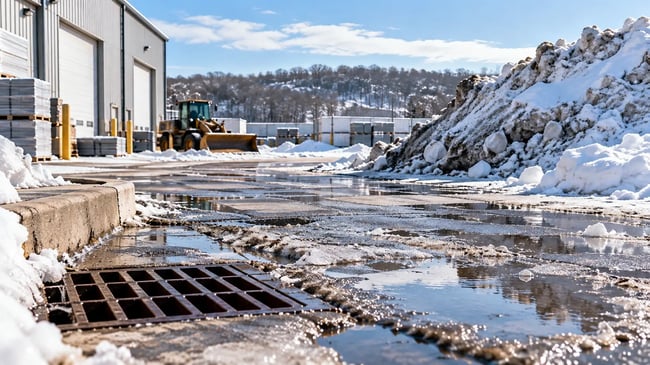
Stormwater Sampling When Pennsylvania Outfalls Freeze
DEP's FAQ says all PAG-03 facilities have to conduct semiannual monitoring, with limited exceptions. If one of your monitoring windows falls in winter, frozen outfalls and snow-covered pipes can make sampling feel impossible. A few rules make it more manageable.
First, snowmelt counts. DEP's FAQ says a snowmelt discharge equivalent to at least 0.1 inch of rainfall may be sampled to meet stormwater sampling requirements, although DEP prefers samples after rain. A storm event for sampling purposes means more than 0.1 inch of precipitation that produces a discharge, separated by at least 72 hours from the previous storm. Our article on snowmelt and stormwater samples goes into how to approach a melt event, and when the 30-minute sampling window starts covers the timing question.
Second, plan for access. Know where each outfall is under the snow, keep a path to it cleared, and have sample bottles, gloves, a cooler, and your lab's chain-of-custody forms ready before the season starts. A frozen outfall often starts flowing during a midday thaw, so watch the forecast for warm afternoons after a snowfall. If you can't collect within the first 30 minutes of discharge, DEP's FAQ says to collect as soon as possible afterward and explain why in a comment on your Discharge Monitoring Report.
Third, if a whole monitoring period goes by with no qualifying discharge you can sample, don't leave the report blank or make something up. Follow your permit and DEP's eDMR instructions for reporting it, and keep a written record of each attempt: the date, the weather, what you saw at the outfall, and why you couldn't sample. Our article on reporting no discharge on your DMRs explains how that reporting generally works.
Spring Melt: When a Season of Buildup Leaves Your Site at Once
The biggest winter discharge often comes after winter is over. A late-February or March warm spell, sometimes with rain on top of snowpack, can melt weeks of accumulation in a day or two. That first big melt carries grit from the snow piles, salt from the season's spreading, oil from equipment parked on frozen ground, and whatever was hidden under the snow. If you sample during it, expect high suspended solids and possibly high oil and grease or metals.
The fix is to get ahead of it. As soon as the snow pulls back, sweep paved areas, clean out snow pile footprints, pick up debris that surfaced from under the snow, and empty sediment traps and inlet inserts that filled over the winter. Check that outfalls and swales aren't blocked by ice or plowed debris, so water goes where your PPC Plan says it goes instead of finding a new path. Look over material storage areas for damage from plows or ice, like crushed containers or torn covers.
If spring melt pushes a sample over a benchmark, don't panic, and don't ignore it. A benchmark exceedance generally means the permit expects you to look at what caused it and improve your controls, not that you've violated the permit outright. Our article on what to do when stormwater results come back high walks through the next steps.
Documenting Winter Stormwater Conditions for Your PPC Plan and DEP
Winter is when records tend to fall apart. People are busy plowing, sampling attempts fail, and nobody writes anything down. Months later, an inspector asks why a sample is missing or why results spiked in March, and there's nothing to point to.
Keep it simple. Log snow events and thaws with the date and rough amounts, and note where snow was piled. Record every sampling attempt, successful or not, with a sentence on outfall conditions. Note salt deliveries, where salt is stored, and any changes to storage. Take photos of snow piles, salt storage, and outfalls during the season, and again after spring cleanup. Your routine stormwater inspections should still happen in winter, and the notes should describe what you could and couldn't see, like an outfall buried under a drift. Rainfall and snowfall records from a nearby weather station help back up your notes, and our article on where to get rainfall data lists sources.
Finally, make sure your PPC Plan describes your winter practices: snow storage areas on the site map, salt storage and handling, and how you'll handle sampling when outfalls freeze. If your plan was written by someone who never saw the site in February, it probably doesn't. A plan that matches what you really do is easier to follow and easier to defend.
Seasonal Winter Stormwater Checklist for Pennsylvania Facilities
Here's the whole season on one page. Print it, adjust it for your site, and hand it to whoever manages snow removal and stormwater.
| When |
What to Do |
| Fall, before the first storm |
Pick and map snow storage areas. Mark every inlet and outfall with a tall stake. Brief your plow crew or contractor and put expectations in writing. Cover salt storage and check the pad and curbing. Stock sampling supplies. Confirm your winter practices are in your PPC Plan. |
| During each storm |
Keep snow piles in their mapped spots. Spread only as much salt as conditions need, and keep it away from inlets. Sweep up spilled salt. Log the event. |
| Through the winter |
Keep paths to outfalls clear. Watch for midday thaws that start flow. Attempt sampling during qualifying melt or rain events and record every attempt. Keep up routine inspections and note what you couldn't see. Check salt covers after wind. |
| First major thaw |
Watch snow piles for dirty or oily melt heading to drains. Add sediment logs or barriers as needed. Sample if it's a qualifying event and your monitoring period calls for it. |
| Spring cleanup |
Sweep paved areas and snow pile footprints. Empty sediment traps and inlet inserts. Clear ice and debris from swales and outfalls. Inspect storage areas for plow damage. Photograph the cleaned site. |
| After the season |
Review what went wrong and update your PPC Plan and site map. Note any results that ran high and what you changed. File your logs and photos with your stormwater records. |
How RMA Helps Pennsylvania Facilities With Winter Stormwater
We're a family-run environmental consulting firm based in New Jersey, and we work with facilities across Pennsylvania on industrial stormwater, including the parts that only show up in winter. We can review your site to pick sensible snow storage areas, look at how you store and use salt, and build those practices into your PPC Plan and site map. We can help you plan for winter sampling, sort out what to report when outfalls freeze, and figure out what to change when spring melt pushes results over a benchmark. If your current plan and practices already cover this, we'll tell you that too.
There's no pressure and no obligation. You can call us at 888-RMA-0230, send us an email, or fill out the form on our website. If winter keeps throwing your stormwater program off track, contact RMA and we'll help you get ready before the first storm.


