How Truck Washout, Wash Water, Settling Basins, and pH Fit Under New Jersey's Concrete Products Manufacturing Permit
Every concrete truck that comes back to your yard needs to be rinsed out, and every rinse leaves behind gray, gritty, strongly alkaline water that looks nothing like rain. Add chute cleaning, mixer cleanout, pump washdown, and returned concrete, and a ready mix, block, or precast plant in New Jersey can generate a lot of this water in a single day. The question that trips up plants is where that water is allowed to go, and what the state's concrete permit actually says about it.
The short answer is that New Jersey's Concrete Products Manufacturing (CPM) permit is a stormwater permit, and it treats truck washout as something to collect, settle, and recycle, not something to release. The details of what a plant can discharge, if anything, depend on the version of the permit your facility is covered under, so we'll walk through how the permit generally approaches process wastewater, what the settling and pH side looks like, and what you need in place at your plant. If you'd rather talk it through with someone who knows concrete plants, you're welcome to reach out to RMA anytime.
Table of Contents
TL;DR
New Jersey's CPM permit is built around stormwater, and truck washout water is process water, which is a different category. NJDEP's own summary of the permit leans on recycling, so the safe approach is to capture washout water and solids and reuse them rather than send them off site. Settling basins remove solids but don't make wash water legal to discharge, and pH has to be managed on its own. Plants need a designated washout area, a drainage layout that keeps process water away from stormwater, a SWPPP that covers it, trained drivers, and records. Check your own permit text for the specifics that apply to you.
What Counts as Truck Washout and Process Water at a Concrete Plant?
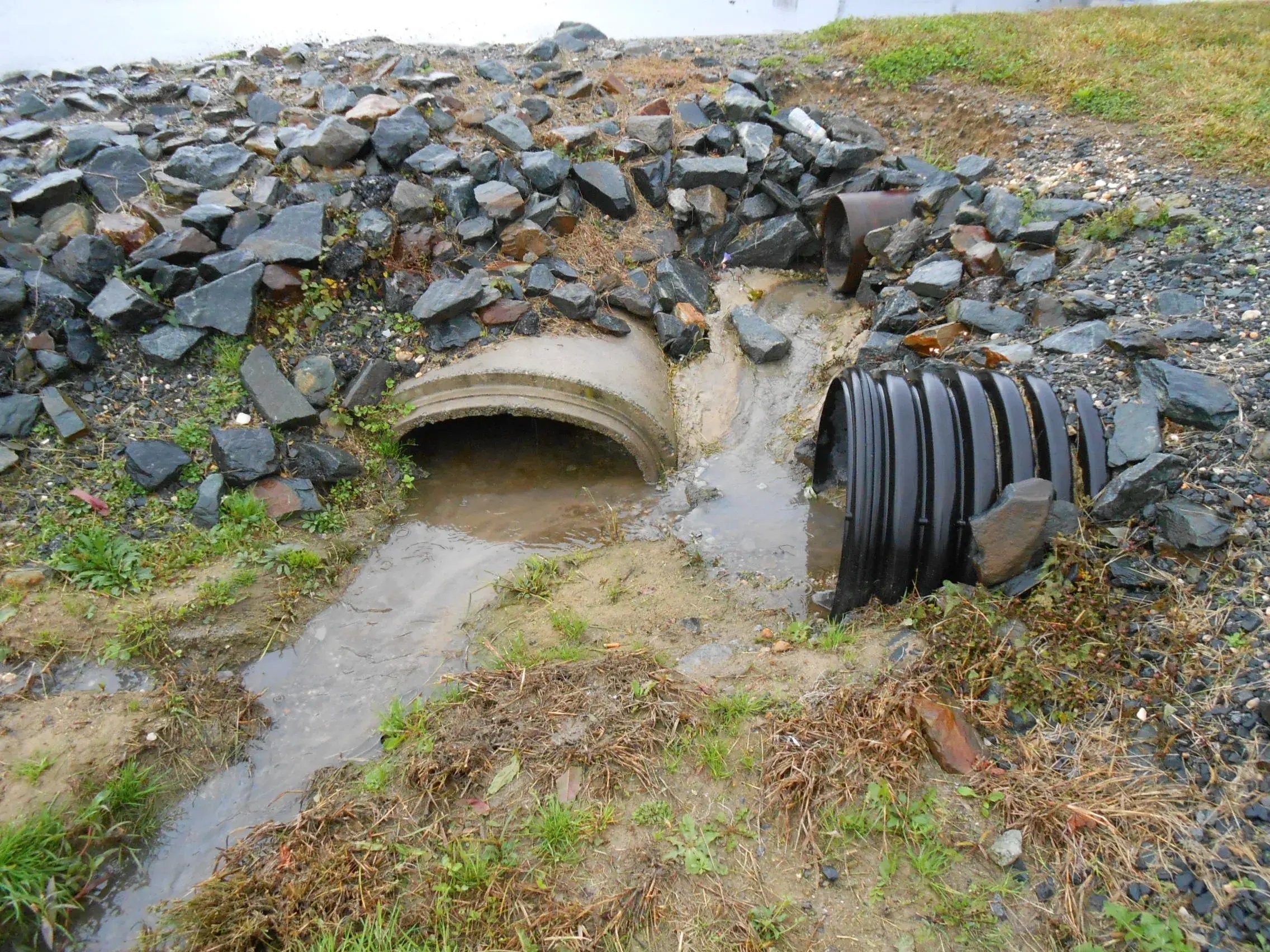
Stormwater is rain and snowmelt that runs across your yard, stockpiles, and driveways. Process water is water your operation uses or creates, and at a concrete plant that means truck washout, chute and drum rinsing, central mixer cleanout, equipment washdown, water pulled from a reclaimer or settling system, and dust control water that doesn't soak in. The difference isn't how dirty the water looks. Plenty of stormwater turns gray after crossing a stockpile, and it's still stormwater. What counts is where the water came from, and the simplest field test is a dry-day walk. If water is moving across your site when it hasn't rained, you're looking at process water.
That distinction drives everything else because New Jersey regulates the two differently. The New Jersey Department of Environmental Protection (NJDEP) runs the state's version of the federal permit program, called the New Jersey Pollutant Discharge Elimination System (NJPDES). Within it, ready mix, block, and brick plants have their own industry-specific general permit, the Concrete Products Manufacturing (CPM) permit. A general permit is one master permit NJDEP wrote for a group of similar facilities, and a plant gets coverage by submitting a Request for Authorization (RFA). If you want the basics of telling the two water types apart, our article on the difference between stormwater and process water is a good companion, and our guide to concrete plant water management covers what happens when the two mix.
How Does New Jersey's CPM Permit Treat Process Wastewater?
NJDEP describes the CPM as the general permit that regulates industrial stormwater discharges to surface and ground waters from facilities that make concrete or concrete products, including ready mixed concrete, block, and brick. The final permit NJDEP posts is dated November 1, 2008. That's a long time ago. Facilities already covered generally stay covered while NJDEP works on a renewal, but a new facility usually can't count on getting fresh coverage under an older general permit, which can push it toward an individual NJPDES permit. NJDEP's CPM page shows the current status, and it's worth checking before you plan around the permit.
Where the CPM differs for washout is that it doesn't treat wash water as something to filter and discharge. NJDEP's summary sheet for the permit highlights a facility-wide recycling program and the elimination of industrial discharges to ground water among its features, and it discusses recycling unused concrete from batch mixes, including concrete that's been mingled with stormwater. It also mentions approved Class B recycling centers as one route for that material. Industry summaries of the permit describe language directing plants to reuse excess concrete, washout wastewater, debris, and aggregate in production wherever they can. We read that as a permit that expects wash water to be captured and reused, with discharge as the exception rather than the plan.
We're deliberately not quoting limits, sampling parameters, or discharge conditions here. Those depend on the version of the permit your facility is authorized under and on how your plant is set up, and a number pulled from the wrong permit version causes more trouble than no number at all. Pull your own authorization and permit text, and read the sections on process wastewater, recycling, and the stormwater pollution prevention plan before you decide how your washout area should work.
Why Does the CPM Push Recycling of Washout Water and Returned Concrete?
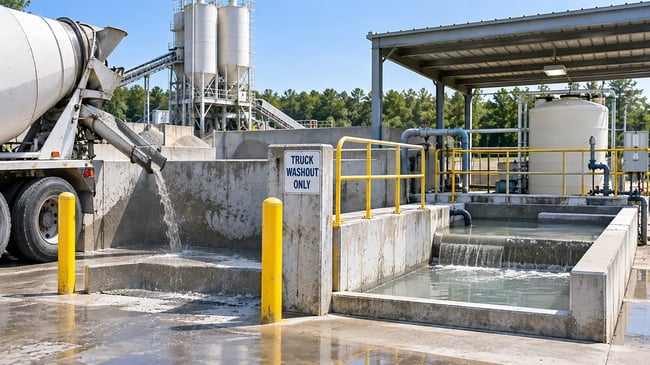
Because recycling keeps the water from ever becoming a discharge problem. A concrete truck washout produces two things, a slurry of water and cement fines, and solids like aggregate and bits of hardened concrete. A reclaimer or washout system separates them, so the aggregate and fines can go back into production and the water can be reused as batch water. When a plant captures and reuses its washout, there's no wash water leaving the property, which takes most of the permit questions off the table.
How much water a plant can reuse depends on the mixes it produces, the equipment it runs, and how consistently drivers use the system. Most plants end up with some combination of reuse, settling, and handling solids as waste. Hardened concrete and reclaimer solids have their own paths, and our guides on what to do with concrete waste and concrete recycling and reclaiming walk through the options.
New Jersey adds a wrinkle for plants that want to recycle more than their own returned concrete. Crushing and processing concrete or taking in outside material may call for recycling approvals under the state's solid waste and recycling rules, separate from the CPM. We handle New Jersey recycling approvals, so if you're thinking about expanding what your plant recycles, that's worth sorting out before you buy equipment.
How Do Settling Basins and pH Control Fit Into Truck Washout Management?
A settling basin does one job well, which is letting solids drop out of the water. It doesn't change how alkaline the water is, and fresh concrete wash water is strongly alkaline, far above the range aquatic life can tolerate. Regulators commonly treat roughly 6.5 to 9 as the safe range for freshwater, and untreated wash water sits well outside it. A basin that looks clear can still carry a pH that would harm a stream or a stormwater system, so clear water isn't a pass on pH. Our article on settling basin design at concrete plants covers the layout side.
Treating process water doesn't change its category either. Settled, pH-adjusted wash water is still process water, and it doesn't become stormwater because it's cleaner. Mixing it into a stormwater basin makes it worse, because the whole volume then has to be managed as process water. Some plants adjust pH in a dosing tank and send the water to a local sewer with approval from the sewerage authority, which sets its own limits. Others handle it under a separate groundwater permit, since NJDEP regulates industrial process wastewater going to the ground as its own permitting matter, outside the CPM. Both are separate approvals you'd need to secure, and neither is covered by simply having CPM coverage.
If your permit or plan calls for checking pH, your team can learn to do it well. We teach clients to take their own readings, and our guide to a DIY pH kit is a practical starting point. We don't do lab work, so when a permit calls for lab analysis, it's worth picking a lab carefully, and our piece on choosing a water testing lab can help.
What Should a Concrete Plant Have in Place for Washout and Process Water?
Most of what keeps a plant out of trouble is ordinary and written down. The plan that ties it together is the stormwater pollution prevention plan, sometimes called an SPPP, an SP3, or just a stormwater plan, and we'll call it a SWPPP here. Our article on what a SWPPP is covers the basics, and the table below shows the pieces we look for when we walk a concrete plant.
| What to Have |
What It Covers |
Where Plants Usually Slip |
| Designated washout area |
One defined place where trucks rinse, with containment that holds slurry and solids |
Drivers rinse chutes wherever it's convenient, including near storm drains |
| Collection and reuse system |
Reclaimer, settling tanks, or basins that capture water and solids for reuse or proper handling |
Systems that overflow in heavy rain or aren't cleaned out on a schedule |
| Drainage map |
Shows where process water is made, where it goes, and how it stays apart from stormwater |
No one can say which drains are stormwater only, so the whole volume gets treated as process water |
| SWPPP that covers washout |
Describes washout practices, responsible people, and housekeeping for the plant |
A plan written once and never updated when the plant layout changes |
| Inspections and the annual report |
Regular walkthroughs and the yearly reporting the permit requires |
Inspections done from memory, with nothing on paper |
| Trained drivers and yard staff |
Everyone who touches washout knows where to rinse and what not to do |
New hires pick up habits from whoever trained the last driver |
| Records of recycling and hauling |
Proof of where solids, returned concrete, and wash water went |
Receipts and logs scattered across offices or missing entirely |
Many of the same practices that keep your stormwater clean also keep washout contained, and our guide to stormwater BMPs explains how those practices work. Training pays off fastest here, because the person holding the hose decides where the water goes. Our online training library and the on-site training we do for concrete plants both cover this.
What About Concrete Truck Washout at Customer Job Sites and Plant Construction?
Washout at a customer's job site is a separate matter from washout at your plant. Generally, a job site's own erosion control and stormwater requirements govern what the contractor does with washout there, and many construction projects require a designated washout area for exactly that reason. Your CPM coverage applies to your plant, not to every site your trucks visit, but it's smart to know what your drivers are expected to do when they pull in. We don't prepare construction-phase permits or approvals, including construction stormwater coverage and soil erosion and sediment control certification. Those are usually handled by the contractor, an engineer, or a soil erosion specialist.
The same goes if you're building a new plant or expanding an existing one. The construction work needs its own approvals, and you'll want an engineer and contractor who handle that. Once the plant is running, though, you'll almost always need the operational pieces, which means the right NJPDES industrial permit or exclusion, a SWPPP, inspections, training, and a washout setup that fits your layout. That's the part we help with, and we can also help you figure out what the construction phase needs and point you toward the right construction people. Our guide to NJPDES permit requirements shows how those operational pieces fit together.
How Does RMA Help With CPM Truck Washout and Process Water Compliance?
We've worked with concrete plants since 1992, and our team is based in New Jersey, so we know NJDEP and the state's permit categories well. We can read your permit and authorization with you, walk your plant to find where process water is made and where it travels, update your SWPPP to cover washout properly, and train your drivers and yard staff. We also teach your team to take their own pH readings and samples, because they know the plant and the timing, and we stay available after the paperwork is done for reminders, results questions, and inspection prep.
A few things fall outside what we do. We don't design or build reclaimers, settling systems, or treatment equipment, since that's engineering work and it's priced like engineering, but we're happy to work alongside the engineer or equipment supplier you choose. If you'd like a sense of what permit support costs, our NPDES pricing calculator gives you a starting point. There's no pressure and no obligation to any of this, and if we're not the right fit, we'll tell you. You can call us, email, or fill out the form on our website, or just reach out to RMA to talk through your plant.