The Realistic Path From a Missed Permit to NJDEP Orders, Penalties, and Lost Business
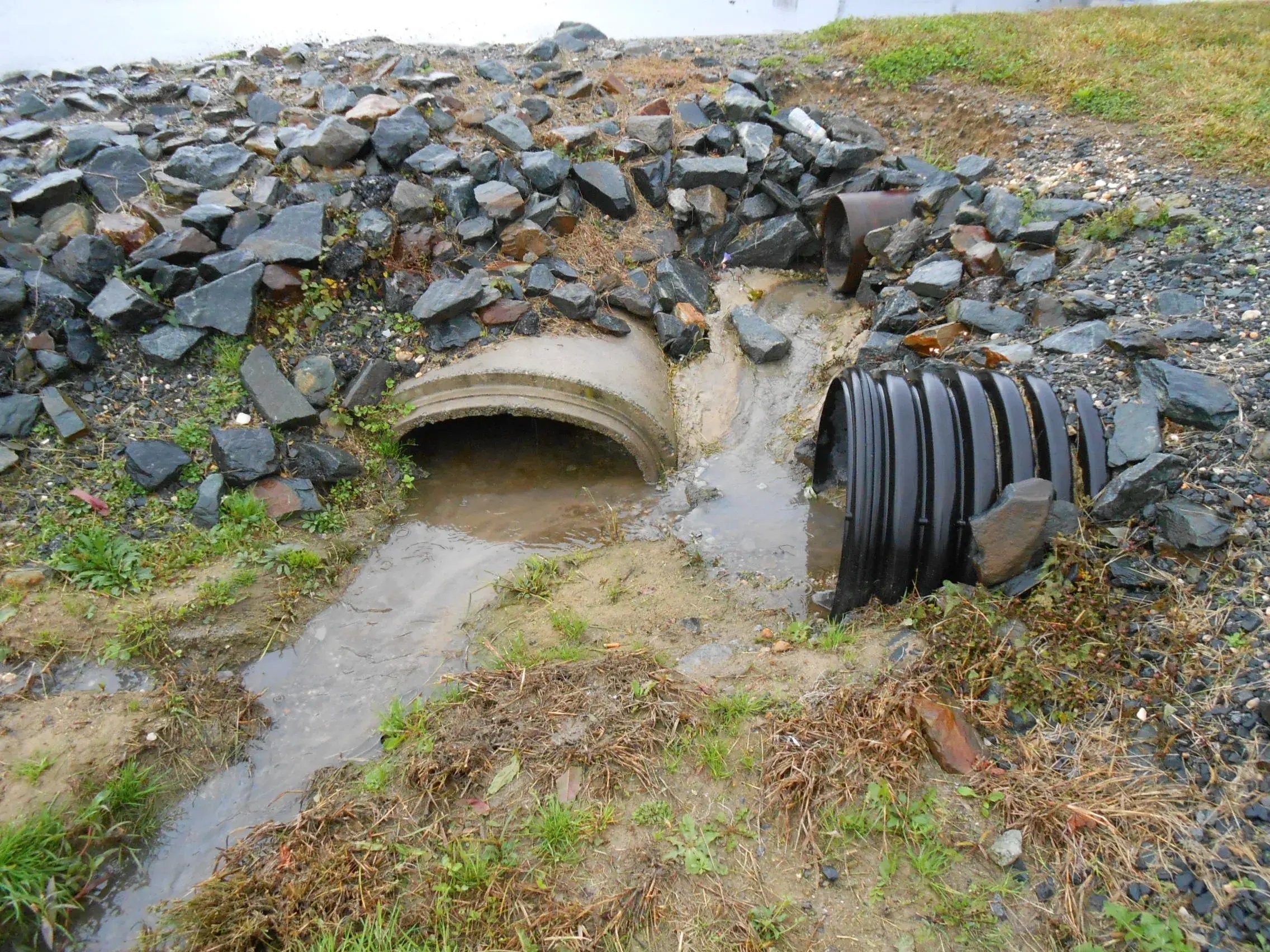
Most New Jersey business owners never think of rain as something the state regulates. But when rain falls on a yard with stockpiles, scrap, equipment, or fuel, it picks up whatever it touches and carries it to a storm drain, a ditch, or a creek. NJDEP treats that runoff as a discharge, and for many industrial facilities that means a permit, a written plan, and regular inspections. Some businesses don't realize any of this applies to them, and others know it does and let it slide because nothing bad has happened yet. So what happens if you do?
The realistic answer is a progression. An inspection finds the gap, NJDEP or EPA sends a notice or order requiring you to get coverage and fix problems, penalties can follow under the New Jersey Water Pollution Control Act, and the paper trail can cost you customers or financing. Correcting things early usually keeps you near the front of that progression instead of the back. We'll walk through each stage in general terms below, and if you'd rather talk through your own facility, you can reach out to RMA any time.
Table of Contents
TL;DR
If a New Jersey facility that needs stormwater coverage ignores the rules, the usual path starts with an inspection, moves to a notice or order requiring coverage and fixes, and can end in penalties under the Water Pollution Control Act. Customers, lenders, and buyers may also react to enforcement records. Facilities that correct problems before an inspector shows up generally have the easiest road, so it pays to find out where you stand now.
Which New Jersey Businesses Need a Stormwater Permit From NJDEP?
NJDEP regulates business stormwater through the New Jersey Pollutant Discharge Elimination System (NJPDES), which is built on the state's Water Pollution Control Act and the rules at N.J.A.C. 7:14A. In plain terms, if rain touches industrial activity at your site and then leaves the property, the state wants to know about it and wants you managing it. Most facilities that need coverage get it through a general permit instead of a custom one. The Basic Industrial Stormwater General Permit, known as 5G2, is the broadest. New Jersey also has industry-specific general permits for concrete products manufacturing, hot mix asphalt, mining and quarrying, sand and gravel, scrap metal, vehicle recycling, and wood waste recycling and leaf composting. A smaller number of sites need an individual permit, and sites that keep industrial activity and materials fully under cover can sometimes qualify for a no exposure exclusion instead.
Which one applies depends on your industry, what's exposed to rain, and where the runoff goes, so we won't tell you flatly that you do or don't need a permit. Plenty of businesses don't, including many warehouses, data centers, body shops, dealerships, and quick-lube shops. Our guides on which NPDES permit you need, who needs a stormwater permit, and what no exposure means walk through that decision, and our article on the 5G2 permit covers the most common New Jersey case.
Coverage comes with homework. That usually means a written stormwater pollution prevention plan (people also call it an SPPP, an SP3, or just a stormwater plan, and we'll call it a SWPPP here), along with inspections, recordkeeping, training, and in some permit categories sampling and reporting. Requirements differ from one permit to the next, and some permits require no sampling at all.
"Ignoring the rules" usually takes one of three forms. Some businesses never learned they needed coverage and never applied. Some got coverage years ago and let the plan, inspections, and records go stale. Others hold a current permit but skip the sampling or reports it calls for. Each leads to a slightly different conversation with a regulator, but they all travel the same road.
How Do NJDEP and EPA Find Stormwater Violations at New Jersey Facilities?
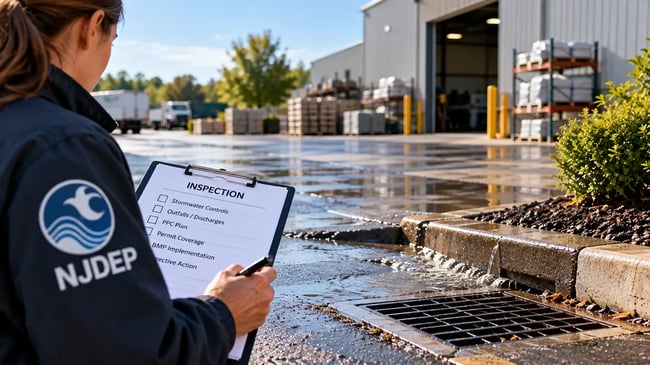
NJDEP's Water Compliance and Enforcement staff inspect permitted industrial stormwater facilities, and EPA inspects New Jersey sites too. Inspections can follow a routine schedule, but they can also follow a complaint from a neighbor, a former employee, or a watershed group, or a report of discolored water or a sheen in a nearby creek. A paperwork review can start the process without anyone setting foot on your property, because missing reports and late submissions show up in agency records.
On site, inspectors tend to start with the basics. Do you hold coverage for the activity they're looking at? Does your SWPPP match the facility as it exists today, not as it looked when someone wrote the plan? Are the inspection logs, training records, and any required sampling results in the binder? Are the controls the plan relies on, such as berms, covers, sweeping, and drain protection, in place and working? A facility with a visible discharge, a stockpile washing toward a drain, and no paperwork has a hard time answering all of those at once. Our article on common NPDES permit problems covers the gaps we see most often.
What Does NJDEP Do After It Finds a Stormwater Violation?
Enforcement in New Jersey isn't one event. It's a ladder, and where you land on it depends on what the inspector found, how serious it is, and how you respond to the first notice. The table shows the general order, though not every case touches every rung, and many resolve early.
| Stage |
What It Looks Like |
What It Usually Asks of You |
| Inspection findings or a notice of violation |
A written list of what the inspector found missing or out of compliance |
Respond on time, fix the items, and document what you did |
| Administrative order |
A formal order to get coverage, update the plan, start inspections, or submit reports by set dates |
Meet each deadline in the order, since a missed one is a new violation |
| Civil administrative penalty assessment |
A penalty assessed under the Water Pollution Control Act, with a stated window to request a hearing |
Pay it or contest it within the window in the notice |
| Court action |
A civil case in court, often ending in a consent order, more common for serious or repeated problems |
Negotiated or court-ordered compliance, usually with penalties |
EPA can work the same ladder on its own. EPA's public enforcement records include administrative orders to New Jersey facilities that never obtained 5G2 coverage, and to facilities that fell behind on inspecting and maintaining the controls their permits called for. Orders like these typically spell out what the facility has to do and by when.
The step that most often turns a manageable problem into an expensive one is ignoring the first notice. Deadlines in notices and orders are firm, and violating an administrative order is its own violation on top of the original problem.
What Penalties Does the New Jersey Water Pollution Control Act Allow?
The Water Pollution Control Act (N.J.S.A. 58:10A-1 et seq.) gives NJDEP several tools, and the penalty rules sit in N.J.A.C. 7:14-8. NJDEP can assess civil administrative penalties for violating the Act, its rules, a permit, or an order, and it can also go to court. We're leaving dollar figures out of this article on purpose. Amounts depend on the type and seriousness of the violation, your compliance history, and rules that change over time, so a number printed here could be wrong by the time you read it. If you've received an assessment, the notice itself states the current amount and the window for requesting a hearing.
A few features of the law are worth knowing in general terms. The statute requires NJDEP to assess minimum penalties, with no discretion, for certain violations: serious violations, violations that make a permittee a significant noncomplier, and omitted parameters on discharge monitoring reports. For permits that require those reports, an overdue report can keep adding to the penalty day by day until it's filed, which is why our guide to discharge monitoring reports is worth a read if your permit requires them. Paying a penalty doesn't close off NJDEP's other options either, because the rules say an assessment and its payment don't limit other enforcement. State law also calls for NJDEP to publish an annual enforcement report and to give public notice of significant noncompliers.
Knowing violations sit in a different category. The Act includes criminal penalties for people who knowingly or purposely violate permit conditions, make false statements in records and reports, or tamper with monitoring methods. That's the far end of the range, and it's the reason accurate records matter even when the real numbers are bad. If you're wondering what you're obligated to report, we cover reporting bad stormwater results in a separate article.
Outside the state's own tools, the federal Clean Water Act lets private citizens and groups sue permit violators in federal court after giving 60 days' notice to the violator, EPA, and the state. New Jersey environmental groups have used that provision against New Jersey permit holders for decades. The 60-day window exists so the violator has a chance to come into compliance first.
If you're facing a penalty assessment, an order, or possible enforcement action, an environmental attorney is the right person to bring in. We help with the compliance side, but legal strategy belongs with a lawyer.
How Can Ignoring Stormwater Rules Cost a Business Customers and Financing?
Penalties are the visible cost, and for many businesses they aren't the biggest one. Enforcement actions, consent orders, and penalty assessments are public records, so customers, lenders, buyers, and competitors can find them. How much that matters depends on who's looking, but a few patterns repeat.
Large customers and general contractors often send supplier questionnaires asking whether you hold the permits your operations require and whether you have open violations. A hedge on those forms can stall a vendor approval. Lenders and buyers ask the same questions during due diligence on a loan, a refinancing, or the sale of a company or property, and an open order or unresolved violation can delay a closing or change the terms. Insurers and landlords may ask as well. None of this is automatic, and each case turns on the deal in front of them, but a facility with clean, current paperwork has a much easier time answering.
There's an internal cost too. Fixing problems against an order's deadline means hiring help in a hurry, pulling staff off production, and paying rush prices for controls or lab work. The same fixes cost less when you schedule them yourself.
Why Does Fixing Stormwater Problems Early Usually Cost Less?
Early correction doesn't erase a past violation, and we can't promise how any regulator will treat your situation. In our experience, though, it changes the shape of the problem. A facility that applies for coverage and fixes its plan before an inspection is dealing with paperwork and some site improvements. A facility that gets cited first is dealing with those same tasks plus deadlines, penalties, and a file at the agency. Timing matters on the front end too, since getting coverage takes time, and our article on how long it takes to get a New Jersey stormwater permit explains why waiting isn't free.
Where you start depends on where you are right now.
| Your Situation |
A Sensible First Move |
| You never applied for coverage |
Confirm whether a permit or a no exposure exclusion fits your site, then apply. Our NJPDES requirements guide is a good place to start. |
| You have a permit, but the SWPPP is outdated |
Walk the site, compare it to the plan, and update the plan. Restart the inspections and logs. See what a SWPPP is if you need a refresher. |
| You missed samples or reports |
Check whether your permit requires them, then get overdue submissions in as soon as you can, since delays can add to penalties. |
| Your sampling results are high |
Find the cause, adjust the controls, and keep honest records. Our guide on high stormwater results walks through it. |
| You've received a notice or order |
Read the deadlines the day it arrives, call an environmental attorney, and start the compliance fixes in parallel. |
Training closes a lot of these gaps before they open. Staff who know what a stormwater inspection involves, what counts as exposure, and what to do after a spill keep the plan alive between consultant visits, and our online training library gives your team a way to build that knowledge on their own schedule.
How Does RMA Help New Jersey Facilities Get Stormwater Compliance Back on Track?
We're a family-run, New Jersey-based firm, and we've helped facilities with NJDEP stormwater requirements since 1992. We can help you work out which permit or no exposure exclusion fits your site, build a SWPPP that matches how your facility really operates, and train your team to run it. After you're permitted, we offer annual support, which can be as hands-off or hands-on as you like: reminders, help interpreting results, plan updates, inspection prep, and answers when questions come up.
We have a few limits. We don't take your stormwater samples for you. Storm windows are short and unpredictable, and your people know the site, so we train your team to sample correctly instead. We aren't the right fit for major engineering design or building a treatment system, and if your fix needs that, you'll want an engineering firm. We're also not always the cheapest option, because senior staff do the work. And if you've received a notice, order, or penalty assessment, talk to an environmental attorney first. We'll work with you on the compliance side from there.
If you're not sure where you stand, there's no pressure and no obligation to ask. You can call us at 888-RMA-0230, contact RMA through our website, or fill out the form, and we'll tell you whether we can help or point you in a better direction.