A Plain-English Guide to New Jersey Stormwater Permits for Business Owners Who've Never Heard of One
If someone just told you your New Jersey business needs a stormwater permit, your first reaction was probably some version of "a permit for rain?" It sounds odd, but it's real, and it's more manageable than it sounds. A stormwater permit is permission from the New Jersey Department of Environmental Protection (NJDEP), the state agency that oversees environmental rules, for the rainwater and snowmelt that runs off the work areas of certain businesses. In exchange for that permission, you agree to a short list of conditions: keep a written plan for your site, inspect it on a schedule, train the people who work there, certify once a year that you're doing all of that, and, for some types of facilities, collect water samples.
Most owners first hear about this from a landlord, a lender, an insurance questionnaire, or a customer's audit, not from NJDEP. Below we explain why the state regulates rainwater at businesses, how to tell if yours is covered, the options New Jersey offers (a basic industrial permit, several industry-specific permits, individual permits, and an exclusion for sites where nothing is exposed), what a permit asks of you each year, and how you get one. If you'd rather talk it through, you can always reach out to RMA and we'll help you figure out where you stand, even if the answer is that you don't need us.
Table of Contents
TL;DR
A stormwater permit is NJDEP's permission for rain and snowmelt that runs off industrial work areas, as long as you follow conditions like keeping a written plan, inspecting your site, training staff, certifying every year, and sampling runoff if your permit calls for it. Whether you need one comes down mostly to your type of business and whether rain can touch your materials or equipment outdoors. New Jersey has a basic industrial permit, several permits written for specific industries, individual permits for sites that don't fit those, and an exclusion for businesses where everything is permanently indoors. For most businesses, once the plan is written and the site is set up, staying compliant is a routine part of running the place.
What Is a Stormwater Permit in Plain Terms?
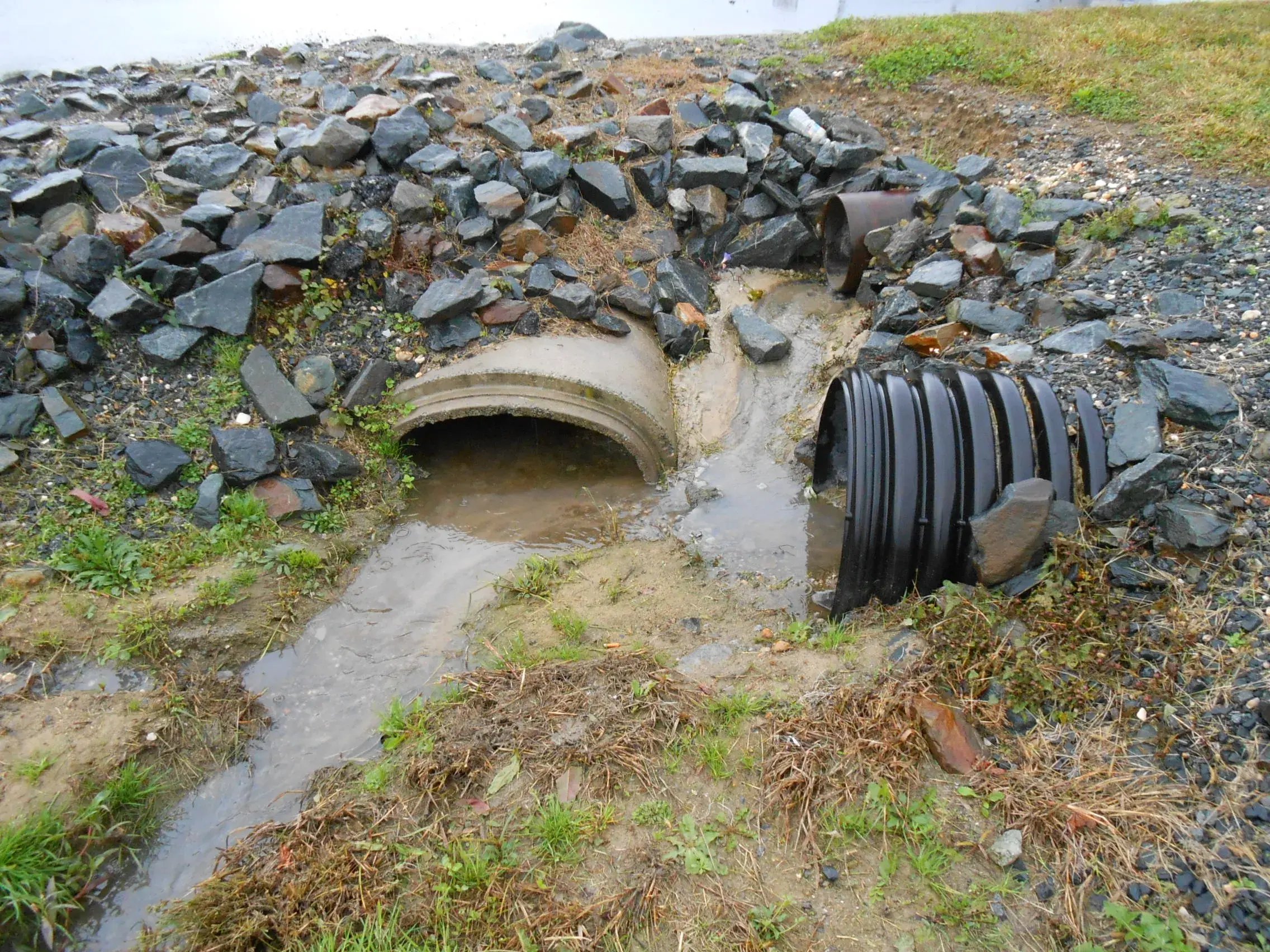
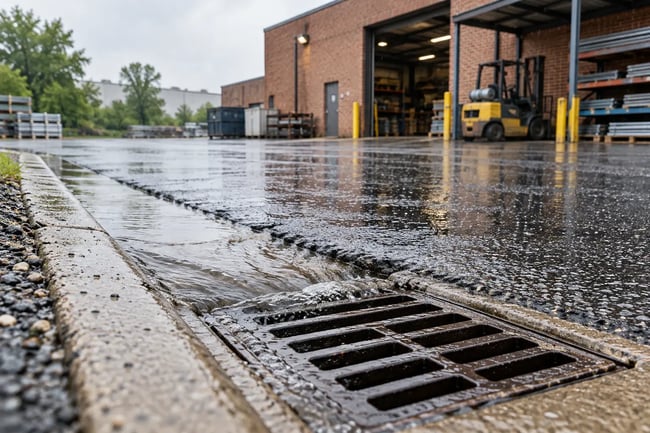
Stormwater is just rain and melted snow that runs across the ground instead of soaking in. At a house, it runs off the roof and driveway. At an industrial site, it runs across yards, loading docks, material piles, dumpsters, fueling areas, and parked equipment, and it picks up whatever is sitting there: oil drips, dust, sediment, metal fines, spilled product. From there it usually heads into a storm drain, a ditch, or a basin, and most storm drains lead straight to a stream, lake, or bay without passing through any treatment plant.
A stormwater permit is the state's way of letting that runoff keep happening while making sure the business has taken reasonable steps to keep it clean. You don't need permission for rain to fall. You need permission for rain that has touched your industrial activity to leave your site. The official name for New Jersey's program is NJPDES, the New Jersey Pollutant Discharge Elimination System. It's the state's version of the federal NPDES program under the Clean Water Act, and New Jersey runs it under its own Water Pollution Control Act and rules at N.J.A.C. 7:14A. If the alphabet soup is confusing, our article on the difference between an NPDES permit and a stormwater permit sorts out the terms.
Having a stormwater permit doesn't mean you're polluting or in trouble. Most permitted facilities are ordinary plants, yards, and shops that got covered once and now keep up with a predictable set of tasks each year.
Why Does NJDEP Regulate Stormwater Runoff From Businesses?
The runoff from one yard during one storm doesn't look like much. The problem is volume. New Jersey is densely built, with a lot of pavement and roofs that shed water fast, and thousands of industrial sites sit near rivers, wetlands, and the shore. Add up the oil from every truck lot, the sediment from every stockpile, and the high-pH washoff from every concrete operation, and it becomes one of the main ways pollution reaches New Jersey's waters.
Federal law requires states to control stormwater from certain industrial activities, and New Jersey goes a step further than many states. Its industrial stormwater permits can cover water that soaks into the ground, not only water that flows to a stream. So a basin or a gravel area where runoff infiltrates can still be part of what your permit covers. That surprises a lot of owners who assumed that if water never left the property, there was nothing to regulate.
The state's approach is mostly about prevention: keeping rain away from materials and equipment through covers, roofs, housekeeping, and planning, rather than cleaning up dirty water afterward. For the technical definition of which runoff falls under these rules, see what stormwater associated with industrial activity means.
Which New Jersey Businesses Need a Stormwater Permit?
Two questions decide it. First, is your business in one of the industrial categories the rules cover? Those categories come from a federal list that New Jersey uses, and they're mostly identified by your Standard Industrial Classification (SIC) code, a four-digit number that describes what your business does. Manufacturing, recycling and scrap, concrete and asphalt, mining, landfills, and many transportation businesses are on the list. Plenty of businesses aren't. Second, can rain or snow touch anything industrial at your site, like materials, equipment, waste, or vehicles being worked on outdoors?
Here's how that tends to play out for common types of New Jersey businesses. Treat this as a starting point, since your specific SIC code and what happens outside on your property are what decide it.
| Type of business |
Usually needs a stormwater permit? |
Why |
| Manufacturer with outdoor storage or loading |
Usually yes |
Manufacturing is a regulated category, and outdoor activity creates exposure |
| Concrete, asphalt, quarry, sand and gravel |
Yes |
Each has its own industry-specific permit in New Jersey |
| Scrap metal, vehicle recycler, wood waste or leaf composting |
Yes |
Each has its own industry-specific permit in New Jersey |
| Trucking, bus, or fleet operation |
Sometimes |
Only vehicle maintenance, equipment cleaning, fueling, and deicing areas are covered |
| Warehouse or distribution center |
Often no |
Many warehousing codes aren't in the regulated categories, but it depends on the code and activities |
| Data center |
Usually no |
Typically not a regulated category, though onsite activities can change that |
| Auto body shop, dealership, quick-lube |
Usually no |
These generally fall outside the regulated categories |
| Office, retail, or restaurant |
No |
Not an industrial category |
If you land in the "usually no" rows, that's a real answer. Plenty of New Jersey businesses don't need an industrial stormwater permit, and we'd rather tell you that than sell you a plan you don't need. If you're in a regulated category, the next question is which permit fits, or whether your site can be excluded entirely.
What Are New Jersey's Stormwater Permit Options?
Most states have one general industrial stormwater permit. New Jersey has several. A general permit is a single master permit NJDEP writes once for a group of similar businesses. You apply for coverage and agree to its terms instead of negotiating your own, which is faster and cheaper, so most regulated businesses end up under one.
| Option |
Who it's for |
| Basic Industrial Stormwater General Permit (5G2) |
Regulated businesses without an industry-specific permit that have eliminated, or can eliminate within six months, exposure of industrial materials and activities to rain, by covering them or moving them inside |
| Concrete Products Manufacturing (CPM) |
Ready-mix, precast, and other concrete products plants |
| Hot Mix Asphalt (R4) |
Asphalt plants |
| Mining and Quarrying (R13) |
Mines and quarries, including certain process wastewater discharges |
| Sand and Gravel (RSG) |
Sand and gravel operations whose stormwater goes only to groundwater |
| Scrap Metal (SM and SM2) |
Scrap metal processing and recycling yards |
| Vehicle Recycling (RVR) |
Auto salvage and vehicle recycling facilities |
| Wood Waste Recycling and Leaf Composting (WRC) |
Untreated wood waste recycling and leaf, grass, and wood chip composting |
| Individual permit |
Sites that don't fit any general permit, often because exposure can't be eliminated, so NJDEP writes a permit specific to that facility |
| Permanent No Exposure Certification |
Regulated businesses where all industrial materials and activities are permanently indoors or under a storm-resistant shelter (an exclusion, not a permit) |
Ending up on the wrong option is one of the most common problems we see. A concrete plant that signed up for the basic permit years ago isn't covered the way it should be. The industry-specific permits exist because those operations have exposure that can't realistically be eliminated, so they manage it with practices written for that industry, and several add sampling. Our guides to concrete plants and stormwater permits and the New Jersey SM2 scrap metal permit go deeper, and if no general permit fits, our article on individual NJPDES industrial permits explains that path.
How the Basic 5G2 Permit Differs From the Permanent No Exposure Certification
These two get confused because both are about keeping rain off your industrial activity. The difference is timing and permanence. The 5G2 Basic Industrial Stormwater Permit is a real permit with a plan, inspections, and annual paperwork, and it gives you up to six months to eliminate exposure through covers, roofs, and relocation. The Permanent No Exposure Certification is for sites already there, with everything permanently inside or sheltered. It's facility-wide, so one exposed corner disqualifies the site, and you recertify with NJDEP every five years and let the state inspect. If you qualify, it's the lightest option. Our explainer on what no exposure means covers what typically passes and what doesn't.
What Does a New Jersey Stormwater Permit Require?
Details vary by permit, but the core is the same. It starts with a Stormwater Pollution Prevention Plan. You'll hear it called an SPPP, an SP3, or just a stormwater plan. We call it a SWPPP, pronounced "swip." It's a written plan that maps your site and drainage, lists what could get into stormwater, names the people responsible, and describes how you'll keep rain away. You keep it on site and only send it to NJDEP if they ask.
The things you do to keep runoff clean are called best management practices, or BMPs. Most are ordinary: lids on dumpsters, drums under a roof, spill kits near fueling areas, sweeping, fixing equipment leaks, and berms that steer water away from work areas. Our guide to stormwater BMPs has plenty of examples. Then come the routine tasks that keep the plan alive.
| Task |
How often |
What it involves |
| Routine site inspections |
Monthly under the basic permit |
Walking the site to check that covers, lids, containment, and housekeeping are holding up |
| Annual inspection |
Once a year |
A deeper review of the whole site, the SWPPP, and inspection and training records |
| Employee training |
Once a year |
Making sure the people named in the plan know what it requires |
| Annual certification |
Once a year, in the quarter set by your authorization |
Signing NJDEP's form confirming the inspections, training, and plan updates are done |
| Stormwater sampling |
Only where your permit requires it |
Collecting runoff during storms and sending it to a lab, common in some industry-specific permits |
The basic 5G2 permit doesn't require stormwater sampling, which is a big part of why it's manageable for small facilities. Some industry-specific permits, including the concrete products permit, do include sampling, and those results get reported to NJDEP. Training can be a short annual session, and options like our online environmental training library exist for teams that want something ready to use. For a fuller look at day-to-day conditions, see NJPDES stormwater permit requirements explained.
How Do You Get a Stormwater Permit in New Jersey?
Getting covered is mostly a matter of answering the right questions in order. First, check your SIC code against the regulated categories. Second, walk your site and note anything industrial that rain can reach. Third, pick the option that fits: no exposure, the basic permit, an industry-specific permit, or an individual permit. Most mistakes happen at that third step, so get a second opinion if you're unsure.
Once you know which permit you need, you file a Request for Authorization, or RFA, which is New Jersey's name for the application to be covered under a general permit. RFAs are submitted electronically through NJDEP Online, the state's permitting portal, which requires setting up an account first. Once NJDEP authorizes you, the clock starts on your plan, BMPs, inspections, and certifications. There's also an annual permit fee, billed separately.
Plenty of businesses file their own RFA and write their own plan, especially under the basic permit. We cover that in whether you can get a stormwater permit yourself. For timing, see how long it takes to get a New Jersey stormwater permit. When NJDEP reissues a general permit, existing permittees are usually renewed automatically, so you're generally not reapplying from scratch.
What Does It Cost to Keep a New Jersey Stormwater Permit?
The ongoing cost has a few pieces. There's NJDEP's annual permit fee, which depends on the permit you're under, so check the current fee when you apply. There's staff time for inspections, training, and paperwork, which at a small basic-permit facility is modest once the routine is set. There may be one-time site fixes, like a roof over drum storage or covered dumpsters. And if your permit requires sampling, there are lab fees and the time to collect samples during storms.
Outside help is optional. Some facilities hire a consultant to pick the permit and write the SWPPP, then handle the routine themselves. Others hand off the whole program. If you'd like a sense of what RMA's help would cost for your situation, use the pricing calculator below. It estimates our support, not NJDEP's fees.
Common Mix-Ups About New Jersey Stormwater Permits
The biggest one is construction. If you're building, expanding, or redeveloping, you'll likely hear about construction stormwater coverage (NJDEP's 5G3 general permit) and soil erosion and sediment control certification through your county Soil Conservation District, plus stormwater design rules for larger projects under N.J.A.C. 7:8. Those cover the building phase, and your engineer or contractor typically handles them. RMA doesn't prepare construction-phase permits. The industrial permit in this article covers the facility once it's running, and that's where we help, though we're glad to help you figure out what construction needs and point you to the right people.
Another mix-up is process water. Water you use in your operation, like washout or equipment wash water, isn't stormwater and usually can't go out under a stormwater permit. Our article on stormwater versus process water explains the line.
Where your site drains also matters. Some older New Jersey cities have combined sewers that carry stormwater and sewage to a treatment plant together. If your runoff goes to a sewerage authority's system, the authority's rules may apply instead of, or alongside, an NJDEP permit. Don't assume either way based on your town alone. Confirm where your site drains. Separately, some towns have created stormwater utilities that charge fees. Those are local programs, not NJDEP permits, and paying one doesn't cover the other.
Finally, if you've just learned you should have had a permit for a while, don't panic. Plenty of facilities discover the gap and get covered without drama. If NJDEP has already contacted you about a violation, consider bringing in an environmental attorney alongside technical help.
How RMA Helps With New Jersey Stormwater Permits
We're a family-run firm based in New Jersey, we've been helping businesses with environmental compliance since 1992, and NJDEP's industrial stormwater permits are a big part of our everyday work. Our senior staff do the work themselves. We can tell you whether you need a permit at all, which option fits, and whether you might qualify for a no exposure certification. We can file your RFA, write a SWPPP your team can follow, set up inspection and training routines, and help with annual certification and sampling. We'll also tell you when you can handle it yourself.
There's no pressure and no obligation. You can call, email, or fill out the form on our website, and we'll start with a conversation about your site. When you're ready, contact RMA and we'll help you figure out your next step.