Stormwater Rules for Sand and Gravel Operations: Who the Permit Covers, What It Allows, and What It Requires
If you run a sand and gravel pit in New Jersey, the rain that falls on your site is regulated, and a lot of operators never get told that. The New Jersey Department of Environmental Protection (NJDEP) controls industrial stormwater through the New Jersey Pollutant Discharge Elimination System (NJPDES), and for many pits the permit that fits is the Sand and Gravel Activity general permit, known by its category code, RSG. The name is short and the job is narrow, which makes it easy to end up under the wrong permit or to assume it covers more than it does.
This article explains the RSG in plain terms: which sand and gravel operations it covers, which discharges it addresses (and where wash water fits), how it differs from the mining and quarrying permit, and what the renewed version expects from you. If you read it and still aren't sure which permit your site needs, you can always reach out to RMA and we'll look at your drainage with you.
Table of Contents
TL;DR
The RSG is NJDEP's general permit for stormwater at sand and gravel operations where the water goes to groundwater and nothing discharges to a stream, pond, or storm drain. It's a stormwater permit, so don't assume it covers wash water. The renewed version took effect January 1, 2026. It requires a stormwater pollution prevention plan plus a drainage control plan and map, and it doesn't require sampling. If any water leaves your site to surface water, you're probably looking at the mining and quarrying permit (R13) instead.
What Is the New Jersey RSG Permit in Plain Terms?
Rain and snowmelt that land on a pit, a stockpile, or a haul road pick up sediment on their way off. When that runoff comes from regulated industrial activity, NJDEP treats it as a discharge that needs permit coverage. For most industries NJDEP does this through a general permit, which is a standard permit the agency writes once for a whole category of facilities. You don't get a custom permit written for your site. You file a Request for Authorization (RFA) to sign on to the one that fits. New Jersey has several of these built for specific industries, and the RSG, permit number NJ0201189, is the one for sand and gravel.
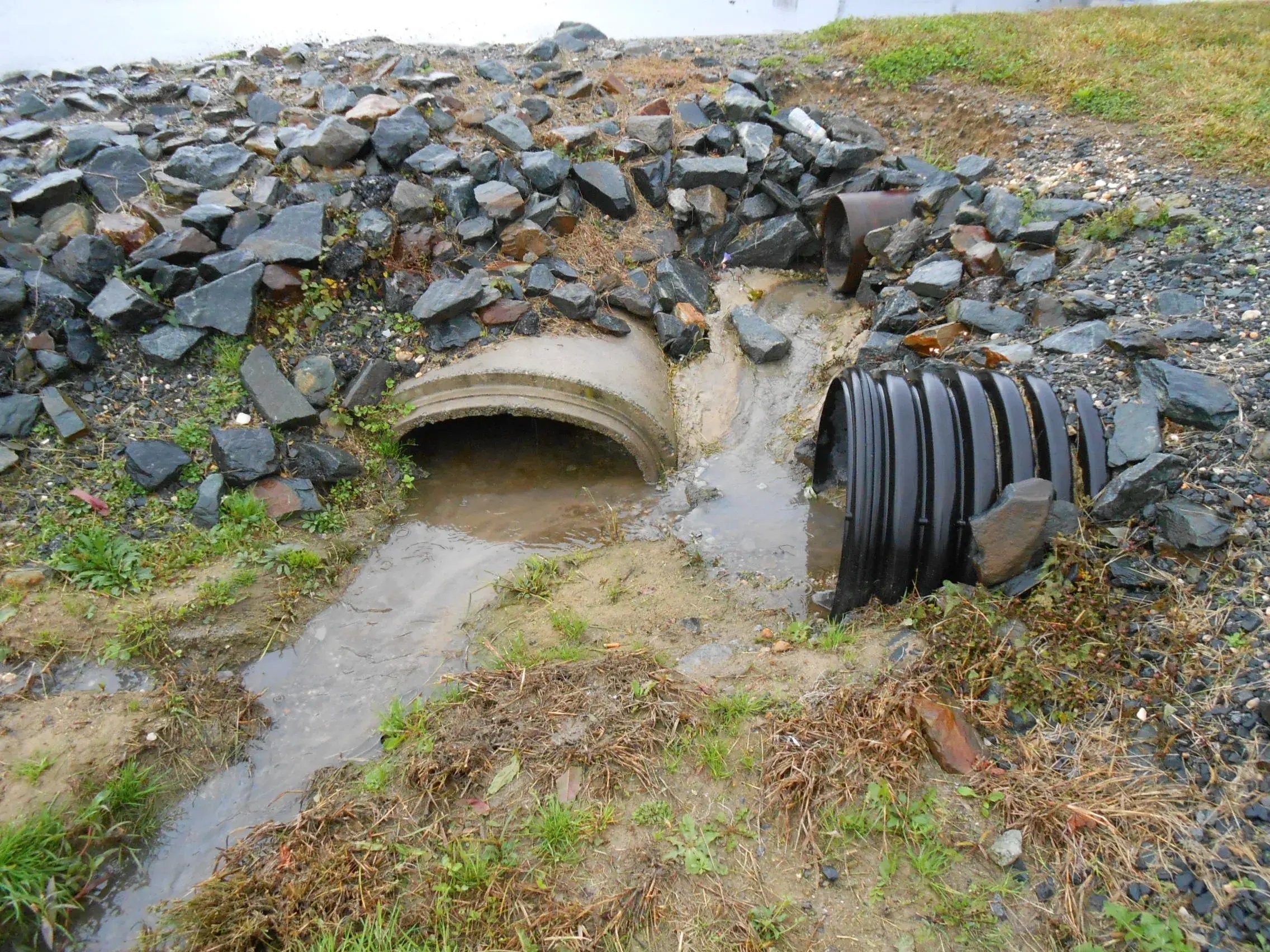
What sets the RSG apart is where the water goes. NJDEP describes it as authorizing stormwater discharges to groundwater at sand and gravel mining and quarrying operations, and says operations with no discharges to surface water may be eligible. In other words, it's built for the pit where rain soaks into the ground on site instead of running off to a creek.
The permit has a history worth knowing. It grew out of the Mining and Quarrying general permit (R13), which was the older home for these operations. NJDEP issued the renewed RSG with an effective date of January 1, 2026, replacing the version that took effect in June 2014, and it has since posted a minor modification to that permit. If you're working from a copy you downloaded a few years ago, pull the current version from NJDEP's site before you rely on it.
Which Sand and Gravel Operations Does the RSG Permit Cover?
The RSG covers facilities involved in sand and gravel mining and quarrying, with one condition that does most of the sorting: no discharge to surface water. Operations that used to be authorized under the R13 and keep all their water on site may be eligible to use the RSG instead. Plenty of pits in South Jersey and central New Jersey sit on sandy, permeable ground where water soaks in quickly, which is why this permit exists and why so many operations in those regions fit it.
Eligibility depends on what your water does, not on how big the pit is or how sandy the soil looks. A pit that has an overflow pipe to a roadside ditch, a basin that spills over in a big storm, or a boundary along a stream may have a surface water discharge even if it rarely happens. The best way to find out is to walk the site during or right after a heavy rain and watch where the water goes. Where it leaves the property, or reaches a drainage feature that leads off the property, you have a discharge to think about.
Mixed sites need extra care. A sand and gravel pit with a ready-mix concrete plant on the property, an asphalt plant next door, or a yard that crushes recycled concrete can end up under more than one permit, because each activity points toward its own category and the answer depends on how the operations share drainage. We'd rather you sort that out before you file than after NJDEP asks about it.
Which Discharges Does the RSG Permit Authorize, and What About Wash Water?
The RSG authorizes stormwater discharges to groundwater. In everyday terms, that's the rain and snowmelt that fall on your operation and soak into the ground through infiltration basins, low spots, or open ground. If you want a refresher on what NJDEP and EPA mean by industrial stormwater, our article on stormwater associated with industrial activity walks through it.
Wash water is a different animal. If you wash sand or gravel, the water that comes off the washing plant is process water, not stormwater. NJDEP describes the RSG as a stormwater permit, so it isn't safe to assume it covers that water. For comparison, NJDEP describes the R13 as authorizing stormwater and certain process wastewater discharges to surface water, which is part of why washing operations often get a closer look. Whether a washing plant needs something beyond the RSG depends on how the wash water is handled and where it ends up. A closed loop that recirculates water is a different situation from settling ponds that drain into the ground, and discharges to groundwater can fall under NJDEP's separate groundwater permitting rules. Talk to NJDEP or a consultant about the wash water before you file, because a mistake here can leave part of your operation uncovered.
Keep in mind that the RSG is a stormwater permit and nothing more. Fuel storage, equipment washing, and other activities at a pit have their own rules, and some of them, like oil storage, fall under separate programs.
RSG vs. R13 vs. 5G2: How Does Where Your Water Goes Decide the Permit?
New Jersey doesn't have one industrial stormwater permit. It has a Basic Industrial Stormwater General Permit (5G2), a set of industry-specific general permits, and individual permits for sites that don't fit anywhere else. For a sand and gravel pit, the choice usually comes down to the two permits in the table below, with the 5G2 included so you can see why it's not the answer.
| Permit |
What NJDEP Says It Authorizes |
Usually the Right Fit When |
| RSG (Sand and Gravel Activity) |
Stormwater discharges to groundwater at sand and gravel operations |
Your pit keeps all its water on site and has no discharge to surface water |
| R13 (Mining and Quarrying Activity) |
Stormwater and certain process wastewater to surface water, plus stormwater-only discharges to groundwater |
Mines and quarries, or a pit where any water reaches surface water |
| 5G2 (Basic Industrial Stormwater) |
Stormwater from regulated facilities that have eliminated, or can eliminate within six months, all exposure to rain and snowmelt |
Not a fit for a pit. NJDEP says mining and quarrying activities are no longer authorized under it |
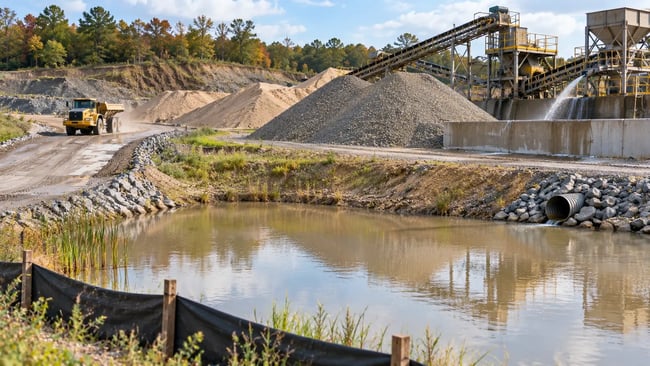
The practical rule is that where your water goes decides the permit. A pit that keeps every drop on site points to the RSG. Any discharge to a stream, wetland, pond, or storm drain usually points back to the R13. And a site that fits neither may need an individual NJPDES permit. If you want the bigger picture, our guides on which NPDES permit you need and when an individual NJPDES industrial permit applies cover the options. You can also read about the 5G2 basic industrial stormwater permit to see why it doesn't suit an operation with this much exposed material.
What Does the RSG Permit Require: SWPPP, Drainage Control Plan, and Sampling?
The core of the permit is a stormwater pollution prevention plan, which New Jersey's rules call an SPPP and which some people call an SP3 or just a stormwater plan. We'll call it a SWPPP here, pronounced "swip," the way most of our clients say it. It describes your site, where water flows, what's exposed to it, and what you do to keep pollutants and sediment out of your runoff, using best management practices (BMPs) such as covering material, stabilizing stockpiles, and maintaining basins. The RSG requires you to keep the SWPPP current and complete, and the renewed permit updated some of its BMP conditions. Our article on what a SWPPP is covers the basics if you haven't written one before.
The RSG also requires a drainage control plan, which includes a drainage control map. This is the piece that holds the permit together, because the whole point of the RSG is keeping water out of surface water, and the drainage control plan is how you show that you're doing it. NJDEP updated the conditions for the drainage control plan in the renewal and added new mapping requirements, so a pit that was covered under the old permit shouldn't assume its existing paperwork still meets the standard.
The other notable feature is what the permit leaves out. NJDEP's renewal materials say the permit doesn't require limits or monitoring, because the permit authorizes no surface water discharge. That means no stormwater sampling and no discharge monitoring reports under the RSG itself. It doesn't mean you have no duties. You still have to maintain the SWPPP and drainage control plan, put the BMPs into practice, and follow the permit's recordkeeping requirements. Inspection and certification duties sit in the general requirements and specific requirements sections of the permit, so read the current version for the details instead of working from an old copy or from memory.
How Do You Get RSG Permit Coverage, and What About a New or Expanded Pit?
Coverage starts with an RFA filed with NJDEP through its online permitting system. NJDEP posts RSG-specific materials on its sand and gravel permit page, including a cover letter, a permit action form, an RFA supplemental form, and a generic certification form. Permit fees are set in NJDEP's fee schedule and change over time, so check the current schedule before you budget for it. If you were authorized under the earlier RSG or under the R13, look at your authorization letter and the current permit to see what NJDEP expects from you now, rather than assuming your old coverage carries forward without any action.
Opening or expanding a pit brings in approvals that have nothing to do with the RSG. Many New Jersey townships license sand and gravel extraction through their own ordinances, sites in regions like the Pinelands or Highlands can face additional land-use rules, and the construction phase of a new or expanded operation has its own stormwater and soil erosion requirements. We don't prepare those construction-phase permits or approvals, and we don't want you to think we do. For those, you'll usually work with your engineer, your contractor, local officials, and a soil erosion specialist. Where we come in is the other side of the project: the operational permit and plans you need once the pit is running, including figuring out whether the RSG is the right permit in the first place.
One more practical point. If keeping your water on site means designing or rebuilding a basin or other drainage structure, that's engineering work, and it belongs with a licensed engineer. We can help you build the plan, map the drainage, and spot where water is getting off the property, but we won't pretend to be an engineering firm.
How Can RMA Help With the RSG Permit?
We're based in New Jersey, we know NJDEP's permit categories, and we have plenty of experience with mining and sand and gravel operations. For the RSG, we help you work out which permit fits your site (and tell you plainly if it's the R13 or something else instead), file the RFA, write or update your SWPPP, and put together the drainage control plan and map the renewed permit asks for. We also train your own team to run the program day to day, and our online training library is there if you want to start with the basics. After you're covered, we offer annual support that can be as hands-off or hands-on as you like, including reminders, plan updates, and inspection prep.
We aren't the right fit for everyone. If your pit is already covered, your SWPPP is current, and your drainage map matches the new requirements, you may not need us. And if you're after the lowest price or the fastest turnaround above all else, we're a small firm that uses senior staff, so we're sometimes pricier than other consultants. If you'd like to talk it through, there's no pressure and no obligation. You can call or email us, or fill out the form on our website, and you can reach out to RMA whenever it suits you.