The Vehicle Recycling General Permit Explained in Plain English for Auto Recyclers, Salvage Yards, and Junkyards in New Jersey
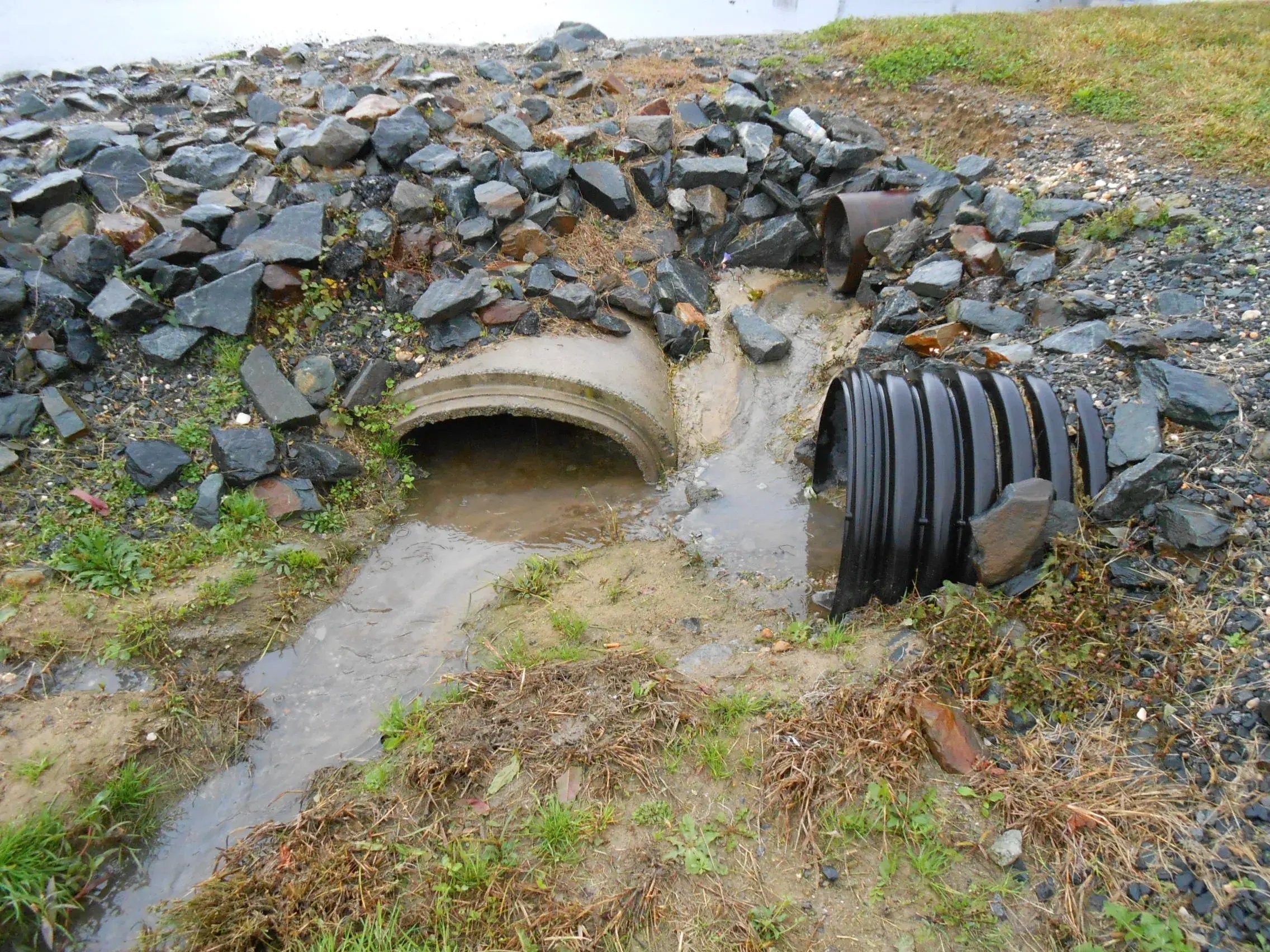
If you run a salvage yard or auto recycling business in New Jersey, rain and melting snow hit a lot of surfaces that carry oil, antifreeze, transmission fluid, and battery acid residue. When that water runs off your lot and into a storm drain or a stream, the State of New Jersey treats it as an industrial discharge, and the New Jersey Department of Environmental Protection (NJDEP) has a permit written specifically for yards like yours. It's called the Vehicle Recycling General Permit, or RVR for short.
Short version: if you take in vehicles, drain them, dismantle them, and sell the parts, the RVR permit is the one NJDEP built for that work. Below we cover who it covers, how the fluid removal and storage rules work, what goes in your stormwater plan, which inspections and paperwork come with it, and what we found (and couldn't confirm) about sampling. If you'd rather talk it through with someone who does this every week, you can reach out to RMA at any point.
Table of Contents
TL;DR
The RVR permit is New Jersey's stormwater permit for auto recyclers and salvage yards that dismantle vehicles and sell used parts. It's built around keeping fluids and oily parts covered, contained, and off bare ground, and it requires a written stormwater plan kept on site, regular inspections, annual training, and an annual certification. NJDEP's 2025 notice lists quarterly sampling for scrap metal yards but not for RVR yards, so confirm what your own authorization says. Yards that also process scrap metal usually belong under a different permit.
What Is the New Jersey RVR Stormwater Permit?
New Jersey runs its own version of the federal stormwater program, called the New Jersey Pollutant Discharge Elimination System (NJPDES). Instead of one permit for every industry, NJDEP issues a basic permit, several industry-specific general permits, and individual permits. A general permit is a single master permit NJDEP wrote once. You apply to be covered under it, NJDEP issues an authorization for your facility, and from then on you follow the rules in the master permit. RVR is the category code for the Vehicle Recycling General Permit.
NJDEP describes the permit as available to facilities that dismantle motor vehicles and sell used parts, wholesale or retail. The goal is practical. The permit wants you to keep pollutants away from rain, and it wants you to write down how you do that in a stormwater plan so an inspector can check your work against it. Most of what's in the permit is housekeeping and layout rather than lab work, which is a big reason many yards can handle a good share of it themselves.
We'll be straight about one limit. NJDEP's own RVR web page wouldn't load for us while we were researching this article, so we leaned on NJDEP's published excerpts and its October 2025 compliance notice for scrap metal and vehicle recycling facilities. The permit document and the authorization NJDEP issued for your yard are what bind you, so use this article to understand the shape of the program and then read your own paperwork.
Which Vehicle Recyclers and Salvage Yards Fall Under the RVR Permit?
The RVR permit is for yards that do vehicle recycling and nothing heavier on the scrap side. That means taking in end-of-life vehicles, draining fluids, pulling parts, storing them, and selling them. Auto salvage yards, junkyards that dismantle cars, and auto recyclers all fit that description. Yards that also process scrap metal, such as shearing, baling, or shredding, generally belong under the Scrap Metal (SM2) general permit instead. As we understand it, SM2 covers scrap metal recycling with or without vehicle recycling, so a yard doing both is usually an SM2 yard. We cover that sorting question in more detail in our guide to the SM2 scrap metal permit, so we won't repeat it here.
| Your yard |
Permit that usually fits |
Why |
| Dismantles vehicles and sells used parts, no scrap processing |
Vehicle Recycling (RVR) |
This is the activity the permit was written for |
| Dismantles vehicles and also processes scrap metal |
Scrap Metal (SM2) |
SM2 is written for scrap metal recycling with or without vehicles |
| Only a parts counter or showroom, with vehicles and parts fully indoors |
Possibly a no exposure exclusion |
Depends on whether anything is exposed to rain; see our no exposure explainer |
| Doesn't fit any industry-specific permit |
5G2 or an individual permit |
See our guides to the 5G2 basic permit and the individual permit |
Two cautions. First, we'd rather you not guess. Coverage turns on what you do on site, where your water drains, and sometimes on local sewer rules. If your yard drains to a sewerage authority instead of a storm drain or waterway, that authority may have its own requirements alongside or instead of an NJPDES stormwater permit, so confirm where your runoff goes. Second, if you're setting up a brand new yard, the construction side (site disturbance, soil erosion and sediment control, municipal site plan approvals) is handled by other professionals and agencies, and RMA doesn't prepare those. We can help you figure out which construction-phase approvals to ask about, and then we pick up with the operating permits and plans the yard needs once it's running.
How Do RVR Fluid Removal and Fluid Storage Rules Work?
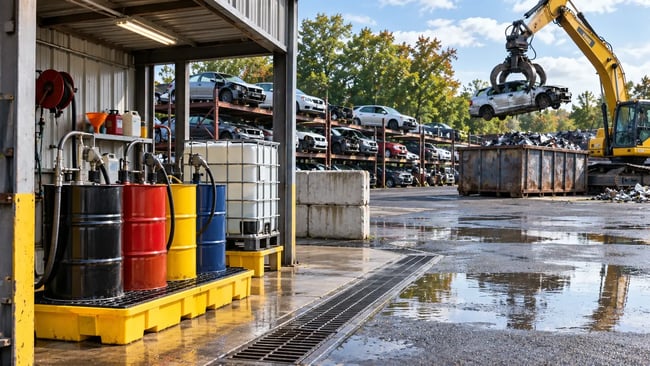
Fluids are the heart of the RVR permit, and the logic is simple once you picture a car moving through your yard. A vehicle comes in, gets looked at, gets drained, gets taken apart, and its parts and fluids go somewhere. The permit gives each of those stops a defined area with its own best management practices (BMPs). NJDEP's current RVR page lists five areas: an inbound vehicle inspection area, a vehicle fluid draining and dismantling area, a vehicle parts storage area, a processed vehicle storage area, and an operable vehicle storage area. The permit text itself adds further BMPs beyond those five, so don't treat the list as complete.
| Area |
What it's for |
What NJDEP says to do |
| Inbound vehicle inspection |
Where vehicles first arrive |
Keep it clean and keep spill kits on hand, and catch leaks as vehicles come in |
| Fluid draining and dismantling |
Where fluids come out and parts come off |
Do the work indoors or under cover on an impervious surface, unless the stormwater is collected for proper disposal |
| Fluid storage |
Where drained fluids wait for pickup |
Impervious surface, contained, and under cover; drained fluid goes off site with a licensed hauler |
| Vehicle parts storage |
Where used parts are held for sale |
Parts with oily, lubricant, or coolant residue get the same covered, contained treatment |
| Processed vehicle storage |
Where drained vehicles sit in the yard |
Keep hoods down on processed vehicles |
| Operable vehicle storage |
Only for yards that sell whole, running vehicles |
Designate the area; fluids don't need to come out of units that are part of an operable vehicle |
NJDEP's 2025 notice puts the fluid removal rule in plain terms. Oil, coolant, transmission fluid, brake fluid, power steering fluid, and wiper fluid get drained and disposed of properly, except from sealed units. Mercury switches and batteries come out before a vehicle leaves the draining and dismantling area, and the mercury switches go into a labeled, closed, leak-proof container in the parts storage area. Drained fluid is hauled off site for recycling or disposal by a hauler NJDEP has licensed, so keep those hauler records where you can find them.
The practical takeaway is that a roof, a concrete pad, a berm or containment, and a habit of keeping spill kits stocked will carry you through most of the physical requirements. Drip pans on dirt and open drums by the fence are where yards get into trouble.
What Goes Into an RVR Stormwater Pollution Prevention Plan (SPPP)?
New Jersey calls the stormwater plan an SPPP, short for Stormwater Pollution Prevention Plan. You'll hear it called a SWPPP in most other states, and our explainer on stormwater pollution prevention plans covers the general idea. Under RVR, the SPPP is where you write down how each BMP works at your specific yard, and NJDEP expects a copy to be kept on site and followed in practice. A plan that sits in a drawer while the yard does something different is a common reason inspectors write things up.
NJDEP's RVR guidance describes the plan as including a site map, a process line diagram, an inventory of the materials that could contact rain, the names of the people on your SPPP team, your inspection records, an annual report, and your annual certification. Check the elements against the permit version you're covered under, since NJDEP can change them when it renews a permit. NJDEP also publishes a sample SPPP template for the vehicle recycling permit, and a tidy yard with an owner who's comfortable with paperwork can use it as a starting point. The part that takes real judgment is the site map and the BMP descriptions, because they have to match what's physically on the ground. If you add a building, move the fluid storage, or start selling whole vehicles, the plan needs updating to match.
What Inspections, Training, and Annual Certification Does the RVR Permit Require?
NJDEP's 2025 notice says RVR and scrap metal facilities should inspect the yard at least quarterly to confirm the BMPs are in place and working, and that a detailed inspection log must be kept. It also says spill kits must be available, every employee needs annual spill response training, spills get cleaned up right away, and used absorbent material is recovered and disposed of properly. NJDEP's RVR page separately lists an annual inspection, an annual report kept on site, and an annual certification using the Department's RVR certification form. Which of these your authorization spells out, and the exact dates they come due, depends on the permit version and the effective date of your authorization, so check the date printed on yours.
A reasonable way to keep all this straight is to treat your authorization as the calendar. Mark the quarterly inspections, the annual training, and the annual certification on it, and keep the logs and training sign-in sheets in the same binder as your SPPP. If you want help with the training piece, RMA's online training library is a place to start, and our guide to stormwater visual inspections walks through what a good walk-around looks like.
NJDEP also expects to hear from you when something changes. The 2025 notice says to notify the Department if facility ownership changes or the business stops operating, so a sale or closure isn't something to leave to the lawyers and forget.
Does the RVR Permit Require Stormwater Sampling, and What Happens in an NJDEP Inspection?
This is the question we get most from vehicle recyclers, and the honest answer is "check your authorization." NJDEP's 2025 notice lists quarterly stormwater sampling, with results submitted to the Department, as a requirement for SM2 permits only. It doesn't list sampling for RVR. We didn't find a sampling requirement for RVR in the sources we could read, but we couldn't open the full permit text, so we won't tell you flatly that none exists. Sampling requirements differ across New Jersey's industry-specific permits, and some require none, which is why we confirm this against the specific permit rather than assuming. If your yard is SM2 or has been moved to it, the answer changes.
What you should expect either way is an inspection. NJDEP's Division of Water Enforcement says it will inspect all permitted scrap metal and vehicle recycling facilities, and that facilities found operating without a permit they should have will face enforcement. If an inspector finds problems, the usual first step is a Notice of Violation with required corrective actions. Serious violations, or corrective actions left outstanding, can lead to formal enforcement and penalties. Inspectors tend to look at the same things this article has covered: fluids stored under cover and contained, draining done in the right place, spill kits stocked, hoods down, and an SPPP and inspection log that exist and match the yard. If you've already received a Notice of Violation or a formal enforcement action, talking to an environmental attorney is a reasonable step alongside fixing the physical problems.
If you've been running without coverage, you're not alone, and getting covered now beats waiting for an inspector to find you. Our guide to how long a New Jersey stormwater permit takes explains what to expect from the application process.
How Does RMA Help Vehicle Recyclers With RVR Stormwater Compliance?
RMA is a family-run firm based in New Jersey, and the people who talk to you are the people who do the work. For RVR yards, that usually means helping figure out whether RVR or SM2 is the right permit, preparing the Request for Authorization, writing an SPPP that matches what's actually in your yard, setting up the inspection log, and getting your team through annual training. We also help yards that have received a Notice of Violation sort out what NJDEP is asking for. We'll also tell you when you don't need us. A small, well-kept yard with a comfortable owner and NJDEP's sample plan can handle a lot of this alone, and we'd rather say so than sell you something you don't need.
There's no pressure and no obligation. You can call, email, or fill out the form on our website, and we'll talk through what your yard does and which permit it fits. If you'd like to start that conversation, reach out to RMA whenever it suits you.