Years in Business, No NJPDES Stormwater Permit: How to Find Out Where You Stand and Get Covered the Right Way
You've been running a facility in New Jersey for five, ten, maybe twenty years, and somewhere along the way you learned that the state regulates rainwater running off industrial sites. Maybe a new consultant mentioned it, maybe a lender asked about it, or maybe you inherited the site from a previous owner who never said a word. Now you're wondering whether you've been out of compliance this whole time, and what happens next.
The short answer is that the first step is finding out whether you ever needed coverage, because plenty of facilities don't. If you do, the path is clear: confirm the right permit, build a stormwater plan that matches your site, and request authorization from NJDEP. This article walks through each of those steps, how to think about contacting the state, and why the years behind you shouldn't stop you from getting this fixed. If you'd rather talk it through with someone, you can always reach out to RMA.
Table of Contents
TL;DR
Operating for years without a New Jersey stormwater permit isn't automatically a problem, because many facilities never needed one. Start by checking your industry code, whether industrial materials or activities are exposed to rain, and where your site drains. If you do need coverage, write a stormwater plan that matches your site today, then request authorization under the correct NJDEP general permit. Whether to contact NJDEP first or involve an environmental attorney depends on whether you've received any notice, and we can't tell you what NJDEP will do about past years.
Does My Facility Need an NJPDES Stormwater Permit After Years Without One?
Maybe, and that's a more comforting answer than it sounds. In New Jersey, stormwater from industrial sites is regulated under the New Jersey Pollutant Discharge Elimination System (NJPDES), which is the state's version of the federal NPDES program, run by the New Jersey Department of Environmental Protection (NJDEP). Whether your facility falls under it depends on what you do, whether the materials and activities involved are exposed to rain and snowmelt, and where the water ends up. A warehouse, a data center, or an office-style operation with everything indoors often needs nothing at all. A yard with outdoor material piles, equipment storage, or fueling areas usually does.
Long-time operators end up in this spot for ordinary reasons. The previous owner never filed anything. A tenant assumed the landlord handled it. The business started small, added outdoor storage over the years, and never revisited the question. Nobody at the company was ever told, and NJDEP never knocked. None of that changes what's required today, but it does mean you aren't the first facility manager to land here, and the fix is a well-worn path.
How Do SIC Code, Exposure, and Permit Category Decide Whether You Need Coverage?
Three questions drive the answer. The first is your Standard Industrial Classification (SIC) code, the number that describes your main line of business. Federal and state stormwater rules list certain industry groups as having "stormwater discharges associated with industrial activity," and your code is how you find out whether you're on that list. Manufacturing, recycling, mining, certain transportation operations, and waste handling are common examples. Our article on who needs a stormwater permit goes deeper on how this plays out.
The second question is exposure. Exposure means industrial materials, products, waste, or equipment sit outside where rain or snowmelt can touch them and carry pollutants off the site. If everything is indoors or under a storm-resistant shelter, a "no exposure" exclusion may apply in place of a permit. That's a real option for some long-running facilities, and it's worth understanding the details in our guide to what no exposure means for stormwater permits. Check NJDEP's current process for claiming it rather than assuming you qualify, since a facility with a stray drum or an outdoor storage pile may not.
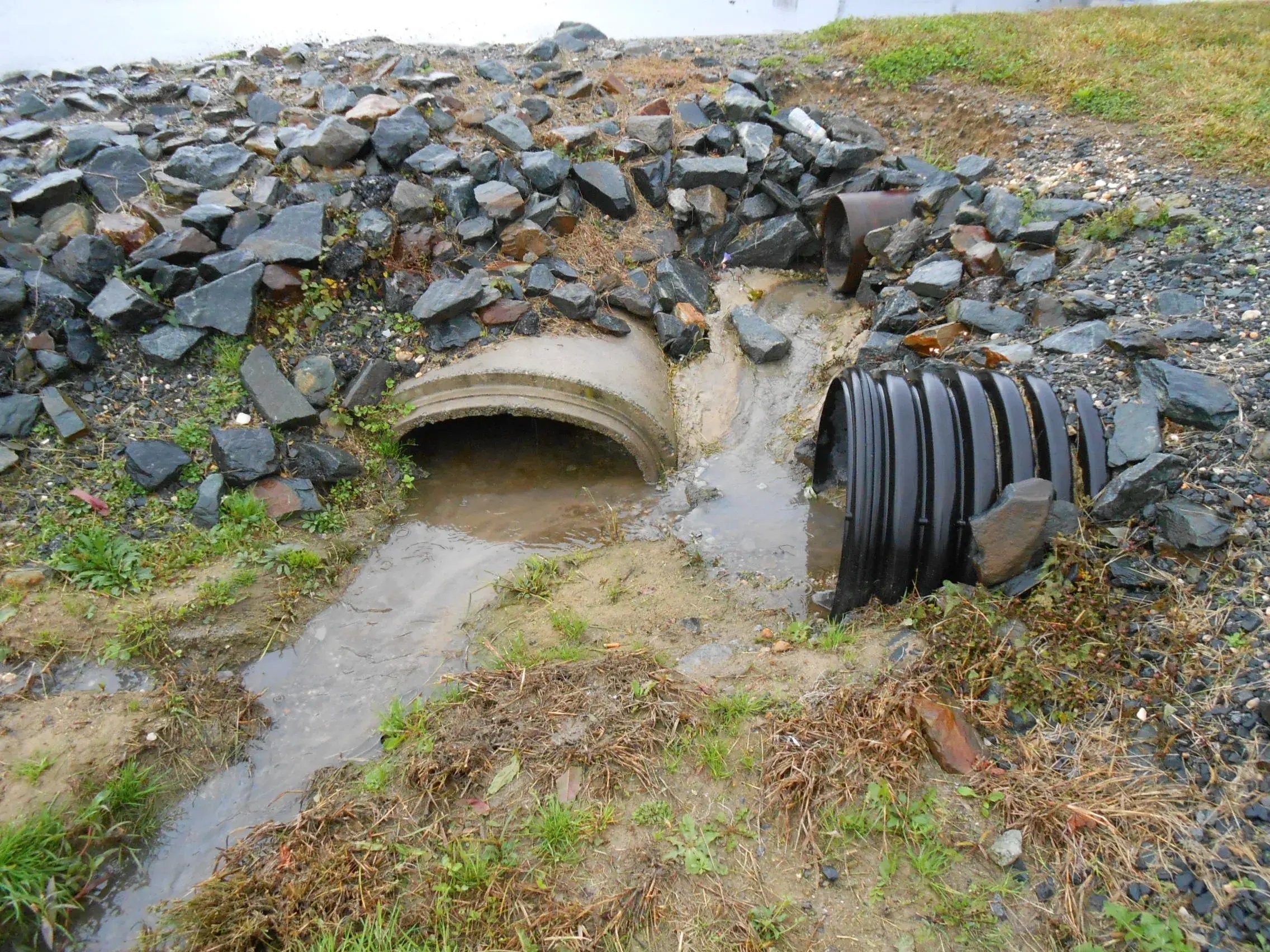
The third question is where your stormwater goes. Water running to a stream, a storm drain that discharges to surface water, or the ground is the classic NJPDES situation. Some older New Jersey cities have combined sewers, though, and where runoff goes to a sewerage authority, that authority's rules may apply instead of, or alongside, an NJPDES stormwater permit. We can't tell you flatly what a facility in a given city needs without knowing where its drains lead, so confirm that before you decide anything.
Which NJPDES Stormwater Permit Category Fits a Facility That's Been Running for Years?
New Jersey doesn't use a single industrial stormwater permit. NJDEP offers a basic general permit, several industry-specific general permits, individual permits, and the no exposure exclusion. Readers often end up on the wrong one, so it's worth matching your facility to the category before you start any paperwork. The table below is a starting point, and the permit documents themselves control eligibility.
| Permit or Option |
Who It Generally Fits |
| Basic Industrial Stormwater General Permit (5G2) |
Regulated industrial facilities that don't fall under an industry-specific permit |
| Concrete Products Manufacturing (CPM) |
Ready-mixed concrete, block, and brick producers |
| Hot Mix Asphalt (R4) |
Hot mix asphalt producers |
| Mining and Quarrying (R13) |
Mining and quarry operations |
| Sand and Gravel (RSG) |
Sand and gravel operations |
| Scrap Metal (SM2) |
Scrap metal processing and recycling (NJDEP lists the original SM permit as expired) |
| Vehicle Recycling (RVR) |
Vehicle recycling and dismantling operations |
| Wood Waste Recycling and Leaf Composting (WRC) |
Wood waste recyclers and leaf composting sites |
| Individual NJPDES permit |
Facilities whose discharges don't fit a general permit |
| No exposure exclusion |
Facilities whose industrial materials and activities are fully protected from stormwater |
Our guides to the 5G2 basic industrial stormwater permit, the SM2 scrap metal permit, and stormwater permits for concrete plants cover the common categories in more detail. If you suspect none of the general permits fit, read when an individual NJPDES industrial permit is needed. For a broader comparison, our article on general, individual, and no-exposure permit types helps.
What Does a Stormwater Pollution Prevention Plan (SWPPP) Need to Include for an Existing Facility?
The stormwater pollution prevention plan, called a SWPPP here and sometimes an SPPP (New Jersey's term), an SP3, or just a stormwater plan, is the document at the center of nearly every industrial stormwater permit. It describes what happens at your site, where pollutants could meet rainwater, and what you do to keep them apart. For the 5G2, NJDEP's permit lays out requirements for an inventory of materials and activities, a site map, a maintenance plan, and an annual inspection, along with rules for keeping the plan updated as things change. Industry-specific permits add their own requirements on top.
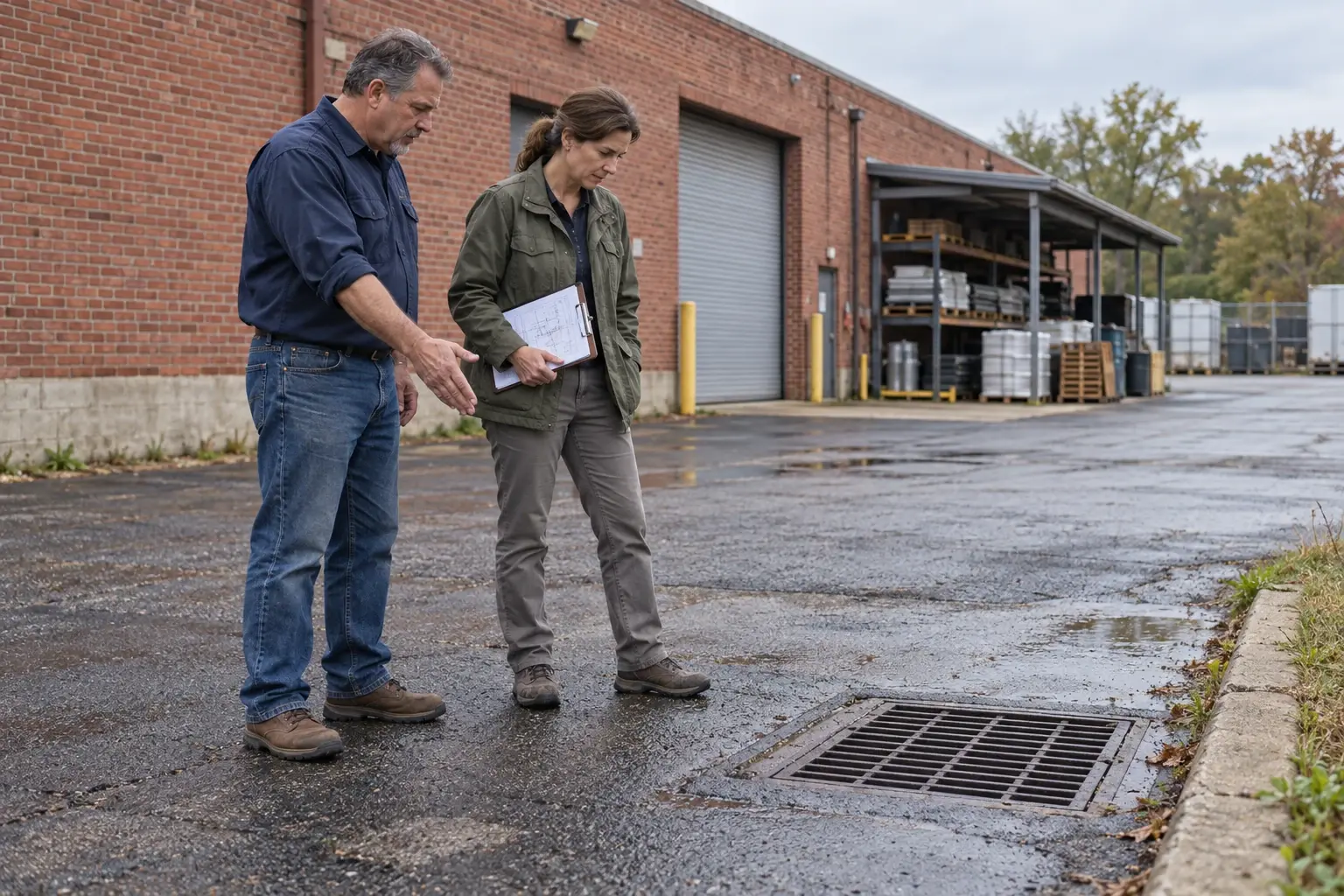
For a facility that's been running for years, the trap is writing a plan that describes how the site is supposed to work instead of how it works now. Over a decade, outdoor storage creeps, drains get added or blocked, buildings go up, and equipment moves. NJDEP wants the plan to match the real site, and your inspector or the person walking your yard will notice if it doesn't. That's why we start with a site walk, and why the best plans are written by someone who has seen the site. Our overview of what a SWPPP is covers the basics, and if you're wondering whether to take it on yourself, we've written about writing your own SWPPP honestly, including when that's a reasonable choice.
The plan generally stays at the facility rather than going to NJDEP. NJDEP's 5G2 certification form says not to submit the plan itself, only the certification, and to keep the plan and a copy of the certification on file. The state can still ask to see the plan, so it needs to be complete and current whenever someone does.
How Does a Request for Authorization Work Under an NJPDES General Permit?
With a general permit, NJDEP doesn't write a custom permit for you. It wrote one permit for a category of facilities, and you join it by submitting a Request for Authorization (RFA). Under N.J.A.C. 7:14A-6.13, the rules governing general permits, each general permit spells out what the request must contain and when authorization takes effect. The permit document tells you where and how to submit, and NJDEP's submission process has its own forms and system, so work from the current permit and NJDEP's stormwater program pages rather than an old checklist.
Once you're authorized, the obligations become routine. The 5G2 calls for an annual inspection and an annual certification to NJDEP, and the dates tie back to your authorization. Other permits carry additional requirements, and some of the industry-specific ones involve sampling, while others don't, so we confirm this against the specific permit rather than assuming. Training requirements also vary by permit, and our article on taking 5G2 NJPDES training online is a good place to start, along with our online training library. For a realistic sense of the calendar, see how long a New Jersey stormwater permit takes to get.
It depends on your situation, and we'd rather lay out the thinking than hand you a script. If you haven't heard anything from NJDEP and you simply discovered the gap, many facilities move forward by getting their paperwork in order and submitting the request for authorization. That's the normal route, and it tells NJDEP you exist and are covered going forward. Still, filing does put your facility on the state's radar, so it's reasonable to think through the timing and what you'll say if anyone asks about prior years.
If you've received a notice of violation, an inspection letter, an information request, or any other communication from NJDEP, the order changes. Talk to an environmental attorney before you respond or file anything. The same goes if you know of a spill, a visible discharge, or contaminated runoff in your history. An attorney can advise on how to communicate with the agency, what to disclose, and in what sequence. We work alongside attorneys regularly, and we handle the technical side: figuring out what permit applies, getting the plan built, and getting you into compliance.
What Happens to the Years You Operated Without a Stormwater Permit?
This is the question behind the question, and the honest answer is that we can't predict it. Discharging industrial stormwater that needed authorization without having it is a violation of New Jersey's Water Pollution Control Act, and NJDEP decides how to respond case by case. We've seen no formula for what happens to a long-running facility that comes forward, and anyone who promises you a specific outcome is guessing.
What we can describe are the things that tend to matter. How long the gap lasted is one. Whether runoff from your site carried pollutants is another, which is why a clean, well-kept yard looks different from one with leaking equipment and exposed scrap. Whether NJDEP has already contacted you, and whether you're acting on your own initiative, also shape the picture. NJDEP also targets particular industries from time to time. A recent advisory from its Division of Water Enforcement, for example, says it will inspect all permitted scrap metal and vehicle recycling facilities. If your industry is under that kind of spotlight, sitting on the problem gets harder, not easier. Whatever the past looks like, the most useful thing you can control is what the site looks like from here forward.
What Drives the Cost of Getting an Existing New Jersey Facility Compliant?
The price depends less on the permit itself than on the condition of your site and what you already have. The permit category matters, since a basic permit with no sampling is a lighter lift than an industry-specific permit with monitoring. Site size and complexity matter, because a two-acre yard with one outfall is a different job than a 40-acre operation with several drainage paths. Whether you already have a plan to update or you're starting from scratch matters too, as does whether the site needs physical fixes like covering materials, repairing drains, or adding containment before the plan can honestly say you're controlling runoff. State agency fees also apply, and they're set by NJDEP, so check its current fee schedule for your permit.
We publish our pricing approach openly because we'd rather you know the range before you call. Use the pricing calculator below to get an estimate for RMA's help with your situation, based on your own answers.
How Does RMA Help Long-Running New Jersey Facilities Get Stormwater Compliant?
We're a family-run firm based in New Jersey, and we've worked with NJDEP's permit categories for years. When a long-time operator calls us, the first conversation is usually about whether coverage is needed at all. If you turn out not to need a permit, or if a no exposure exclusion looks like a fit, we'll tell you so, even though that means no project for us. If you do need one, senior staff handle the work: confirming the right category, walking the site, writing the plan by hand without AI, and helping you submit the request for authorization.
There's no pressure and no obligation here. You can call us, email us, or fill out the form on our website, and we'll talk through where you stand. If you're ready, contact RMA and tell us a little about your facility. We'll let you know honestly whether we're the right fit, and if we're not, we'll point you in a better direction.