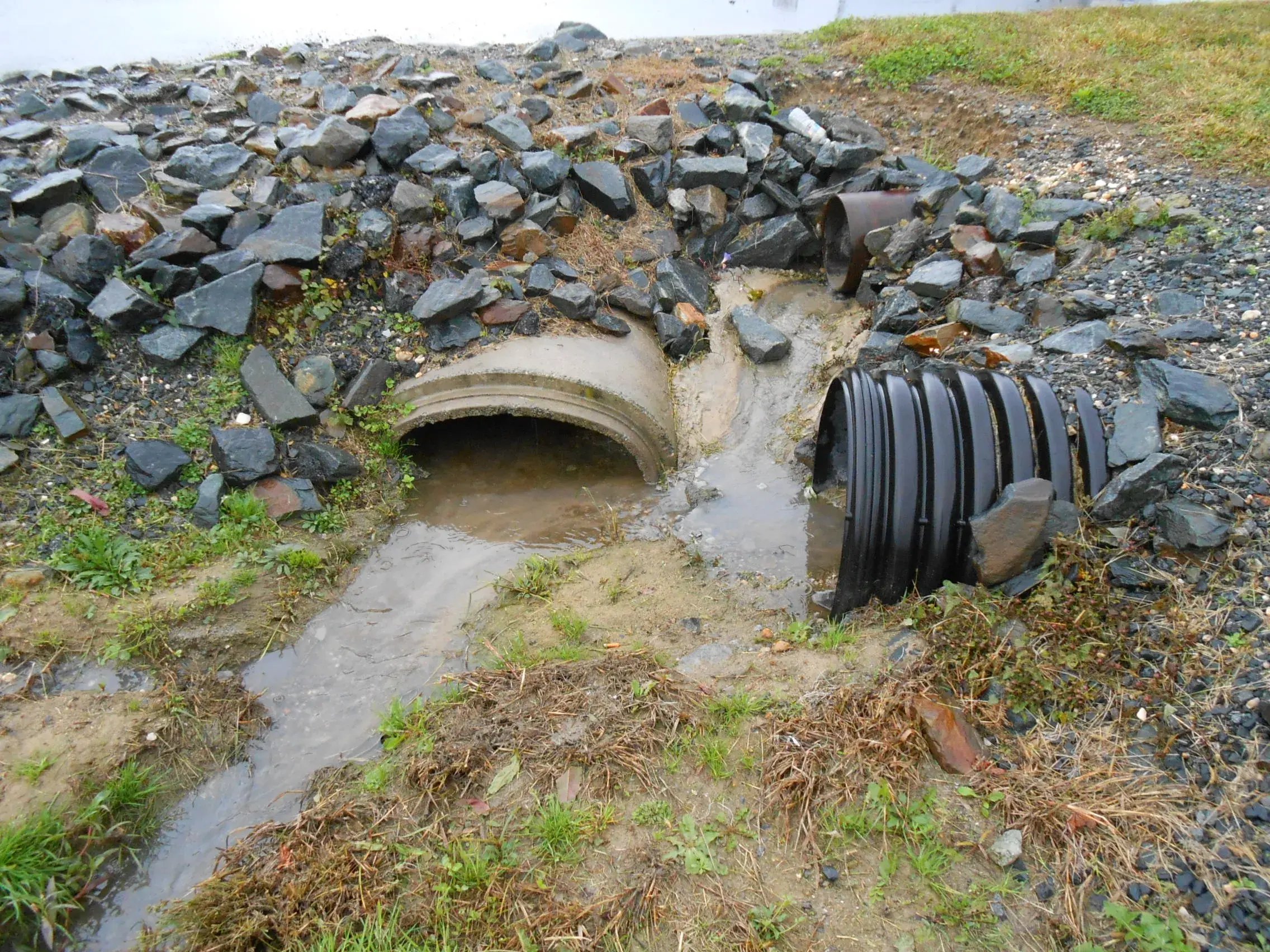
The 5G2, CPM, R4, R13, RSG, SM2, RVR, WRC, Individual Permits, and No Exposure: How New Jersey Sorts Industrial Facilities and Why Landing on the Wrong Stormwater Permit Costs You
If you run an industrial site anywhere else in the country, getting a stormwater permit usually means one thing: you file for your state's general industrial permit (often called a multi-sector general permit), write a stormwater plan, and get on with it. New Jersey doesn't work that way. The New Jersey Department of Environmental Protection (NJDEP) regulates rainwater and snowmelt running off industrial sites through its own program, called NJPDES, and instead of one permit for everybody, it splits facilities across a basic permit, a set of industry-specific general permits, individual permits written for one site, and an exclusion for facilities with nothing exposed to the weather. So the honest answer to "which permit do I need?" depends on what your facility does and what sits outside, and picking the wrong one can leave you out of compliance even though you filed something.
Below, we'll walk through how New Jersey's system differs from other states, what each permit is for, a simple table that matches common industries to their likely permit, and what goes wrong when a facility ends up on the wrong one. We'll also cover a wrinkle most guides skip: several of New Jersey's industry-specific permits are long past their expiration dates, which changes the options for new facilities. If you'd rather talk through your own site, feel free to reach out to RMA and we'll help you figure out where you fit.
Table of Contents
TL;DR
New Jersey doesn't have one general industrial stormwater permit like most states. It has a basic permit (5G2) that only works for facilities with nothing exposed to rain, separate general permits for concrete, asphalt, mining, sand and gravel, scrap metal, vehicle recycling, and wood waste and leaf composting, individual permits for everyone else, and an exclusion for sites with truly no exposure. The right permit depends on your industry and what's outside, and several industry permits are expired, so new facilities often end up needing an individual permit. Landing on the wrong permit means the wrong requirements, missed sampling, and the risk of being treated as unpermitted.
How Is New Jersey's Industrial Stormwater Permit System Different From Other States?
Under the federal Clean Water Act, certain types of industrial facilities need a permit for the stormwater that runs off their property. In most states, that coverage comes from one big general permit (EPA's or the state's own version) that groups facilities into industry sectors. A machine shop, a concrete plant, and a food processor all apply under the same document and simply follow the section written for their sector. New Jersey runs its own version of the federal program, called the New Jersey Pollutant Discharge Elimination System, or NJPDES. NJDEP issues these permits, and they fully stand in for the federal permit, so you don't apply to EPA separately.
Where New Jersey parts ways with other states is structure. There's no multi-sector permit here. NJDEP instead issues a basic general permit with a narrow eligibility test, a handful of general permits written for specific industries, and individual permits tailored to one facility at a time. NJDEP's rules also reach stormwater that soaks into the ground on your site, not just water that flows off into a storm drain or stream, which surprises a lot of facilities that assume a retention basin means they don't discharge anything. All of this lives in the state's NJPDES rules at N.J.A.C. 7:14A, under the authority of the New Jersey Water Pollution Control Act.
The practical effect is that the first question in New Jersey isn't "how do I get the permit?" It's "which permit even applies to me?" A facility that would be a routine sector filing in Pennsylvania or Delaware can face a completely different path here, and a facility that would qualify for a simple no exposure certification elsewhere may find New Jersey's version much harder to meet.
What Are New Jersey's Industrial Stormwater Permit Options?
Here's the lineup of permits NJDEP's industrial stormwater program offers for industrial facilities, using the names and codes NJDEP uses on its own pages. You'll see these codes on permit letters, inspection reports, and lender questionnaires, so it helps to know what each one means.
| Code |
Full Permit Name |
Who It's Written For |
| 5G2 |
Basic Industrial Stormwater General Permit |
Regulated facilities that have eliminated, or can eliminate within six months, all exposure of industrial materials and activities to rain and snowmelt |
| CPM |
Concrete Products Manufacturing |
Ready mixed concrete plants and facilities making block, brick, and other concrete products |
| R4 |
Hot Mix Asphalt Producers |
Facilities manufacturing hot mix asphalt |
| R13 |
Mining and Quarrying Activity |
Mines and quarries, including stormwater and certain process wastewater discharges to surface water |
| RSG |
Sand and Gravel Activity |
Sand and gravel operations whose stormwater goes only to groundwater, with no surface water discharge |
| SM2 |
Scrap Metal Processing and Recycling |
Scrap metal recyclers, and facilities recycling both scrap metal and used vehicle parts (the older SM permit is no longer available) |
| RVR |
Vehicle Recycling |
Auto salvage and vehicle recycling yards |
| WRC |
Wood Waste Recycling and Leaf Composting |
Wood recycling operations and leaf composting facilities |
| Individual |
Individual NJPDES Industrial Stormwater Permit |
Facilities that can't eliminate exposure and don't qualify for any general permit |
| No exposure |
Permanent no exposure exclusion |
Facilities with every industrial material and activity inside a permanent, fully enclosed building |
You may also run into a few other codes. NJDEP has a separate permit for Newark Airport (R5), and older paperwork for wood recyclers sometimes references a wood recycler permit called R7. The 5G3 is New Jersey's construction stormwater permit, which covers land disturbance during building projects rather than an operating facility, so it isn't one of the options above. The municipal permits (Tier A and so on) apply to towns and public agencies, not private businesses.
Every one of these permits, general or individual, requires a stormwater pollution prevention plan, which RMA calls a SWPPP (pronounced "swip"). In New Jersey you'll often see it called an SPPP or SP3, or just a stormwater plan, but it's the same idea: a written plan describing your site, where stormwater goes, what could pollute it, and the best management practices (BMPs) you use to keep it clean. NJDEP notes that the industry-specific permits may also include monitoring, benchmarks, or effluent limits, so two facilities on different permits can have very different workloads.
Why the 5G2 Basic Industrial Stormwater Permit Isn't a Catch-All
The name "Basic Industrial Stormwater General Permit" makes the 5G2 sound like New Jersey's default permit for any industrial site. It isn't. NJDEP makes it available only to regulated facilities that have eliminated, or can eliminate within six months of authorization, all exposure of industrial materials and activities to rain and snowmelt. You do that by moving things indoors or covering them. NJDEP describes the 5G2 as a "remove and cover" permit.
That eligibility test rules out a lot of facilities. An uncovered dumpster, a stockpile of sand, a stack of steel sheets, drums or totes stored outside, a piece of heavy equipment parked in the yard, or an outdoor emergency generator can each be enough to knock a site off the 5G2. Mining and quarrying operations are specifically not authorized under the 5G2 either. We sometimes describe the 5G2 as the stormwater permit for facilities that otherwise wouldn't need one, because the sites that qualify are already close to having no exposure at all.
For the facilities that do fit, the 5G2 is the simplest NJPDES permit to live with. It requires a SWPPP, an annual inspection and annual certification, and annual training, and it doesn't require stormwater sampling. NJDEP renewed the 5G2 with a master general permit that took effect February 1, 2023. If you want to go deeper on how it works, our guide to the 5G2 Basic Industrial Stormwater Permit in New Jersey walks through the forms and day-to-day requirements.
Which New Jersey Stormwater Permit Fits Your Industry?
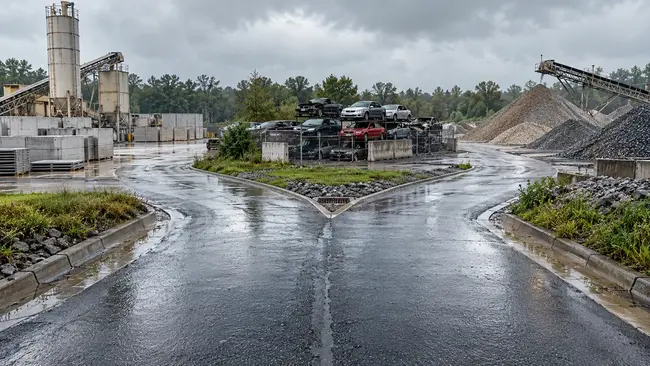
The table below matches common industries to the permit they're most likely to land on. Treat it as a starting point, not a final answer. Eligibility for each general permit has its own conditions (industry codes, where water goes, what activities happen on site), and current permit status can change the answer, which we'll get to in a moment.
| Your Industry or Situation |
Likely Permit |
What to Watch For |
| Ready mix concrete, precast, block, or brick plant |
CPM |
Truck washout and process water are handled differently from stormwater |
| Hot mix asphalt plant |
R4 |
Written for hot mix asphalt manufacturing specifically, not paving contractors' yards |
| Stone quarry or mine |
R13 |
Also addresses certain process wastewater, such as dewatering, going to surface water |
| Sand and gravel pit that keeps all water on site |
RSG |
Any discharge to surface water usually points back to R13 instead |
| Scrap metal yard, or scrap plus used auto parts |
SM2 |
Quarterly stormwater sampling, plus a separate NJ recycling approval in many cases |
| Auto salvage or vehicle recycling yard |
RVR |
Fluid and oily parts storage has to be covered and contained |
| Wood recycler, mulch producer, or leaf composter |
WRC |
Often paired with solid waste or recycling approvals |
| Manufacturer with everything indoors except parking and a covered dumpster |
5G2 or no exposure |
One uncovered item outside can disqualify you |
| Metal fabrication, chemicals, plastics, food and beverage, printing, or other manufacturing with outdoor activity |
Individual permit |
No industry-specific general permit exists for these in New Jersey |
| Warehouse, data center, body shop, dealership, or quick-lube |
Often none |
Depends on industry code and whether vehicle maintenance, fueling, or washing happens outdoors |
That last row deserves a word. Plenty of businesses worry they need a stormwater permit when they probably don't. Coverage depends on your industry classification (your SIC code), whether anything industrial is exposed, and where your water goes. For transportation-type operations, it's generally only the vehicle maintenance, equipment cleaning, fueling, and deicing areas that bring a site into the program. If you're not sure where you land, our article on stormwater associated with industrial activity explains how regulators draw that line.
What Happens If You Pick the Wrong New Jersey Stormwater Permit?
Because each permit is its own document with its own requirements, filing under the wrong one isn't a paperwork technicality. The most common mistake we see is a facility getting onto the 5G2 because the name sounds right, while it still has materials or activities outside. On paper the facility looks permitted. In reality it doesn't meet the permit's core condition, so an inspector can treat it as discharging without valid coverage. That's the worst place to be, because you've been spending time and money on compliance that doesn't protect you.
The second problem is missed requirements. The 5G2 doesn't require sampling, but industry-specific permits can carry monitoring, benchmarks, or effluent limits, and the SM2 calls for quarterly stormwater sampling. A scrap yard that thinks it's under a no-sampling permit won't collect samples, won't file the required reports, and will build up a record of violations without knowing it. The reverse happens too: a facility follows a plan written for the wrong permit and spends money on controls or testing that its actual permit doesn't call for, while missing the conditions it does.
The third problem is the SWPPP itself. A stormwater plan has to be written to the specific permit you're covered under. A generic plan, or one written for a different permit or a different state, won't line up with your inspection schedule, your BMPs, or your reporting deadlines. This is one of the gaps we find most often when we review a plan someone else prepared, and it's why our guide to NJPDES stormwater permit requirements focuses on matching the plan to the permit.
Finally, there's the cleanup. Switching permits isn't instant. Moving from the wrong general permit to the right one, or from a general permit to an individual permit, means new applications, a rewritten SWPPP, and sometimes facility changes. If the mix-up surfaces during an NJDEP inspection or enforcement action, the fix happens on the agency's timeline instead of yours. If you're already facing a notice of violation over permit coverage, it may be worth talking with an environmental attorney alongside your consultant.
How Expired NJ General Stormwater Permits Change Your Options
Here's the wrinkle that trips up new facilities. General permits in New Jersey are written for five-year terms, and NJDEP has to reissue them for them to stay current. Several of the industry-specific general permits have gone years past their expiration dates without being reissued. The 5G2 and the WRC have been renewed more recently, but others have not, and NJDEP has also retired the original SM scrap metal permit, leaving the SM2.
For facilities that already have coverage under an expired general permit, the permit generally stays in effect while NJDEP works on a renewal, so existing permittees keep following the permit they have. For a brand-new facility, or one applying for the first time, it's a different story. You generally can't get new coverage under an expired general permit. That means a new concrete plant or asphalt plant may not be able to use the permit written for its industry, and the only path left is an individual permit. Our article on whether you need an individual NJPDES industrial permit goes into how that plays out.
Individual permits are tailored to one site, so requirements can differ from a similar facility down the road, and NJDEP's review times for them run long. Our breakdown of how long it takes to get a New Jersey stormwater permit covers what to expect. Because permit status changes whenever NJDEP reissues something, always check the current permit page on NJDEP's stormwater website before you file, rather than relying on a list from a few years ago.
When You Might Not Need a New Jersey Industrial Stormwater Permit
Not every business that handles materials needs an NJPDES industrial stormwater permit. The first way out is no exposure. If every industrial material and activity is inside a permanent building that's anchored to a foundation and fully roofed and walled, you may be able to show what NJDEP calls permanent no exposure. A tarp over a pile doesn't count. New Jersey is strict about this, much stricter than many other states, so it's worth reading up on what no exposure means before you count on it.
The second is where your water goes. Several of New Jersey's older cities have combined sewer systems that carry stormwater and sewage together to a treatment plant. If your site drains only to a combined sewer, the local sewerage authority's rules may apply instead of, or alongside, an NJPDES stormwater permit. Whether that's your situation depends on exactly where your site drains, so confirm it with your sewerage authority or municipality rather than assuming based on your town.
The third is simply not being in a regulated category. Many warehouses, data centers, body shops, dealerships, and quick-lubes fall outside the program or only come in because of outdoor maintenance, fueling, or washing. If that's you, the honest answer may be that you don't need us or anyone else for a stormwater permit. A short conversation, or our overview of who needs a stormwater permit, can usually settle it.
How to Confirm the Right NJ Stormwater Permit for Your Facility
Before you file anything, start with your industry code. Find your SIC code (and the matching NAICS code) and compare it against the eligibility section of the permit you think fits. Several of New Jersey's industry-specific permits are tied to specific codes, such as the R4 for hot mix asphalt manufacturing and the R13 for listed mining and quarrying codes, and the CPM also reaches facilities NJDEP classifies as concrete products manufacturers.
Next, walk your site with fresh eyes and list everything outside: stockpiles, dumpsters, drums, totes, equipment, generators, fueling areas, wash areas, and loading docks. Then trace where rain goes when it leaves each area, whether that's a storm drain, a ditch, a stream, a basin where it soaks in, or a combined sewer. Those two lists decide whether you're looking at no exposure, the 5G2, an industry permit, or an individual permit. Our explainer on general, individual, and no exposure permits is a good companion for this step.
Then check current status. Look at NJDEP's industrial stormwater general permits page for the permit you think applies and confirm it's active and accepting new applicants. If it's expired and you're a new facility, plan for an individual permit. Finally, if you're already permitted, pull your authorization letter and make sure the permit category on it matches what you do today. Facilities change over the years, and a site that qualified for the 5G2 a decade ago may have added an outdoor storage area since. If you handle process water, such as concrete washout or quarry dewatering, read up on the difference between stormwater and process water, because that water is regulated differently.
How RMA Helps Facilities Choose and Manage New Jersey Stormwater Permits
We're based in New Jersey and have been working with NJDEP's stormwater program since we opened in 1992, so sorting out which NJPDES permit fits a facility is a big part of what we do. We help facilities confirm whether they need a permit at all, figure out which one applies, prepare the application, write a SWPPP that matches that specific permit, and handle the ongoing work like inspections, annual certifications, sampling where the permit requires it, and training. For your team's training, our online training library is another option. And if your site turns out not to need a stormwater permit, we'll tell you that too.
If you're not sure where your facility fits, or you suspect you're on the wrong permit, there's no pressure and no obligation to talk it through. You can call us, email us, or fill out the form on our website, and we'll take a look at your situation. When you're ready, contact RMA and we'll help you figure out the right next step.