How Population Density, Industrial History, the Shore, and Already Polluted Waterways Led NJDEP to Regulate Rainwater at Businesses So Closely
If you run a plant, a yard, or a shop in New Jersey, it can come as a surprise that the state cares where the rain goes after it hits your property. Rainwater running off a business doesn't sound like pollution. But when that water flows across a gravel lot, past a stockpile, around a parked loader, or under a dumpster, it picks up whatever is sitting there and carries it to the nearest storm drain, ditch, or stream. New Jersey watches that runoff more closely than most states, and the reasons come down to four facts about the state itself: it's the most crowded state in the country, it's been an industrial state for more than two centuries, it leans hard on its rivers, bays, and the Shore, and most of its waterways already fall short of at least one water quality standard.
Put those four together and you get a state with very little room for error, which is why the New Jersey Department of Environmental Protection (NJDEP) built a stormwater program with separate permits for specific industries instead of one general approach for everyone. Below, we walk through each reason, show how they shaped today's permits, and explain what it means if you're trying to figure out whether these rules apply to you. If you'd rather talk through your own site, feel free to reach out to RMA and we'll help you sort it out.
Table of Contents
TL;DR
New Jersey is strict about rainwater running off businesses because it's the most densely populated state, it has a long industrial past that left a lot of contamination behind, its rivers, bays, and Shore supply drinking water and drive the tourism economy, and most of its waters already fail at least one water quality standard, often because of runoff. With that little margin, NJDEP chose to write separate stormwater permits for industries like concrete, asphalt, quarries, sand and gravel, scrap metal, vehicle recycling, and wood waste instead of using one permit for everyone. Plenty of businesses still don't need a permit at all, so the first step is figuring out which category, if any, fits your site.
What Does New Jersey Mean by Regulating Stormwater Runoff?
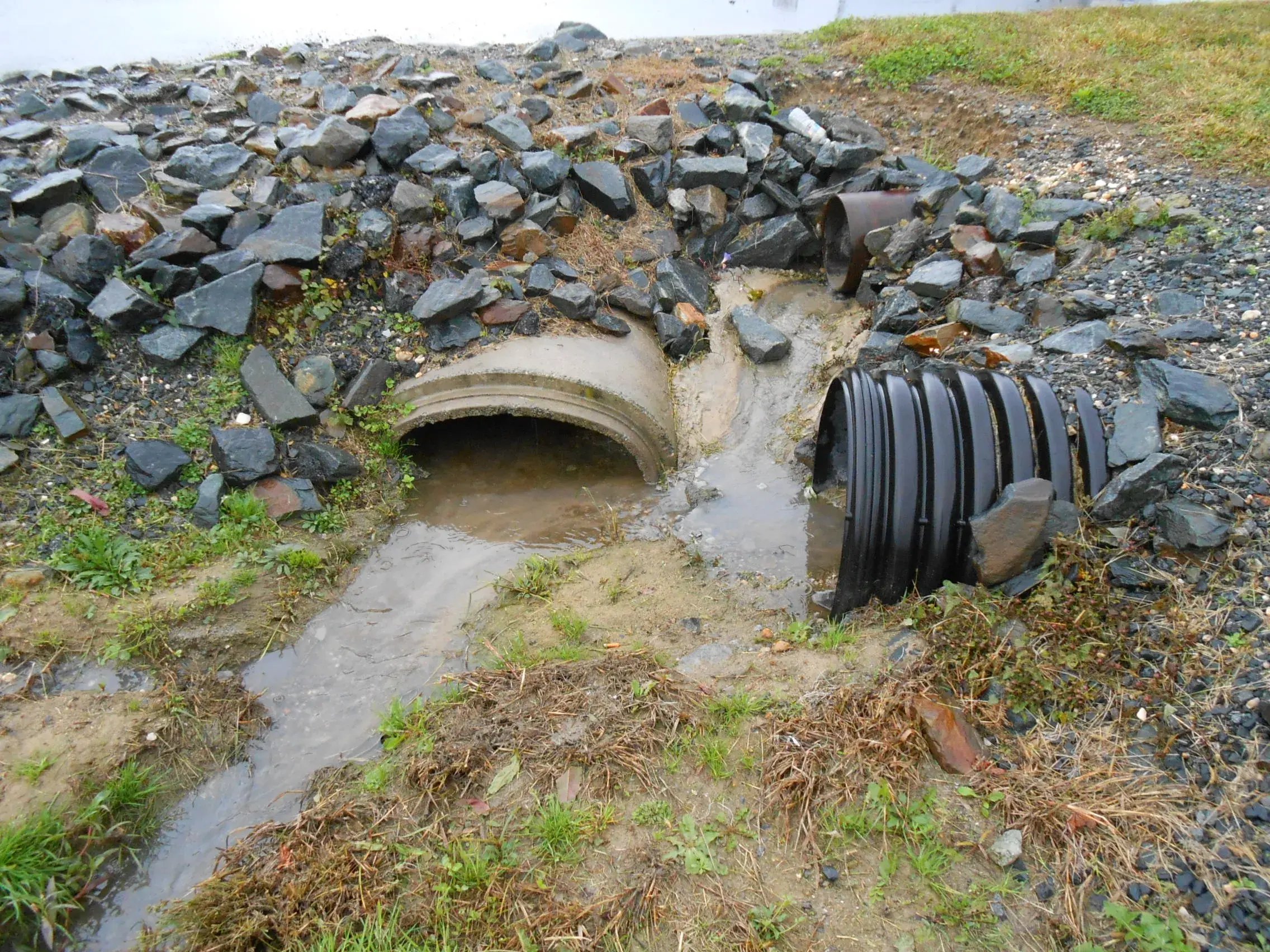
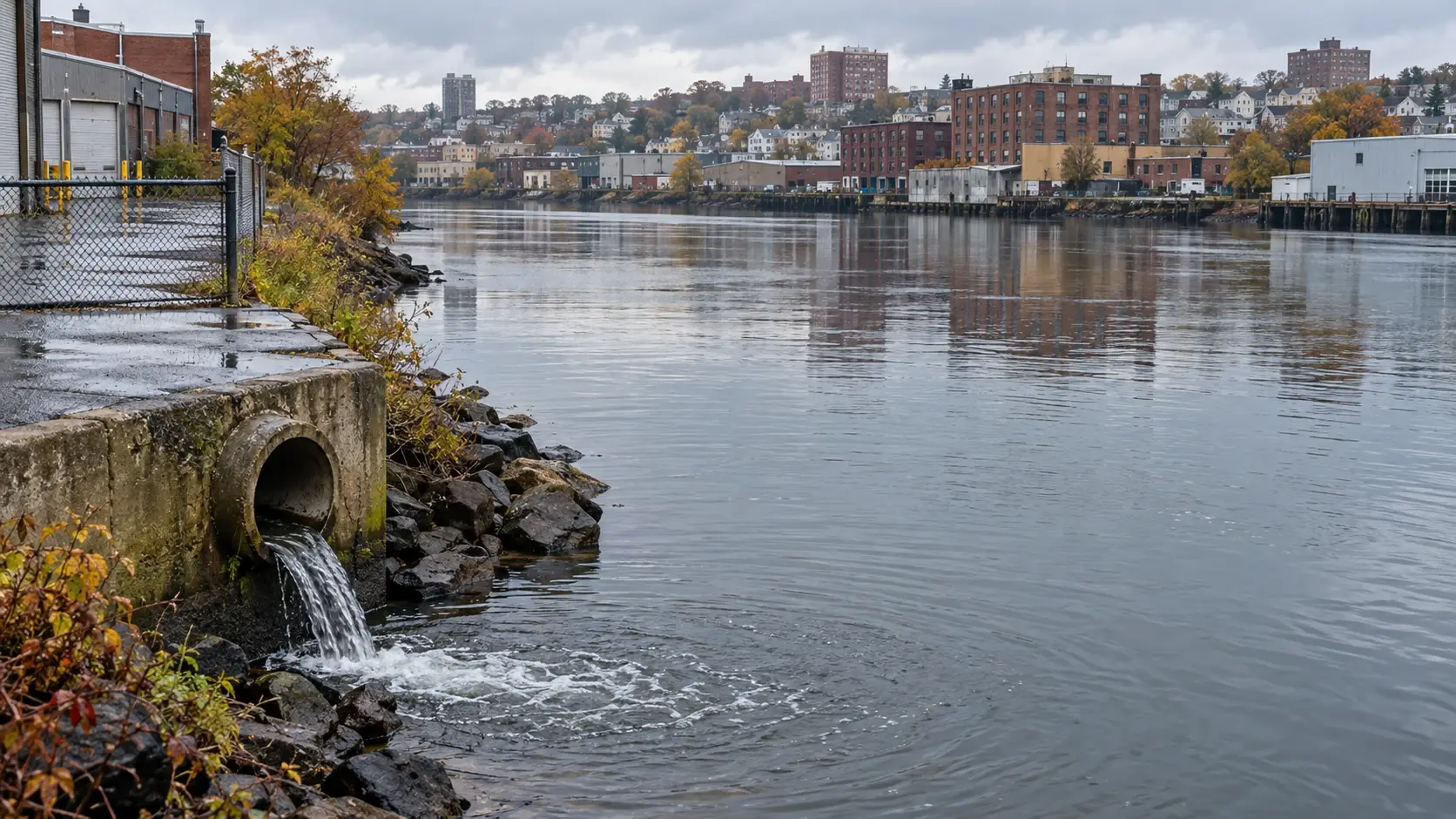
Stormwater is just rain or melted snow that doesn't soak into the ground. On a field or a forest floor, most of it sinks in. On roofs, pavement, and packed gravel, it runs off instead, and it takes whatever it touches along for the ride: oil drips, dust from a crusher, metal fines from a scrap pile, cement wash, sediment, trash. That water usually ends up in a storm drain or a ditch, and from there it goes straight to a stream, river, lake, or bay without passing through a treatment plant first.
NJDEP is the state agency that manages New Jersey's environmental rules. The program it uses to control what flows into the state's waters is called NJPDES, the New Jersey Pollutant Discharge Elimination System. That's New Jersey's version of the federal NPDES permit program, and NJDEP has run it in place of the EPA since 1982, under authority from the state's Water Pollution Control Act of 1977. When a business has outdoor industrial activity that could dirty the rain running off its property, NJPDES is the program that decides whether it needs a stormwater permit and what that permit requires.
The federal rules are what bring certain industries into the program in the first place. They're based on the kind of work a facility does, and our guide to stormwater associated with industrial activity covers how that works. What New Jersey adds is a tighter system for handling those facilities once they're in.
How New Jersey's Population Density Makes Stormwater Runoff Worse
The 2020 Census counted 1,263 people per square mile in New Jersey, more than any other state. That density affects runoff in two concrete ways.
First, more people means more pavement. Roads, parking lots, rooftops, and industrial yards all shed water instead of absorbing it. When a larger share of the land is hard surface, more rain turns into runoff, it moves faster, and it carries more pollutants with it. In much of New Jersey, a spill or a dusty stockpile sits a few hundred feet from a storm inlet that drains to a stream running through somebody's backyard.
Second, density puts industry and neighborhoods right next to each other. A concrete plant, a scrap yard, or a truck terminal in New Jersey is rarely isolated. The stream behind the property might flow past a park, a school, or a town's drinking water intake a few miles downstream. When something goes wrong, more people are affected, and there isn't much slack in the system to absorb it.
How New Jersey's Industrial History Shapes Its Stormwater Rules
New Jersey has been an industrial state for a very long time. Paterson, built around the Great Falls of the Passaic River in the 1790s, was planned from the start as a manufacturing city that ran on river power. Over the next two centuries, chemical plants, refineries, metal works, and factories lined the state's rivers and bays.
That history left a mark. New Jersey has more sites on the EPA's Superfund National Priorities List, the federal list of the country's most contaminated places, than any other state. One of the best known is a stretch of the Passaic River in Newark, which has been on that list for more than 40 years. Much of that contamination came from old habits like dumping process wastes and leaving materials uncovered in the rain.
This history shapes how regulators think. New Jersey's Water Pollution Control Act came about in the 1970s, at a time when a fish kill and pressure from the federal government pushed the state to take control of its own water pollution program. Regulators have spent decades since then cleaning up after industry, and they've learned that small, everyday exposure (a leaking drum, an uncovered pile, a dirty wash area) adds up over years. Today's industrial stormwater rules aim to stop that slow, repeated pollution at sites that are still operating, many of them on land that's been industrial for generations.
Why New Jersey's Rivers, Bays, and Shore Raise the Stakes for Stormwater
New Jersey depends on its water in ways that make pollution expensive. NJDEP points out that the state's rivers, lakes, and bays provide much of its drinking water and also support swimming, fishing, boating, commercial shellfishing, and tourism.
The Jersey Shore and New Jersey's Tourism Economy
Tourism is one of New Jersey's biggest industries, bringing in tens of billions of dollars a year, and roughly half of that spending happens in the Shore counties. NJDEP runs a beach monitoring program that tests water at ocean and bay beaches throughout the summer. When bacteria counts spike and a beach has to close, local stormwater runoff is one of the usual causes the state points to. A closed beach on a July weekend hits hotels, restaurants, and rental owners all at once.
Barnegat Bay and New Jersey's Back Bays
Barnegat Bay is a good example of what runoff can do to a bay. Its biggest problem is too much nitrogen, which feeds algae and harms clams, seagrass, and fish. Studies of the bay have found that a large share of that nitrogen comes from surface runoff off developed land and roads in its watershed. NJDEP has spent years funding stormwater projects there because cutting runoff is one of the only ways to improve the bay's health. Other shallow back bays along the coast share the same weakness: they don't flush out quickly, so pollution that gets in tends to stay.
Rivers, Reservoirs, and Groundwater
Inland, the same logic applies to rivers like the Raritan, Passaic, and Delaware, which feed reservoirs and drinking water intakes for millions of people. New Jersey also relies heavily on groundwater in many areas, and NJPDES stormwater permits can cover discharges to groundwater, not just to surface water. A facility whose runoff soaks into a basin or a gravel area instead of flowing off site isn't automatically outside the program.
How Many New Jersey Waters Are Already Impaired by Runoff?
Every two years, NJDEP publishes an Integrated Water Quality Assessment Report that checks whether the state's waters are clean enough for the uses they're meant to support, such as aquatic life, drinking water supply, swimming, and fishing. When a waterbody doesn't meet those standards, it's called "impaired." Here's a snapshot from the 2016 statewide report:
| Use the Water Is Meant to Support |
Fully Supports It |
Does Not Support It |
Not Enough Data |
| General aquatic life (all state waters) |
17% |
64% |
19% |
| Trout aquatic life |
14% |
59% |
27% |
| Drinking water supply |
38% |
43% |
19% |
The 2014 report put it even more starkly. Out of the state's 958 subwatersheds, only 14 contained waters that fully supported every use they were assessed for, leaving fish consumption aside. NJDEP reports that excess nutrients, like the nitrogen and phosphorus that wash off developed land, are the main reason waters fail the aquatic life standard.
Impaired waters change the math for every discharger in the watershed. When a stream is already over its limit for a pollutant, the state usually can't let anyone add more of it, and it may set a pollution budget for the whole watershed, called a TMDL. Our article on TMDLs, impaired waters, and stormwater permits explains how those budgets can tighten what's expected of individual facilities.
There's good news in the long view, too. NJDEP reports that the state's water quality has improved a great deal since the 1970s, and permits and pollution controls are a big part of that progress.
Why NJDEP Built Industry-Specific Stormwater Permits
Density, industrial history, heavy reliance on water, and widespread impairment all point the same way. Many states cover most industrial facilities under one broad stormwater permit with different sections for different industries. New Jersey went a different direction. NJDEP has a basic general permit for facilities that can get their materials and activities out of the rain, plus a set of separate general permits written for specific industries whose work almost always happens outdoors.
The reasoning is practical. A ready-mix plant, a hot mix asphalt plant, a quarry, and a scrap yard each have their own typical pollutants and their own typical problem spots. A permit written for one industry can spell out the controls that fit that kind of operation. With so many impaired waters and so much industry packed close to them, NJDEP decided tailored permits were worth the extra complexity.
| New Jersey Stormwater Permit |
Who It's Written For |
| Basic Industrial Stormwater General Permit (5G2) |
Regulated facilities that have removed, or can remove within six months, all exposure of industrial materials and activities to rain and snowmelt |
| Concrete Products Manufacturing (CPM) |
Ready-mix concrete plants and block, brick, and other concrete product manufacturers |
| Hot Mix Asphalt Producers (R4) |
Facilities that manufacture hot mix asphalt |
| Mining and Quarrying (R13) |
Mining and quarry operations |
| Sand and Gravel (RSG) |
Sand and gravel operations |
| Scrap Metal (SM2) |
Scrap metal recyclers, with or without vehicle recycling (the older SM permit has expired) |
| Vehicle Recycling (RVR) |
Facilities that only recycle vehicles |
| Wood Waste Recycling and Leaf Composting (WRC) |
Untreated wood waste recyclers and leaf, grass, and wood chip composting sites |
| Individual NJPDES permit |
Facilities that can't eliminate exposure and don't fit any general permit, such as metal shredders |
The 5G2 shows how strict New Jersey's thinking is. It isn't a catch-all for any industrial site. It's designed for facilities that get their materials and activities under cover or out of the rain entirely, an approach regulators often call "remove and cover." If a regulated business can't do that and doesn't fit one of the industry permits, it's usually headed for an individual permit, which is written just for that site. Our guides to the 5G2 Basic Industrial Stormwater Permit and individual NJPDES industrial permits go deeper on both.
The industry permits each come with their own requirements, and some include monitoring tailored to the pollutants that industry tends to produce. Recyclers, for example, can start with our breakdown of the New Jersey SM2 Scrap Metal Permit, and concrete producers can see how stormwater fits into their operations in our producer's guide to concrete plants and stormwater permits.
How New Jersey Stormwater Permits Differ From Other States
Every state works from the same federal Clean Water Act, but New Jersey's details lean strict. Here's a side-by-side look at a few of them, compared with the EPA's Multi-Sector General Permit (MSGP), the model many states follow.
| Topic |
Common Federal-Style Approach |
New Jersey's Approach |
| Permit structure |
One multi-sector permit with sections for each industry |
A basic permit plus separate permits for specific industries, and individual permits for the rest |
| Basic permit |
Covers sites with ongoing outdoor exposure, managed with controls |
The 5G2 expects facilities to eliminate exposure altogether |
| Where the water goes |
Focused on discharges to surface water |
Can cover discharges to surface water and groundwater |
| Name of the plan |
Stormwater Pollution Prevention Plan (SWPPP) |
Stormwater Pollution Prevention Plan, abbreviated SPPP |
The name difference trips people up. A Stormwater Pollution Prevention Plan is the written, site-specific plan that explains where water flows on your property, what could pollute it, and what you do to stop that. Most of the country calls it a SWPPP. New Jersey calls it an SPPP. If a national consultant hands you a generic SWPPP built on federal language, it may not line up with what your New Jersey permit asks for.
New Jersey also expects permit holders to inspect their sites and certify each year that they're following their plan. For the full list of obligations, our article on NJPDES stormwater permit requirements lays them out.
What New Jersey's Strict Stormwater Rules Mean for Your Business
None of this means every business in New Jersey needs a stormwater permit. Plenty don't. Whether you need one depends on what kind of work you do (based on your industry classification code), whether your materials and activities are exposed to rain, and where the water from your site ends up. Warehouses, offices, many data centers, body shops, dealerships, and quick-lube shops often find they either aren't covered or can qualify for an exclusion. If nothing industrial on your property is exposed to the weather, you may be able to certify no exposure instead of holding a permit, which we explain in our article on what no exposure means for stormwater permits.
Where your water goes matters too. In some older New Jersey cities, storm drains and sanitary sewers share the same pipes, and runoff ends up at a sewage treatment plant run by a local sewerage authority. In those places, the authority's rules may apply instead of, or alongside, an NJPDES stormwater permit. The only way to know is to trace where your own site drains and confirm it with the right agency.
If you are in a regulated industry, NJDEP expects you to be in the right permit category, to have a current SPPP that matches your site, and to keep up with inspections, training, certifications, and any monitoring your permit requires. Our overview of general, individual, and no exposure permits is a good place to start sorting out which type might fit you.
The good part is that once a site is set up properly, staying compliant is mostly steady habits: covering what can be covered, keeping yards clean, fixing leaks fast, and writing down what you did.
How RMA Helps New Jersey Businesses With Stormwater Permits
We're a family-run firm based in New Jersey, and we've been working with NJDEP's stormwater program for decades. We help businesses figure out whether they need a permit at all, choose the right category (5G2, one of the industry-specific permits, an individual permit, or a no exposure exclusion), write and update SPPPs that match how the site really runs, and stay on top of inspections, training, and annual certifications. Much of our work is with the industries New Jersey singles out, like concrete, asphalt, quarries, and recyclers. If it turns out you don't need us, we'll tell you so.
If you're not sure where your site fits, or you just want a second set of eyes on what you have, there's no pressure and no obligation to talk it through. You can call us, send an email, or fill out the form on our website, and if you're on a timeline, our article on how long it takes to get a New Jersey stormwater permit is a useful read in the meantime. Whenever you're ready, contact RMA and we'll help you figure out the right next step for your property.