What New Jersey Concrete Plants Have to Monitor, How Results Get Reported to NJDEP, and How to Sample at a Dusty, Busy Plant
If you run a concrete plant in New Jersey, rain does something most owners never think about when they build the place: it runs across your yard, past the aggregate bins, cement handling, mixer truck lanes, and washout area, and then it leaves your property. New Jersey's Department of Environmental Protection (NJDEP) regulates that runoff through the New Jersey Pollutant Discharge Elimination System (NJPDES), and plants that make ready mixed concrete, block, brick, or other concrete products typically operate under the Concrete Products Manufacturing (CPM) general permit. The question we hear next is a practical one: what exactly do I have to sample, how often, and where do the results go?
In short, the CPM permit expects regular stormwater sampling, which NJDEP's summary describes as quarterly, for pollutants tied to concrete operations such as pH, solids, oil and grease, COD, and iron. Samples go to a New Jersey certified lab, and results get reported to NJDEP on monitoring report forms, New Jersey's version of Discharge Monitoring Reports. Your own authorization and the permit text decide the exact parameters and limits, so we explain below how to read them, how reporting works, and how to collect a representative sample at a plant full of dust, trucks, and wet concrete. If you'd rather talk it through with someone who knows New Jersey concrete plants, you're welcome to reach out to RMA anytime.
Table of Contents
TL;DR
New Jersey's CPM permit generally has concrete plants sample their stormwater on a quarterly basis for pollutants such as pH, solids, oil and grease, COD, and iron, using a New Jersey certified lab and reporting results to NJDEP on online monitoring report forms, the state's version of DMRs. The exact parameters, limits, and storm criteria come from your authorization and the permit text, so read both. At a dusty, busy plant, good results come from a consistent sampling point, a stocked kit, clean bottles, and a trained person who can reach the outfall safely when it rains.
What Does New Jersey's CPM Stormwater Permit Cover?
The Concrete Products Manufacturing (CPM) general permit is NJDEP's industry-specific stormwater permit for plants that make concrete or concrete products. A general permit is one set of rules NJDEP writes for a whole category of facilities, and a plant gets covered by submitting a Request for Authorization (RFA) instead of negotiating a permit from scratch. NJDEP describes CPM as covering industrial stormwater discharges to surface and ground waters from facilities that make ready mixed concrete, block and brick, or other concrete products, along with facilities NJDEP classifies as concrete or concrete related manufacturers.
CPM exists as an alternative for plants that can't eliminate all exposure of materials and activities to rain and snowmelt, which describes most batch plants with aggregate piles, cement handling, truck lanes, and washout areas. A plant that can eliminate exposure may qualify for the Basic Industrial Stormwater General Permit (5G2) instead, and some facilities don't fit any general permit and need an individual permit. Your authorization letter from NJDEP shows which one you're under, so check it before you plan any sampling. Everything below assumes your plant is authorized under CPM.
CPM also requires a stormwater pollution prevention plan, which NJDEP calls an SPPP and which you'll also hear called an SP3 or just a stormwater plan. We'll call it a SWPPP, the way most of the industry does. Your sampling results are the test of whether that plan works, and our article on the stormwater pollution prevention plan covers the basics.
Which Parameters Does the CPM Permit Make You Monitor?
NJDEP's CPM information sheet lists these among the pollutants tied to the permit: flow (reported only), pH, total suspended solids, total dissolved solids, oil and grease, chemical oxygen demand, and total iron. Which apply at your plant, which carry limits, and which discharge points they cover come from the permit text and your authorization, so confirm your own list. The table shows what each one can tell you about a concrete plant.
| Parameter |
What it can point to at a concrete plant |
| pH |
Cement dust, spilled cement, or washout water reaching runoff, since concrete is highly alkaline |
| Total suspended solids (TSS) |
Sediment, aggregate fines, and cement particles carried off by runoff, often from bare ground, stockpiles, tracking, or a settling basin that needs cleaning |
| Total dissolved solids (TDS) |
Dissolved minerals and salts, which settling alone doesn't remove |
| Oil and grease |
Hydraulic leaks, fueling areas, equipment maintenance, and form oils |
| Chemical oxygen demand (COD) |
Organic material in the water, which can come from oils, admixtures, and other organics |
| Total iron |
Iron from soils, aggregate, and rusting equipment or scrap |
| Flow |
Reported along with your results so the numbers can be put in context |
The permit also separates plain stormwater from water that has picked up concrete from batch mixes or returned loads. NJDEP's summary describes different requirements for discharges where unused concrete mingles with stormwater, so the source of the water matters as much as the parameter list. If your washout area, reclaimer, or truck wash can overflow toward an outfall, treat that as a problem to fix before the next storm. Our articles on the difference between stormwater and process water and concrete plant water management show where that line sits.
How Often Does a CPM Concrete Plant Have to Sample Stormwater?
NJDEP's CPM summary describes monitoring on a quarterly basis for the pollutants listed above, which means at least one sample per quarter. Your permit sets the exact frequency and defines how a quarter is counted, so confirm both in the text. NJDEP's own guidance on monitoring report forms makes a related point: the permit, not the pre-printed form, sets the minimum frequency, and sampling more often than required is allowed. We'd argue for it, and we've written about the case for more stormwater monitoring than your permit requires.
Samples generally have to come from a qualifying storm event, and permits set the criteria for what counts, such as how much rain, how long it's been since the last storm, and how soon after the discharge starts you're expected to collect. Those criteria differ from permit to permit, so don't borrow them from another state's permit or a conference handout. Write the criteria for your permit on a card and keep it in the sampling kit.
The hard part is the calendar. A dry stretch at the end of a quarter can leave you with no qualifying storm and no sample, so treat the first week of each quarter as the start of the sampling window and keep the kit stocked. How a quarter with no qualifying discharge gets recorded depends on the form and the permit, and our article on reporting no discharge on a monitoring form explains the general idea.
How Do CPM Sampling Results Get Reported to NJDEP?
Federal permits use the term Discharge Monitoring Report (DMR). New Jersey's forms are called Monitoring Report Forms (MRFs), and in everyday conversation people use the two terms for the same job: getting your lab results in front of the agency. NJDEP has moved permit holders to submitting MRFs through an online system, reached with a MyNewJersey account linked to DEP Online, and the forms also collect information about the stormwater sampling event itself, such as the rain that triggered it. NJDEP's registration steps and reference manual change over time, so use the current versions on its website when you set up access. Our article on Discharge Monitoring Reports covers the general idea if the term is new to you.
Sampling results aren't the only thing the permit asks you to send. NJDEP's CPM summary also points to an inspection and an annual report, with timing that usually runs off your authorization date. New Jersey's rules also set who may sign monitoring reports (N.J.A.C. 7:14A-6.9), so settle who signs, and who backs them up, before the first submission is due.
Results are public. NJDEP's DataMiner lets people pull submitted monitoring data by permit number, so check units and typos before you submit.
Does a CPM Stormwater Sample Have to Go to a New Jersey Certified Lab?
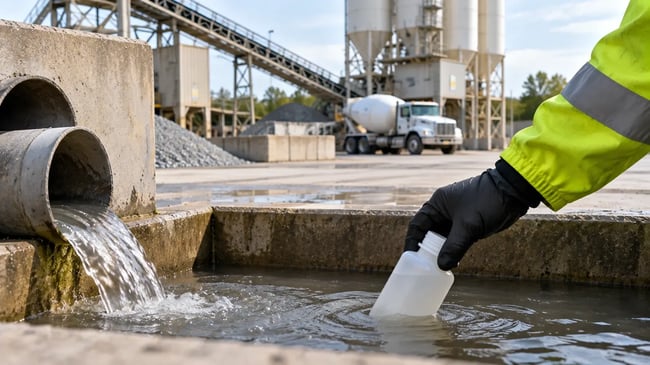
In general, yes. New Jersey's laboratory certification rules (N.J.A.C. 7:18) require labs that analyze water samples for compliance with the state's water pollution rules to be certified, and NJDEP has taken the position that results from a lab without the right certification don't count. Certification is also parameter by parameter. A certified lab gets an annual list of the parameters it's certified for, so a lab can be certified in New Jersey and still not be certified for the test you need. Ask any lab you're considering for its current certification and make sure pH, solids, oil and grease, COD, and iron, or whichever parameters your permit lists, appear on it.
Follow the lab's instructions on bottles, preservatives, holding times, and chain of custody exactly, since a missed holding time can sink a result you spent a storm collecting. Our article on picking a water testing lab covers what else to ask before you hire one.
pH trips plants up because it changes after collection, and New Jersey treats measurements that must be made immediately as their own certification category. Settle with your lab and the permit how your plant measures pH before storm season. We have separate articles on how to measure pH in a stormwater sample and on how pH changes after collection.
How Do You Take a Good CPM Stormwater Sample at a Dusty, Busy Concrete Plant?
A concrete plant is about as hard a place to take a clean, representative sample as you'll find. There's cement dust in the air, mixer trucks tearing up the lanes, washout water that wants to run toward the low spot, and a storm that never starts when it's convenient. Most bad samples we see come from a handful of repeatable problems, and nearly all of them can be fixed with a little planning. The table below pairs the common ones with what we'd do about each.
| Problem at the plant |
What it does to the result |
What we'd do |
| Dust settles on the bottle, cap, or sampling pole |
Pushes up pH and solids for reasons unrelated to your runoff |
Keep caps on until you're at the outfall, use the lab's bottles, and never touch the rim or inside of the cap |
| Truck traffic or footsteps stir up sediment at the sampling point |
Inflates TSS with sediment that wasn't in the flowing water |
Collect from moving water at the designated point, without scooping the bottom |
| Washout or truck wash water reaches the outfall |
Puts process water in a stormwater sample, with very high pH |
Walk the drainage path before you sample, note what you see, and fix the overflow |
| The storm hits and nobody is ready |
Missed storm criteria, and no qualifying sample for the quarter |
Pre-stage the kit, name a primary and a backup, and watch the forecast during the first weeks of each quarter |
| pH meter drifted or was never calibrated |
Numbers that look real but aren't |
Calibrate on the schedule the manufacturer gives and log it |
Dust cuts two ways. Dust on your bottle is contamination and should stay out, but dust that settled on your yard and washes off in the rain is part of your runoff and should show up in the sample. If high pH or solids trace back to yard dust, the fix is better sweeping and dust control around the silos and loading areas. Our nine tips for taking a good stormwater sample and our article on why stormwater samples come back bad go deeper on technique.
Choosing a Safe, Consistent Sampling Point
Pick a sampling point you can reach without crossing a truck route, and use the same one every quarter so results can be compared. Wear high-visibility gear, and tell the batch operator when someone's out sampling. If water leaves your site in an unusual way, or not at all, our article on sampling when water doesn't leave your site covers that case.
We don't take your samples for you, because storms don't wait for a consultant's calendar and your team knows the yard better than we do. What works is a trained person at your plant, which is why we teach people to take your own stormwater samples correctly. Training needs repeating when staff turn over, and our online training library is a practical way to cover the basics for new hires.
What Should a Concrete Plant Do When CPM Sampling Results Come Back High?
A high result isn't automatically a violation, and it isn't automatically a lab error either. Check the lab report against your field notes for anything that could explain it, such as dust on the bottle, washout water upstream, stirred-up sediment, or a missed holding time. If the number is real, it tells you which pollutant is leaving the site. High pH usually points at washout, spills, or dust, and high solids usually point at bare ground, stockpiles, tracking, or a settling basin that needs cleaning.
Whether a result above a number is an exceedance of a limit or just a data point depends on the parameter and the permit, because some values are limits and some are monitor and report only. Read the permit language for each parameter, and look at what it says about corrective action and plan updates. We cover the practical steps in what to do when stormwater sampling results are high, and our article on whether you have to report bad results explains what the reporting side usually looks like. If NJDEP sends a letter or a notice, or you're facing a penalty, an environmental attorney may be the right person to bring in, since the legal side is outside what a consultant should advise on.
Whatever the cause, write down what you found, what you changed, and when, and keep it with your SWPPP. An inspector who sees a high result next to a record of an investigation and a fix reads it very differently from one who sees a number alone. Our article on what inspectors look for at a concrete plant covers what they ask for.
How Does RMA Help With CPM Sampling and Reporting in New Jersey?
We're a New Jersey firm, and we've worked with concrete producers on NJDEP permits for decades. For CPM sampling and reporting, we help you read your permit and authorization, figure out which parameters and discharge points apply, and set up a sampling plan your team can follow. We train your people to collect good samples, since they're the ones on site when it rains, and we help you understand your results once they come back. After a plant is permitted, we also offer ongoing support, such as reminders, help interpreting results, SWPPP and annual report updates, and inspection prep, either hands-off or hands-on depending on what you want.
We're not the right fit for every plant. If you have a trained person, a certified lab, and a good routine, you may not need us at all. We're a small firm with senior staff doing the work, which means we aren't always the cheapest option, and we can't always meet very tight timelines. We don't do engineering or the construction of treatment systems, but we're happy to help you figure out what you need and who to call.
If you'd like to talk through your plant and your permit, you can call us, send an email, or fill out the form on our website. There's no obligation, and we'll tell you plainly whether we can help.