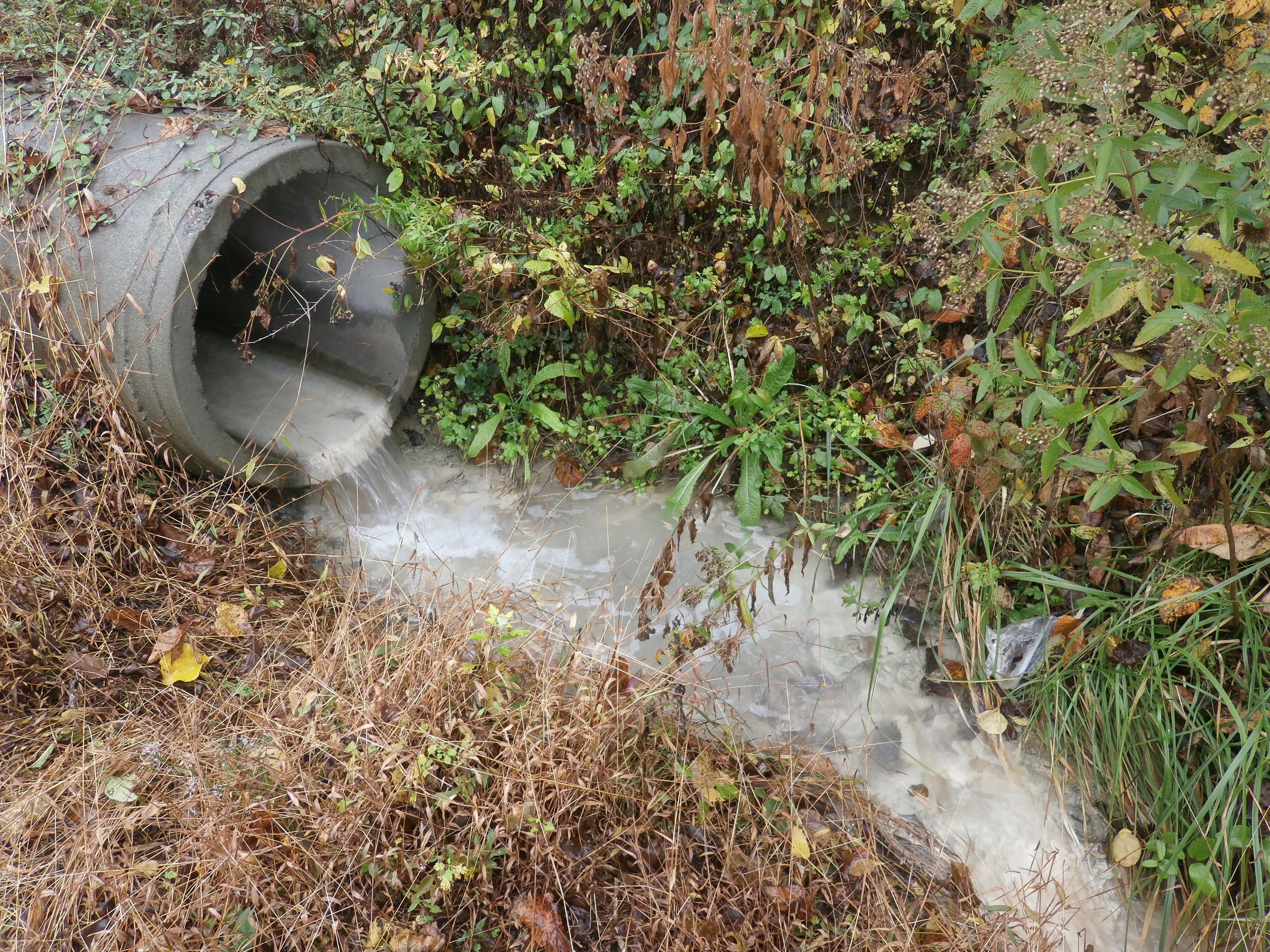
Where PAG-03, No Exposure Certifications, Reefer Fueling, and Ammonia Systems Fit Into PA DEP's Industrial Stormwater Rules
A refrigerated warehouse doesn't look like the kind of place that needs a stormwater permit. The product stays inside, the dock doors close, and the only water leaving is rain off the roof and truck court. Then a customer, an insurer, or the Pennsylvania Department of Environmental Protection (DEP) asks whether you have industrial stormwater coverage, and the answer turns out to be less obvious than the building makes it seem.
The short answer is that most cold storage warehouses need to file something with DEP. For a facility that keeps everything under cover, that filing is usually a No Exposure Certification. If anything industrial is exposed to rain or snow, it's usually coverage under PAG-03, Pennsylvania's general permit for industrial stormwater. This article explains how DEP classifies refrigerated warehousing, what counts as exposure at a cold storage site, how reefer fueling, truck maintenance, and ammonia equipment change the picture, and what comes with each option. If you'd like a second set of eyes on your site, you can reach out to RMA at any point.
Table of Contents
TL;DR
Pennsylvania treats refrigerated warehousing as light industry, so a cold storage facility generally needs either a No Exposure Certification, if every industrial material and activity is under a storm-resistant shelter, or PAG-03 coverage, if anything is exposed. Most sites keep product indoors, so the answer usually turns on outdoor details like dock staging, reefer trailer fueling, truck maintenance, leaking equipment, and some ammonia system components. Facilities that discharge to High Quality or Exceptional Value waters can't use No Exposure and need an individual permit, while some that send stormwater to a public sewer plant may not need either. Ammonia brings separate reporting and safety programs that this article only touches on.
Why Does a Cold Storage Warehouse Fall Under Pennsylvania Stormwater Rules?
Stormwater permits in Pennsylvania come out of the federal NPDES program, which stands for National Pollutant Discharge Elimination System. DEP runs that program in the state, and its general permit for industrial stormwater is called PAG-03. Which facilities need coverage is set by a federal list that sorts industries by Standard Industrial Classification (SIC) code, and refrigerated warehousing and storage, SIC 4222 (NAICS 493120 in the newer system), is on it.
Cold storage lands in the federal rule's light industry category, alongside farm product and general warehousing. That's different from trucking and bus operations, where only the maintenance, fueling, and equipment cleaning areas count. For a warehouse, the regulated area is the industrial footprint of the whole site: storage areas, shipping and receiving areas, material handling, and the yard that connects them. A light industry facility isn't regulated if its industrial materials and activities are all under a storm-resistant shelter, but DEP expects you to document that with a certification rather than assume it. So the real choice is between permit coverage and a No Exposure Certification, and filing nothing isn't one of the options. Our article on stormwater associated with industrial activity goes deeper on how that phrase is defined.
PAG-03, No Exposure, or Individual Permit: Which One Fits Cold Storage?
DEP sorts industrial sites into three paths. Which one a cold storage facility lands on depends on how much of the operation is exposed to weather and where its stormwater ends up.
| Path |
Usually fits a site that |
Sampling |
Fees and term |
| No Exposure Certification |
Keeps every industrial material and activity under a storm-resistant shelter |
Existing facilities submit sample results with the application |
$500 every five years, no annual fee, valid up to five years |
| PAG-03 general permit |
Has some exposure, such as outdoor staging, fueling, or maintenance, and discharges to waters a general permit can cover |
Semi-annual sampling and electronic reporting |
$500 filing fee plus an annual fee; the current permit runs through March 23, 2028 |
| Individual NPDES permit |
Discharges to High Quality or Exceptional Value waters, or otherwise can't use PAG-03 |
Set in the permit; DEP says monitoring is limited or none for sites pushed here by special protection waters |
Depends on DEP's current fee schedule; coverage generally runs five years |
No Exposure is all or nothing for the site. DEP won't approve it for part of a facility, so one open fueling island or a handful of leaking trailers can push an otherwise indoor warehouse into PAG-03. Our guide to which Pennsylvania stormwater permit you need covers the decision across industries, and our breakdown of what PAG-03 costs in Pennsylvania goes past the agency fees.
What Does No Exposure Mean for a Refrigerated Warehouse?
"No exposure" means all industrial materials and activities are protected by a storm-resistant shelter. The federal definition counts material handling, including storage, loading, unloading, and transportation of products, so a dock where pallets sit in the rain is an activity that's exposed, not just a spot where product passes through. DEP describes a storm-resistant shelter as a fully roofed and walled building, or a structure with only a roof as long as water can't flow through it and blown-in rain or snow can't run out, for example because of a curb or berm.
Some things don't need a shelter, including tightly sealed drums, covered dumpsters in good condition, adequately maintained vehicles, and most final products. The certification is signed under penalty of law, and DEP's form asks about exposure now and over the next five years, so planned outdoor storage belongs in your answers today.
The application package is more than one form. It includes the No Exposure form, a PAG-03 Notice of Intent (the filing used to request permit coverage), site maps, a Preparedness, Prevention, and Contingency (PPC) Plan where applicable, the $500 fee, and notice to your municipal storm sewer operator if you discharge to one. Approval lasts up to five years, renewal is due at least 180 days before expiration, and if something becomes exposed, you need to tell DEP right away and file for permit coverage. See also what No Exposure means under an NPDES permit.
How Do Loading Docks, Trailers, and Outdoor Storage Affect a Cold Storage Stormwater Permit?
Docks, trailers, and the yard are where indoor cold storage sites usually get tripped up. DEP's published guidance gives a fairly clear read on the common situations.
| What's on your site |
How it usually plays out for No Exposure |
| Enclosed docks, with all loading and unloading done inside |
Consistent with No Exposure |
| Product staged on an open dock apron or in the yard |
Exposure, unless it's under a cover that meets the shelter criteria |
| Wooden pallets stacked outside |
May still qualify when they're in good condition and don't contaminate stormwater |
| Sealed drums, or dumpsters that are covered and not leaking |
No shelter needed; a dumpster without a lid does need one |
| Stains, spills, or residue on pavement near drains |
Evidence of exposure, so clean it up before you certify |
A clean yard with sound equipment can stay No Exposure, while a yard where product, leaks, or open containers sit in the weather can't. Employees who run the dock and yard should know what counts as exposure, and our online environmental training library is one way to cover that.
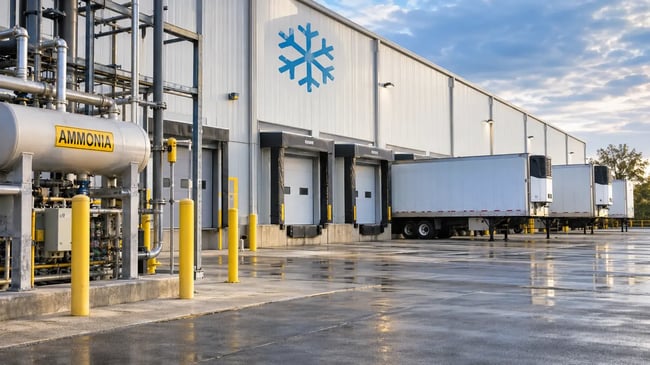
Does Reefer Trailer Fueling or Truck Maintenance Require PAG-03 Coverage?
Reefer trailers run on diesel, and fueling them in the yard is one of the most common reasons an otherwise indoor cold storage site can't certify No Exposure. DEP's guidance is direct: an on-site fueling area with no roof, canopy, or cover is ineligible. A fueling area with aboveground tanks may still qualify if the secondary containment is protected from rain and blowing snow, and mobile fueling stations that meet the shelter criteria may qualify as well.
Truck maintenance and washing follow the same logic. Vehicle wash water isn't an authorized discharge under PAG-03, and DEP says wash areas must be indoors for a facility to stay eligible for No Exposure. Keep wash water completely separate from stormwater.
What If Your Business Also Runs a Trucking Fleet?
DEP picks a facility's primary SIC code by revenue, so whichever activity earns the most is the primary one. If storage earns the most, you're a refrigerated warehouse and the whole industrial yard is in play. If trucking earns the most, you fall under the transportation category, where only the maintenance, fueling, and equipment cleaning areas are regulated. DEP can also require coverage under the Pennsylvania Clean Streams Law if pollutants are leaving the site, whatever your SIC code says.
How Do Ammonia Refrigeration Systems Affect Cold Storage Stormwater Compliance?
Ammonia is the standard refrigerant in large cold storage facilities, and from a stormwater standpoint it comes down to where the equipment sits and whether anything leaks. Machinery rooms are indoors, but condensers, piping, and some receivers often aren't. Outdoor equipment with oil leaks, stained pads, or residue running toward a storm drain is the kind of exposure DEP asks about.
Water is the second issue. PAG-03 authorizes certain non-stormwater discharges, including uncontaminated condensate from coolers, chillers, and compressors when it's treated through an oil/water separator, and from the outside storage of refrigerated gases or liquids. Cooling tower discharges aren't on that list, so blowdown or washdown water from evaporative condensers needs a separate answer.
Ammonia also brings obligations that have nothing to do with stormwater. Facilities holding 500 pounds or more generally file annual Tier II reports under EPCRA Section 312, and systems with 10,000 pounds or more are covered by EPA's Risk Management Program and OSHA's Process Safety Management standard. Our Tier II reporting page is the place to start on the first one.
Does Where Your Cold Storage Stormwater Goes Change Which Permit You Need?
It can. The same warehouse can land in a different spot depending on where its runoff ends up. If the receiving stream has a High Quality or Exceptional Value designation, you can't use No Exposure, PAG-03 doesn't authorize the discharge, and an individual permit is required. If a stream gets redesignated while you hold PAG-03 coverage, you'll need to apply for an individual permit when the general permit expires.
Sewers work differently. If your stormwater flows to a sanitary or combined sewer that's part of a publicly owned treatment works, DEP says permit coverage or No Exposure isn't required, though the discharge is subject to pretreatment rules and the plant should be notified. Discharges to a municipal storm sewer or a private storm sewer still need coverage. So do sites where water flows into a basin that rarely discharges, or leaves as sheet flow without a pipe. Cities, townships, and sewer authorities can add their own rules and fees, so confirm what applies at your address.
What Does PAG-03 Compliance Look Like for a Cold Storage Warehouse?
PAG-03 compliance runs on a PPC Plan, which documents how stormwater moves across your site and what could contaminate it. Our comparison of SWPPPs and PPC Plans explains how it differs from the plans used in other states, and our guide on when to update your PPC Plan covers triggers like new outdoor storage.
Cold storage falls under Appendix L of PAG-03, and sampling is semi-annual. A qualifying storm event is rainfall of more than 0.1 inch, separated by 72 hours from the previous storm. Appendix L monitoring for refrigerated warehouses has centered on total suspended solids and oil and grease, though DEP can require results for pollutants tied to an impaired stream. Results go into DEP's electronic discharge monitoring report (eDMR) system, which every industrial stormwater permittee must use. Our eDMR guide and PAG-03 sampling article walk through the mechanics.
The values in Appendix L are generally benchmarks rather than hard effluent limits, but they still carry consequences. If the same pollutant exceeds its benchmark at the same outfall in two consecutive monitoring periods, you owe DEP a Corrective Action Plan within 90 days of the end of the period that triggered it. See benchmark values versus effluent limits for how to read results. The annual report and annual permit fee are due each March 23, and the current PAG-03 expires March 23, 2028. To see what an inspector looks for, read what happens during a DEP stormwater inspection .
What Stormwater Permits Does a New Cold Storage Facility Need in Pennsylvania?
Some readers asking this question haven't opened yet. If you're building or expanding a cold storage facility, two separate stormwater tracks apply. The first is construction. Pennsylvania's Chapter 102 rules require erosion and sediment control for earth disturbance, with NPDES construction stormwater coverage, commonly under the PAG-02 general permit, for larger disturbances, along with county conservation district review and township land development stormwater approvals. RMA doesn't prepare construction-phase permits or approvals. Those usually go through your civil engineer, your contractor, or an erosion and sediment control specialist.
The second track is operations, and it's the part we do. Once the building is running, you'll need either a No Exposure Certification or PAG-03 coverage, plus the PPC Plan, sampling, and reporting that come with it. Planning early lets you place docks, fueling, and equipment so a No Exposure Certification stays realistic, instead of retrofitting a canopy later. We can help you work out which construction-phase approvals your project needs and point you toward the right professionals for them.
How Can RMA Help With Cold Storage Stormwater Permits in Pennsylvania?
Cold storage questions usually start with a simple one: does this site qualify for No Exposure, or does it need PAG-03? We can walk your docks, yard, fueling areas, and equipment, tell you which path fits, and prepare the No Exposure Certification or PAG-03 application, the PPC Plan, and the sampling and reporting that follow. Our Pennsylvania NPDES and stormwater page lays out how that works.
If your site is simple and everything stays indoors, you may not need a consultant for much of this, and our article on getting a PAG-03 permit yourself shows where the do-it-yourself route works and where it doesn't. If you'd like to talk it through, you can call, email, or fill out the form on our website, with no pressure and no obligation. To get started, get in touch with RMA and tell us what's happening at your facility.