Typical Pricing for PAG-03 Applications, Standalone PPC Plans, and Ongoing Permit Support, Plus the DEP Fees You'll Pay Separately
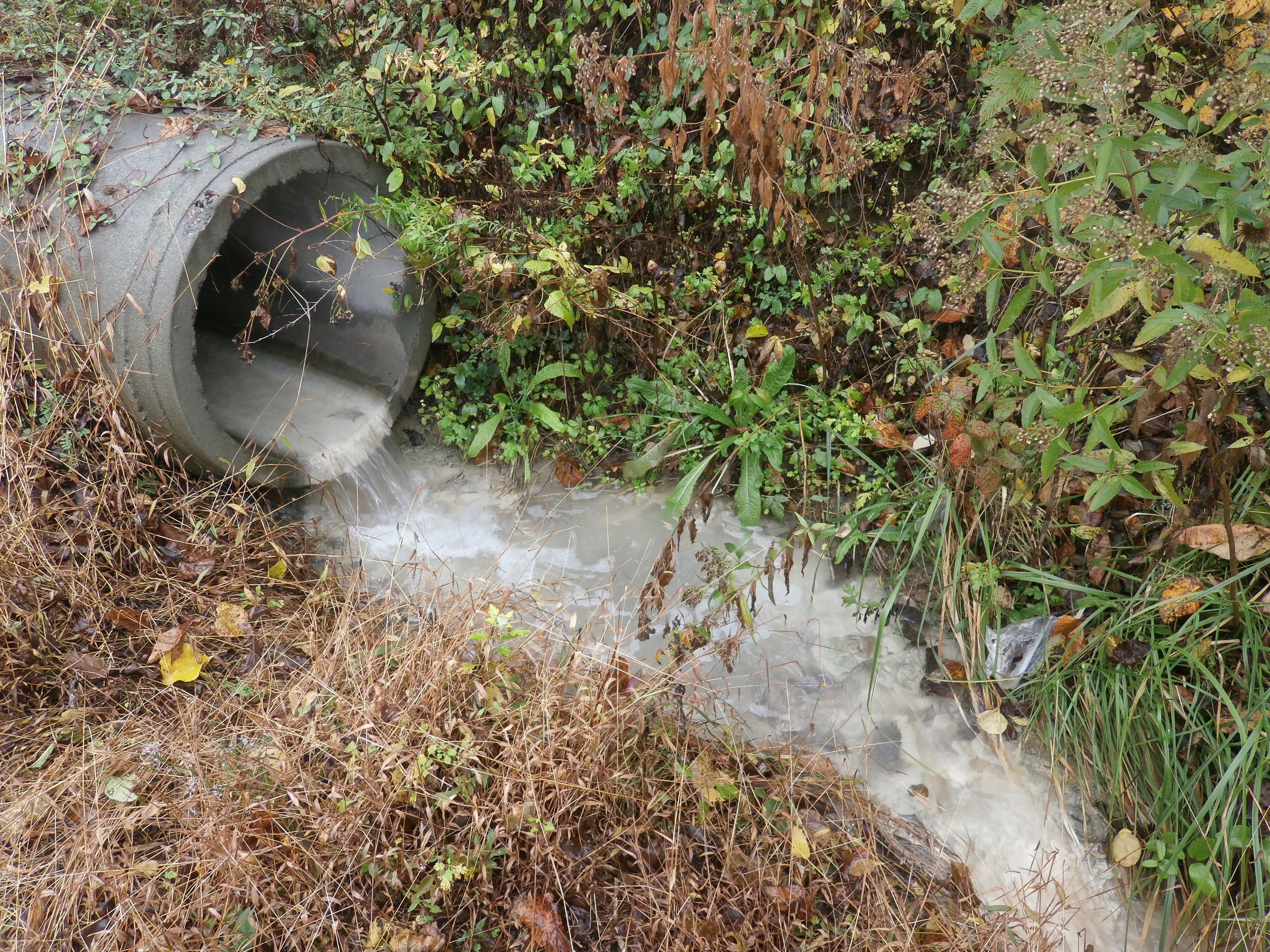
If your Pennsylvania facility needs industrial stormwater coverage, you've probably run into the term PAG-03. It's the general permit Pennsylvania's Department of Environmental Protection (DEP) uses to cover rain and snowmelt running off industrial properties, where it can pick up pollutants on the way to a storm drain, stream, or ditch. Getting covered takes a lot more than a short form, and consultant quotes can look nothing alike, which makes it hard to know what's fair. For a relatively straightforward facility, we typically charge about $5,000 to $10,000 to prepare a complete PAG-03 application package, about $2,000 to $5,000 for a standalone PPC plan (the preparedness, prevention, and contingency plan that explains how your facility prevents pollution and responds to spills), and about $3,000 to $6,000 per year for ongoing help once you're covered. DEP's own fees are separate from all of that.
Those numbers are ranges, not flat rates, and the rest of this article explains what sits behind them: what the work involves, why one facility lands at $5,000 while another lands well past $10,000, what a PPC plan costs on its own, and which expenses never show up in a consultant's quote. We also cover when you don't need a consultant at all. If you'd rather talk through your own site, you can reach out to RMA and we'll tell you what we'd expect it to cost and whether we're even the right fit.
Table of Contents
TL;DR
For a relatively straightforward Pennsylvania facility, we typically charge around $5,000 to $10,000 to prepare a full PAG-03 application, around $2,000 to $5,000 for a standalone PPC plan, and around $3,000 to $6,000 per year for ongoing permit support. Site complexity drives the spread. DEP charges its own $500 application fee and $500 annual fee, and sampling and lab testing run roughly $250 to $750 per outfall each time you sample. You don't have to hire a consultant, and a straightforward facility with the right person in-house can do this on its own.
What Does a PAG-03 Consultant Cost in Pennsylvania?
The table below puts every number in one place. Everything in the first three rows is what a consultant like us charges. The rest is paid to DEP or a lab, and it's easy to forget when you're comparing quotes.
| What you're paying for |
Typical cost |
Who you pay |
| Complete PAG-03 application package (relatively straightforward facility) |
About $5,000 to $10,000, one time |
Consultant |
| Standalone PPC plan (relatively simple facility) |
About $2,000 to $5,000, one time |
Consultant |
| Ongoing permit support after you're covered |
About $3,000 to $6,000 per year |
Consultant |
| PAG-03 application fee |
$500 |
PA DEP |
| PAG-03 annual fee |
$500 per year |
PA DEP |
| Stormwater sampling and lab testing |
Roughly $250 to $750 per outfall, each time you sample |
Lab, and whoever collects the samples |
These are ranges because every facility is different, and we price projects based on the work that's needed rather than quoting one flat number. A facility with one outfall and a tidy file of existing records sits at the low end. A site with several drainage areas and missing paperwork sits at the high end or beyond it. The sections below explain where your facility is likely to land and why.
What Are You Paying For in a PAG-03 Application Package?
It helps to start with what you're buying, because the application is the smallest part of it. PAG-03 is Pennsylvania's general permit for industrial stormwater, and DEP expects the application to show that you understand how rainwater moves across your property and what it touches on the way. That means the work starts with your industrial activities, not with paperwork. We look at what you do outdoors, where materials are stored, handled, or loaded, and where pollutants could realistically end up in runoff.
From there we trace how stormwater flows across the site and identify your outfalls, which are the locations where stormwater leaves your property. We prepare the maps and supporting documentation that go with the application, and we write your PPC plan around your facility and how it operates. Then we assemble the Notice of Intent (the NOI, which is the application form you file with DEP) and everything that backs it up. A typical package also includes site visits, sampling and lab testing, coordination with you and your team, and responding to questions from DEP during their review. If you're curious how this compares to the plan some other states require, our article on SWPPPs versus PPC plans for PAG-03 covers the difference.
Why Do PAG-03 Consultant Costs Range From $5,000 to $10,000 or More?
Almost always, it comes down to how complicated the site is. A smaller facility with simple drainage, limited outdoor activity, and good existing records takes less work. A facility with multiple drainage areas, several outfalls, different industrial operations, or missing documentation has a lot more to evaluate, and the price reflects that. Two facilities of the same size can be completely different projects, which is why we don't price by square footage or headcount.
| Factor |
Usually keeps cost lower |
Usually pushes cost higher |
| Drainage |
Simple, easy to trace |
Multiple drainage areas |
| Outfalls |
One or very few |
Several |
| Industrial operations |
Limited outdoor activity |
Several different operations outdoors |
| Existing records |
Good maps, plans, and past results |
Missing or outdated documentation |
| Timing and history |
No deadline pressure |
Urgent deadline or unresolved issues with DEP |
Deadlines deserve a mention on their own. If you're up against a date, or DEP has already raised a problem at your facility, there's more to untangle and less time to do it, and that adds cost. Our article on how long PAG-03 coverage takes will help you plan so you're not paying a rush premium.
A word on the cheapest quote you'll get. We're not the cheapest consultant, and we don't want to be. A price far below this range usually means something is missing, such as a real site visit, a drainage evaluation, or sampling coordination, and those gaps tend to surface later as questions from DEP or a plan that doesn't match how your facility works. Our guide to choosing a PAG-03 consultant lists the questions worth asking before you sign anything.
How Much Does a Standalone PPC Plan Cost in Pennsylvania?
Some facilities don't need the full application package. Maybe you already hold PAG-03 coverage and your plan is missing or out of date, or you only need the plan itself. We write standalone PPC plans too, but there's no single price we can give you, because a plan that needs a few sections refreshed is a very different project from a brand-new plan for a facility with no documentation at all.
To scope one, we look at what you already have, whether your drainage or operations have changed, whether the maps need updating, and whether a site visit is needed. A standalone plan costs less than a full application package, but the gap is smaller than the final numbers suggest, because the work that's left is the hard part. We still have to understand your facility, evaluate your operations, see how stormwater moves across your site, and usually walk it in person. For a relatively simple facility, you're probably still looking at about $2,000 to $5,000. It can come in lower, and it can come in higher, depending on how much existing information we have to work with and how much time it takes to build a plan we're comfortable standing behind. If you want to know what the plan does once it exists, our article on when a PPC plan needs updating picks up from there.
Can You Just Update an Existing PPC Plan Instead?
This is the question we hear right after the price. If a plan already exists, it seems like it should be cheaper to touch it up than to start over. Sometimes that's true when the plan is yours and you keep it current. But we generally don't make minor updates to PPC plans that another consultant prepared or that a facility developed in-house.
The reason is simple. Before we put our name on a plan, we need to be confident it's accurate, complete, and meets current requirements, and we can't be confident of that for a document we didn't build. Depending on how old the plan is and how it was originally prepared, there can be quite a bit that needs to change: drainage that was never mapped correctly, operations that have shifted since it was written, or sections copied from a template that never fit the site. So in most cases we recommend preparing a new PPC plan from scratch rather than patching an old one, and we'd rather tell you that up front than quote you a small update and then find the plan can't be saved.
What Does Ongoing PAG-03 Compliance Support Cost Per Year?
The permit doesn't end when DEP approves your coverage. For facilities that want professional help managing their PAG-03 requirements over time, a typical consulting budget is around $3,000 to $6,000 per year. That can cover inspections, reporting your stormwater sampling results to the state, employee training, PPC plan updates, and keeping track of the permit's ongoing requirements so nothing slips between one deadline and the next.
What's included depends on what you want us to handle versus what your own employees take care of. Some facilities want everything off their plate. Others do their own inspections and sampling and only want us for the electronic reporting and the plan updates. Results go to DEP through its electronic Discharge Monitoring Report system, and our guide to Pennsylvania eDMR reporting shows what that involves if you'd like to keep it in-house. Training can be split the same way, and our online environmental training library is one option for getting your team up to speed without paying for custom development.
Which PAG-03 Costs Fall Outside a Consultant's Fee?
This is where budgets get blown, so it's worth walking through slowly. Start with DEP. The agency charges a $500 application fee and, once you're covered, a $500 annual fee. DEP bills that annual fee as an installment invoice, and its fee page lists the PAG-03 due date as March 23 each year, starting after your first twelve months of coverage. DEP also adds a 2% processing fee to credit card payments as of May 1, 2026, so it's worth knowing how you plan to pay.
Next comes sampling. Stormwater sampling and lab testing can run roughly $250 to $750 per outfall each time you sample, so a site with two outfalls pays that twice for the same rain event. How often you sample depends on the requirements in your permit, so the yearly total depends on your permit and the weather. You may be able to collect samples yourself and pay only the lab, and our article on taking your own stormwater samples explains when that makes sense. Picking the right lab matters too, and we cover that in how to pick a water testing lab.
Finally, some things are separate from an annual consulting fee by nature. Corrective action plans, permit amendments, and physical improvements to your facility aren't automatically included, because nobody can know in advance whether you'll need them. If a sample comes back high, for example, the fix might be a procedure change or it might be new equipment, and our article on what to do when sampling results are high walks through the options. We spell out what's included and what isn't in every proposal, so you're not left guessing what to budget for.
Do You Need a Consultant to Get PAG-03 Coverage?
No. You don't have to hire us, or any consultant, to prepare a PAG-03 application. If you have a straightforward facility and someone on staff with the knowledge and the time, you can absolutely do this yourself. The tradeoff is time and risk. The application and PPC plan take real effort, and a mistake can mean questions from DEP or a plan that doesn't hold up later. Our article on getting a PAG-03 permit yourself lays out what the DIY route looks like so you can judge for yourself.
There's also a middle path. If you only need help with certain parts of the process, such as the drainage evaluation or the PPC plan, we can look at that instead of handing you a full-service quote. And before you spend anything, it's worth confirming that PAG-03 is the right route at all. Depending on your industrial activity and whether it's exposed to rain and snow, some facilities need an individual permit, and some qualify for a No Exposure Certification instead. Our guide on which Pennsylvania stormwater permit you need covers all three. If an individual permit turns out to be the answer, expect the process to be more involved and the cost to be considerably higher than the PAG-03 numbers here.
How Do You Get an Accurate PAG-03 Price for Your Facility?
Start by gathering whatever you already have: existing permits, facility maps, PPC plans, sampling results, and a general description of your operations. You can use those documents to size up the work yourself, or you can have us review everything and tell you what's needed. In that case we prepare a project-specific proposal covering the PAG-03 application, the PPC plan, or ongoing support, with the work and the cost spelled out so you know exactly what you're getting.
If you'd like a number before you talk to anyone, the free pricing calculator below gives you an instant estimate, with no email address, sales call, or obligation. It's built around the same factors we described above, so it's a decent way to see whether your facility looks closer to $5,000 or closer to $10,000 before you decide how to proceed.
How Can RMA Help With PAG-03 Permitting and Costs?
We work with Pennsylvania facilities all the time, on everything from a first PAG-03 application to a PPC plan rewrite to year-round permit support. Senior people do the work, we price it based on what your site needs, and we'll tell you plainly if a simpler route makes more sense for you, including doing it yourself. If we're not the right fit, we'll say so and point you in a better direction.
There's no pressure and no obligation. You can call us, send an email, or fill out the form on our website, and tell us what's going on at your facility. If you'd like a straight answer on cost and next steps, get in touch with RMA and we'll take it from there.