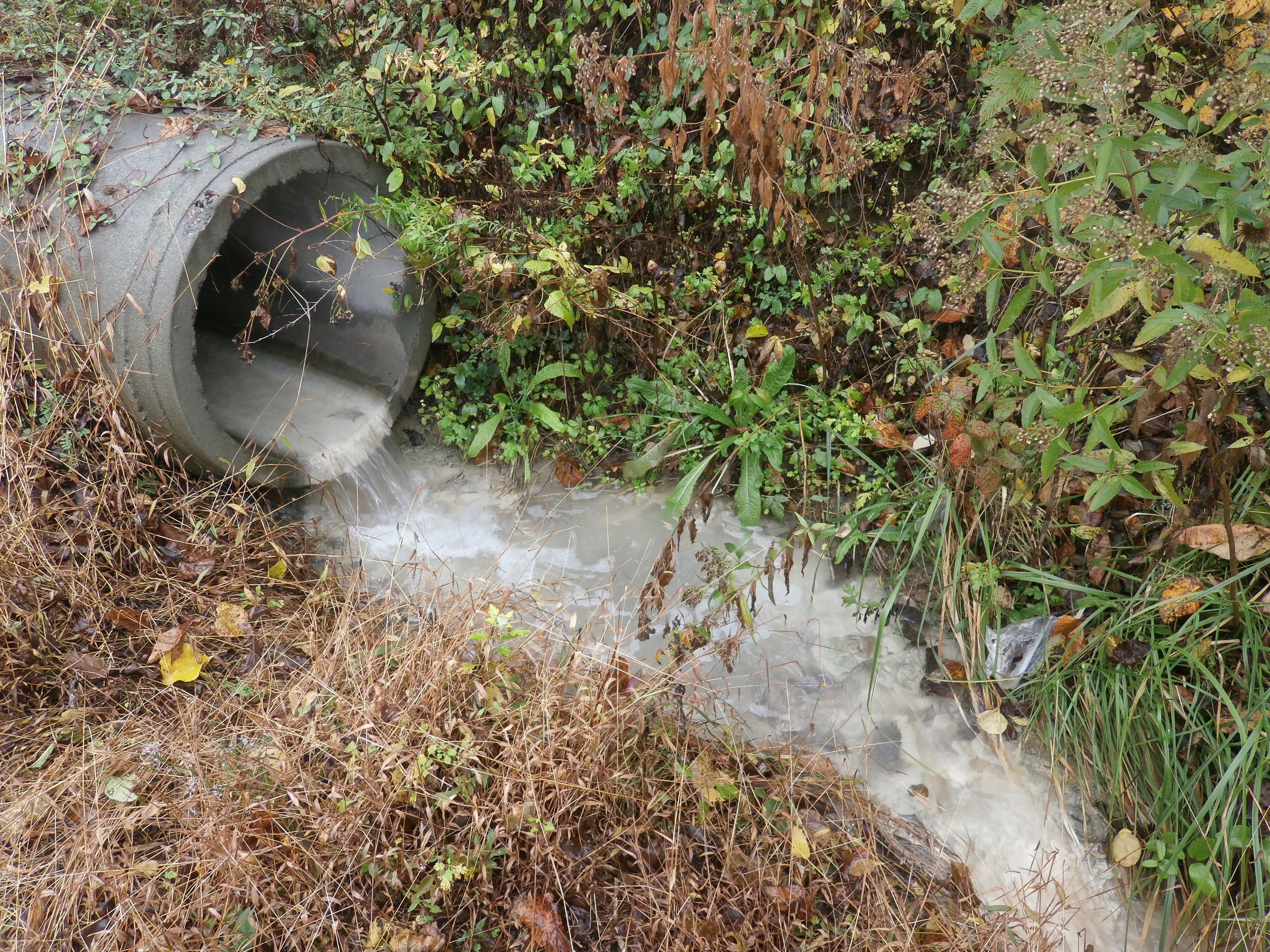
Steel Mills Are Clearly Covered, but Many Steel Service Centers Fall Outside Pennsylvania's Industrial Stormwater Rules. Here's How to Tell Which Side You're On.
If you run a steel operation in Pennsylvania, you've probably heard that industrial facilities need a stormwater permit from the Pennsylvania Department of Environmental Protection (DEP). The permit most facilities use is called PAG-03, a general NPDES permit. NPDES stands for National Pollutant Discharge Elimination System, the Clean Water Act program that regulates what leaves your site in runoff. For steel, the short answer is that mills are covered, usually under PAG-03 and sometimes under an individual permit, while steel service centers often don't need coverage at all because DEP treats most of them as wholesale distributors instead of manufacturers.
Facilities get tripped up on that second half in both directions. Some service centers pay for permit coverage they never needed, and some that have grown into heavier processing work are unpermitted without knowing it. This article covers how DEP decides who's covered, how to tell which side of the line your facility is on, and what outdoor coil and plate storage means if you do need coverage. If you'd rather talk through your own site, you can reach out to RMA and we'll help you sort it out.
Table of Contents
TL;DR
Steel mills in Pennsylvania are covered by the state's industrial stormwater program, usually through a general permit called PAG-03, or through an individual permit when a mill also discharges process wastewater. Most steel service centers are classified as wholesale distributors, which isn't a regulated category, so many don't need permit coverage at all. DEP decides which side you're on by your biggest source of revenue, so a service center that earns more from fabricating, coating, or scrap than from selling metal can end up covered. If you are covered, steel and plate stored outdoors is usually the main thing your sampling and plan have to deal with.
How Does Pennsylvania DEP Decide Which Facilities Need an Industrial Stormwater Permit?
DEP doesn't start with whether your yard looks industrial. It starts with what your facility does for a living, and it sorts that using a Standard Industrial Classification code, or SIC code. An SIC code is a four-digit number that classifies a business by its main activity. The federal rules define stormwater associated with industrial activity partly by SIC code and partly by narrative descriptions of certain activities, such as scrap recycling. PAG-03's instructions then list the covered codes and group them into sector appendices, like Appendix B for primary metals and Appendix U for fabricated metal products.
What counts is your primary SIC code. DEP's industrial stormwater FAQ tells facilities to add up the revenue from every activity on the site, and the activity that brings in the most money is the primary industrial activity. That one rule explains most of the difference between a steel mill and a steel service center. The table below shows how DEP's guidance treats the possible combinations.
| Your situation |
What DEP's guidance says |
| Your primary SIC code is on the regulated list |
You need permit coverage or a No Exposure Certification |
| Your primary code isn't listed, but a secondary one is |
Nothing is required, unless DEP decides coverage is necessary because of pollutants in your stormwater |
| A regulated narrative activity, like scrap recycling, happens on site |
You need coverage or a No Exposure Certification, whatever your primary code is |
If you do need coverage, Pennsylvania gives you three routes. PAG-03 is the general permit, a standardized permit that eligible facilities join by filing a Notice of Intent with DEP. An individual NPDES permit is written for a single facility, and it's required when a site isn't eligible for the general permit. A No Exposure Certification lets a covered facility skip permit coverage if every industrial material and activity is protected from rain and snow. Our guide to general, individual, and no-exposure permits goes through the differences, and our article on whether you need a stormwater permit in Pennsylvania covers the decision for industrial facilities in general.
Do Steel Mills in Pennsylvania Need PAG-03 or an Individual NPDES Permit?
Yes, steel mills are inside the program. PAG-03's primary metals appendix, Appendix B, covers SIC codes 3312 through 3317, which take in steel works, blast furnaces, rolling and finishing mills, steel wiredrawing, cold-rolled steel sheet, strip, and bars, and steel pipe and tube. It also covers iron and steel foundries (3321 through 3325) and miscellaneous primary metal products (3398 and 3399). People use "steel mill" loosely, but if your main business is making or finishing steel from ore, scrap, or hot-rolled stock, you're almost certainly sitting in one of those codes.
Whether you use PAG-03 or an individual permit depends mostly on what else leaves the site. PAG-03 is built for stormwater, plus a short list of allowed non-stormwater discharges such as fire-fighting water, uncontaminated groundwater, and certain washdown water. A mill that discharges process wastewater, like cooling or descaling water from rolling operations, needs an individual NPDES permit for that wastewater, and DEP's rules don't let a facility with an individual permit for non-stormwater discharges also use PAG-03 for its stormwater. The stormwater gets folded into the individual permit instead. PAG-03 also doesn't authorize stormwater that's subject to federal effluent limitation guidelines, and it doesn't cover discharges to streams Pennsylvania classifies as High Quality or Exceptional Value waters. That's why large integrated operations often hold individual permits.
Sampling comes with either route. Under PAG-03, Appendix B requires stormwater samples every six months at each outfall, the point where stormwater leaves your site. The parameter list includes metals such as aluminum and zinc, oil and grease with a benchmark of 30 mg/L, and the nitrogen and phosphorus monitoring DEP added when it reissued the permit in 2023. A benchmark isn't an effluent limit, so one high result isn't a violation on its own, and our explainer on benchmark values and effluent limits covers the difference. Two consecutive exceedances of the same pollutant at the same outfall, though, trigger a Corrective Action Plan that goes to DEP within 90 days of the end of the monitoring period. Results are reported through DEP's electronic system, which we walk through in our eDMR guide.
PAG-03 also requires a Preparedness, Prevention, and Contingency (PPC) Plan, a written plan for preventing and responding to releases of pollutants from the site. Our comparison of PPC Plans and SWPPPs explains how the two differ. A No Exposure Certification isn't a realistic option for most mills, since raw materials, scrap, and product usually sit outdoors.
Why Are Many Steel Service Centers Outside Pennsylvania's Industrial Stormwater Permit Requirements?
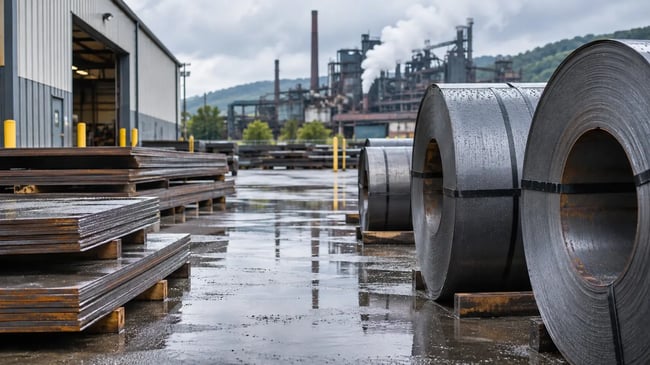
A steel service center buys metal from mills in bulk and sells it onward in the sizes and forms customers need. The SIC manual puts these businesses in code 5051, Metals Service Centers and Offices, which sits in Wholesale Trade and not in manufacturing. The code describes establishments primarily engaged in marketing semifinished metal products, and its examples read like a service center's inventory: bars, plates, sheets, strip, structural shapes, steel pipe and tubing, and concrete reinforcing bar.
Wholesale trade is almost entirely missing from the list of regulated industrial categories. The exceptions in PAG-03's table are scrap and waste recycling (5093), automobile salvage yards (5015), and petroleum bulk stations (5171), and steel service centers aren't among them. So when a facility's primary code is 5051, DEP's guidance puts it in the scenario where no permit and no No Exposure Certification is required, even if some activity on site looks like manufacturing.
Processing doesn't automatically change that. The Census Bureau's definition of metal service centers says they may saw, shear, bend, level, clean, or edge metal on a custom basis as part of a sale, so the classification system expects some processing. A service center that saws, shears, and levels material for customers is, in most cases, still classified as a wholesaler.
Not being required to have a permit isn't the same as nothing applying to you. DEP's FAQ states that it can require permit coverage under Pennsylvania's Clean Streams Law when a facility's stormwater carries pollutants into state waters, even if the facility isn't in a regulated category. A service center with rusting steel, leaking equipment, and an unmanaged yard can still end up in a conversation with DEP.
How Can You Tell Whether Your Steel Facility Is a Service Center or a Manufacturer?
DEP's method is simple on paper. It comes down to five steps:
- List every activity that takes place on the site.
- Add up the revenue each activity brings in.
- Match the biggest one to an SIC code, using the OSHA SIC search that DEP's FAQ points to.
- Check that code against the covered codes in PAG-03's instructions.
- Separately, check whether any narrative activity on site, like scrap recycling, is regulated no matter what your primary code is.
If the code lands in 5051 and nothing else triggers coverage, you're on the wholesale side. If it lands in a primary metals, fabricated metals, or scrap code, you're on the covered side. The table below shows how common steel-related activities tend to sort. They're examples, so confirm your own code in the SIC search.
| Where most of the revenue comes from |
Typical classification |
PAG-03 appendix |
| Selling bar, plate, sheet, and tube bought from mills, with sawing, shearing, or leveling as part of the sale |
Wholesale metals service center (SIC 5051) |
None listed, so generally no coverage required |
| Making steel, rolling it, drawing wire, or producing pipe and tube |
Primary metals (SIC 3312 through 3317) |
Appendix B |
| Casting steel or iron, or heat treating metal |
Foundries and miscellaneous primary metals (SIC 3321 through 3325, 3398, 3399) |
Appendix B |
| Fabricating parts by forming, stamping, welding, coating, or machining metal |
Fabricated metal products and related work (SIC 3400s and 3500s) |
Appendix U |
| Buying, sorting, and processing scrap metal |
Scrap recycling (SIC 5093) |
Appendix P |
What Happens When Processing Becomes the Main Business?
Picture a facility that sells most of its metal as plate and bar but also runs a fabrication shop that cuts, forms, welds, and paints parts for customers. If the fabrication work brings in more revenue than the metal sales, fabrication is the primary activity, the code moves into the 3400s, and Appendix U applies. A toll processor, which charges for cutting, slitting, or coating metal that belongs to someone else, earns its money from processing and not from selling metal, so it generally belongs on the manufacturing side. As processing gets heavier, with cut-to-length and slitting lines, plasma or laser cutting, forming, or coating, the line gets harder to draw. The code on your insurance policy or business registration doesn't decide any of this, since it may have been picked years ago. The code that matters is the one that matches where your revenue comes from today, so write down how you reached your answer.
What Else Can Pull a Steel Service Center Into Stormwater Permitting?
A wholesale primary code isn't a permanent pass, and several things can bring a service center into the program. The biggest is scrap. A roll-off box of your own offcuts that a dealer hauls away is a normal part of running a service center. Buying scrap from other sources, sorting it, shearing or baling it, and selling it is a different business. Scrap recycling is covered by a narrative description in the federal rules, tied to SIC 5093 and PAG-03's Appendix P, and DEP's guidance says a listed narrative activity on site requires coverage regardless of the primary code. If your yard does more than handle its own scrap, look hard at how much of the operation it has become.
DEP's own authority is the second. It can require coverage for a facility outside the listed codes if it finds pollutants in the facility's stormwater, and PAG-03 includes a catch-all appendix, Appendix J, for facilities DEP designates that don't fit any other sector. When that happens, a No Exposure Certification isn't available as an alternative, because it only applies to facilities regulated under the federal categories. The facility has to file for PAG-03 or an individual permit.
Where your runoff goes matters as well. A covered facility that discharges to a municipal separate storm sewer system, known as an MS4, still needs its own coverage, because DEP's guidance says the MS4 operator's permit doesn't extend to you. Stormwater that flows to a sanitary or combined sewer belonging to a public treatment plant doesn't need PAG-03 or a No Exposure Certification, but it falls under federal pretreatment rules and the sewer authority should know about it. Townships, boroughs, and sewer authorities can also have their own stormwater rules and fees, so confirm what applies locally even when DEP's industrial program doesn't reach you.
How Does Outdoor Coil and Plate Storage Affect Stormwater Compliance for Covered Steel Facilities?
If you're covered, whether as a mill or as a service center that crossed the line, outdoor storage is usually where the stormwater problems start. Steel stored outside rusts, which puts iron and suspended solids into runoff. Galvanized and aluminum stock can add zinc and aluminum, two of the metals Appendix B monitors. Coils and plates often carry protective oils, and saws, shears, cranes, and forklifts drip hydraulic and lubricating oil onto the same pavement. A storage yard often drains to just one or two outfalls, so a bad result there tends to repeat, which is how a facility ends up writing a Corrective Action Plan.
What helps is mostly physical. Moving the most exposed material under roof, covering stock, and keeping steel off the ground on racks or dunnage cut down on rust and solids. Drip pans under cutting equipment, regular sweeping, and prompt cleanup of leaks deal with the oil. Our overview of stormwater BMPs is a good place to start before you decide what to spend money on. If results come back high anyway, we cover the next steps in our article on high stormwater sampling results. If your crew needs training, our online environmental training library is one place to look.
Can a Steel Facility With Outdoor Storage Qualify for a No Exposure Certification?
Generally not while material sits in the weather. A No Exposure Certification requires industrial materials and activities to be protected by a storm-resistant shelter. DEP defines that as a fully roofed and walled structure, a roofed structure that stormwater can't flow through and that keeps blown-in rain from running out, or, only as a temporary measure, a tarp of sufficient strength. DEP's guidance says flexible covers generally can't be used to claim no exposure over a permanent installation. DEP also won't approve no exposure for part of a site, so if one industrial area has exposure, the whole facility is out.
Whether finished steel counts as protected depends on the material, and rusting or oil-coated steel is the kind of case to settle with DEP before you rely on it. The certification carries a $500 fee every five years, compared with $500 to file for PAG-03 coverage and another $500 each year after that, so the effort of moving material indoors is sometimes worth it for a facility that's close to qualifying.
How Can RMA Help Pennsylvania Steel Facilities Sort Out Stormwater Permit Coverage?
For most facilities, the first step is just finding out which side of the line they're on, and we can do that with you without any pressure to buy anything. We work with Pennsylvania facilities all the time, and we'll look at what your site does, how the revenue breaks down, and which code fits. If you turn out to be a wholesale service center with no coverage requirement, we'll tell you so, and you won't need us for a permit.
If you are covered, we can help with the whole path: working out whether PAG-03, an individual permit, or a No Exposure Certification fits, walking the site to map outfalls and pollutant sources, preparing the PPC Plan and application, coordinating sampling, and handling ongoing reporting once you're permitted. You can call us, email us, or fill out the form on our website, and whenever you're ready you can contact RMA about your steel facility's stormwater permit. We'll tell you plainly what we think applies and what it would take.